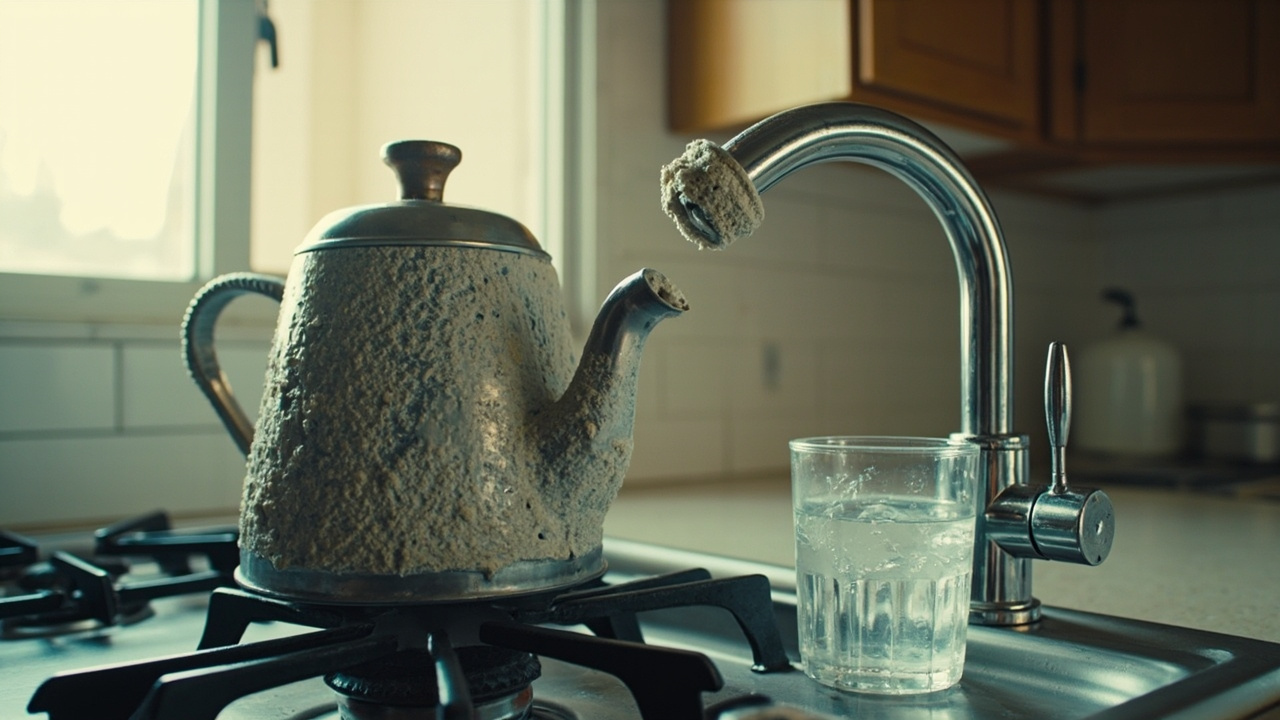
If the shower glass clouds two days after you clean it and the kettle grows a crust, you don’t have a cleaning problem — you have a permission problem. Almost everything that fixes hard water needs a cut, a tap, or a drain somewhere, and the plumbing belongs to your landlord.
Quick answer
You cannot install a whole-house water softener as a renter — it needs a brine tank, a drain line, and a connection into the cold water line, and all of that is the landlord’s plumbing. What you can do is test your hardness, treat drinking and cooking water at the tap, and handle one shower with a cartridge unit. Anything that touches the supply line starts with a written request to your landlord, not a drill.
The three questions that decide your answer
Two of these are about your lease. Only one is about hardware.
1. What needs the landlord, and what does not
| Tier | What it is | Permission |
|---|---|---|
| 0 | A pitcher on the counter — attaches to nothing | Not needed |
| 1 | A filter on a removable aerator, or a cartridge unit on a tap or arm | Check your lease |
| 2 | Anything that cuts, taps, or drains: a softener, under-sink RO, a whole-house filter, an inline housing on a hose bib | Written — and install nothing while you wait |
- Don’t cut into a supply line, drill a counter, or run a drain line without written permission. A verbal “it’s fine” isn’t permission, and the cost lands on your deposit at move-out.
Tier 2 is where the expensive options live and where a renter has no standing. The whole-house filter vs softener comparison is what you’d be approving.
2. Which fixture is actually bothering you
- Drinking or cooking water tastes off, the kettle scales → treat the kitchen tap (Step 2).
- One shower has scale on the glass or arm → treat that one shower (Step 3).
- Scale on every faucet, every glass, the dishwasher door, the laundry → nothing you can buy reaches this. Scale on every fixture at once is a whole-house condition, and the fix is the landlord conversation — see scale on faucets and dishwasher spotting.
- Laundry takes twice the soap → measure it first.
3. How long are you here
A 12-month lease does not amortize a whole-home softener, whatever it costs. If you’re the one buying, how to choose a water softener is your page instead; hose-connected units are in portable water softeners.
Step 1 — Test your water before you buy anything
Get a number, not a guess
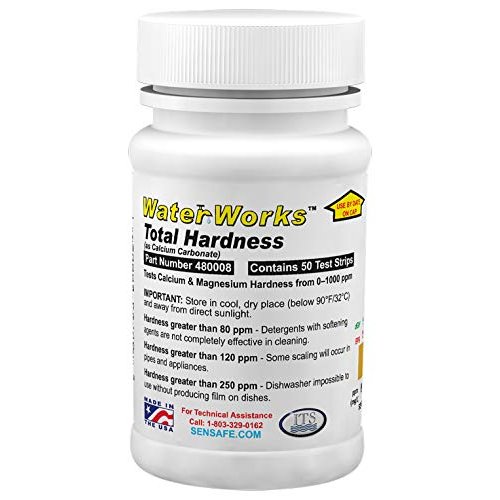
Soap scum is consistent with hard water, and also with a low-flow showerhead and cheap soap. A strip settles it in three seconds. A bottle of 0-1000 ppm hardness test strips covers a year of arguing with yourself, and the maker lists detection points from 0 to 1000 ppm.
Sample more than one place
Kitchen cold, bathroom cold, and the hot line are three samples, and they don’t always agree. Ten dollars of strips tells you whether hardness is building-wide or fixture-specific, which helps most later: “the shower glass won’t come clean” is a complaint, while “18 gpg at the shower arm, 19 gpg at the kitchen cold tap” is a maintenance item.
Fifty strips covers three taps and every retest. Strip versus drop-count versus digital meters is in the hardness test kit comparison.
Convert the number
The U.S. Geological Survey classifies hardness in milligrams per liter as calcium carbonate: 0 to 60 soft, 61 to 120 moderately hard, 121 to 180 hard, over 180 very hard. Those are USGS’s own figures, from the USGS Water Science School “Hardness of Water” page, retrieved 2026-10-04.
Strips speak grains per gallon, and one gpg is about 17.1 mg/L, so here’s the same four bands converted — arithmetic on the USGS numbers, not a USGS table.
| USGS band | mg/L as CaCO₃ | Roughly, in gpg |
|---|---|---|
| Soft | 0–60 | 0–3.5 |
| Moderately hard | 61–120 | 3.5–7 |
| Hard | 121–180 | 7–10.5 |
| Very hard | over 180 | over 10.5 |
The gpg to ppm conversion chart has the full factor list, the hardness unit converter does the arithmetic, and the water hardness explainer covers what the minerals do once they’re in the water.

What you’d be sizing, and why a renter doesn’t
Sizing is a purchase decision, and you don’t have one. Running the arithmetic shows fastest why every renter-side option here is point-of-use.
Daily grains equals people times gallons per person per day times hardness in gpg; capacity needed is roughly daily grains times the days between regenerations. The site’s planning default is 75 gallons per person per day and 3 days between regenerations.
Two people on 18 gpg: 2 × 75 × 18 = 2,700 grains a day, and 2,700 × 3 = 8,100 grains per cycle — which rounds up to the smallest standard residential size, a 16,000-grain unit. The softener size calculator runs your number.
Read that again: the smallest unit that would serve a two-person apartment is a full residential softener — brine tank, floor drain, supply-line connection, salt, service visits. All Tier 2, all the landlord’s plumbing. The arithmetic is the wall; everything after is a way around it.
Softener, filter, and RO are three different jobs
- Softener (salt-based ion exchange): swaps calcium and magnesium for sodium through a resin bed. The only thing here that removes hardness and fixes scale at every fixture.
- Filter (sediment, carbon, KDF): catches grit, chlorine, and odor. It does not soften — nothing a carbon or KDF stage removes is a hardness mineral.
- RO (usually under sink): strips dissolved solids from the water you drink and cook with. It isn’t an exchanger, it drains brine you have to route, and it fixes one tap.
The softener vs RO vs filter breakdown has the mechanism detail. Salt-free “softeners” are usually conditioners: they change how scale sticks but usually do not bring hardness grains to zero on a test strip. If a listing promises your number goes to zero, ask which mechanism does it — the answer is ion exchange, and that isn’t in a salt-free bottle.
Step 2 — Drinking and cooking water at the tap
This is the renter fix that most closely matches a softener, at a fraction of the intrusion.
Faucet-mount filters are the default renter answer
It screws onto a standard aerator, needs no tools, and comes off in under a minute — which is what makes it a Tier 1 conversation instead of a Tier 2 one.
Check one thing first: most don’t fit pull-out or handheld spouts. That’s the most common reason one ends up in a return pile.
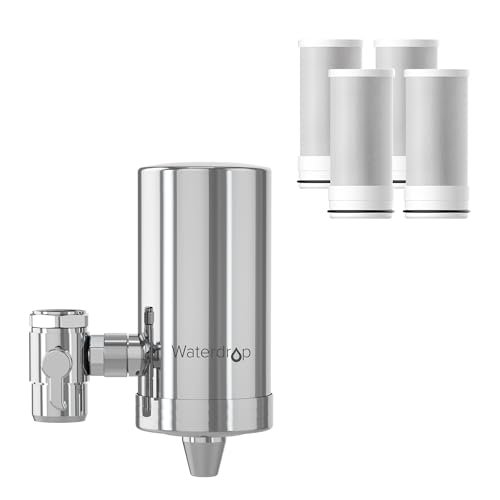
- A faucet-mount filter with four cartridges — four cartridges in the box, so you aren’t re-ordering quarterly. Default pick for the kitchen.
- An NSF/ANSI 372 faucet filter — the lower-priced option, carrying the NSF/ANSI 372 mark printed on the listing, the lead-reduction certification standard for point-of-use filters. Nine cartridges is more than most leases need. We’re naming the mark the product shows, not what the standard requires.
The pitcher, when you cannot touch a fixture
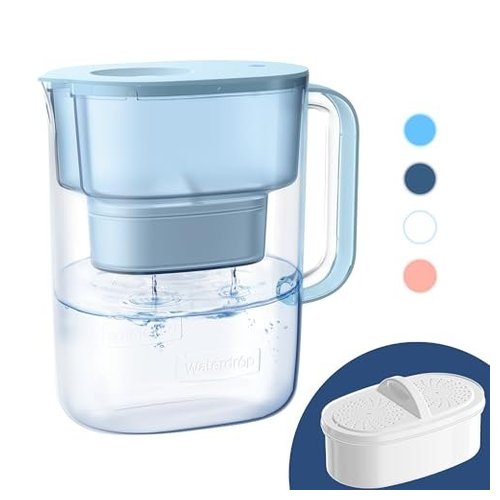
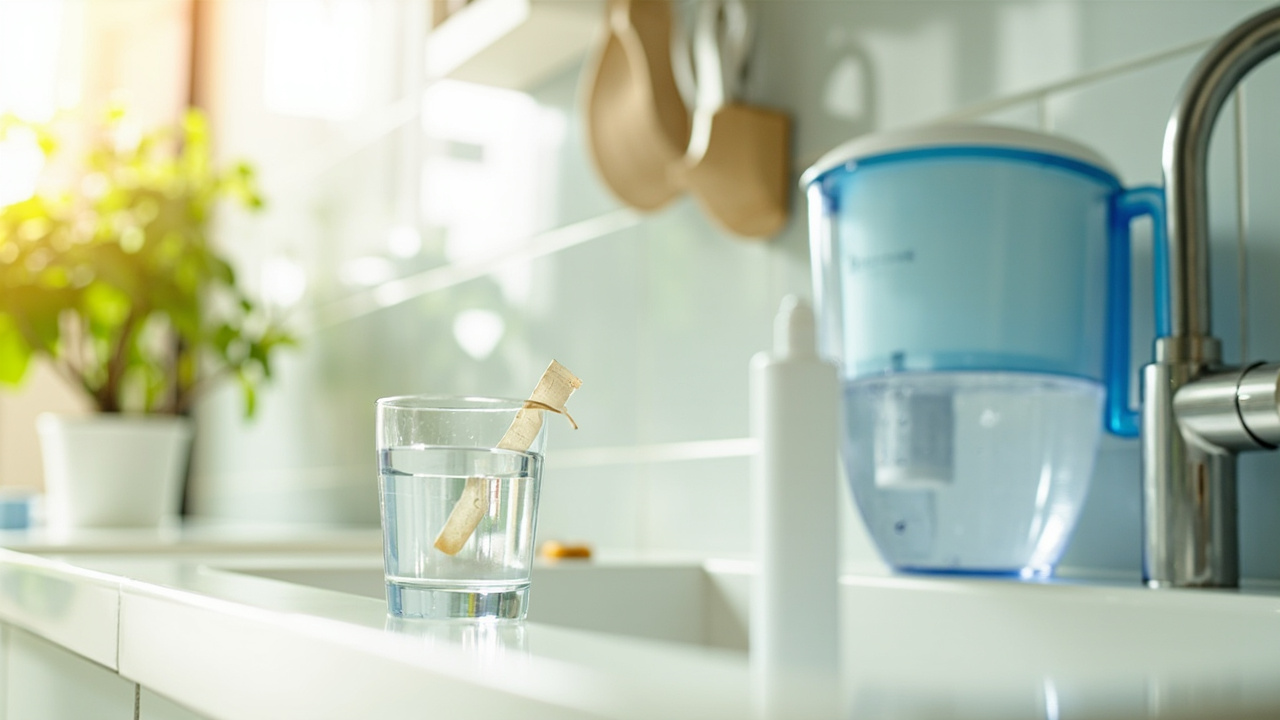
Furnished units, strict leases, dorm housing, or a lease clause about fixtures land here. A 10-cup NSF-certified pitcher attaches to nothing, making it the only option on this page that’s unambiguously yours to own and take with you. Its ceiling is clear: it filters the water you pour into it, and nothing else.
When the answer is under the sink instead
If the lease permits a hole under the counter, under-sink reverse osmosis removes more than a faucet filter does — the EPA lists reverse osmosis among treatments effective for removing total dissolved solids, and names hardness and deposits among the effects above the 500 mg/L secondary TDS standard. Those secondary standards are aesthetic guidelines, not enforceable limits, so this is a product comparison, not a legal argument.
- Don’t drill under someone else’s counter or hang a supply-line filter without written permission. A leak in a cabinet you don’t own is your deposit, and a supply-line fitting is Tier 2 however reversible the box looks.
The under-sink reverse osmosis guide covers membrane stages, filter changes, and where the drain goes.
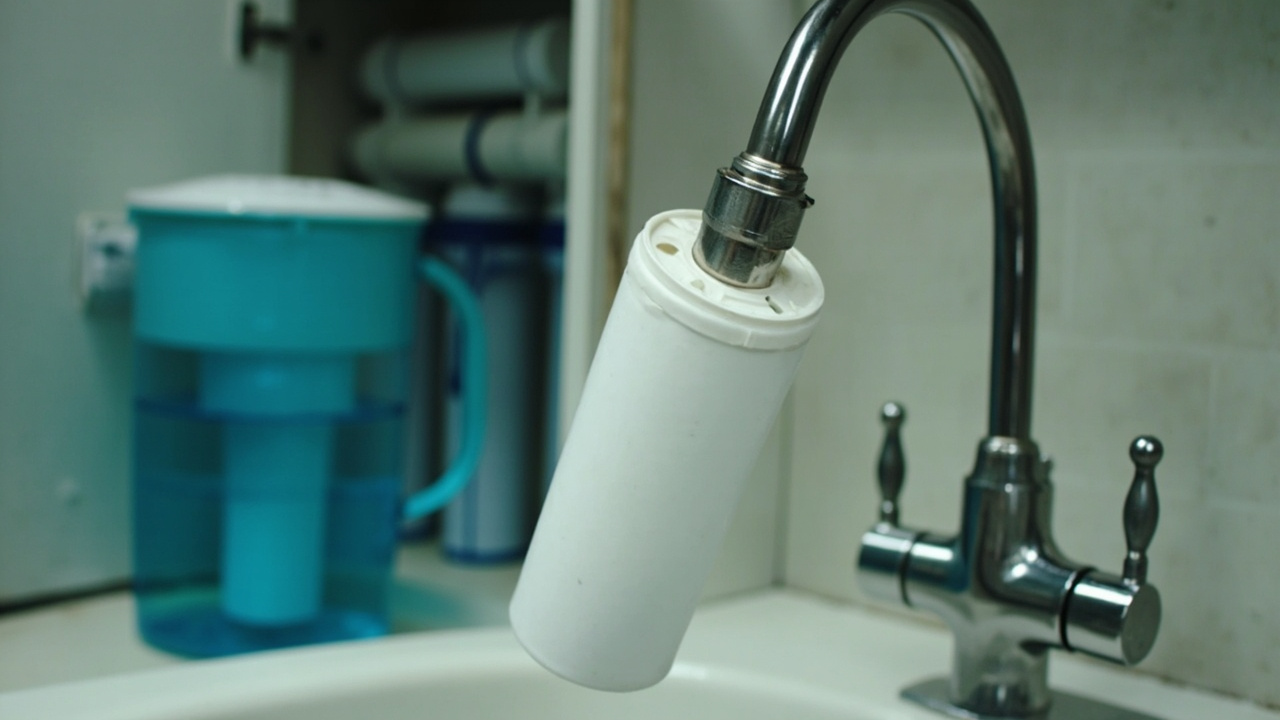
Step 3 — The shower, handled without breaking the lease
This site’s most common renter complaint, and it’s had three different answers. Here’s the straight one.
A shower filter is not a softener — say it before the link
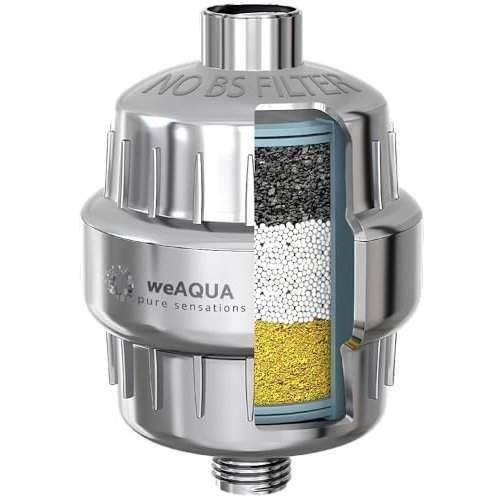
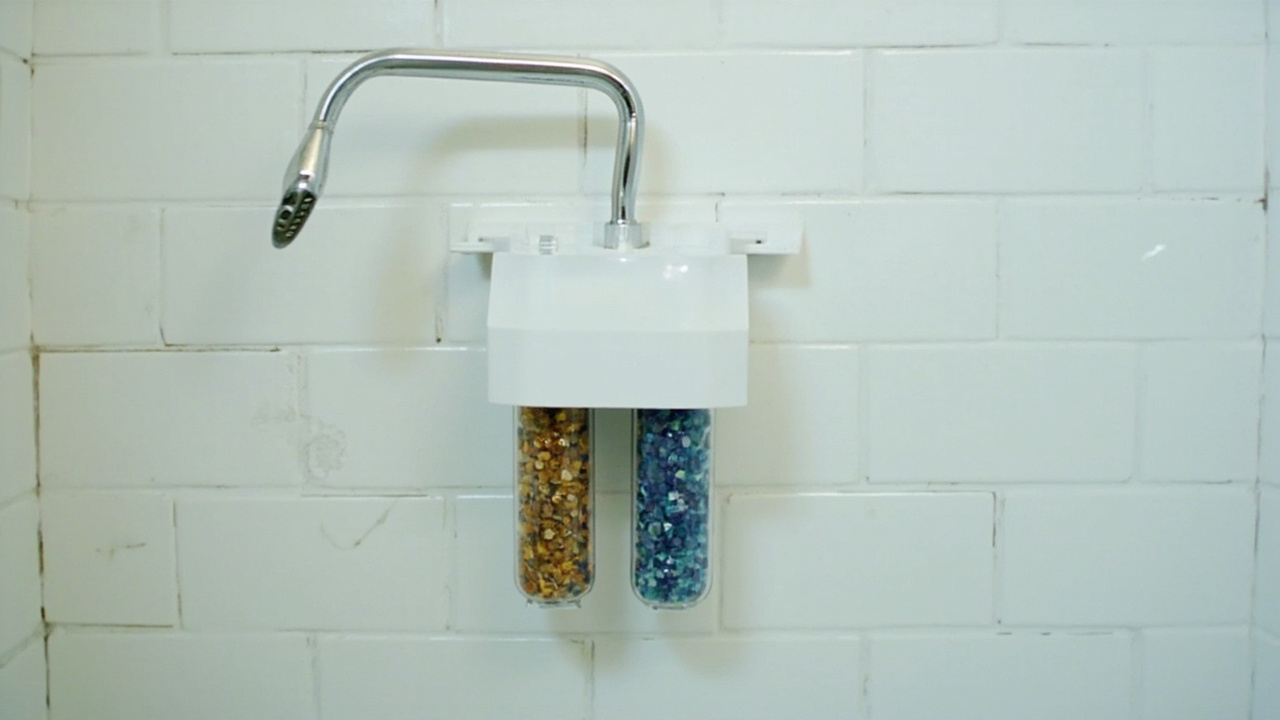
Softening requires ion exchange: resin beads that swap calcium and magnesium for sodium, plus a regeneration cycle that flushes the captured minerals away. A shower filter has no resin bed, no brine, no regeneration. A KDF stage can change how dissolved minerals crystallize so they’re less likely to precipitate as hard scale — a conditioning effect, not a removal.
So it does not soften, and it does not stop hard water stains on glass: the minerals are still in the water, and a hardness test reads the same before and after. What it does is cut chlorine and trap sediment at one arm, which is why a shower filter for chlorine and sediment is worth buying for that, and not for hardness. If a listing calls itself a water softener, that claim doesn’t match what the product does.
What each media type does is in what shower filters really do; for existing scale, see shower glass stains.
- Don’t buy a shower filter expecting it to stop hard water stains. It won’t, and no media changes what a hardness strip reads.
The one unit that actually ion-exchanges
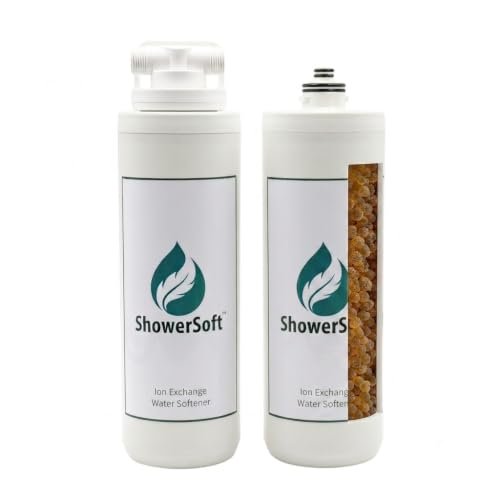
One consumer class performs real softening with no brine tank, no drain line, and no plumber: a cartridge ion-exchange unit scoped to one tap or shower arm.
It’s $239.99 as of 2026-10-04, and Amazon lists it as low in stock, so re-check price and availability on the day you order. Over a 12-month lease that’s a fifth of the rent, for one shower. It also commits you to cartridge swaps on a schedule you have to keep, and a unit you stop maintaining quietly goes back to doing nothing.
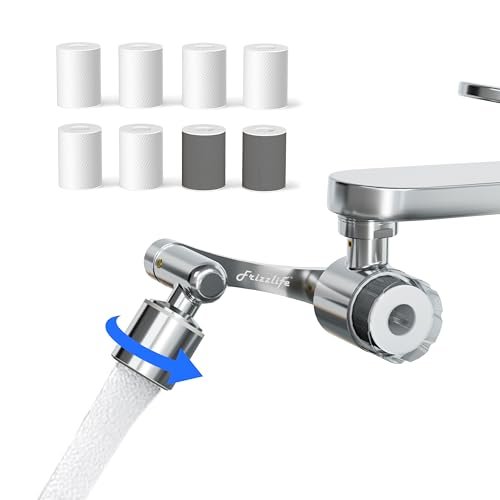
If chlorine and sediment at one arm would be good enough, the shower filter above costs a fraction of that. If that shower genuinely needs softening and you’ll still be there in a year, a portable ion-exchange cartridge unit is the honest answer. Hose-connected units are a different class, in portable water softeners.
Point of use vs point of entry
Point-of-use treats water at one place, and the place is yours. Point-of-entry means the main cold line, and that isn’t yours.
| Pitcher | Faucet-mount | Portable ion exchange | Under-sink RO | Whole-home ion exchange | |
|---|---|---|---|---|---|
| Upfront, 2026-10-04 | $17.99 | $26.99–$45.11 | $239.99 | Owned by its own guide | Four-figure installed |
| Touches | Nothing | One removable aerator | One faucet or shower arm | A hole in the counter | Cuts the main line; brine tank; drain line |
| Permission | Not needed | Check your lease | Check your lease | Written | Written |
| Softens (ion exchange) | No | No | Yes | No | Yes |
| Fixes scale on every fixture | No | No | At its one tap | No | Yes |
| Renter verdict | Always safe | Best value | One tap, big share of a lease | Needs permission | Not a renter purchase |
The last row is the honest one: the only row that fixes every fixture, and the only row you can’t buy. Over a 12-month lease, the first three columns together cost less than the portable unit does — and none of them touches what the last column does. That’s the arithmetic of renting, and no filter closes it.
Running costs aren’t summed here — none of these manufacturers publishes a per-gallon figure.
What you can actually evaluate
Metered regeneration, iron capacity, and resin volume are unreachable for you. These four are not:
- Does it need a drain line? If yes, it’s out.
- Does it come apart by hand? If not, it needs a tool — and a tool near a leased fixture is a conversation you didn’t need.
- What is the cartridge interval, and is the replacement price published? A unit with no stated interval is a unit you stop maintaining in month four.
- What certification does the manufacturer print, and against which standard? NSF/ANSI 372 and NSF/ANSI 44 are marks you can look for. “Certified” with no standard named isn’t a certification.
If you’re weighing readings against each other, hard vs soft water covers what changes once a number moves.
Salt is not on your list
You have no brine tank, so pellets-versus-crystals doesn’t apply. The water softener salt guide is thorough and it isn’t about you.
- Don’t buy a softener, salt, or a brine tank “for later” if you rent. You won’t be the one to move it, the landlord owns the outlet, and salt in a unit nobody regenerates cakes and pulls moisture.
For context on listings you can’t use: salt vs salt-free and water softener vs conditioner cover why conditioners usually don’t zero your hardness strip.
What to ask your landlord for
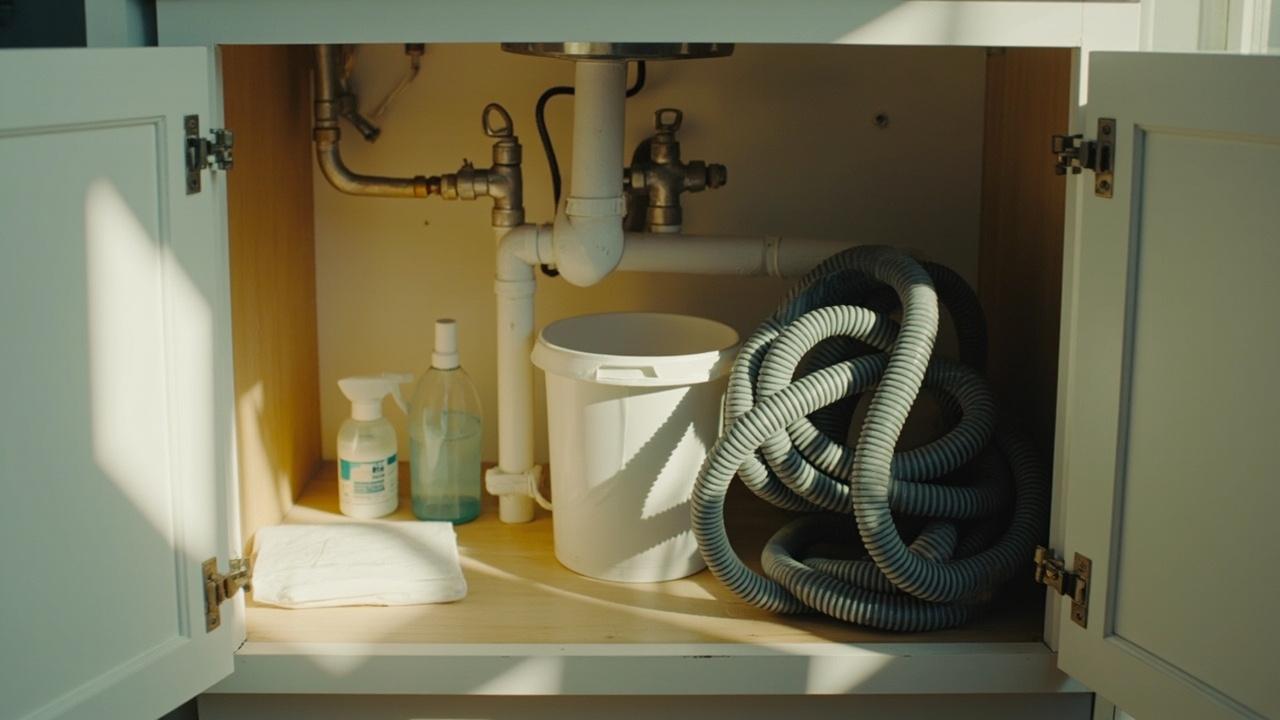
Bring a number, not a complaint. A test result, the specific fixtures, one sentence about what you see. Hardness is a maintenance cost to an owner — the EPA lists scaling and sedimentation among the economic impacts of dissolved solids, which moves a landlord more than “the glass is cloudy.”
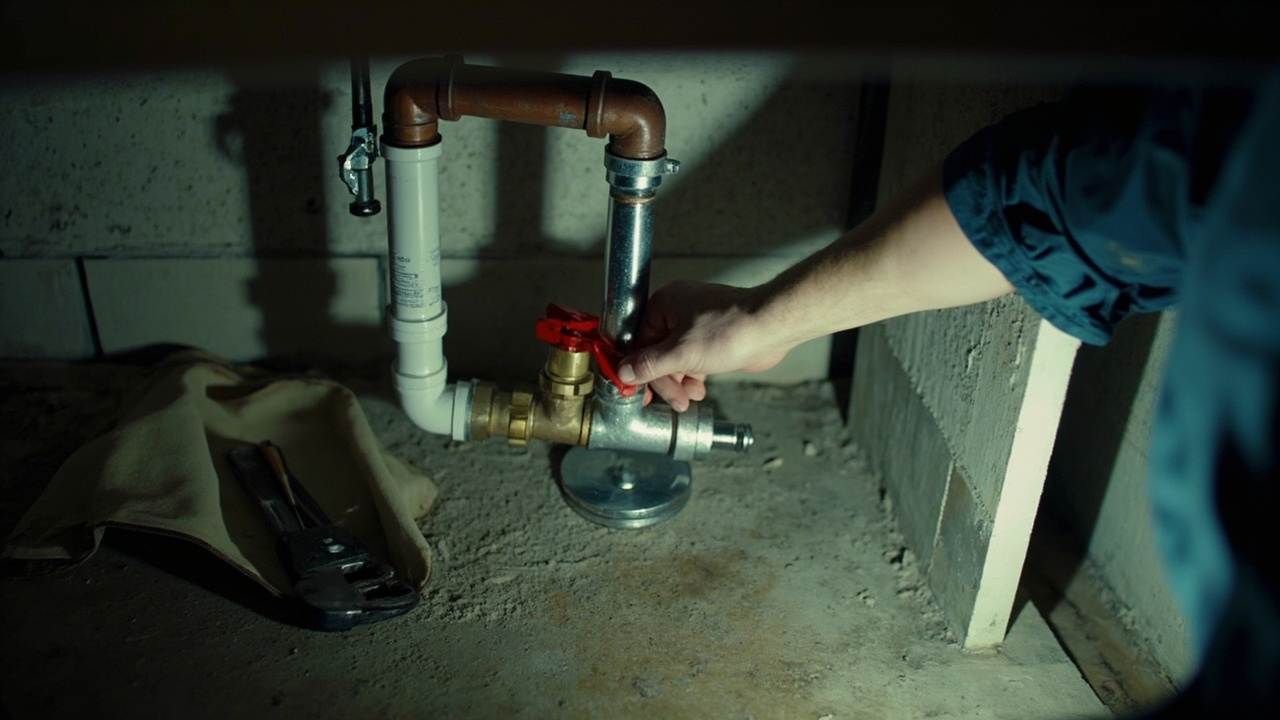
Ask about three things. Whether the building already treats water somewhere you can’t see; whether the water heater is the actual complaint; and whether a hose bibb is reachable — the only place a landlord-side treatment could tap in without opening a wall.
- Don’t shop for a local installer or call one out to quote a renter install. This is a written-lease question, not a service call, and an installer’s quote answers a question you weren’t asking.
- Don’t install anything while you wait for an answer.
If it’s approved, how to choose a water softener and the softener size calculator become relevant.

When to call a pro
Keep it to yourself if: you’re testing hardness, swapping a cartridge, cleaning a shower head, or descaling a kettle — none of which touch the landlord’s plumbing.
A pro is the landlord’s call, not yours, if: the main line gets cut, a unit is relocated, an active leak shows up at a fitting or drain, or a control head or pump fails past a reset. A softener’s drain line also has to meet local code, which isn’t a renter’s decision.
We don’t rank local service lists or installer directories, and a pro can’t tell you whether your lease allows the work.
Common mistakes
- Buying a shower filter because the listing says “softener.” It doesn’t soften. Hardness minerals pass straight through and your test strip won’t move.
- Treating every fixture when you have one complaint. A faucet filter at the kitchen sink does nothing for shower glass, and a pitcher does nothing for either.
- Buying the wrong shape of faucet filter. Anything needing a visible, screw-on aerator won’t fit pull-out or handheld spouts — the NSF/ANSI 372 extender in this class is one listing that states the fit requirement.
- Treating a shower filter sold as a softener as a stain fix. It cuts chlorine and sediment. It doesn’t remove hardness, so spotting keeps coming back.
What to buy
Role first, then the product. Priced 2026-10-04.
| Role | What to buy | Why |
|---|---|---|
| Start here | The 481108 0-1000 ppm strip | One number beats every guess, and 50 tests is a renter’s lifetime supply |
| Nothing to unbolt | The PT-07B pitcher | Zero installation, zero removal — the whole answer when the lease forbids fixtures |
| Kitchen tap | The Waterdrop FC-06 | Four cartridges in the box; check your spout shape first |
| One shower, real softening | The ShowerSoft unit | $239.99 and one tap. Listed low in stock — re-check before committing |
Key takeaways
- A whole-house softener isn’t a renter purchase. It needs a brine tank, a drain line, and a cut into the cold line — all the landlord’s.
- Test first. A hardness test strip turns a complaint into a number, and three taps beat one.
- Match the fix to the fixture. A faucet-mount filter covers drinking and cooking water; nothing you can buy covers scale on every fixture.
- A shower filter isn’t a softener and won’t stop stains, no matter what the listing says.
- Real softening at one tap is a portable ion-exchange unit, and it costs a fifth of a year’s rent for one shower.
- Know which of the three permission tiers you’re shopping in before you spend anything.