Quick answer
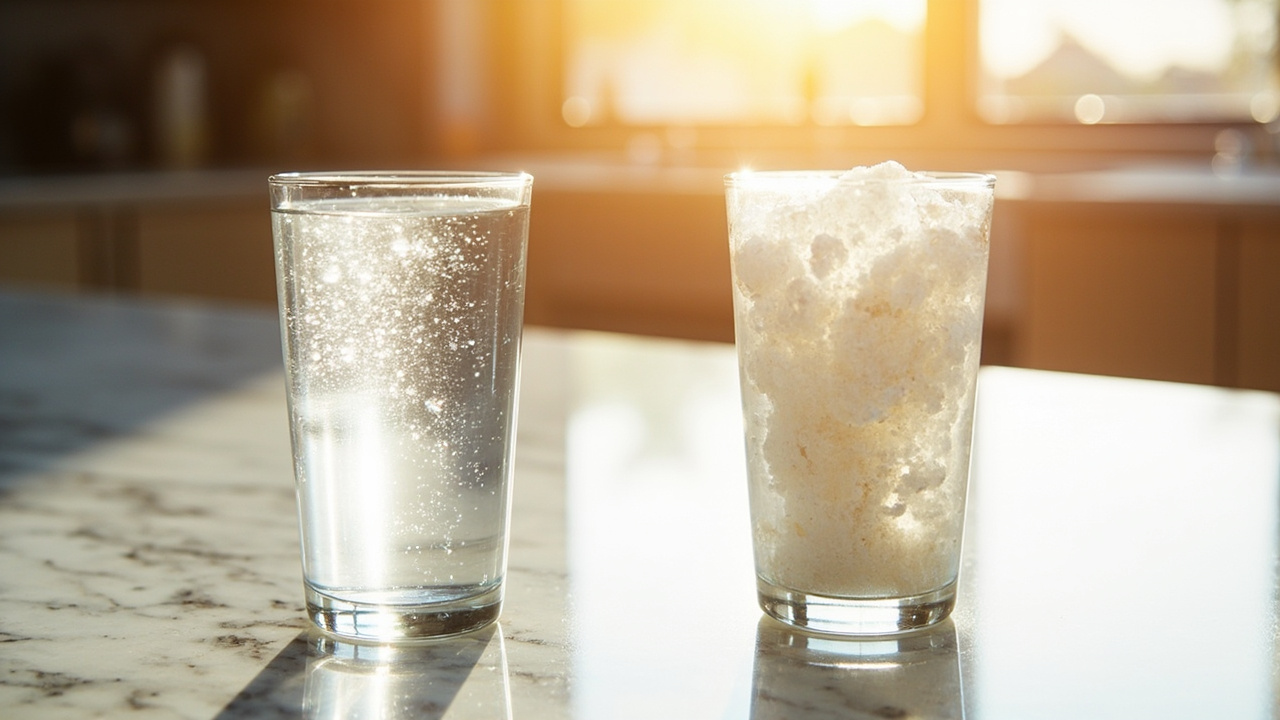
Cloudy glasses after every dishwasher cycle usually mean hard water minerals drying on your dishes. White powdery spots are removable mineral residue. Rainbow-tinted cloudiness that doesn’t wipe off is etching — permanent glass corrosion that no cleaner reverses. The 2010 phosphate ban weakened detergents in hard water. Fix in order: add rinse aid, run citric acid monthly, switch to powder detergent, then test your hardness to decide if a whole-house softener makes sense.
What’s happening to your glasses
Not all cloudy dishes are the same problem. Before you buy anything, separate three conditions:
- Spots — discrete white dots dried on the glass surface. Almost always calcium and magnesium carbonate. Removable.
- Film — a thin, hazy layer covering glasses, plastic containers, and silverware. Usually a mix of mineral residue and undissolved detergent. Removable in early stages.
- Etching — a permanent, iridescent cloudiness that looks rainbow-like under light. Caused by alkaline corrosion of the glass itself. Not removable — no amount of cleaning brings it back.
The distinction matters because the fix path diverges completely. Spotting and film have cheap DIY remedies. Etching means the damage is done; prevention (softer water, lower temperature, less detergent) is your only option going forward.
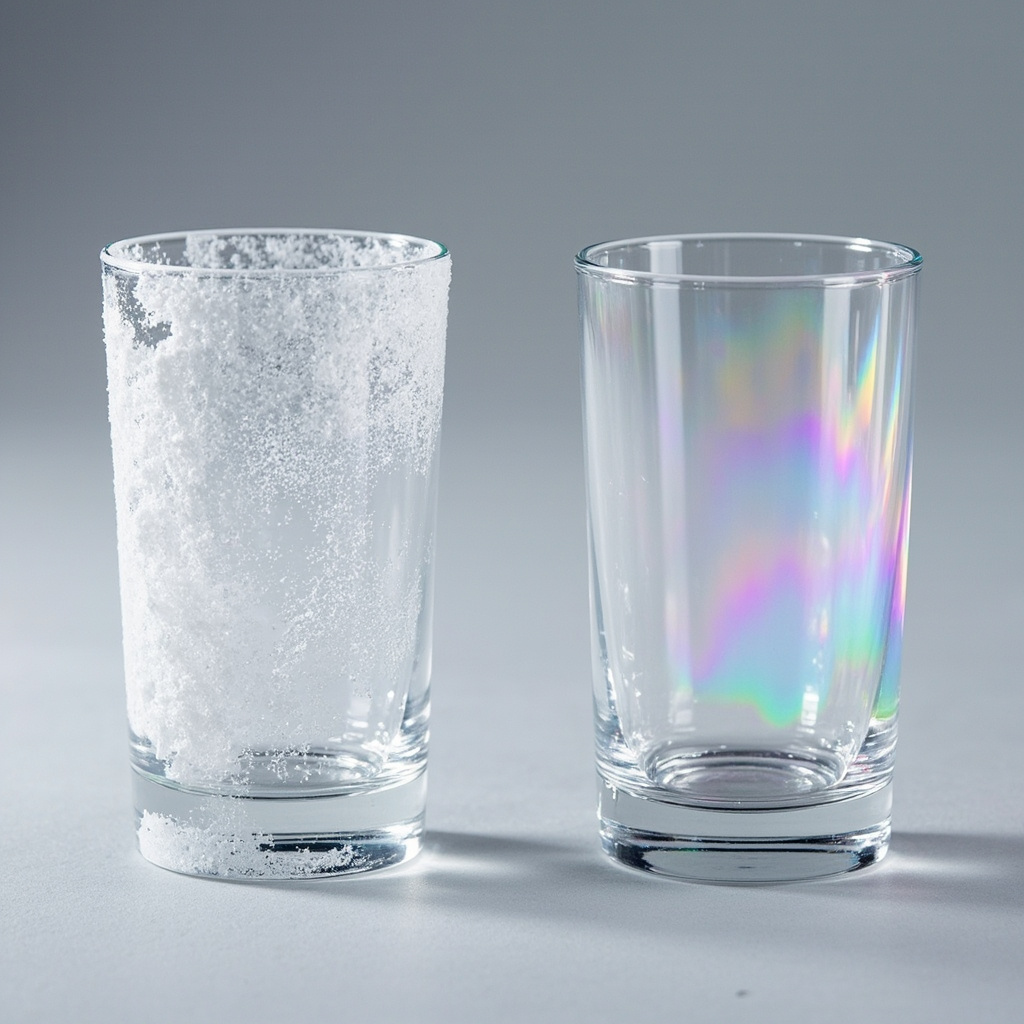
How do you tell them apart? Scratch the cloudy area with a fingernail. If you feel a rough, sandy texture, it’s mineral scale — removable. If the surface feels smooth but looks cloudy even when wet, it’s etched glass — permanent. If a damp finger wipes the haze away temporarily, it’s early-stage film — fixable with rinse aid.
Hard water is the common thread. If your shower glass and faucets also show white scale, the same minerals are hitting your dishwasher. The harder the water, the more minerals per droplet, and the heavier the spotting during the heated dry cycle.
Why your detergent isn’t working anymore
The 2010 phosphate ban
Before 2010, dishwasher detergents contained phosphates (typically sodium tripolyphosphate). Phosphates are chelating agents — they chemically bind calcium and magnesium ions so those minerals can’t deposit on dishes. When US states started banning phosphates in dishwasher detergent around 2010, manufacturers reformulated without them.
The substitute chelators (sodium citrate, polycarboxylates) are weaker. In homes with moderately hard water — above 7 gpg (120 ppm) on a hardness test — the reformulated detergents leave noticeably more residue than the old phosphate formulas did.
How hardness fights your detergent
In hard water, the surfactants and enzymes in detergent bind preferentially to calcium and magnesium ions instead of food soils. This means less active detergent available to clean your plates, and more mineral residue left behind on glasses. The harder your water, the worse the trade-off.
You can’t fix this by adding more detergent — in hard water, more detergent means more residue, not more cleaning. The fix is to address the minerals separately: rinse aid to help water sheet off, citric acid to chelate what the detergent can’t, and if your water is hard enough, a softener to remove the minerals before they reach the dishwasher.
Consumer Reports has noted the same pattern in their detergent testing: powder formulas consistently outperform pods and gels in hard water conditions because the user can match the dose to their hardness level. A pod sealed at the factory gives you one dose — usually calibrated for soft to moderately soft water.
Fixes: three tiers from cheap to serious
Tier 1 — Rinse aid (start here, $14)
Rinse aid is a surfactant. It lowers the surface tension of the final rinse water so it sheets off dishes instead of forming droplets. Fewer droplets means fewer mineral deposits left behind when water evaporates during the heated dry.
Finish Jet-Dry Rinse Aid, 32 oz, 315 washes — about $14, fills the rinse aid dispenser in most dishwashers, lasts 4-6 months. Essential in any home above 3 gpg hardness.
Fill the dispenser monthly. Most dishwashers have an adjustable dial — start at the middle setting and bump it up one notch if spots persist after a few cycles. The dispenser releases a small amount during the final rinse automatically; you don’t need to add it each load. Don’t skip this and jump straight to buying a softener; rinse aid alone resolves the majority of spotting complaints in moderately hard water.
Tier 2 — Citric acid monthly ($15, lasts 1-2 years)
Citric acid is a chelating agent — the same function phosphates used to provide. It binds Ca²⁺ and Mg²⁺ ions, holding them in solution so they drain out instead of depositing on glass.
Milliard Citric Acid Powder, 2 lb food-grade — about $15 for a 2 lb bag. Add 1-2 tablespoons to the pre-wash compartment or bottom of the tub once a month and run an empty hot cycle. This descales the dishwasher interior at the same time.
Skip / Don’t — quick fixes:
- Don’t use vinegar as a long-term rinse aid substitute. Acetic acid is a weaker chelator than citric acid and can degrade rubber seals inside the dishwasher over months.
- Don’t add citric acid to the same cycle as chlorine bleach detergents — the acid neutralizes the bleach and neither works.
Tier 3 — Water softener ($600-1,500)
If you’ve tried rinse aid and citric acid and your glasses are still cloudy, and your hardness is above 10-12 gpg, a whole-house softener is the most reliable fix. A softener removes calcium and magnesium at the source so the dishwasher never sees hard water.
This is also the fix for scale on fixtures, soap that won’t lather, and appliance lifespan issues. But it’s a plumbing project — test your hardness first, then read about how water softeners work before committing.
For Bosch, Miele, or other European-style dishwashers with a built-in ion-exchange softener, dishwasher salt regenerates the internal resin. This is pure NaCl — not table salt, which contains iodine and anti-caking additives that clog the resin. Only models with a dedicated salt reservoir use this; most US dishwashers don’t have one.
Detergent choice: powder beats pods in hard water
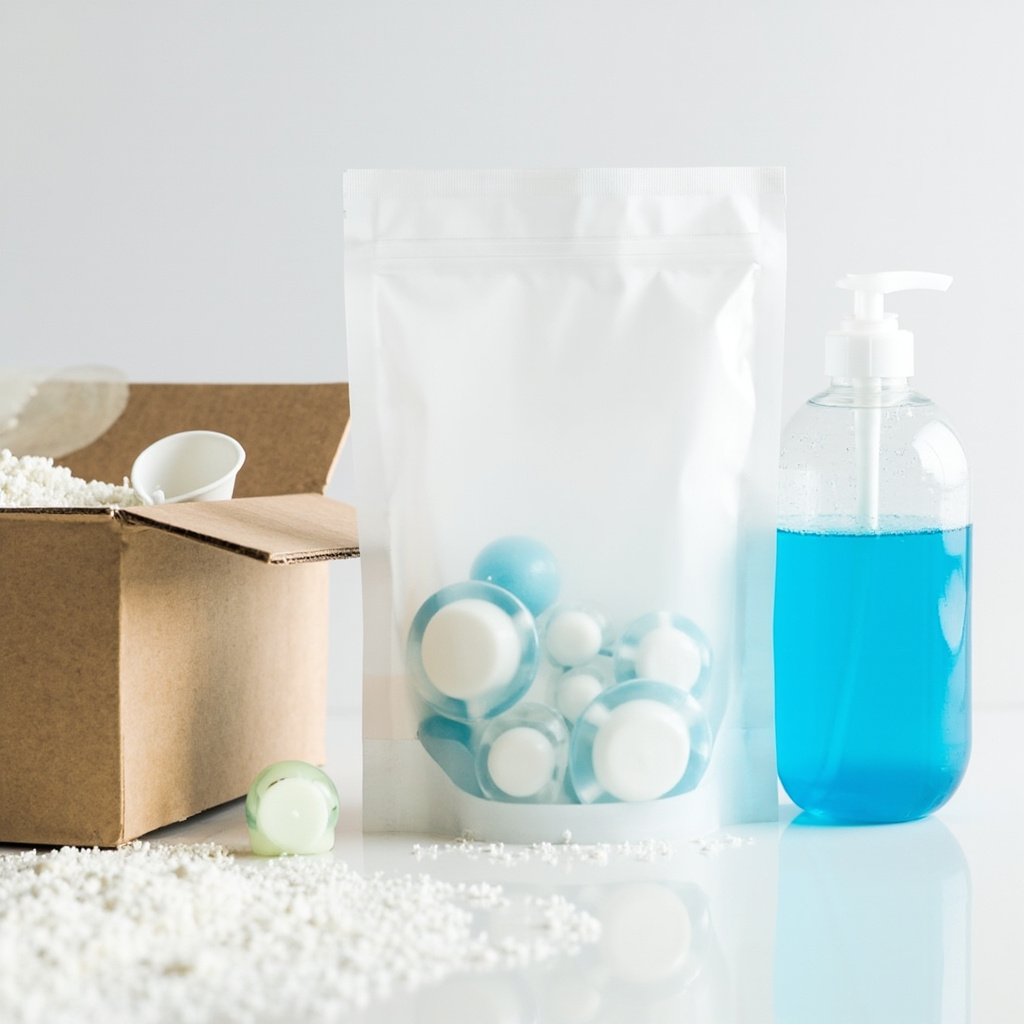
Powder detergent gives you two advantages in hard water that pods and gels can’t match:
- Adjustable dose. A pod is a fixed amount — usually too much for soft water and sometimes too little for hard water. Powder lets you dial in 1 tablespoon for soft water or 2 for hard.
- Highest active-ingredient concentration. Powder contains less water and filler than gel, so more of each scoop is actually cleaning your dishes.
Cascade Complete Powder Detergent, 75 oz — about $7, adjustable dose, widely available. A 75 oz box covers 50-75 loads depending on how much you use per cycle.
Gels are the weakest option for hard water — they’re mostly water and enzymes with minimal chelating power. Pods are convenient but you’re stuck with whatever dose the manufacturer sealed inside. If your water is hard and you’re seeing film, switching from pods or gel to powder is one of the cheapest fixes available.
Decision tree: which fix path is yours
Walk through these branches in order. Don’t skip ahead — most cases resolve at branches 1 or 2.
Branch 1: Spots only, glasses are otherwise clear
Add rinse aid. Set the dispenser higher if spots persist after 2-3 washes. Most cases resolve here. Don’t buy a softener yet.
Branch 2: White film on glasses, plastic, and silverware
Two-part fix. First, add citric acid (1-2 tbsp) to the pre-wash and run a hot cycle. Second, switch to powder detergent and increase the dose by 50%. If film persists after 3 cycles, run an empty hot cycle with citric acid to descale the tub and spray arms. An Affresh cleaner tablet works well for this too.
Branch 3: Cloudiness doesn’t wipe off — rainbow tint
This is etching. The glass is permanently damaged. Switch to a low-phosphate detergent, reduce the dose to 1 tablespoon (soft water needs less), and lower your water heater to 120°F. Replace the etched glasses — they will not recover.
Branch 4: Still failing after rinse aid + citric acid + powder
Test your hardness. If you’re above 10-12 gpg, a whole-house softener is the most reliable long-term fix. Check whether your home already has a softener that’s broken or out of salt — see our water softener troubleshooting guide.
Skip / Don’t — fix path:
- Don’t buy a portable dishwasher softener before checking whether your home has a whole-house unit that’s simply out of salt or in bypass mode.
- Don’t add more detergent as your first response to film. In hard water, extra detergent means extra residue. Switch to powder and adjust the dose instead.
What you’ll need
| Product | Role | When to use |
|---|---|---|
| Finish Jet-Dry Rinse Aid | Surfactant — water sheets off glass | Every load, refill monthly |
| Milliard Citric Acid | Chelates Ca/Mg so they drain out | Monthly descaler cycle |
| Cascade Powder | Adjustable-dose detergent for hard water | Every load |
| Miele Dishwasher Salt | Regenerates built-in softener resin | Bosch/Miele only, every 1-3 months |
| Affresh Cleaner | Removes scale from tub and arms | Monthly maintenance |
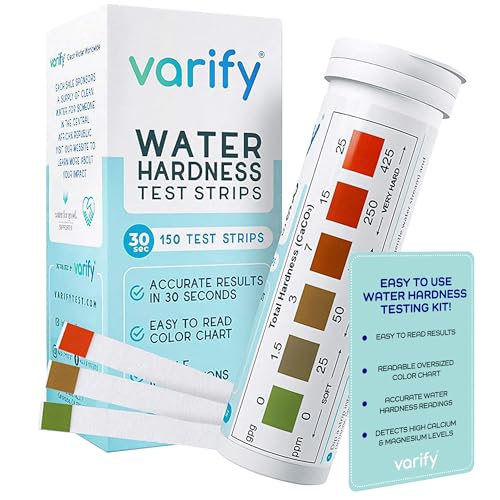
| Varify Test Kit | Confirms hardness level | Before buying a softener |
If you’re not sure which tier you need, start with rinse aid and a test kit. The total cost is under $25 and answers 80% of the question.
Common mistakes
- Treating etching like film. If the glass feels smooth but looks rainbow-cloudy, no cleaner will fix it. Stop buying products for permanently damaged glasses — replace them and prevent the next set by reducing detergent and temperature.
- Adding more detergent to fight film. In hard water, more detergent produces more residue, not more cleaning. Switch from pods to powder and adjust the dose down to 1-1.5 tablespoons.
- Using table salt in a Bosch or Miele. Table salt has iodine and anti-caking agents that clog the ion-exchange resin. Only use dedicated dishwasher salt in the salt reservoir.
- Skipping rinse aid in moderately hard water. At 4-10 gpg, rinse aid is the single most effective fix. Skipping it and going straight to a softener is spending $1,000 to solve a $14 problem.
When to call a pro
Keep DIY if: adding rinse aid, running citric acid cycles, switching detergent, testing hardness, or adding dishwasher salt to a European model.
Call a licensed plumber if:
- Installing a whole-house water softener (requires cutting into the main line)
- Your dishwasher isn’t draining properly (could be a pump or plumbing issue, not hardness)
- You see leaks at the dishwasher connection or under the sink
We don’t rank local installation companies — for choosing a softener, start with our softener sizing guide.
Related
- Hard water stains on glass — shower doors and windows
- Scale on fixtures — faucets, showerheads, and appliance inlets
- Water hardness levels explained — gpg, ppm, and what your number means
- How water softeners work — ion exchange from source to drain
- Softener vs filter vs RO — which system solves which problem
- What is hard water? — the basics if you’re new to this
Key takeaways
- Spots and film are removable; etching (rainbow cloudiness) is permanent glass damage — replace, don’t chase.
- The 2010 phosphate ban weakened detergents in hard water — you now need to address minerals separately.
- Fix in order: rinse aid → citric acid monthly → powder detergent → test hardness → consider a softener.
- Powder detergent beats pods and gels in hard water because you can adjust the dose.
- Dishwasher salt (pure NaCl) is only for Bosch/Miele-type models with a built-in softener — never use table salt.
- Don’t add more detergent to fight film — switch to powder and adjust the dose instead.
- If your water is above 10-12 gpg and DIY fixes aren’t enough, a whole-house softener is the most reliable long-term fix.