If your shower glass keeps clouding up even though the softener is running, the salt tank is the first thing to check—not the resin, not the valve. Buying the wrong salt form, letting the tank run dry, or ignoring a crusty bridge wastes the regen cycle you’re already paying for. Here’s a plain-language walk through the types, how often to top off, and what goes wrong when you don’t.
Quick answer
Water softener salt is the brine consumable that regenerates a softener’s resin—it isn’t a filter and isn’t a magic cleaner. Most homes use sodium chloride pellets, solar crystals when cost-per-pound matters, potassium chloride for sodium-restricted diets, or blocks in cabinet units. Check the level monthly, top off before the pile drops to the water line, break any crusty bridge, and use a resin cleaner only when iron or mush is the issue. Pick the form your owner’s manual allows.
Salt roles in regeneration

Why the softener needs salt at all
Salt and water make brine. During regeneration, that brine flushes the resin bed and strips off the calcium and magnesium it collected during the service cycle. Without enough salt, the brine is too weak to fully recharge the resin, and you get hard-water breakthrough—spots on glass, soap that won’t lather, scale in the kettle.
For the full regeneration cycle explained step by step, see how water softeners work.
The USGS classifies water hardness as CaCO₃: soft is 0–60 mg/L, moderately hard is 61–120, hard is 121–180, and very hard is above 180 mg/L. One grain per gallon (gpg) is roughly 17.1 mg/L. A home at 15 gpg uses meaningfully more salt per regen than a home at 5 gpg—and that difference drives your refill cadence.
Salt is not a filter, not a cleaner
Salt is a regen consumable. It doesn’t remove sediment, chlorine, or taste—those are jobs for a carbon cartridge or an RO membrane. If you’re wondering whether you even need salt-based softening at all, the salt-based vs salt-free systems comparison breaks down what each approach actually does—salt-free conditioners don’t reduce hardness grains (gpg); they crystallize calcium to reduce scale, but the water still tests hard.
One common confusion: a salt bridge looks like the tank is full, but the brine well underneath is empty. The softener runs its clock, draws weak or zero brine, and your water stays hard. We’ll cover bridges in detail below.
Pellets vs crystals vs blocks
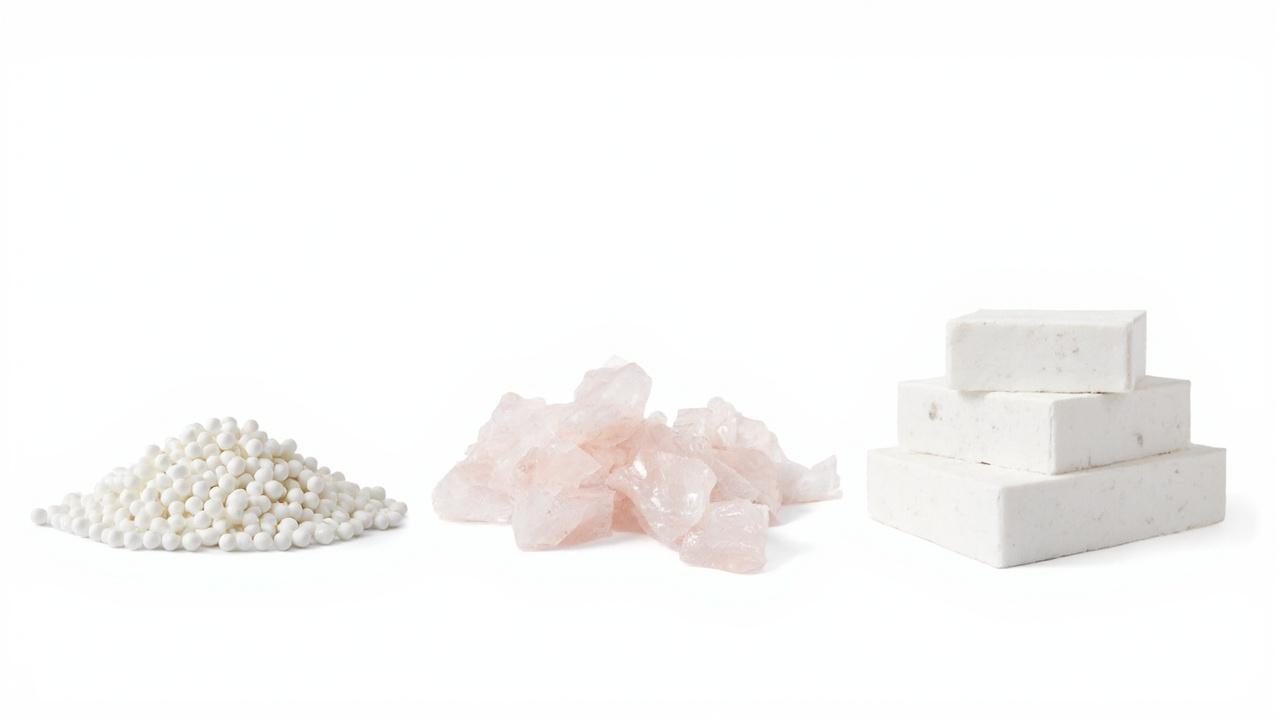
This section gives you a one-paragraph overview of each form. For the full comparison table—bridge behavior, dissolving rates, purity grades, and cost-per-pound math—see salt pellets vs crystals.
Sodium chloride pellets — the default
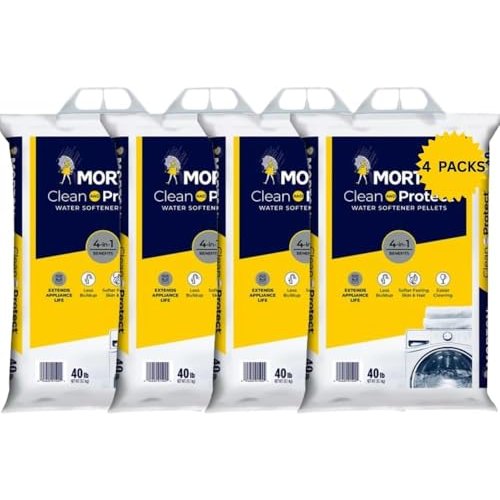
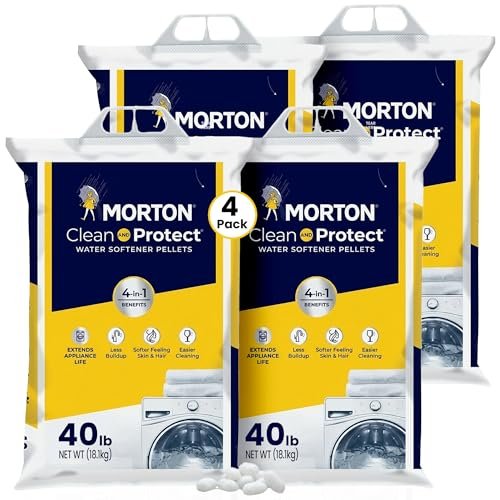
Extruded pellets, typically 99.5% NaCl purity or higher. They dissolve evenly in deep brine tanks and resist bridging better than loose crystals in most conditions. If your owner’s manual doesn’t specify a form, pellets are the safe default. A 4-pack of Morton Clean and Protect pellets (40 lb bags) is a typical household purchase for a standard deep-tank unit.
Best for: deep brine tanks, households that check the tank monthly rather than weekly.
Solar salt crystals — the cheaper loose form
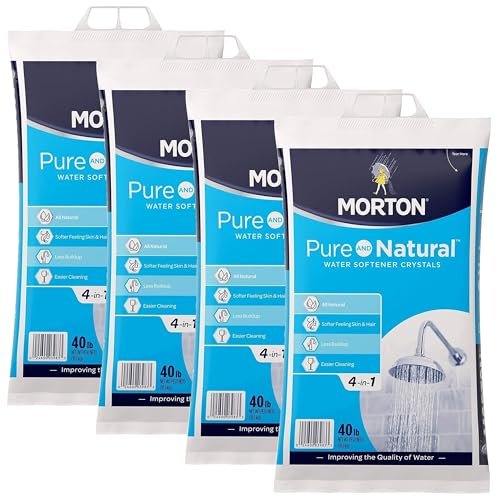
Evaporated from seawater or inland brine. High-purity grades exist (99.6%), but crystals are chunkier and tend to bridge and mush more often in humid tanks or when the lid isn’t sealed. They’re the cheaper pick per pound, especially in dry climates where humidity isn’t a factor. The Morton Pure and Natural Solar 4-in-1 crystal pack is a known-brand option, and a single 50-lb bag of all-natural solar salt works for budget shoppers.
Best for: cost-per-pound shoppers, dry climates, softeners whose manuals explicitly allow crystals.
Potassium chloride — the sodium-free alternative
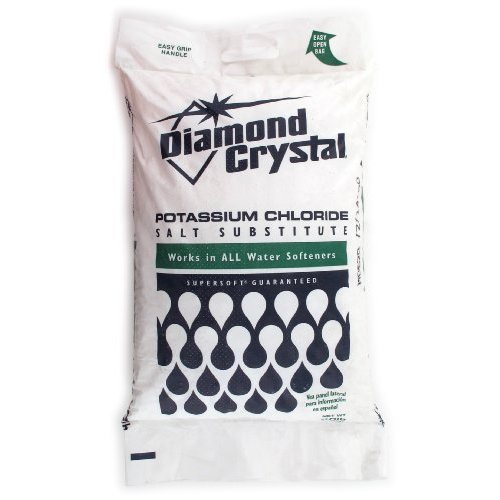
Same regeneration chemistry, but with potassium ions (K⁺) instead of sodium (Na⁺). It costs about 1.5–2 times more per pound. Use it when a clinician has flagged sodium intake from softened water (we don’t give medical advice—ask your doctor). Diamond Crystal potassium chloride pellets (Cargill, model 7376) is the standard 40-lb option.
Before swapping: check your owner’s manual. Some softeners accept KCl only at reduced capacity or need a brine injector adjustment. Dissolving is slightly slower than NaCl.
Blocks, bars, and cubes — cabinet units only
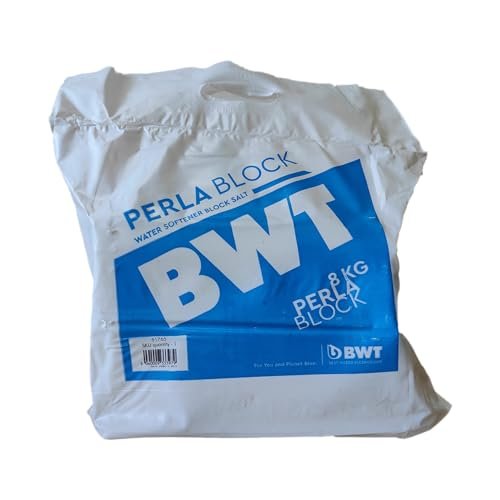
Compact blocks fit specific cabinet-style softeners (some BWT, WaterGem, and similar units). They’re not interchangeable with pellets or crystals. A BWT SALTBLO block salt set is an example, but only buy blocks if your manual calls for them.
Skip if: your softener has a tall separate brine tank. Never drop a block into a pellet tank “just in case”—it’ll sit above the water line and dissolve unevenly, if at all.
How often to add salt
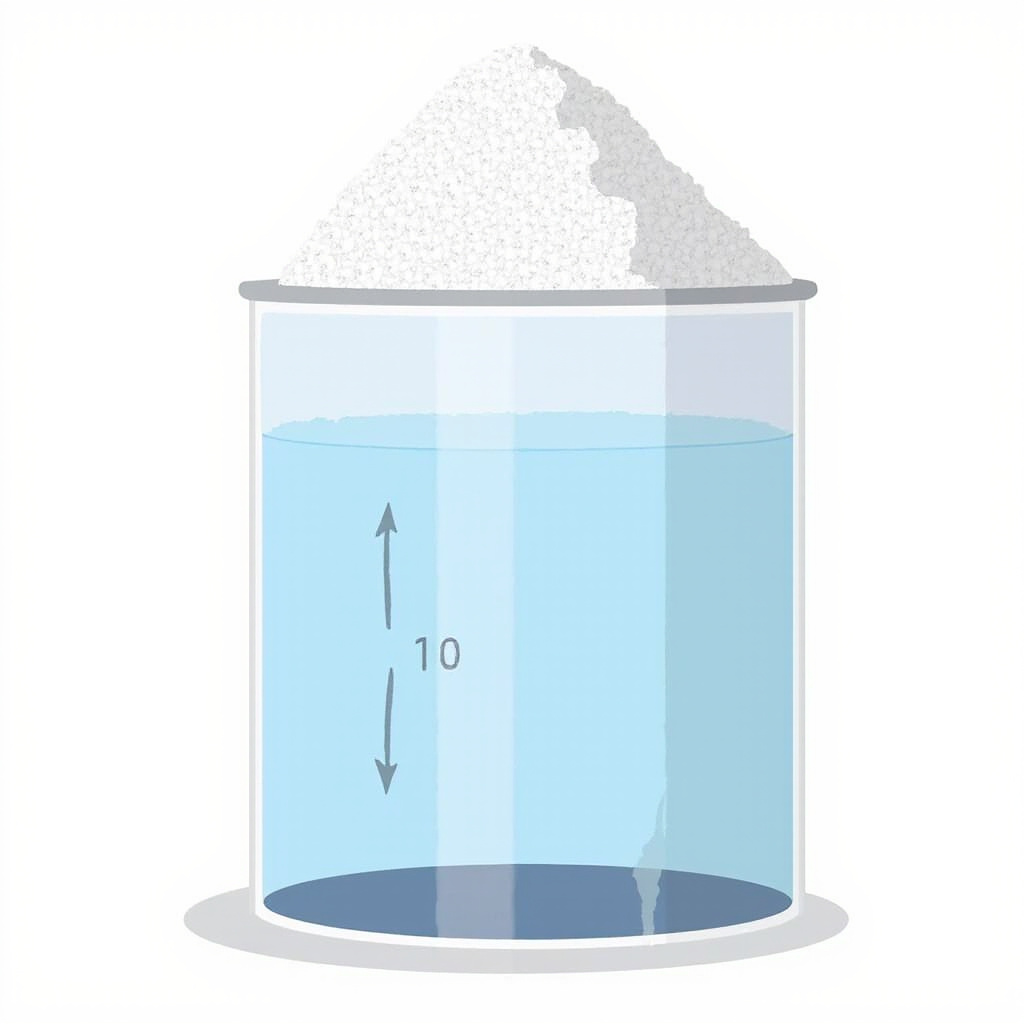
This section covers cadence and warning signs. For the actual step-by-step pour-and-level procedure, see how to add salt to your softener.
Typical cadence by household size
- 1–2 people: every 6–8 weeks (deep tank, pellets).
- 3–4 people: every 4–6 weeks.
- 5+ people or high hardness (above 15 gpg): every 2–4 weeks.
Rule of thumb: top off before the salt pile drops to the water line—not after. Once the pile is at or below the water, the brine is already weak.
Signs you’re late
- Salt pile visible at or below the water line.
- Hard-water symptoms return (scale on shower glass, soap not lathering, cloudy dishes).
- A salt bridge makes the tank look full, but the water sits below the crust—a false “full” reading.
Factors that change your cadence
- Hardness: 5 gpg vs 20 gpg can double your salt consumption.
- Regeneration mode: metered (demand-initiated) units use less salt than timed ones.
- Salt form: pellets may last longer in deep tanks; crystals sometimes need more frequent top-offs.
- Iron in water: iron-fouled resin may need extra salt or a dedicated iron-removal formulation.
If you’re filling up more often than the schedule above suggests, check whether your hardness setting on the control head matches your actual water test. A setting that’s too high wastes salt; too low and you get breakthrough.
Salt bridge and mush
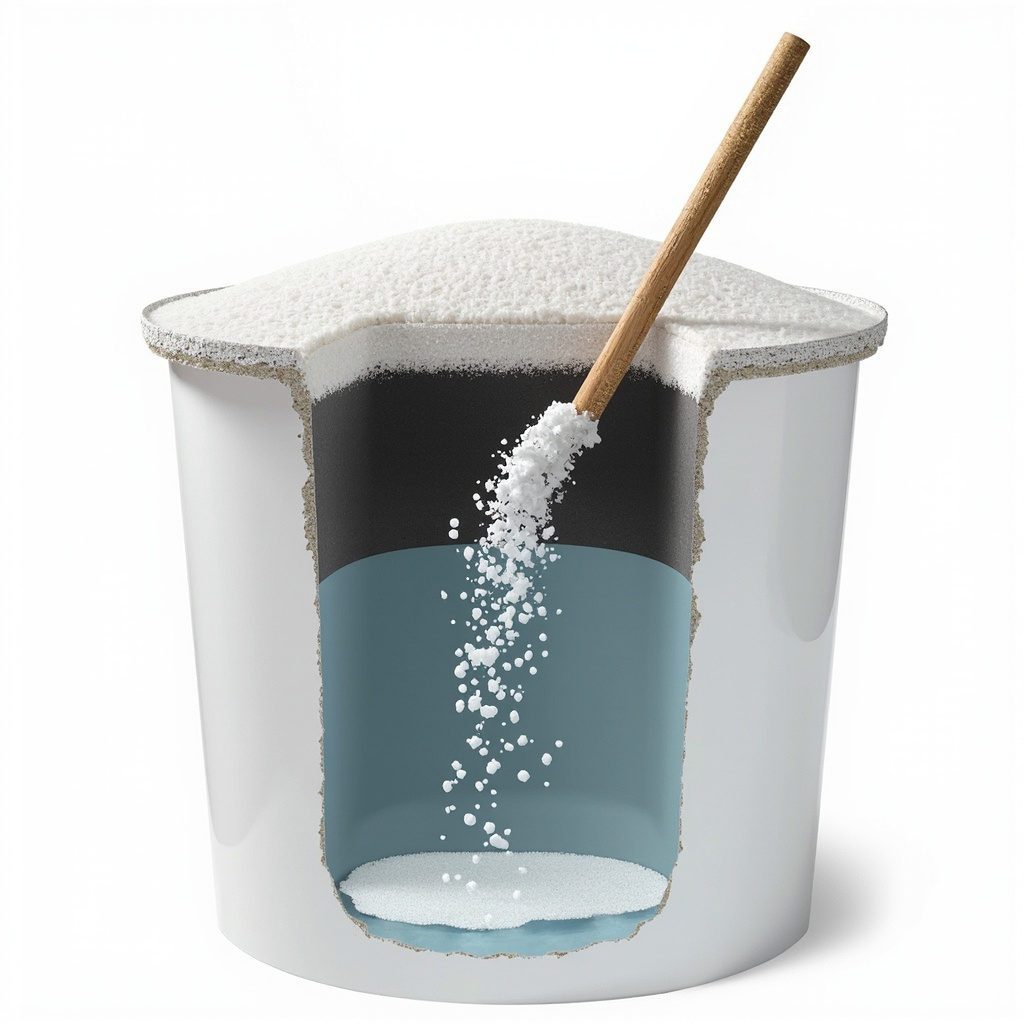
What a salt bridge looks like
A hard crust spanning the brine well, with an empty cavity below. The salt looks “full” but no brine gets made. The softener runs its cycle, draws weak or zero brine, and your water stays hard.
What mush looks like
Fine sludge at the tank bottom. Salt dissolved too fast, or got wet from high humidity or a tank leak. Resin never sees full-strength brine because the sludge clogs the brine draw.
Skip and don’t
- Skip breaking the bridge with a metal rod if your tank has a plastic grid at the bottom—use a broom handle or PVC pipe to avoid punching through the grid.
- Don’t pour hot water to “melt” a bridge—it can warp plastic tanks and over-concentrate the brine.
- Skip topping off with fresh salt until you’ve removed the old mush—otherwise you accelerate the next bridge.
How bridges form
High humidity, pellet form, and infrequent checks. Pellets fuse together in a damp brine well; the crust holds its shape while the grid below runs dry. The result is a tank that reads “full” on visual inspection but produces no brine. For the full brine tank troubleshooting flow—bridge removal, float adjustment, drain-line checks—see brine tank problems.
What actually fixes it
Break the bridge gently, vacuum or scoop out the mush, and refill with fresh pellets (or whichever form your manual allows). If bridges keep coming back: switch from crystals to pellets if you were on crystals, lower humidity near the tank, or check the brine valve float setting. A fresh 4-pack of Morton Clean and Protect pellets is what most households use for a post-cleaning refill.
Cleaners: when they help

What resin cleaners do
A resin bed cleaner dissolves iron buildup and organic fouling on the resin beads—restoring exchange capacity that salt alone can’t recover. It is not a substitute for salt. It’s an additive for specific fouling problems, not a “better salt.”
When to use one
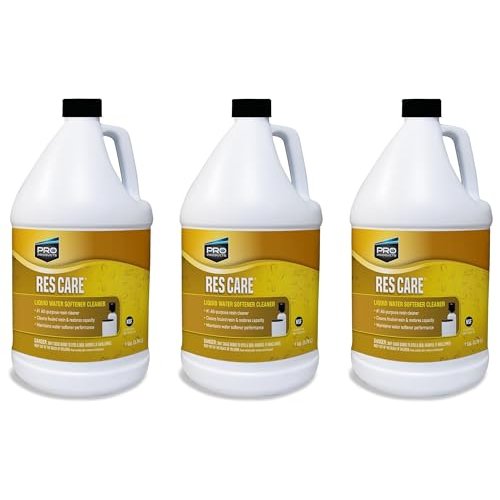
- Iron in well water → use an iron-removal salt or a dedicated resin cleaner like Pro Products ResCare RK02B on a quarterly schedule.
- Yellow or brown resin, or a metallic taste returns after regen → resin cleaner, not more salt.
- Mush neglect (months without checking the tank) → run a cleaner once, then fix your cadence.
When you don’t need one
If your salt is correct, your refill cadence is right, and your resin is light amber—skip it. Cleaners aren’t preventive vitamins. Standard sodium chloride pellets handle the ion exchange on their own when the water doesn’t carry iron.
How they’re dosed
Pour a measured amount into the brine well (1 capful for liquid, 1 tablet for solid), then trigger a manual regen. Some iron-fighter salt pellets come pre-mixed with cleaner additive—those count as salt and cleaner in one bag.
Common mistakes
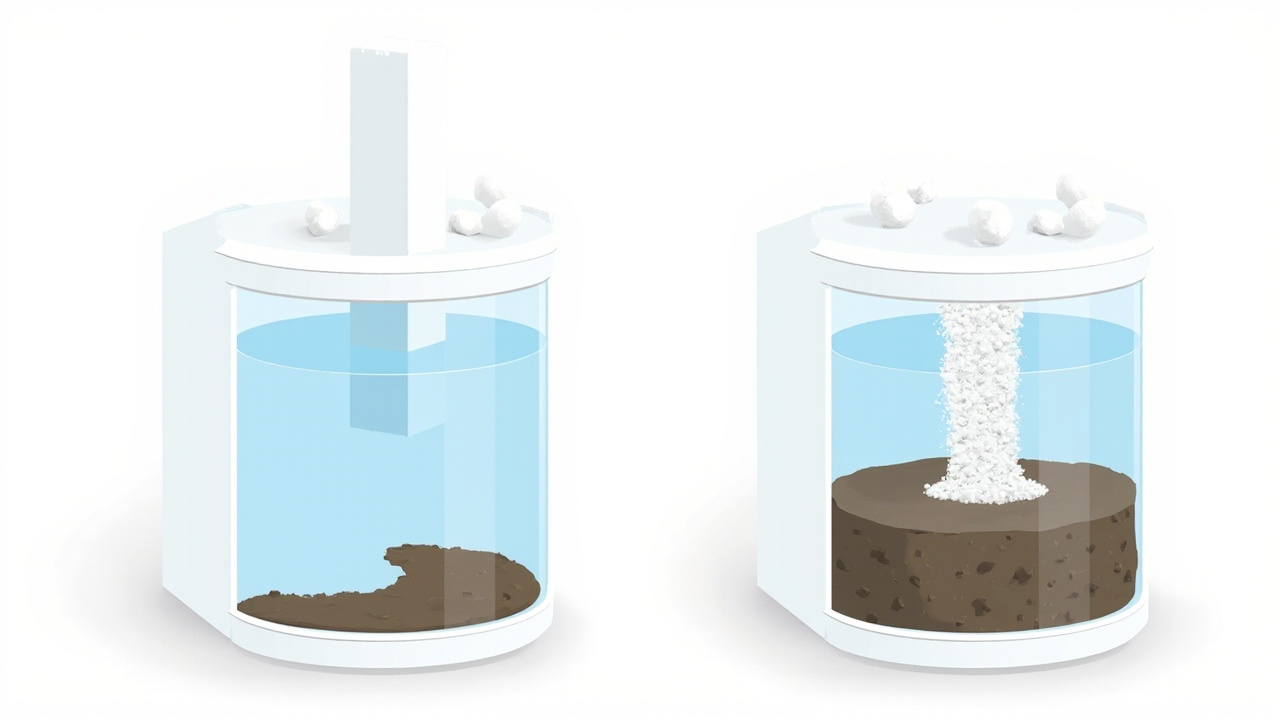
- Buying blocks for a pellet tank. Blocks fit specific cabinet units. Dropping one into a standard tall brine tank means it sits dry above the water line and never dissolves. If you’re unsure, BWT block salt is only for units that call for it—check the manual.
- Topping off wet mush instead of cleaning. Adding fresh salt on top of sludge creates a recurring bridge within weeks. Scoop the mush first, then refill.
- Switching to potassium chloride without checking the manual. Some softeners need a brine injector swap or accept KCl only at reduced capacity. Read the spec sheet before buying Diamond Crystal potassium chloride.
- Ignoring the salt level because the tank “looks full.” A bridge reads as full but the brine well is empty. Open the lid and poke the pile monthly.
- Treating resin cleaner as preventive vitamins. Cleaners are for fouling, not wellness. Run one when iron or mush is the problem, then go back to plain salt.
What to buy

Each product below has a context, not a trophy. Match the form to your tank, not to a “best overall” label.
Pellets — default for most tanks
- Morton Clean and Protect pellets (4-pack, 40 lb) — household default for deep brine tanks.
- Morton Water Softener Salt Pellets (4-pack, 40 lb) — alternative Morton pack if the Clean-and-Protect version is out of stock.
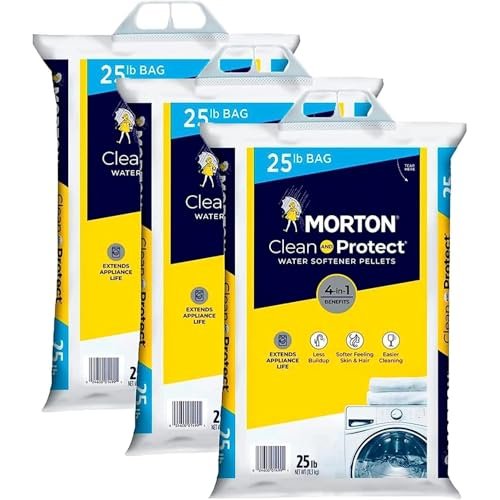
- Morton Clean and Protect 25 lb bags (3-pack) — easier-to-carry option for readers with back or mobility concerns.
Solar crystals — cost-per-pound play
- Morton Pure and Natural Solar 4-in-1 crystals (4-pack, 40 lb) — high-purity crystal multi-pack when the manual allows.
- All Natural Solar Salt (50 lb bag) — single bag for budget shoppers.
Potassium chloride — sodium-restricted households
- Diamond Crystal Potassium Chloride (40 lb) — sodium-free alternative when your manual approves KCl and a clinician has signed off.
Blocks — cabinet units only
- BWT SALTBLO Block Salt (8 kg, set of 2) — for cabinet-style softeners that specify block form.
Resin cleaner — add-on for iron or mush
- Pro Products ResCare RK02B Cleaner (1-gal, 3-pack) — quarterly maintenance when iron or mush has fouled the resin.
Where to buy locally: Home Depot, Lowe’s, Costco, and Walmart stock 40-lb bags of Morton and Diamond Crystal year-round. Regional pricing varies. We don’t earn a commission on in-store purchases—this Amazon list is for readers who prefer delivery.
Before buying, check your hardness number. If you don’t know your gpg yet, start with a hardness test kit so you’re not guessing the salt dose.
When to call a pro
Keep DIY if: testing hardness, setting the control head, adding salt, breaking a salt bridge, or swapping a cleaner dose.
Call a licensed plumber if:
- You need to relocate the unit or cut into the main line.
- There’s an active leak at fittings or the drain.
- The control board or electrical system faults beyond a simple reset.
- Well pump or pressure tank issues are involved.
We don’t rank or recommend specific local installer companies.
Related
- How water softeners work — the regeneration cycle in plain language.
- Salt pellets vs crystals — full deep-dive comparison with bridge math and dissolving behavior.
- Brine tank problems — salt bridge, mush, and refill troubleshooting.
- How to add salt — step-by-step pouring instructions.
- How to choose a water softener — sizing before you commit to a system.
- Salt vs salt-free systems — the honest limits of salt-free alternatives.
Key takeaways
- Water softener salt makes brine—it’s not a filter, not a cleaner, not magic.
- Pellets are the default for deep brine tanks; crystals are a cheaper loose alternative when the manual allows.
- Potassium chloride swaps sodium for potassium—use only when your manual approves and a clinician signs off for sodium-restricted diets.
- Check the salt level monthly; top off before the pile drops to the water line.
- A salt bridge reads as “full” but the brine well is empty—break it and clean mush before refilling.
- Resin cleaner is for iron or mush fouling, not preventive vitamins.
- Pick the form your owner’s manual allows—don’t substitute blocks for pellets or KCl for NaCl without checking the spec sheet.