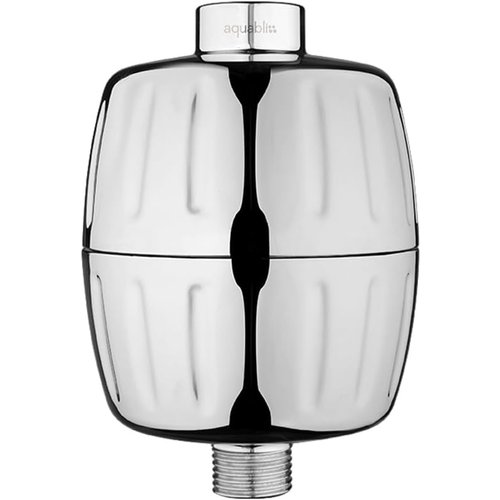
Quick answer
Shower filters sit between the shower arm and showerhead, running water through media that reduces chlorine, chloramine, and some heavy metals. Three media dominate the market: KDF (copper-zinc redox), activated carbon (adsorption), and vitamin C (chemical neutralization). The catch: shower filters do NOT soften water. No ion exchange means calcium, magnesium, and TDS pass through unchanged. If your utility uses chloramine, you specifically need vitamin C media.
What shower filters actually do
If your hair feels like straw after every shower and the chlorine smell hits before the water warms up, a shower filter can help with the chlorine part. But it won’t fix hard water scale on the glass.
Shower filters are point-of-use devices that treat water at a single fixture. They use different media to reduce specific contaminants:
- Chlorine — all three media types handle this
- Chloramine — only vitamin C neutralizes it effectively
- Heavy metals — KDF removes dissolved iron, lead, and mercury via redox
- Sediment and rust — a mechanical pre-filter catches particulate
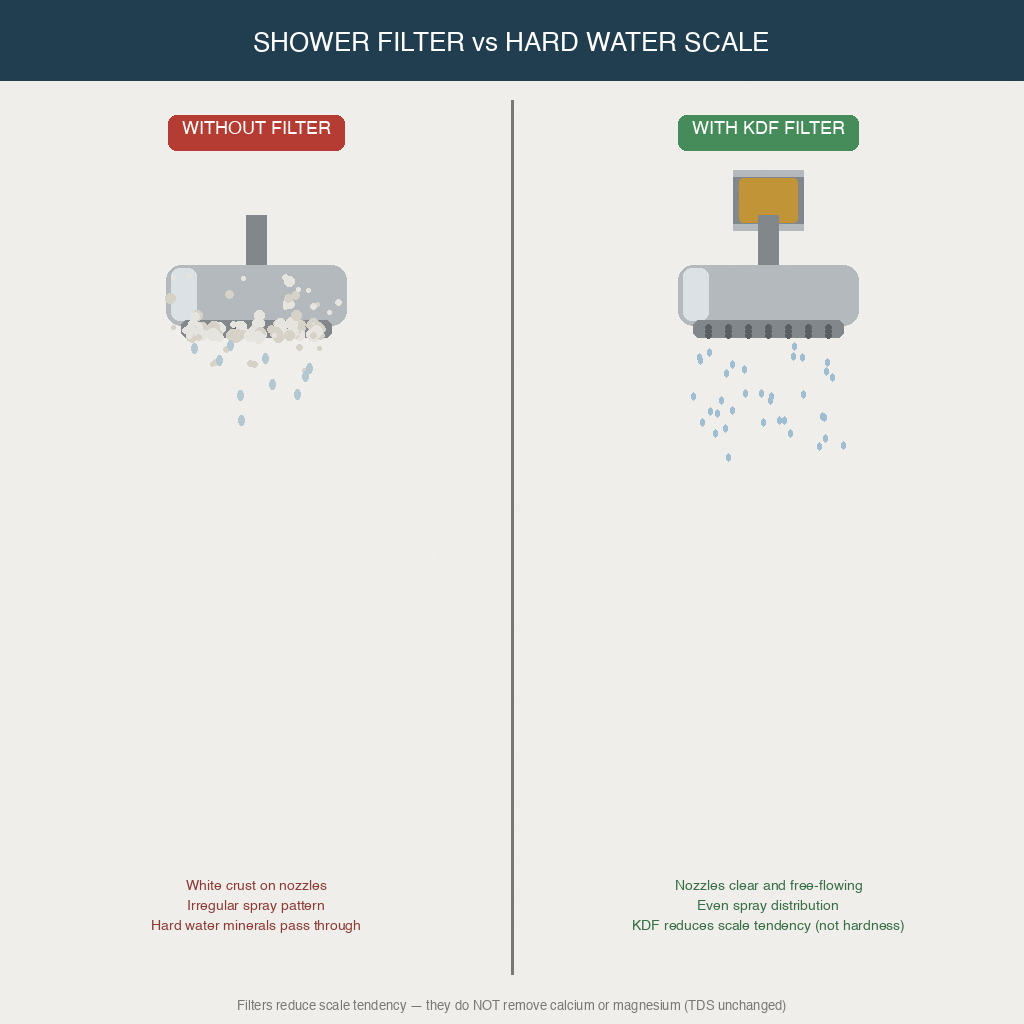
- Scale tendency — KDF may reduce how aggressively minerals precipitate, but does not remove them
What they don’t do is just as important. Shower filters do not soften water. No ion exchange means no removal of calcium and magnesium. Your TDS reading stays the same before and after the filter. If hard water stains are the problem, see our guide on hard water stains on shower glass — a filter alone won’t solve that.
Softener vs filter vs RO — quick disambiguation
- Water softener (salt-based): swaps hardness minerals for sodium via ion exchange. Fixes scale, spotting, and soap scum at the whole-house level.
- Shower filter (point-of-use): reduces chlorine, chloramine, heavy metals, and some sediment at one fixture. Does NOT remove hardness.
- Reverse osmosis (under sink): polishes drinking water, removes dissolved solids. Not practical for shower use.
For a deeper comparison, see softener vs RO vs filter.
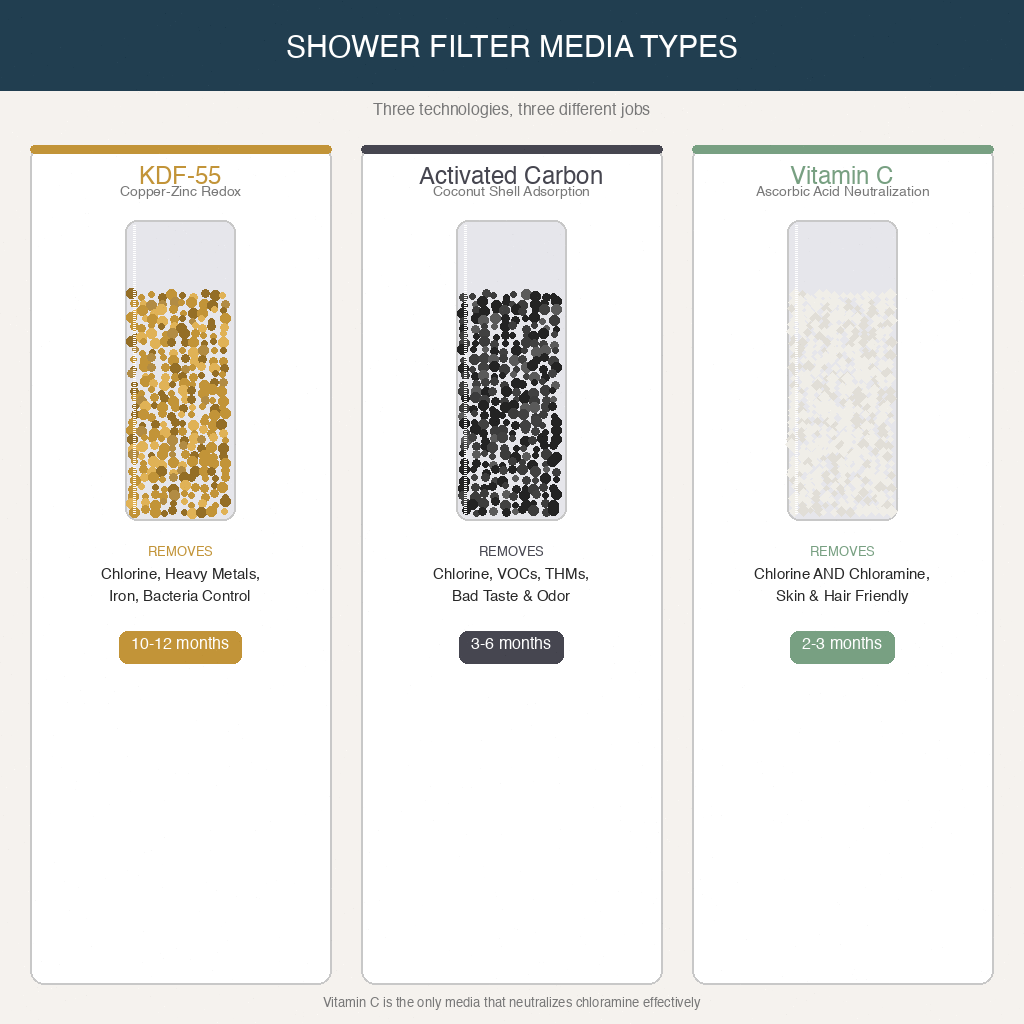
Three filter media: KDF vs carbon vs vitamin C
KDF (Kinetic Degradation Fluxion)
KDF is a copper-zinc alloy that works via redox reaction — exchanging electrons with dissolved contaminants as water passes through.
- Removes: Free chlorine, dissolved iron, hydrogen sulfide, heavy metals (lead, mercury), controls bacteria and algae growth
- Does NOT remove: Chloramine, calcium/magnesium hardness, TDS
- Lifespan: 10 to 12 months
- Best for: City water with chlorine and heavy metal concerns; well water with iron
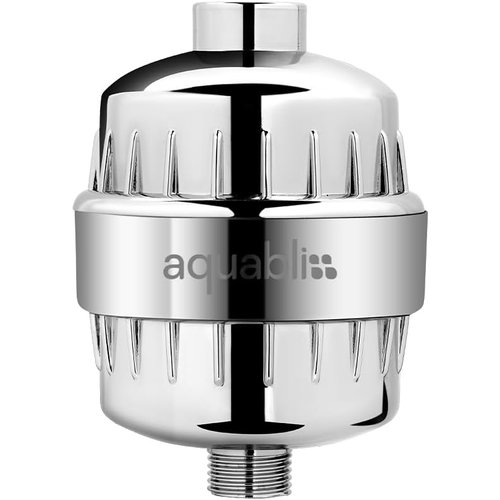
KDF-55 is the most common grade in shower filters. Unlike some carbon media that lose efficiency above 100°F, KDF performs well in hot shower water. For a multi-stage filter built around KDF, the Aquabliss SF100 multi-stage filter combines KDF with calcium sulfite and activated carbon for broad contaminant coverage.
Activated carbon
Activated carbon (typically coconut shell in premium filters) works via adsorption — contaminants physically stick to the porous carbon surface as water flows through.
- Removes: Free chlorine, VOCs, THMs, some pesticides, bad tastes and odors
- Does NOT remove: Chloramine, dissolved minerals, most heavy metals, TDS
- Lifespan: 3 to 6 months (hot water shortens effectiveness)
- Best for: Budget chlorine removal on city water without chloramine
Carbon is the workhorse of water filtration. Most budget shower filters use this as the primary or sole media. For a carbon-heavy upgrade, the Aquabliss SF500 with coconut shell carbon packs 44% more filter media than standard cartridges and targets chlorine-sensitive skin.
Vitamin C (ascorbic acid)
Vitamin C media works via chemical neutralization. Ascorbic acid reacts directly with chlorine and chloramine, converting them to harmless chloride salts.
- Removes: Free chlorine AND chloramine — the only media that handles both effectively
- Does NOT remove: Heavy metals, dissolved minerals, sediment, TDS
- Lifespan: 2 to 3 months (shortest of the three)
- Best for: Chloramine-treated city water (roughly 25% of US utilities use chloramine)
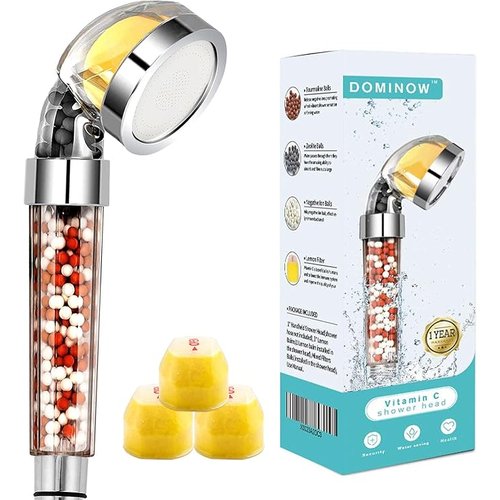
Vitamin C shower filters originated in South Korea and are gaining traction in the US as more utilities switch to chloramine disinfection. The Dominow vitamin C shower filter includes a handheld head and targets chloramine directly.
Side-by-side comparison
| Media | Chlorine | Chloramine | Heavy metals | Hardness | Lifespan | Price tier |
|---|---|---|---|---|---|---|
| KDF | Yes | No | Yes | No | 10-12 mo | Mid |
| Carbon | Yes | No | Partial | No | 3-6 mo | Low |
| Vitamin C | Yes | Yes | No | No | 2-3 mo | Mid |
Single-stage vs multi-stage: the honest truth
Many shower filters advertise “15-stage” or “20-stage” filtration. That number is marketing inflation. What matters is the number of distinct filtration media, not how many layers of mineral beads the manufacturer stacks.
A “20-stage” filter listing KDF + carbon + ceramic beads has three real filtration media. The “stages” count each layer separately — including decorative mineral balls and “energy stones” that have no certified filtration function.
What the tiers actually mean
Single-media filter: Uses one technology (usually carbon-only). Good for basic chlorine reduction on a tight budget. Cheapest but narrowest coverage.
Dual-media filter: Combines two media (typically KDF + carbon). Covers chlorine plus heavy metals plus VOCs. This is the most common value sweet spot.
Triple-media filter: KDF + carbon + vitamin C (or calcium sulfite). Covers chlorine, chloramine, heavy metals, and VOCs. Best coverage but highest replacement cost since you replace all media together.
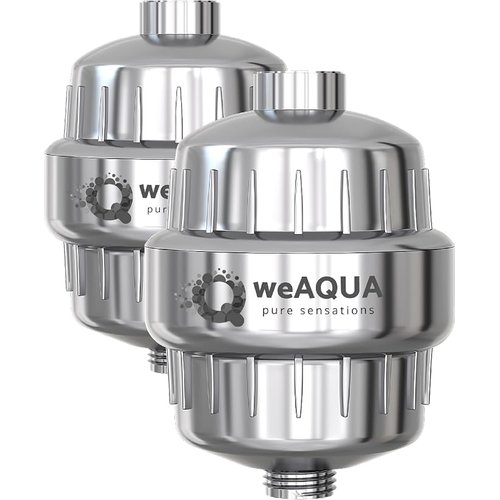
Skip/Don’t: Don’t buy a “15-stage” filter if the media list reads carbon + ceramic beads + energy stones. Ceramic beads and energy stones are not certified filtration media. Look for NSF/ANSI 177 certification or clearly stated KDF and carbon content. The weAQUA Heavy Duty 2-pack is one of the few budget filters that lists real media (sediment, carbon, KDF, calcium sulfite) with no gimmick beads.
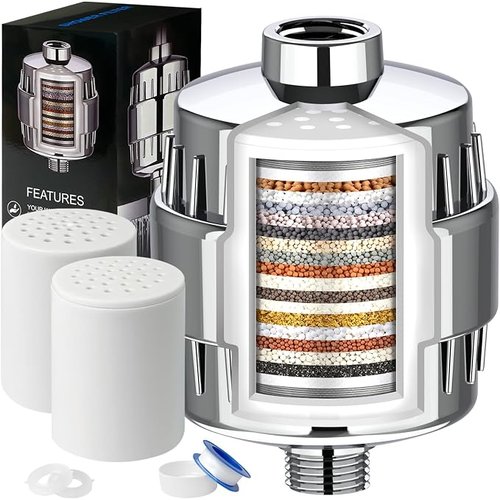
Skip/Don’t: Don’t assume more stages equals better filtration. A well-built 2-media KDF + carbon filter outperforms a poorly-made 7-layer filter with no real KDF. The Dwavele budget KDF + carbon filter includes KDF-55 and activated carbon with two replacement cartridges for under $17 — the stage count is inflated but the core media are legitimate.
Do shower filters work for hard water?
This is where most shower filter marketing crosses into misleading territory. Here’s the honest answer: shower filters do not soften water.
Softening requires ion exchange — physically swapping calcium and magnesium ions for sodium ions using a resin bed. That resin needs periodic regeneration with salt brine. Shower filters have no resin bed, no brine cycle, and no ion exchange. Calcium and magnesium pass straight through.
Some KDF-based filters claim “scale reduction.” Here’s what that actually means: KDF’s redox reaction can alter the crystalline structure of dissolved minerals, making them less likely to precipitate as hard scale on surfaces. This is a conditioning effect — similar to how salt-free conditioners work. The minerals are still in the water. Your TDS reading doesn’t change.
This matters because many salt-free conditioners share the same limitation. They may change how scale behaves, but they typically do not bring hardness grains to zero on a test strip. If someone is selling a shower filter as a “water softener,” that claim doesn’t match what the product does.
If you need actual softening — to stop scale, spotting, and soap scum — you need a salt-based softener. Check the hard water GPG to PPM conversion chart to measure your hardness first, then decide. For softener maintenance basics, see our guide on salt bridge and mushing.
Which shower filter is right for you
The decision depends on your water source and disinfectant type. Here’s a branching guide:
Branch 1: City water with free chlorine
You need KDF + carbon multi-stage. Carbon handles chlorine reduction; KDF adds heavy metal and bacteria control. This covers most US municipal water users. The Aquabliss multi-stage filter is the most common pick in this category.
Branch 2: City water with chloramine
You need vitamin C media specifically. Carbon and KDF cannot effectively remove chloramine — only vitamin C neutralizes it. If you’re not sure whether your utility uses chloramine, check your annual Consumer Confidence Report. The Dominow vitamin C filter is built for this scenario.
Branch 3: Well water
You need KDF-heavy filtration. Well water typically doesn’t carry chlorine or chloramine (no municipal treatment), but it often carries dissolved iron, hydrogen sulfide, and heavy metals — exactly what KDF targets. Carbon is less critical here. A weAQUA KDF + carbon filter handles both metals and any occasional chlorine from shock treatment.
Branch 4: Hard water with scale buildup
Don’t buy a shower filter expecting it to solve scale. A filter alone will not stop hard water stains or soap scum. KDF may reduce scale tendency slightly, but the minerals stay in the water. You need a whole-house softener — see the softener vs filter vs RO comparison to choose the right system. A shower filter is complementary, not a replacement.
Branch 5: Sensitive skin or color-treated hair
You need carbon + vitamin C coverage. Chlorine strips hair color and dries skin; chloramine (if present) does the same but is harder to remove. A vitamin C filter handles both disinfectants, while a carbon-heavy filter like the Aquabliss SF500 reduces THMs and organic compounds that irritate sensitive skin.
Replacement schedule
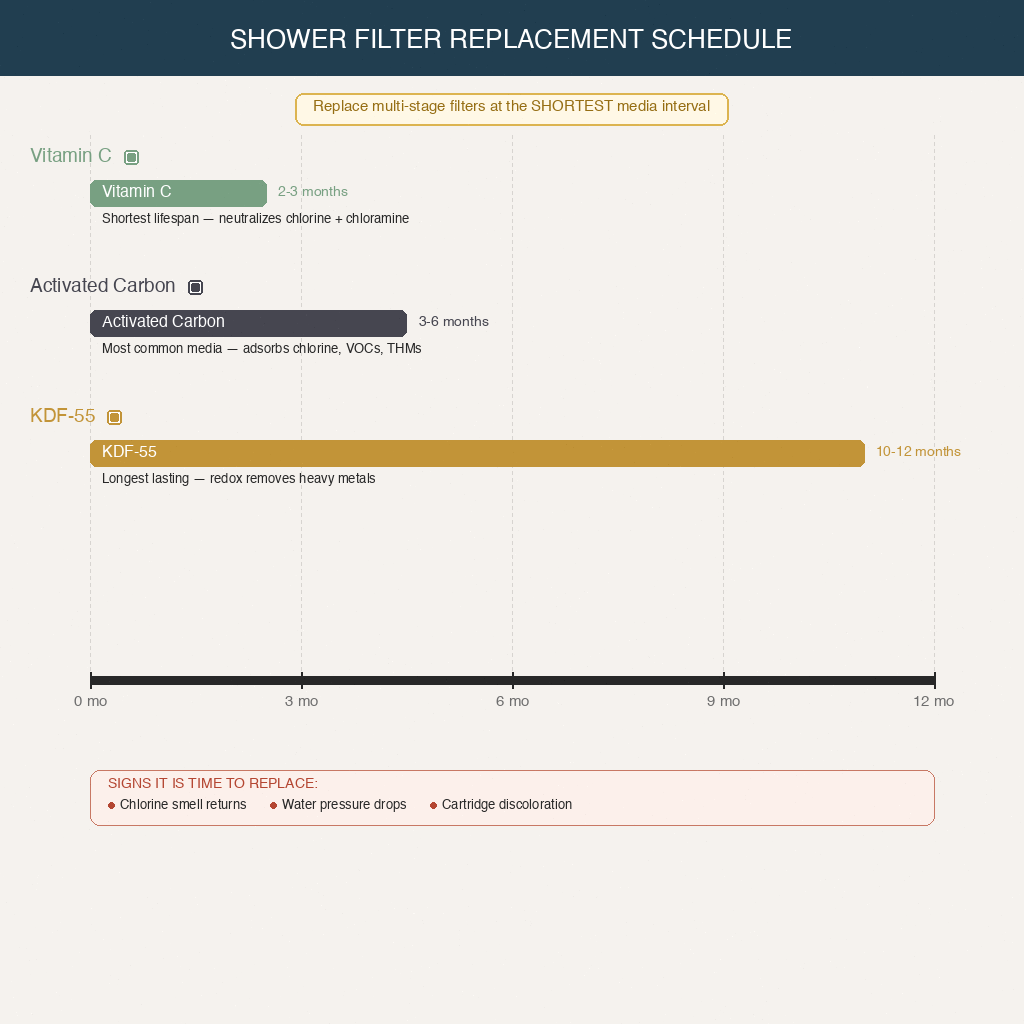
Replacing cartridges on time is the difference between a filter that works and one that makes your water worse. A saturated carbon filter can release trapped contaminants back into the water stream — a process called breakthrough.
| Media | Lifespan | Signs it needs replacing |
|---|---|---|
| Carbon | 3 to 6 months | Chlorine smell returns; water pressure drops |
| KDF | 10 to 12 months | Heavy metal test shows contamination returning |
| Vitamin C | 2 to 3 months | Chlorine or chloramine smell returns; some filters have a visual indicator |
Multi-stage filters that combine KDF + carbon typically need replacement at the shortest media’s interval — usually 6 months, even though the KDF component could last longer. Don’t wait for total failure. Set calendar reminders for the replacement window.
For budget-conscious buyers, the Dwavele filter with 2 replacement cartridges included covers 8 to 12 months out of the box for under $17.
Common mistakes
-
Buying a filter for “hard water” expecting softening. Shower filters do not remove calcium or magnesium. No ion exchange means hardness passes through. If your goal is stopping scale and spots, you need a softener, not a filter. This is the most common misunderstanding in shower filter reviews. The Aquabliss multi-stage filter reduces chlorine well but won’t change your hardness reading one bit.
-
Not checking your disinfectant type before buying. Roughly 25% of US utilities use chloramine instead of free chlorine. If you have chloramine and buy a carbon-only filter, you’ll notice no improvement. Check your utility’s Consumer Confidence Report first.
-
Ignoring the replacement schedule. A carbon cartridge past its lifespan can release trapped contaminants back into your water. KDF and vitamin C don’t have the same breakthrough risk, but their effectiveness drops sharply. Set a reminder based on your media type.
-
Trusting “15-stage” marketing over the actual media list. Stage count is inflated by counting decorative mineral beads. What matters is whether the filter contains real KDF, real activated carbon, or real vitamin C. Look for NSF/ANSI 177 certification.
When to call a pro
Keep DIY if: swapping a shower filter cartridge, checking your water quality report, testing hardness with a strip, or installing a point-of-use shower filter (most screw on by hand with no tools).
Call a licensed plumber if:
- You need to cut into the main water line for a whole-house system
- You have an active leak at shower arm threads that Teflon tape won’t fix
- Your water pressure drops throughout the house (not just at the shower)
- You’re on a well and noticing sudden changes in water color or smell
We don’t publish local installer rankings. For whole-house softener or filtration installation, get quotes from 2 to 3 licensed plumbers in your area.
Related
- How water softeners work — why ion exchange removes hardness while shower filters can’t
- Softener vs RO vs filter — comparing all three water treatment approaches side by side
- Hard water stains on shower glass — what to do when scale has already formed
- TDS explained — why TDS doesn’t change after a shower filter
- Hard water GPG to PPM conversion chart — measure your hardness before choosing a system
- Salt bridge and mushing — softener maintenance basics if you decide you need full softening
Key takeaways
- Shower filters reduce chlorine, chloramine, and some heavy metals — they do NOT soften water
- Three media: KDF (10-12 mo, metals + chlorine), carbon (3-6 mo, chlorine + VOCs), vitamin C (2-3 mo, chlorine + chloramine)
- Only vitamin C neutralizes chloramine — check your utility’s disinfectant before buying
- “15-stage” marketing is inflated; count real media types, not layers
- KDF may reduce scale tendency but does not remove hardness minerals or change TDS
- For hard water scale, you need a softener, not a filter — see the GPG to PPM chart to measure yours
- Replace cartridges on time: carbon every 3-6 months, KDF every 10-12 months, vitamin C every 2-3 months. The Aquabliss SF500 carbon upgrade is a good example of a filter that clearly states its real media