Quick answer
Salt-based softeners physically remove calcium and magnesium through ion exchange. You will feel softer water and use noticeably less soap. Salt-free conditioners crystallize those same minerals so they pass through without sticking to pipes or fixtures, but your water is still technically hard. If you want true soft water (0 to 1 gpg residual on a test strip), choose salt-based. If you just want to stop scale buildup without buying salt or generating wastewater, salt-free is the trade-off.
How salt-based softening actually works

A salt-based water softener uses a tank of polystyrene resin beads. As hard water flows through, the beads swap their sodium ions for the calcium and magnesium ions dissolved in your water. Those hardness minerals get trapped on the resin, and sodium takes their place in the water flowing to your taps. That swap is called ion exchange, and it is the only residential method that physically removes hardness from water. The science is explained in more detail in how water softeners work.
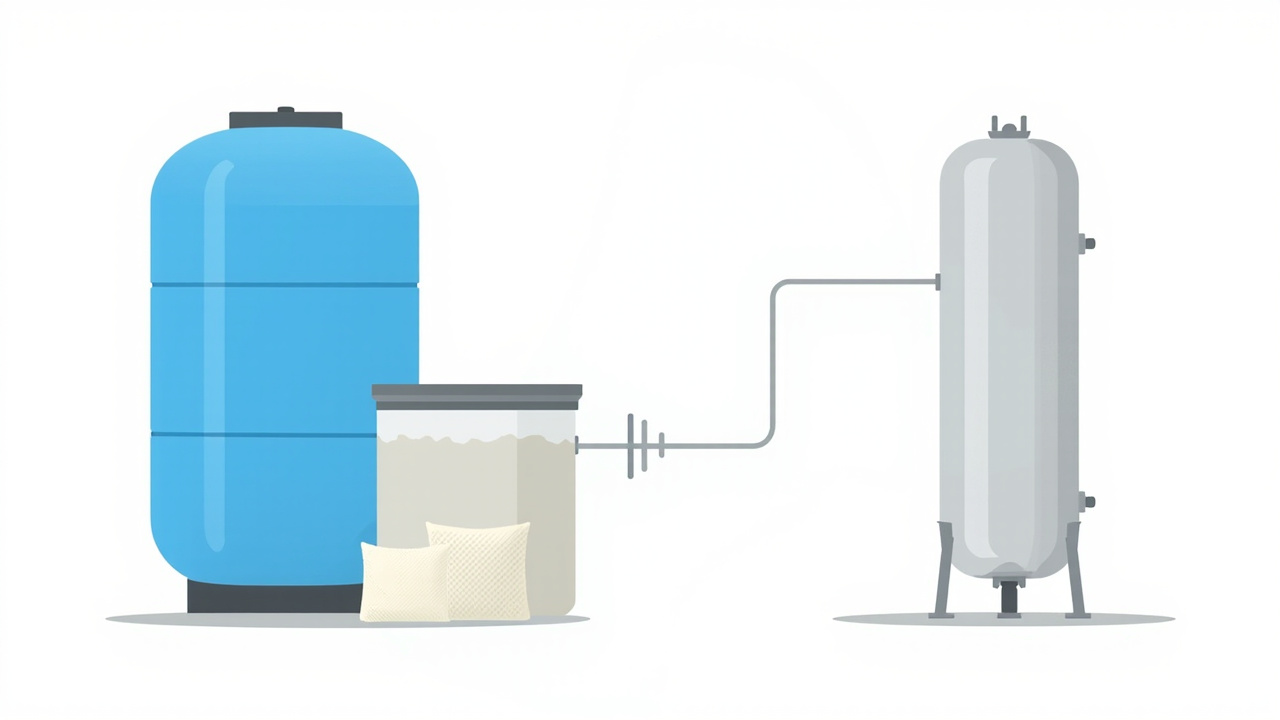
The catch is that resin beads have a fixed capacity. Once they are loaded with calcium and magnesium, the softener runs a regeneration cycle: it flushes a concentrated salt brine through the resin tank, which pushes the trapped minerals down the drain and recharges the beads with sodium. That is why salt-based systems need a brine tank, a drain connection, and regular salt refills.
The capacity rating you see on product pages (32,000 grain, 48,000 grain) tells you how many grains of hardness the resin can remove before it needs to regenerate. A 32,000-grain unit treating 10 gpg water can soften about 3,200 gallons between regenerations. For a family of 4 using 75 gallons per person per day, that is roughly every 10 days.
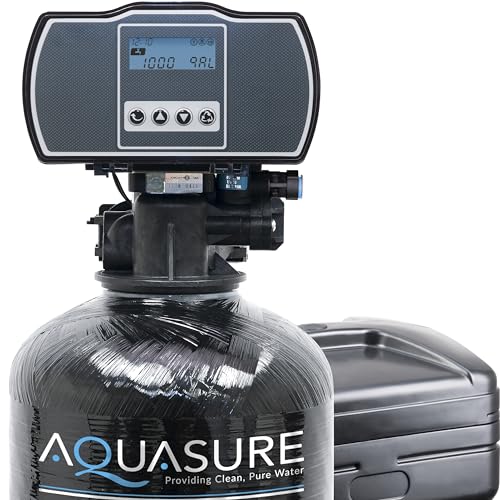
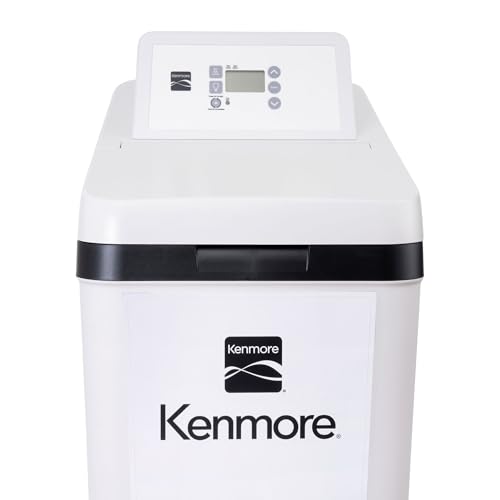
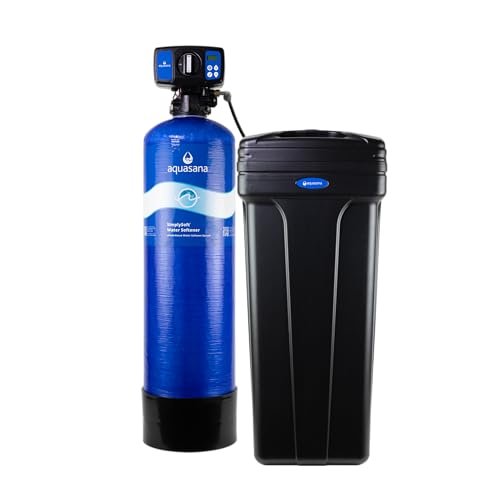
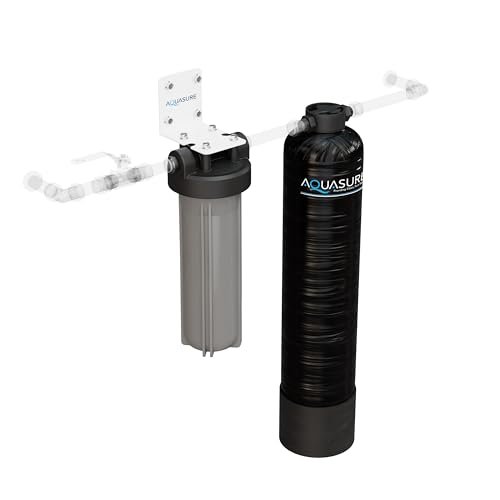
For 1 to 2 bathroom homes on a budget, the Aquasure Harmony 32,000 grain softener covers typical demand at around $523. The Kenmore 350 water softener is the same 32,000-grain class but carries a recognizable brand name for 1 to 4 people. For 3+ bathroom homes or harder water, the Aquasana SimplySoft 40,000 grain softener gives you extra headroom.
How salt-free conditioning works (and what it does NOT do)
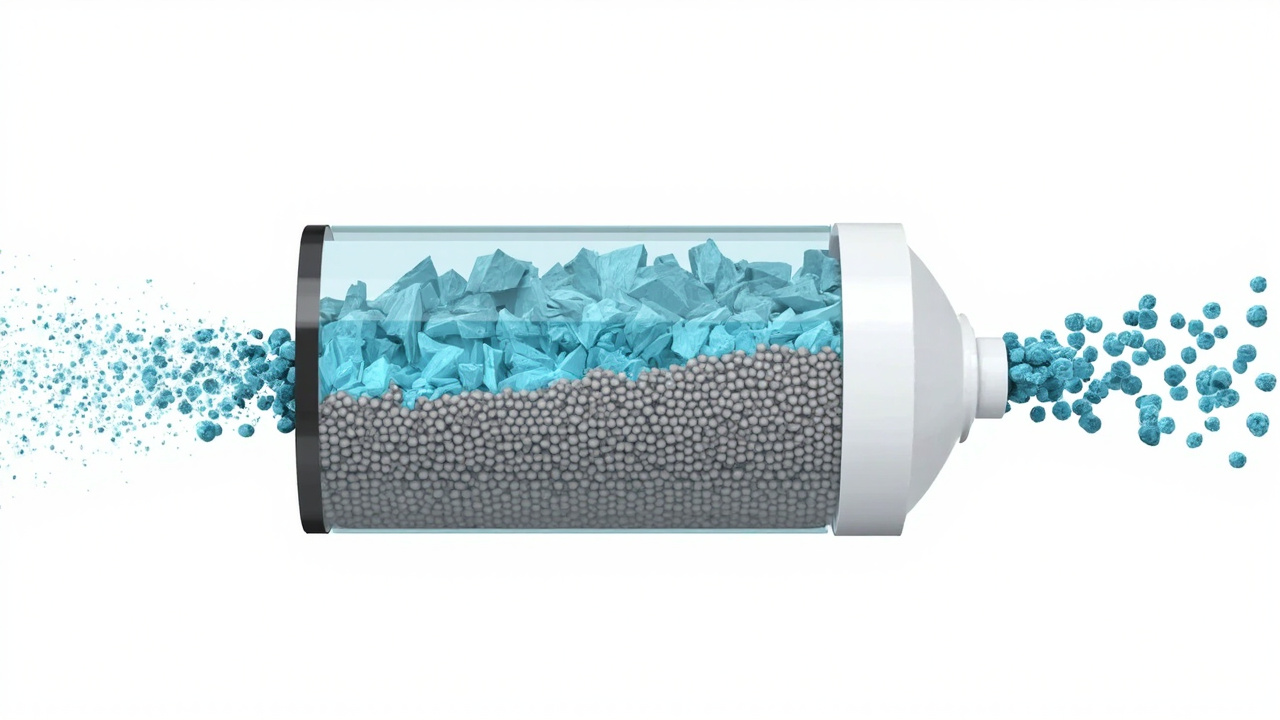
Salt-free systems use a different media called TAC (Template Assisted Crystallization). As hard water passes through the TAC bed, dissolved calcium and magnesium are converted into microscopic crystal structures. Those crystals stay in the water, but they are shaped in a way that prevents them from adhering to pipes, heating elements, and fixture surfaces.
The honest part: salt-free conditioners do not remove hardness. Your water will still test at the same gpg on a strip. The minerals are still there, just in crystal form instead of dissolved form. According to the Water Quality Association, salt-free systems are classified as conditioners, not softeners, precisely because they do not reduce hardness grains. Soap lather may not improve. The slick, slippery feel of truly soft water will likely be absent or very subtle.
The upside: no salt to buy, no electricity needed, no drain connection, and no regeneration wastewater. TAC media typically lasts 3 to 6 years before replacement, depending on water volume and manufacturer specs.
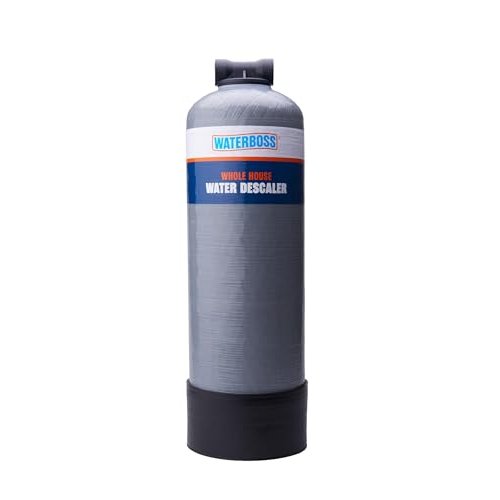
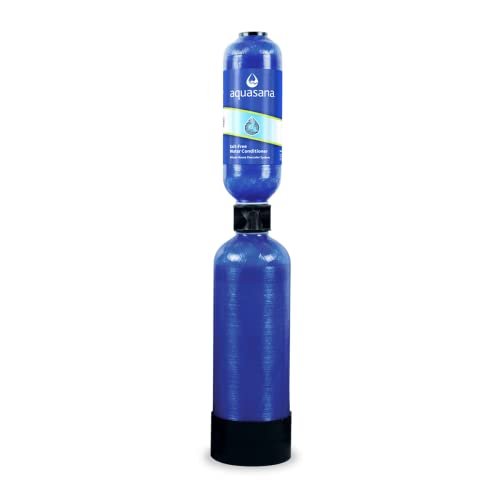
The WaterBoss salt-free descaler is the entry-level option at about $350 for city or well water. The Aquasure Serene Lite conditioner covers 1 to 3 bathrooms for around $442. For larger homes, the Aquasana salt-free conditioner is rated for 600,000 gallons, which translates to roughly 4 to 6 years of media life depending on household usage.
- Skip if your main goal is softer skin feel or better soap lather. Salt-free won’t deliver that.
- Don’t expect a salt-free conditioner to make your hardness test strip read soft. It won’t.
Side-by-side comparison
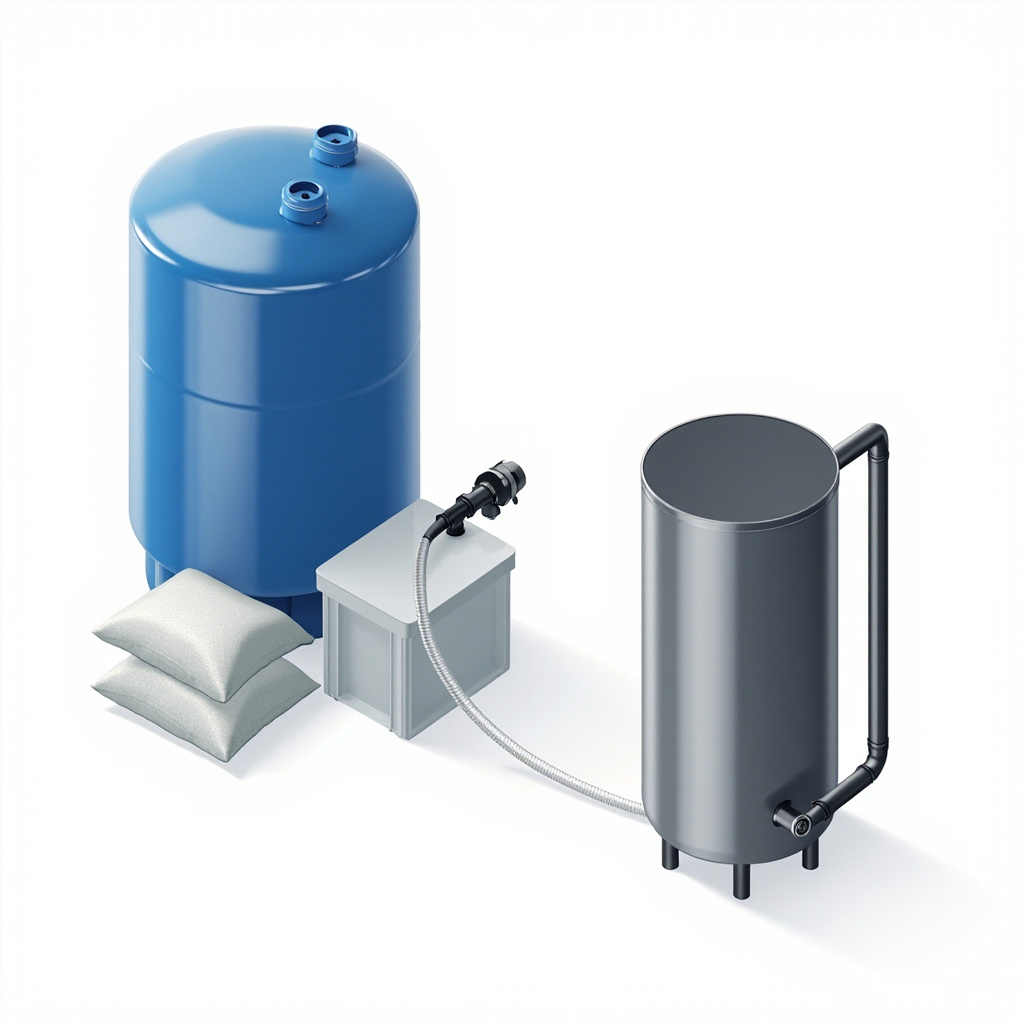
This is the shortest path to understanding the difference. The table below covers the dimensions that actually drive a buying decision.
| Dimension | Salt-based softener | Salt-free conditioner |
|---|---|---|
| Mechanism | Ion exchange (removes Ca and Mg) | TAC crystallization (keeps Ca and Mg in crystal form) |
| Does it remove hardness? | Yes, water tests 0 to 1 gpg | No, water still tests hard |
| Scale prevention | Excellent, no minerals left to deposit | Good, crystals don’t stick to surfaces |
| Soap lather improvement | Significant | Minimal, minerals still present |
| Salt required | Yes, 40-lb bag refills every 4 to 6 weeks | No |
| Electricity needed | Yes, powers the regeneration valve | No |
| Drain connection | Required for regeneration wastewater | Not needed |
| Wastewater per regen cycle | 20 to 80 gallons | None |
| Maintenance | Monthly salt plus annual resin cleaner | Media replacement every 3 to 6 years |
| Upfront unit cost | $400 to $900 | $350 to $800 |
| Annual operating cost | $80 to $150 (salt, cleaner, water) | $0 (no consumables) |
| NSF/ANSI 44 certified | Yes, standard for cation exchange softeners | No (does not reduce hardness, so not certified under NSF 44) |
If you are still deciding between a softener, a whole-house filter, or an RO system in addition to this salt-vs-salt-free question, see softener vs RO vs filter for the broader picture.
What your test strip will still show
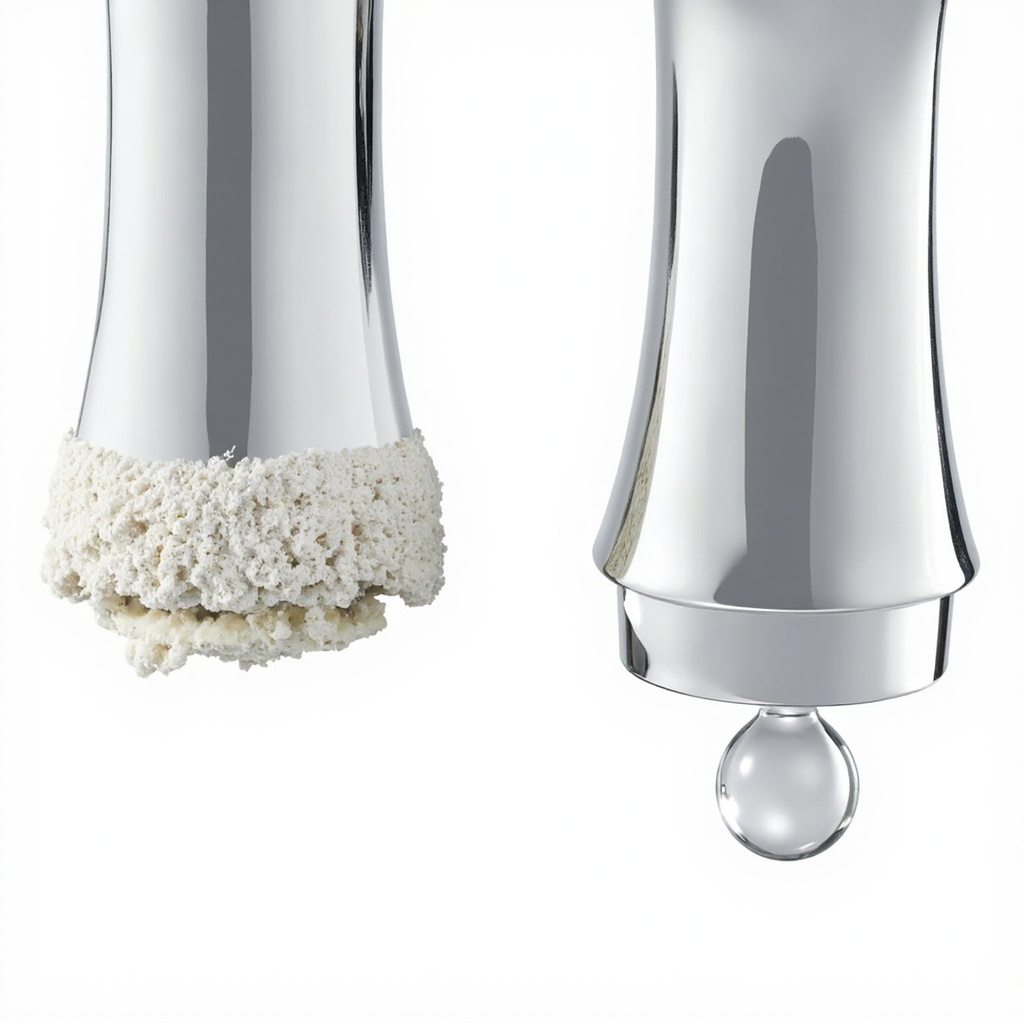
This is the number one source of confusion and buyer’s remorse. After installing a salt-free conditioner, your hardness test strip will read exactly the same gpg as before. The minerals have not been removed. They have been crystallized. The strip cannot tell the difference between dissolved calcium and crystallized calcium.
After installing a salt-based softener, your strip should drop to near 0 gpg. That is the visual proof that ion exchange is working.
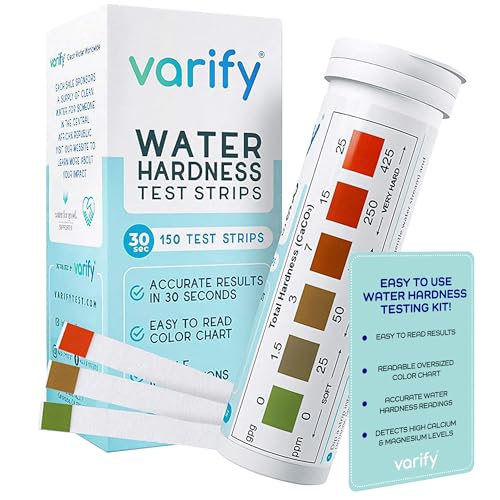
If you have not tested yet, stop. A $10 hardness test kit will tell you your gpg in under a minute, and it prevents a $500 mistake in either direction. For more on reading results, see water hardness levels and what is hard water.
- Test before and after installation. Salt-based should show a drop. Salt-free should show no change.
- Don’t write a negative review of a salt-free system because “the strip still reads hard.” That is how it is supposed to work.
Cost and maintenance tradeoffs
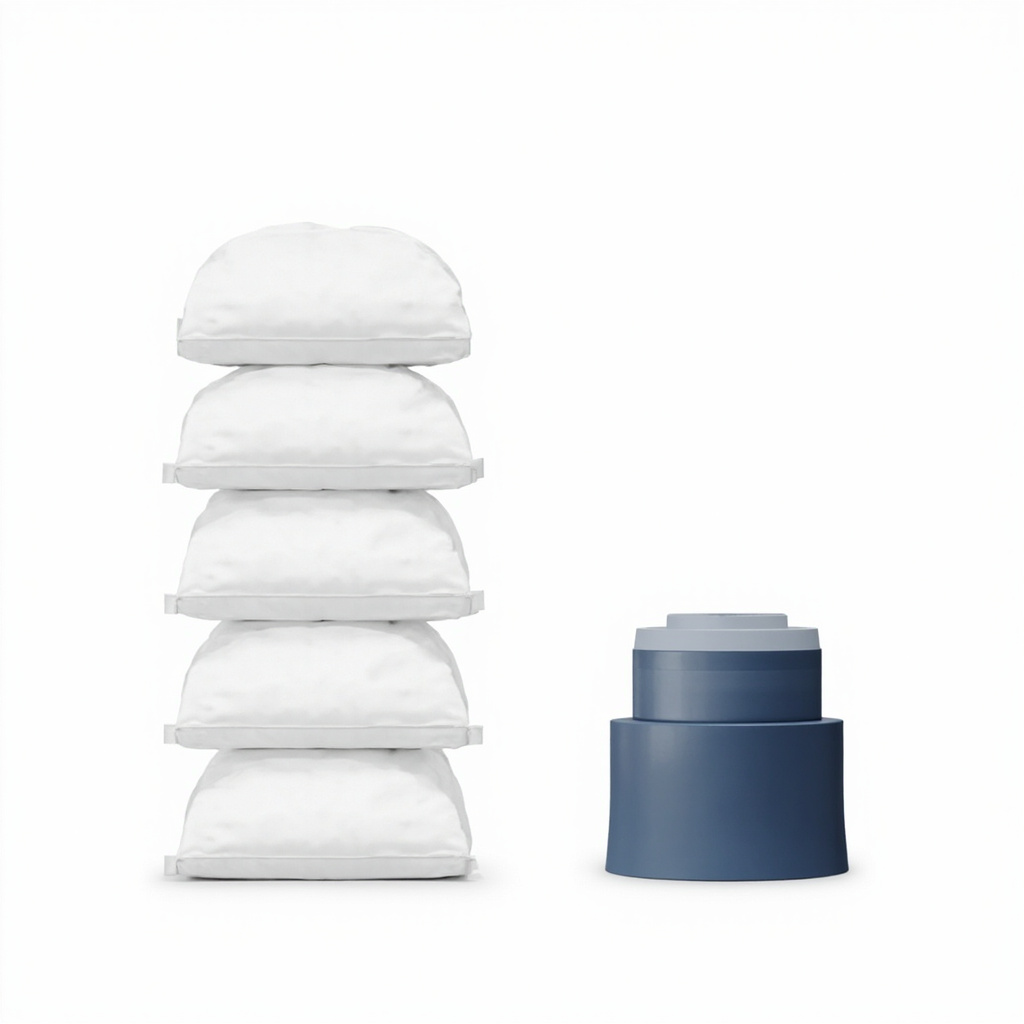
The upfront price gap between salt-based and salt-free is small. The real difference shows up over 5 years of operation.
Salt-based, 5-year estimate:
- Unit: $400 to $800
- Salt (one 40-lb bag per month at about $7): roughly $420
- Resin cleaner (annual): about $50
- Extra water and electricity (regeneration): about $100
- 5-year total: roughly $1,000 to $1,400
Salt-free, 5-year estimate:
- Unit: $350 to $800
- Salt: $0
- Electricity: $0
- Wastewater: $0
- Media replacement (around year 4): $150 to $300
- 5-year total: roughly $550 to $1,000
Salt-free is cheaper to operate year to year, but that gap narrows if you need a media replacement sooner than expected. Salt-based costs more in consumables but delivers measurable softness the entire time.
The Aquasure Harmony 32K remains the lowest 5-year-cost salt-based option for small households. The WaterBoss salt-free descaler is the lowest upfront salt-free option.
- Skip both if your hardness is under 3 gpg. At that level, neither system produces a noticeable benefit, and a simple whole-house filter handles taste and sediment without the cost.
- Don’t buy a salt-free system expecting zero maintenance forever. TAC media degrades. Replacement is not optional.
Who might prefer which
The decision comes down to your hardness level, your household priorities, and what trade-offs you can live with.
Choose salt-based if
- Your water tests 7 gpg or higher (hard to very hard)
- You want softer skin and hair feel in the shower
- You want better soap and detergent performance
- You can add salt every 4 to 6 weeks without it being a chore
- You have space for a brine tank and a drain nearby
- Your area does not restrict salt-based discharge
Choose salt-free if
- Your water is 3 to 10 gpg (moderate) and your main concern is protecting pipes and appliances from scale
- You cannot or will not add salt (rental property, physical limits, environmental preference)
- No drain is available near the installation point
- You are comfortable with the water still testing hard on a strip
- Your priority is scale prevention, not soap feel
For very hard water (15+ gpg), salt-based is the safer choice. TAC crystallization has a finite capacity, and at extreme hardness levels the media can be overwhelmed. Salt-based ion exchange handles high hardness more reliably.
For help calculating the right grain capacity, see how to choose a water softener. If you already have a salt-based system and are choosing between salt pellets and crystals, that guide covers the trade-offs.
Common mistakes
- Believing “salt-free softener” means soft water. Salt-free conditioners do not soften. They condition. Your test strip is the proof. If the box says “softener” but the mechanism is TAC, the marketing is using the wrong word.
- Not testing hardness before buying. Buying a 40,000-grain salt-based unit for 3 gpg water is overkill. Buying a salt-free conditioner for 20 gpg water is underkill. Run a hardness test kit first.
- Ignoring the drain requirement for salt-based. Salt-based softeners need a nearby drain for regeneration wastewater. If no drain exists, installation costs can double. Check your plumbing layout before ordering.
- Forgetting salt-free media replacement. “No maintenance” is a marketing claim, not a technical spec. TAC media lasts 3 to 6 years, then needs replacement at $150 to $300. Budget for it.
Related
- How water softeners work — deep dive on ion exchange, resin, and regeneration cycles
- How to choose a water softener — sizing, features, and grain capacity guide
- Softener vs RO vs filter — when you need filtration beyond softening
- Salt pellets vs crystals — choosing the right salt for your salt-based system
Key takeaways
- Salt-based removes hardness through ion exchange. Salt-free crystallizes minerals through TAC but does not remove them.
- Your test strip is the truth. Salt-based reads near 0 gpg. Salt-free reads the same as before installation.
- Salt-based costs $80 to $150 per year in salt, cleaner, and water. Salt-free costs near $0 but needs media replacement every 3 to 6 years.
- Choose salt-based for 7+ gpg hard water and better soap and skin feel.
- Choose salt-free for scale prevention without salt, drains, or wastewater.
- Test your hardness before buying either system. A hardness test kit costs under $10 and prevents a $500 mistake.
- For very hard water (15+ gpg), salt-based is more reliable. If you go that route, the Aquasana SimplySoft 40K gives you extra capacity.