Quick answer
A water softener uses ion-exchange resin to remove hardness minerals (calcium, magnesium) so soap lathers and scale stops forming throughout the whole house. A reverse osmosis (RO) system forces water through a membrane to strip out dissolved solids, lead, and chlorine — usually only at one kitchen tap. A whole-house water filter catches sediment, rust, and chlorine at the main line. The three systems solve different problems, and many homes combine two or all three.
What each system actually does
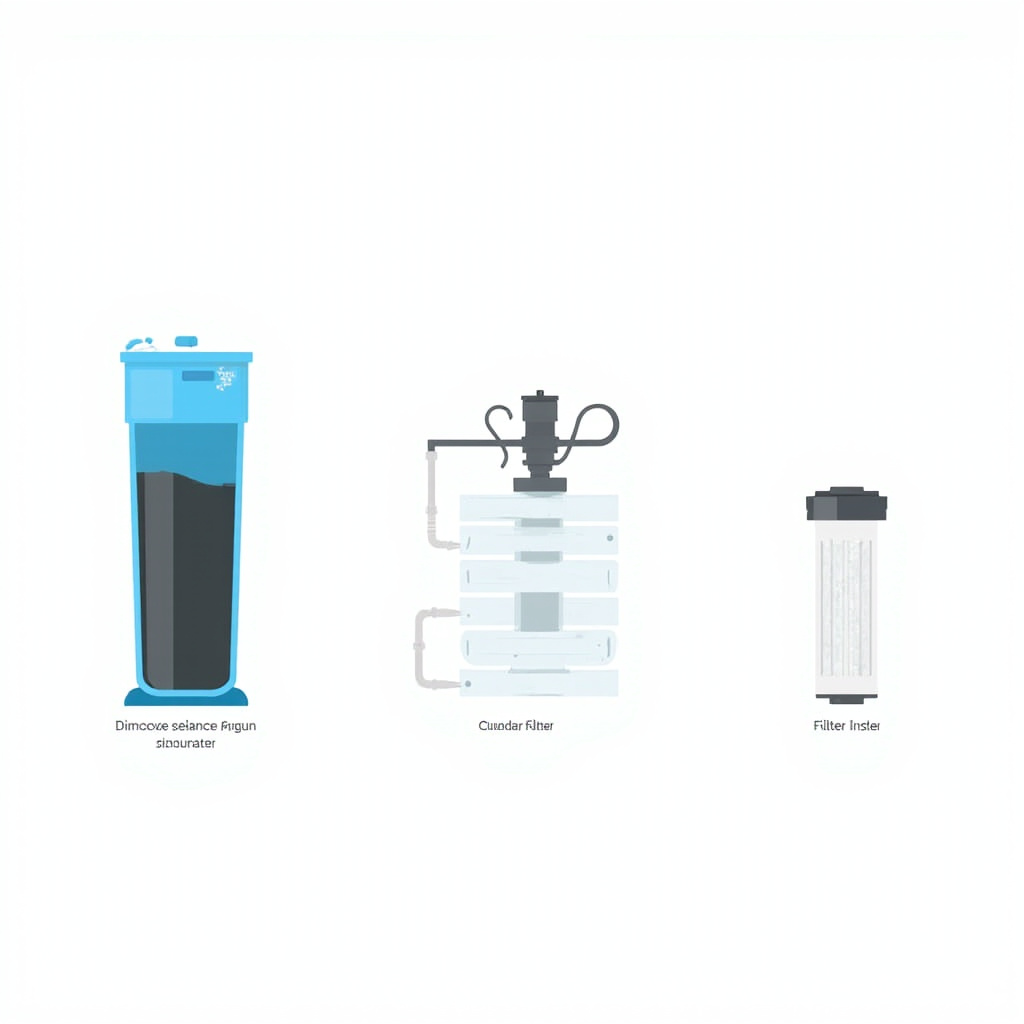
If you open three tabs and compare product pages, every manufacturer claims their box “treats your water.” That phrasing is how people end up with a $500 softener when what they actually needed was a $40 carbon filter. The table below is the shortest path to the right answer.
| Job | Softener | Whole-house filter | Reverse osmosis |
|---|---|---|---|
| Removes hardness (calcium, magnesium) | Yes — ion exchange | No | Partially (membrane rejects it, but RO is point-of-use only) |
| Removes chlorine taste and smell | No | Yes — if carbon cartridge | Yes — carbon pre-filter stage |
| Safe drinking water (lead, PFAS, dissolved solids) | No | Only with specialty cartridge | Yes — NSF/ANSI 58 certified |
| Removes iron or sediment | Small amounts with specialty resin | Yes — sediment stage | Yes — for dissolved iron at the tap |
| Where it installs | Whole-house main line | Whole-house main line | Under-sink (point-of-use) |
| Typical cost range | $500-$1,500 installed | $40-$300 plus cartridge swaps | $200-$600 under-sink |
No single system does all four jobs well. The phrase “water filter” alone is too vague — it matters whether you mean sediment, carbon, or RO.
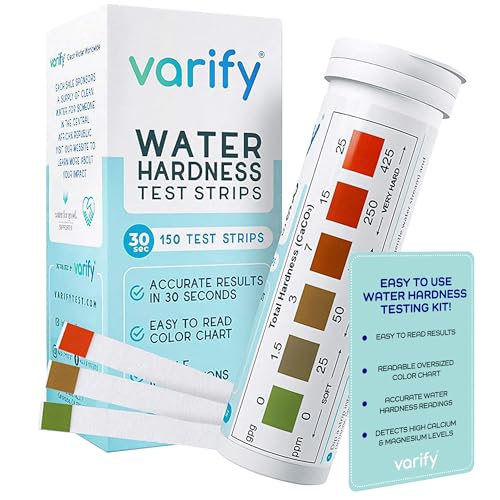
If you don’t yet know your grains-per-gallon (gpg), stop here and run a hardness test first. Grab a hardness test kit for under $10 before you spend another dollar on equipment. For deeper context, see what is hard water and water hardness levels.
Water softener (ion exchange)
A water softener uses a tank of resin beads that trade calcium and magnesium ions for sodium. The result: water “feels” soft, soap lathers, scale stops building up on fixtures and inside the water heater. The mechanism is described in detail in how water softeners work.
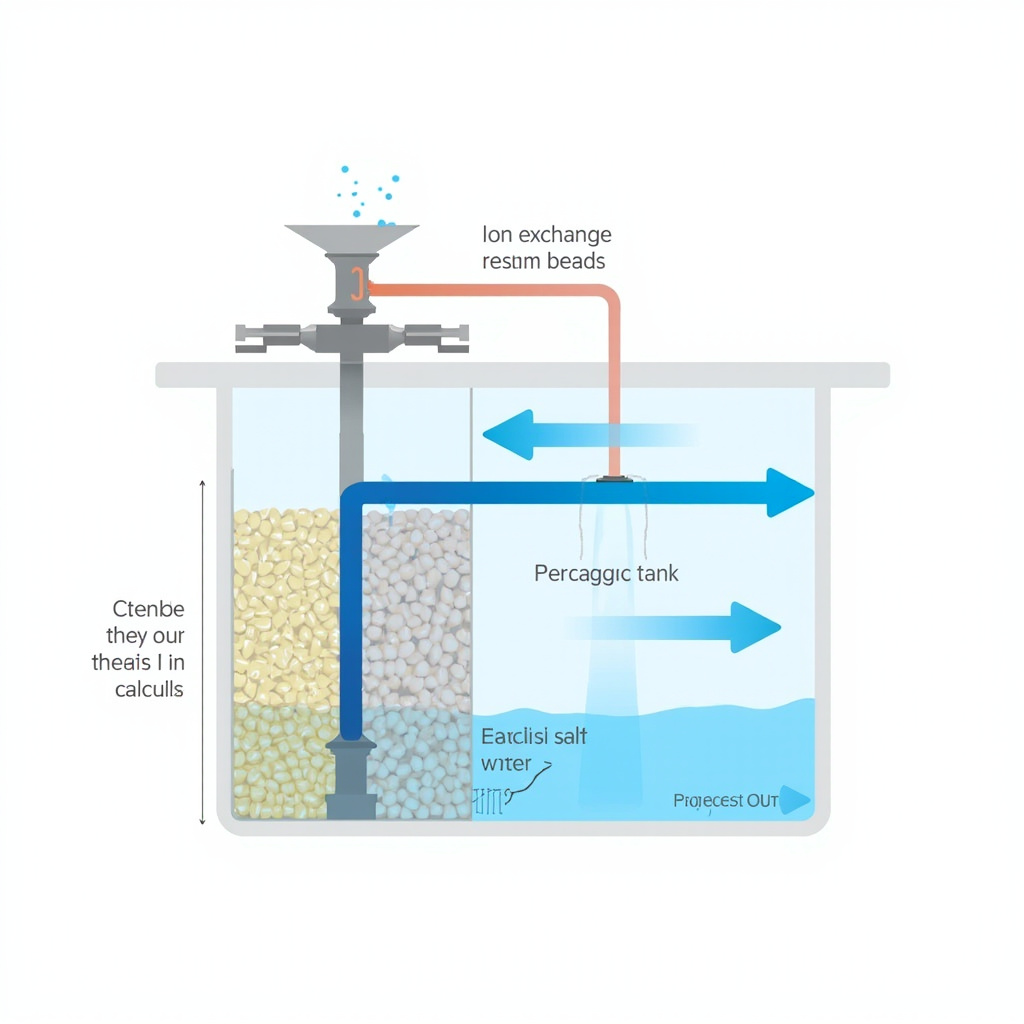
What a softener does not do: filter water for drinking safety. It won’t remove chlorine, lead, bacteria, or PFAS. It also adds a small amount of sodium (ion exchange swaps Ca²⁺ and Mg²⁺ for Na⁺). If someone in the household is on a strict sodium-restricted diet, ask their clinician about drinking softened water — we do not give medical advice.
You probably need a softener if your water tests at or above 7 gpg (about 120 ppm). Anything above 10 gpg is considered very hard and will wreck water heaters, dishwashers, and showerheads over time.
Maintenance: refill salt every 6-8 weeks, clean the resin every 4-6 months, check the brine tank annually.
- Skip if your water tests 3 gpg or below. A softener will not give you a noticeable benefit and adds salt to your wastewater stream.
- Don’t buy a softener to fix brown or rusty water — that is usually an iron problem. Iron needs a specialty resin softener or a dedicated iron filter. See how to choose a water softener for iron-rated guidance.
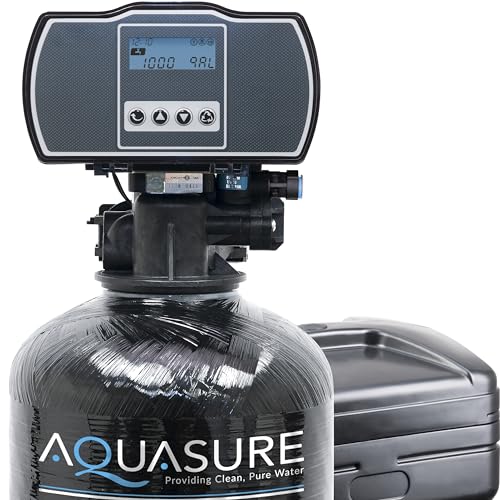
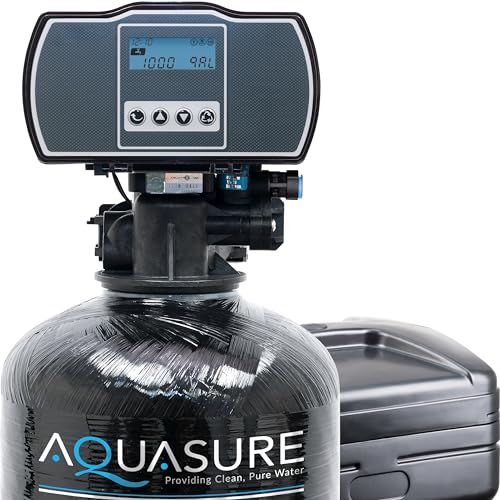
For sizing: the Aquasure Harmony 32,000 grain water softener covers 1-2 bathrooms. For 3-4 bathrooms or harder water, step up to the Aquasure Harmony 48,000 grain water softener.
Whole-house water filter
A whole-house filter is a single housing at the main water line that holds a replaceable cartridge. Three common cartridge types cover most homes:
- Sediment — catches dirt, sand, and rust. The cheapest option.
- Carbon block — reduces chlorine taste and smell, plus some organics.
- Combo sediment + carbon — does both in one housing.
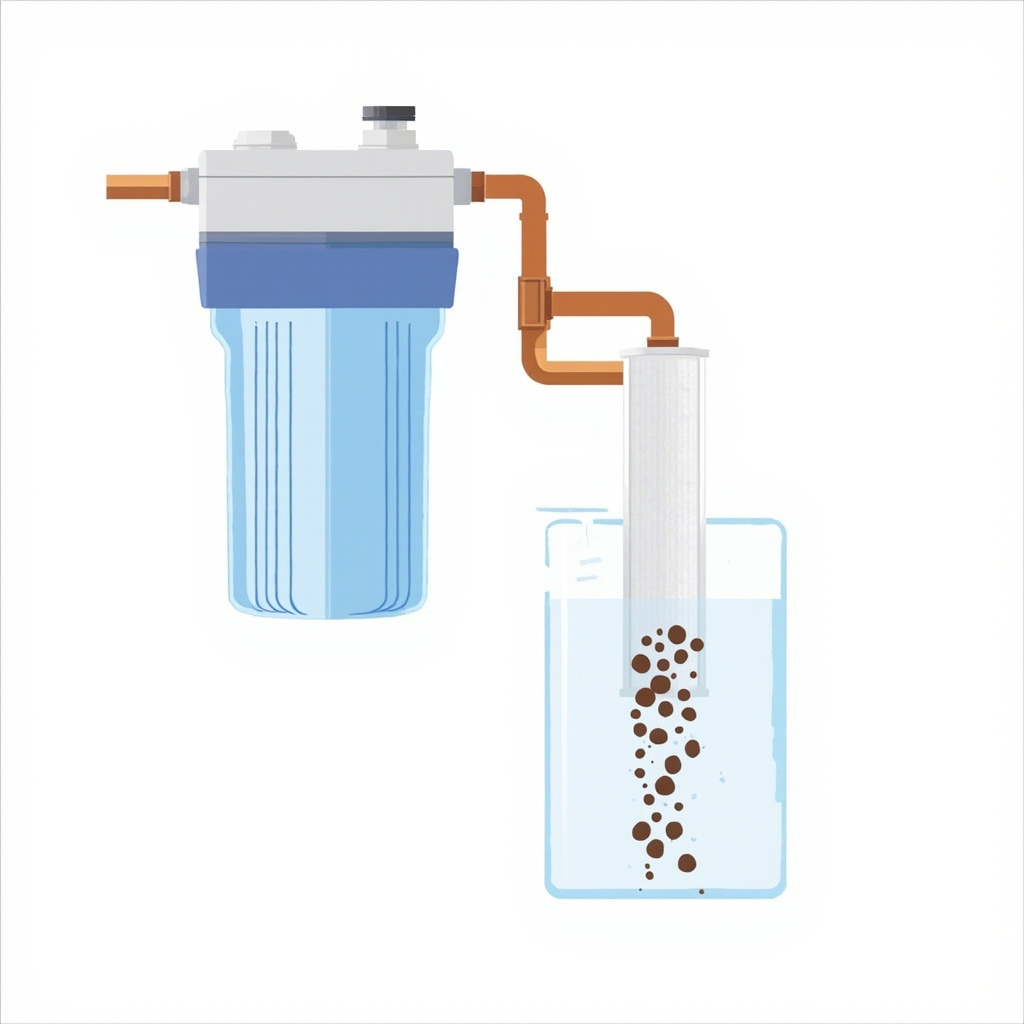
What it does not do: soften water. A 5-micron sediment filter will not stop calcium from scaling your heater. Standard carbon cartridges do not remove dissolved minerals.
You probably need a whole-house filter if you’re on well water, if your cold tap water is discolored, or if your city water tastes strongly of chlorine.
Maintenance: swap the cartridge every 3-6 months (sediment) or 6-12 months (carbon). This is the cheapest of the three systems to run.
- Skip if your only complaint is scale on glass shower doors. A filter won’t fix that — only a softener will.
- Don’t expect a $40 whole-house housing to act like an RO system. They are in different categories.
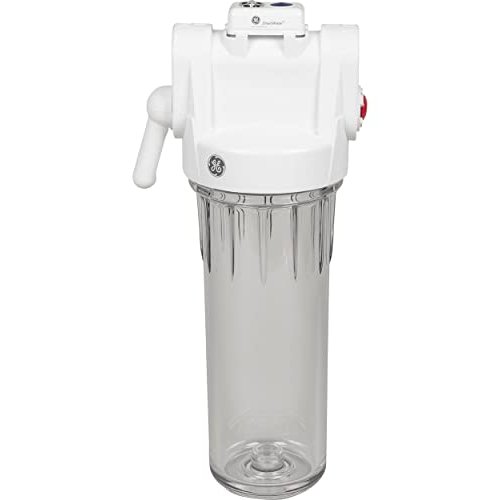
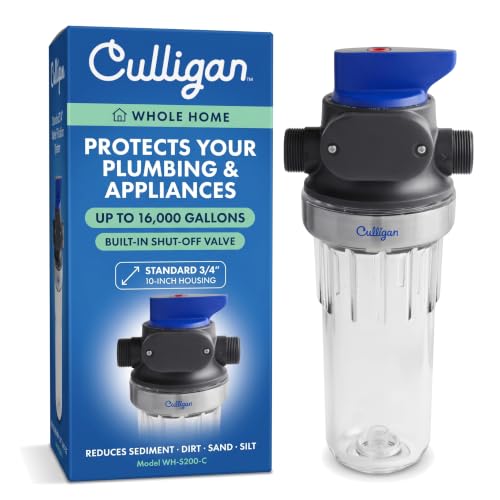
For value: the GE GXWH20T whole-house filter housing with install kit is about $40 and includes fittings. For a 3/4 inch alternative, the Culligan WH-S200-C whole-house filter housing runs about $32.
Reverse osmosis (usually point-of-use)
Reverse osmosis forces water through a semi-permeable membrane at high pressure, removing up to 99% of dissolved solids, lead, fluoride, chlorine, arsenic, and PFAS per NSF/ANSI 58. The output goes to a dedicated faucet at the kitchen sink and sometimes the fridge.
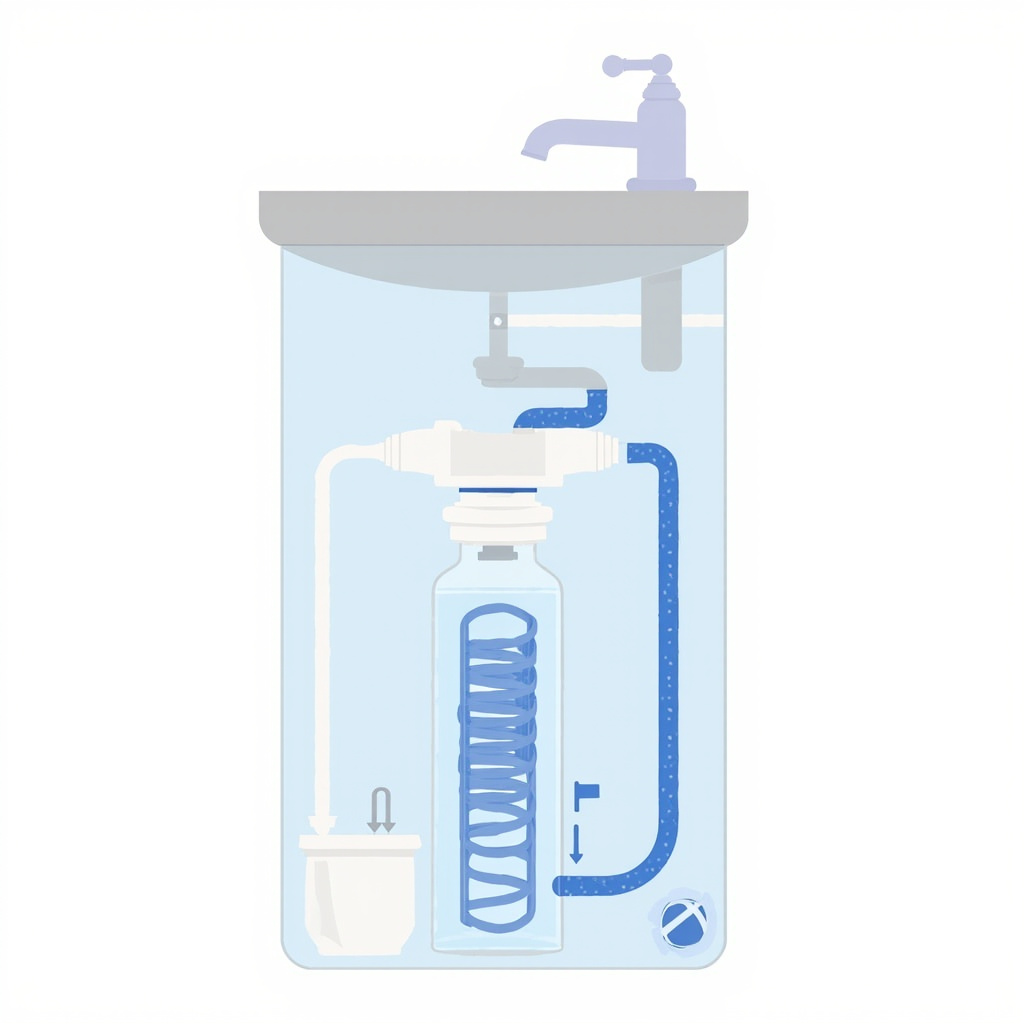
What RO does not do: treat the whole house. It does not protect your water heater, shower, or washing machine from hardness. A traditional RO also sends 3-4 gallons of reject water to the drain per gallon of pure water produced. Newer tankless models cut that ratio closer to 1:1.
You probably need RO if your tap water fails a lead test, if you are on well water with high total dissolved solids (TDS), or if you want bottled-water-quality drinking water without the plastic waste.
Maintenance: replace pre-filters every 6-12 months, the membrane every 2-3 years, and the polish filter annually.
- Skip if your only problem is hardness. RO does not protect your pipes — use a softener.
- Don’t install whole-house RO unless a water specialist confirms you need it. Whole-house RO exists but typically costs $5,000-$15,000+ and is rarely the right call for a residence.
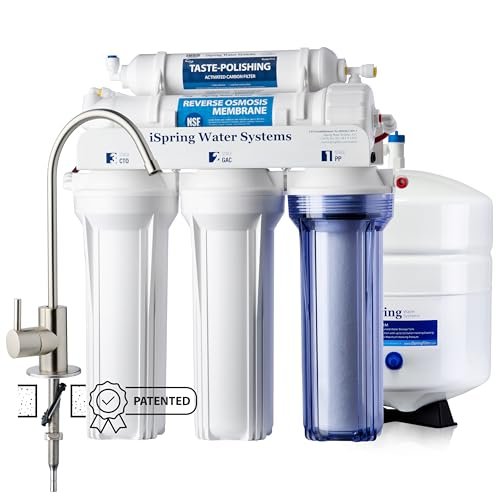
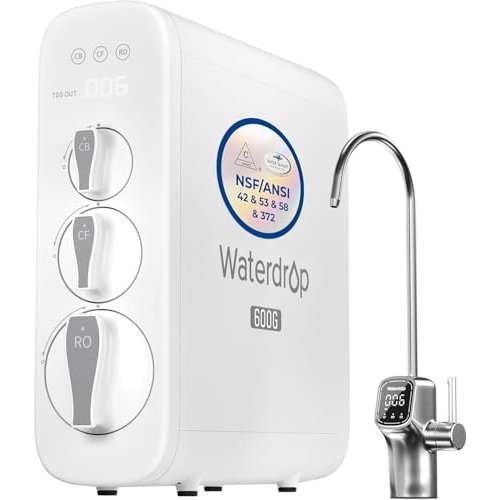
For under-sink RO: the iSpring RCC7-BN 5-stage under-sink RO system is NSF-certified and runs about $220. For a tankless upgrade with a better waste ratio, the Waterdrop G3P600 tankless RO system is rated at 600 gallons per day.
Can you combine systems?
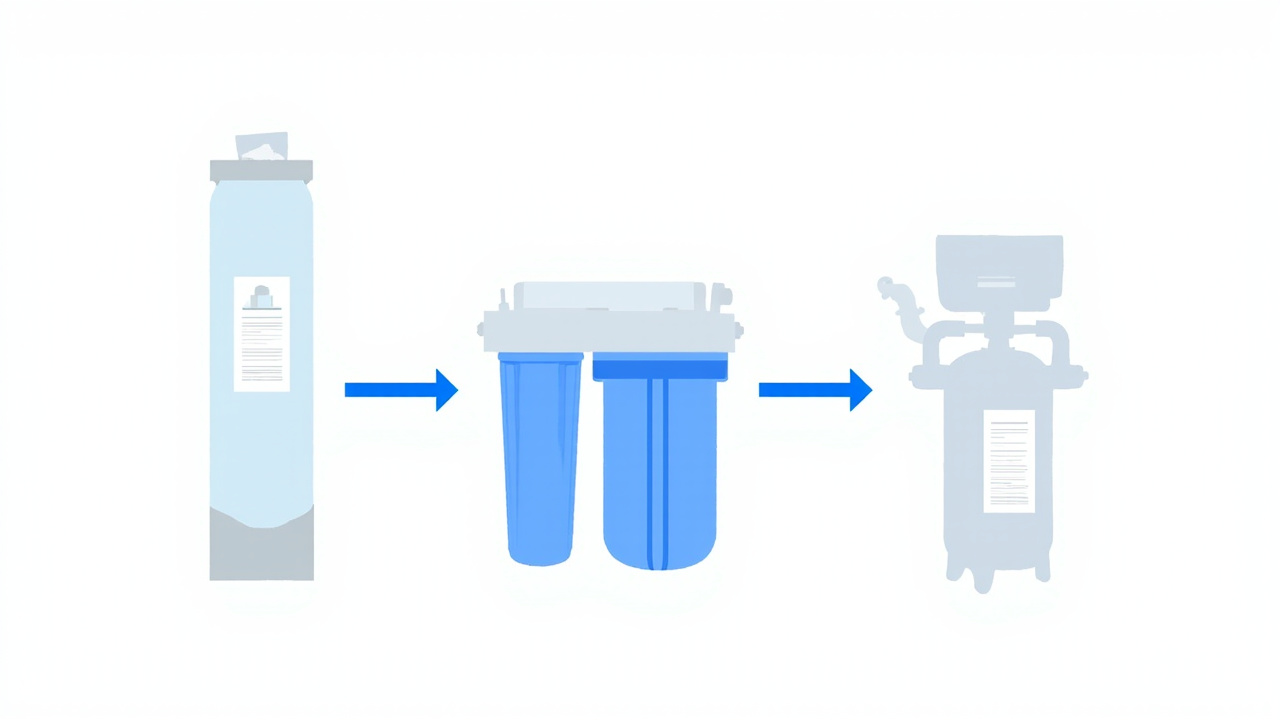
Yes — and many homes do. A common staged layout looks like this:
- Whole-house filter first — catches sediment and protects the softener’s resin bed downstream.
- Water softener second — handles hardness for the whole house.
- Under-sink RO at the kitchen sink — polishes drinking water for lead, TDS, and chlorine.
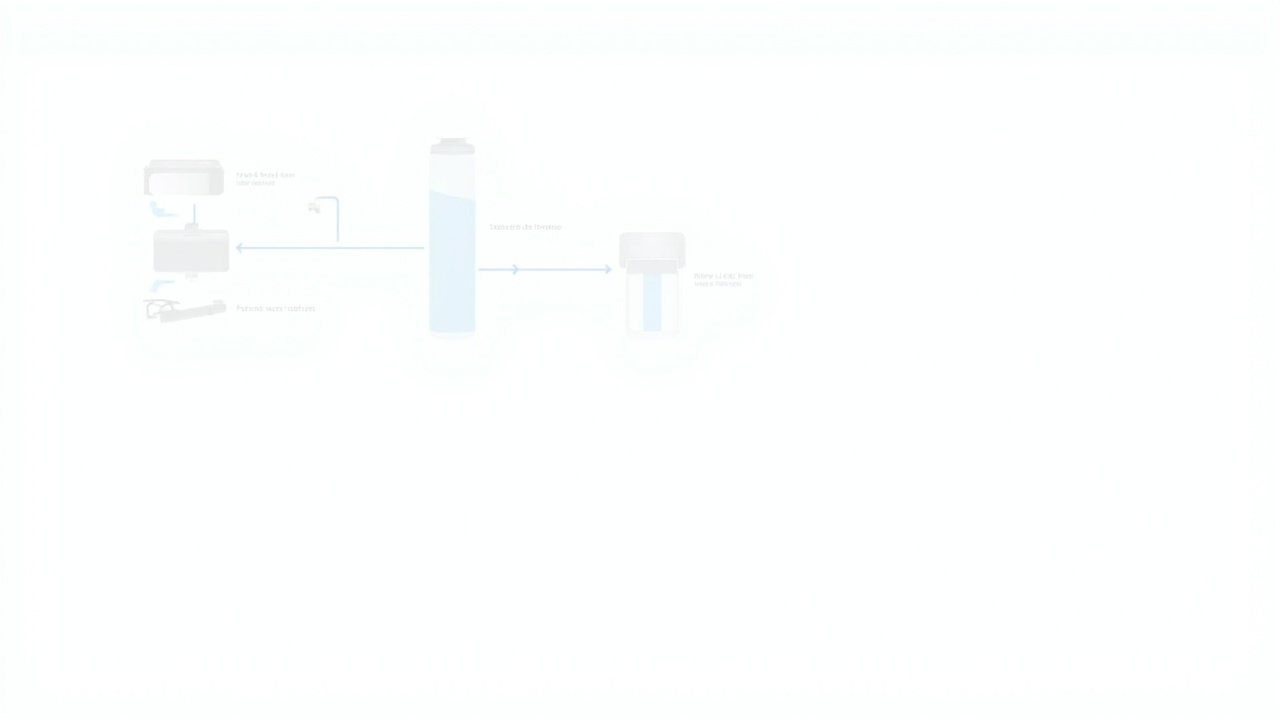
The order matters. Pre-filtering sediment extends softener resin life. Softening before RO prevents the RO membrane from scaling. Putting carbon before the RO membrane protects it from chlorine damage, which is the most common cause of premature membrane failure.
Do I need a softener with RO? If your whole-house water is hard (7 gpg or higher), yes — because RO only treats one tap. The rest of the house still scales. A staged layout pairs well: a GE GXWH20T whole-house filter housing protects the softener resin, a 32K or 48K grain Aquasure softener handles hardness, and an iSpring RCC7-BN under-sink RO system polishes drinking water at the kitchen tap.
If your water is naturally soft (some Pacific Northwest city supplies, for example), you may skip the softener and use RO for drinking only.
If you are weighing salt-free conditioners against ion-exchange softeners, see salt pellets vs crystals for the consumable side of that decision. Salt-free systems usually change how scale sticks; they typically do not bring hardness grains to zero on a test strip. Match the claim to your goal before you buy.
Who should pick what
Match the system to the symptom, not to the marketing copy.
- If your only symptom is white scale on faucets, shower glass, or inside the kettle → you need a softener. Test your gpg first with a hardness test kit, then size using how to choose a water softener. A 32,000 grain softener is the starting point for 1-2 bathrooms.
- If your cold tap water is brown, rusty, or has visible dirt → you need a whole-house sediment filter first. If rust persists, you may also have an iron problem.
- If your water smells strongly chlorinated or tastes like chlorine → you need a carbon whole-house filter (or a carbon stage). A GE GXWH20T housing with a carbon cartridge handles this for under $50.
- If your tap water fails a lead test or your TDS reading is high → you need an under-sink RO system for drinking and cooking. The iSpring RCC7-BN is the standard value pick.
- If you have hard water AND want pure drinking water → you need both a softener and an RO system. They pair without conflict and protect different parts of the house.
Common mistakes
- Buying a softener to “filter” water. A softener adds a small amount of sodium and removes nothing toxic. If you want safe drinking water, you still need a filter or RO.
- Expecting a $40 whole-house filter to soften water. Sediment and carbon cartridges do not remove dissolved calcium or magnesium.
- Skipping the hardness test. Guessing gpg leads to buying the wrong grain-capacity softener. A hardness test kit for $10 prevents a $500 mistake.
- Putting RO on the whole house. RO is slow and wasteful. Whole-house RO exists but costs $5,000-$15,000+ and is rarely the right call for a residence.
- Ignoring cartridge replacement intervals. A clogged filter housing drops water pressure and can grow bacteria. Mark the calendar: sediment every 3-6 months, carbon every 6-12 months, RO membrane every 2-3 years. A Waterdrop G3P600 tankless RO cuts waste ratio but still needs cartridge swaps on schedule.
Safety and limits
- Shut off water and relieve pressure before opening filter housings.
- Do not force fittings — overtightening plastic housings cracks them.
- Drain lines for softeners must meet local code (air gap where required).
- Softened water is higher in sodium. If someone is on a strict sodium diet, ask their clinician about drinking softened water. We don’t give medical advice.
- Keep salt and cartridge cleaners away from kids and pets.
When to call a pro
Keep DIY if: testing hardness, setting the control head, adding salt, breaking a salt bridge, or swapping a cartridge.
Call a licensed plumber if:
- Cutting into the main water line or relocating the unit.
- Active leak at fittings or the drain.
- Control board or electrical faults beyond a reset.
- Well pump or pressure tank issues.
We don’t rank local installer directories or match you with contractors.
Related
- How water softeners work — ion-exchange mechanism in depth.
- How to choose a water softener — sizing by grains and household size.
- Water hardness levels — how to read gpg and ppm test results.
- What is hard water — signs and symptoms of hard water.
- Hardness test kits — what to buy before any system purchase.
- Hard vs soft water — the everyday difference.
- Salt pellets vs crystals — softener consumable choice.
Key takeaways
- A softener removes hardness minerals (whole house). A filter removes sediment and chlorine (whole house). RO removes dissolved solids and lead (kitchen tap only).
- No single system does all four jobs well.
- “Water filter” is not specific enough — say whether you mean sediment, carbon, or RO.
- Test your gpg before buying any system.
- Softener plus RO is a common pair for hard-water homes that also want pure drinking water.
- Whole-house RO is real but almost never cost-effective for a residence.
- Cartridge and salt replacement dates matter more than the brand you pick.