Quick answer
Water hardness is the amount of dissolved calcium and magnesium in your water, measured in grains per gallon (gpg) or parts per million (ppm). Most US homes sit between 3 and 18 gpg. You can find yours with a $10 test strip in under a minute. One gpg equals 17.1 ppm, and anything above 7 gpg usually leaves visible scale. Knowing your number is the first step before choosing any softener, filter, or cleaning routine.
What hardness means
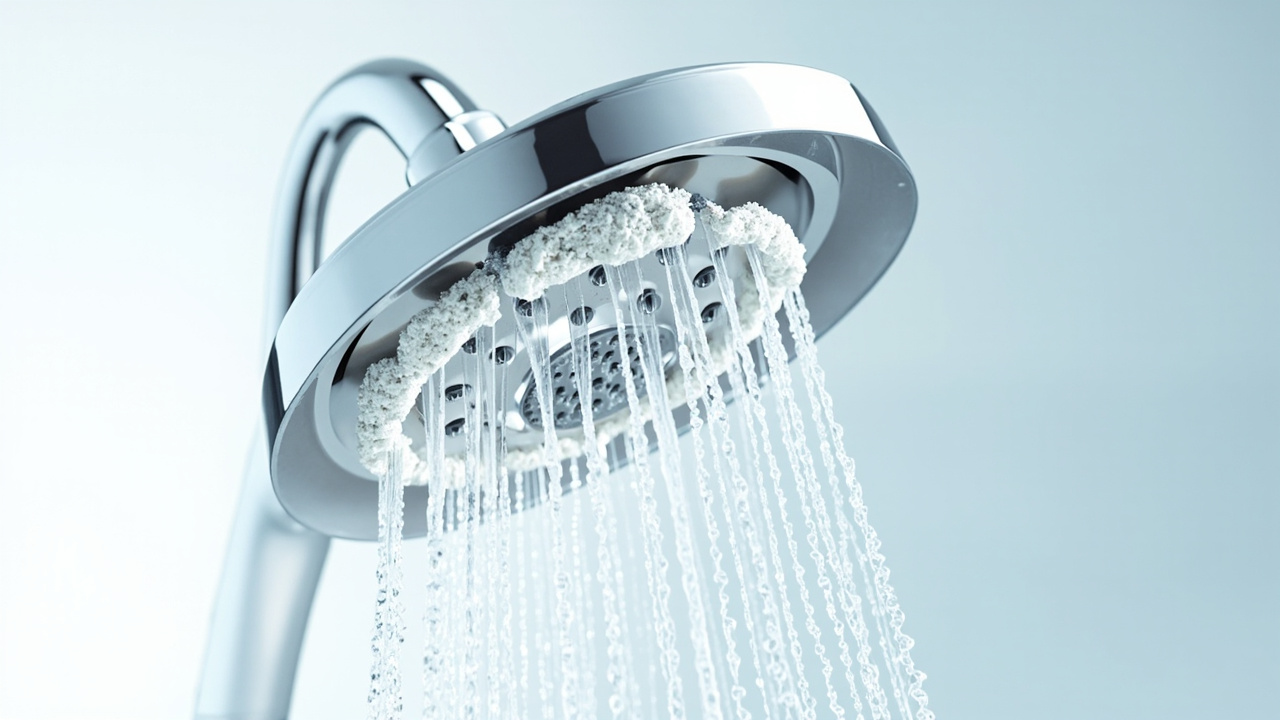
If your showerhead has white crust, your glasses come out spotty, and your soap won’t lather — that’s hardness at work. The USGS defines it simply: “water hardness is the amount of dissolved calcium and magnesium in the water” USGS Water Science School.
These minerals dissolve into groundwater as it passes through limestone and dolomite rock. Your hardness number depends on local geology — not on your pipes or your water company’s treatment process (though municipal blending can shift it). If you want the full picture of what hard water does in your home, see what is hard water.
Hardness comes in two sub-types:
- Temporary (carbonate) hardness — from calcium and magnesium bicarbonates. Boiling converts these to insoluble carbonates, which is why kettles and coffee makers get that chalky scale. This is the stuff a descaling cleaner targets.
- Permanent (non-carbonate) hardness — from sulfates and chlorides of the same minerals. Boiling doesn’t touch it. Only ion exchange (a softener) removes it.
Both types count toward your total gpg. Home softeners don’t distinguish between them — they swap out all hardness ions equally. If you don’t know your number yet, a test strip gets you there in under a minute.
Don’t confuse hardness with water “quality” or “safety.” Hard water is not a health hazard. The EPA has no primary drinking water standard for calcium or magnesium. Hardness is a nuisance — scale, soap scum, appliance wear — not a contaminant.
Skip the deep chemistry if you just need a number. Jump straight to the testing section below.
Units: gpg vs ppm
Two units dominate US water treatment, and they confuse people constantly.
- gpg (grains per gallon) — the industry standard for softener sizing. One grain equals 64.8 mg of calcium carbonate per US gallon.
- ppm / mg/L — the lab and municipal report standard. In freshwater, 1 ppm ≈ 1 mg/L (density is essentially 1 kg/L).
The conversion is simple and universal:
- ppm ÷ 17.1 = gpg
- gpg × 17.1 = ppm
So if your water report says 120 ppm, that’s 120 ÷ 17.1 ≈ 7 gpg.
Hardness conversion table
| ppm (mg/L) | gpg | Level |
|---|---|---|
| 0–60 | 0–3.5 | Soft |
| 61–120 | 3.6–7.0 | Moderately hard |
| 121–180 | 7.1–10.5 | Hard |
| 180+ | 10.6+ | Very hard |
“Is 8 gpg hard water?” → 8 gpg = 137 ppm = Hard. Yes, you’ll see scale buildup and soap scum at that level.
For the sensory difference between soft and hard water (what it feels, tastes, and cleans like), see hard vs soft water.
Typical ranges (soft to very hard)

The USGS classification guidelines express hardness as calcium carbonate (CaCO₃) equivalent USGS Water Science School:
- Soft: 0–60 mg/L (0–3.5 gpg)
- Moderately hard: 61–120 mg/L (3.6–7.0 gpg)
- Hard: 121–180 mg/L (7.1–10.5 gpg)
- Very hard: above 180 mg/L (above 10.5 gpg)
Hardness is geology-driven. States sitting on limestone bedrock — Texas, Florida, Indiana, Utah, Arizona — typically see 15–30+ gpg at the tap. New England and the Pacific Northwest tend softer, often 1–5 gpg. But these are regional patterns, not guarantees for your address.
How to find your number without testing
If you’re on municipal water, three routes work:
- Consumer Confidence Report (CCR) — search “[your city] water quality report.” Federal law requires utilities to publish this annually, and many list hardness.
- Call your water utility — they’ll give you gpg or ppm over the phone. They test regularly; the number is stable year-round unless they change their source.
- Check the utility website — some post real-time water quality data.
Don’t rely on a regional “hardness map” for your actual number. Maps show zone averages. Your municipal blend or local well can be 5 gpg higher or lower than the zone number printed on the map.
Skip the map entirely if you’re on well water — test strips are your only reliable source. There’s no report, no utility to call.
How to test at home
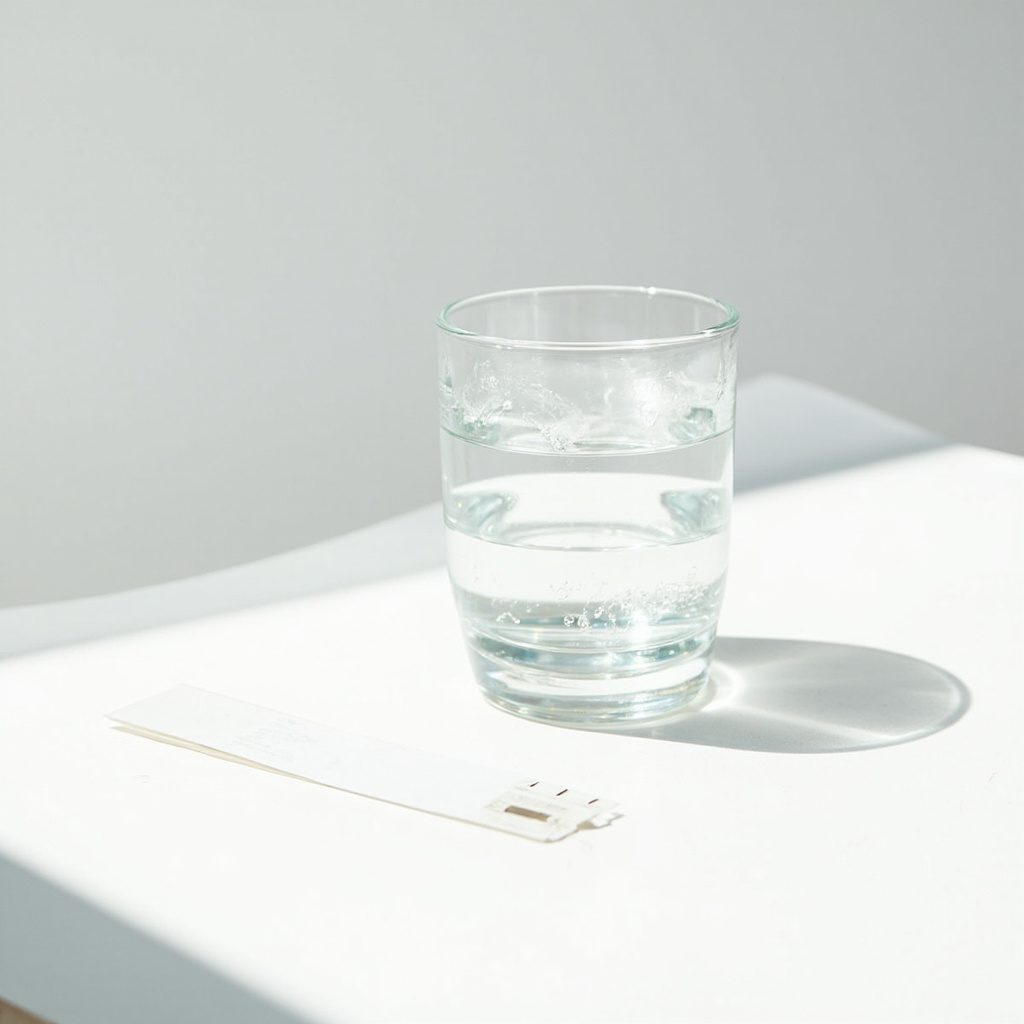
Three tiers, from cheapest to most accurate. Pick based on what you’re doing with the result.
Tier 1: Test strips ($8–$12)
Dip for 1 second, wait 15 seconds, match the color to the chart on the bottle. Most strips read in gpg or ppm on a 0–20+ scale. Good enough for most homeowners.
Best for: a quick go/no-go before softener shopping. If you just need to know “is it hard enough to justify a softener,” a strip answers that.
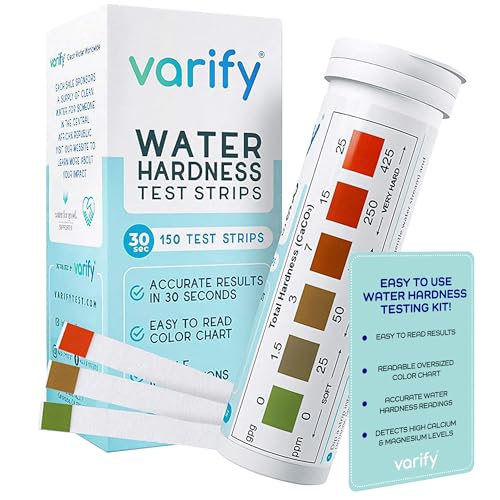
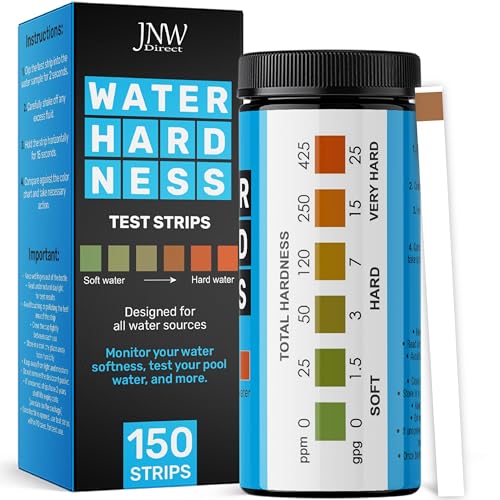
The Varify 150-strip kit ($9.99) gives you enough strips to test before and after a softener install, plus share with a neighbor. The JNW Direct 150-strip kit ($9.99) is the same price point — handy if you want a backup bottle or extra strips for retesting over time.
Tier 2: Drop-count titration kit ($25–$40)
You add reagent drops one at a time until the water sample changes color. Each drop typically equals 1 gpg in standard kits. More precise than strips, and it resists interference from iron and chlorine that can throw off color-based strips.
Best for: sizing a softener, or when your strip result sits right on a band boundary (is it 6 or 8 gpg?).
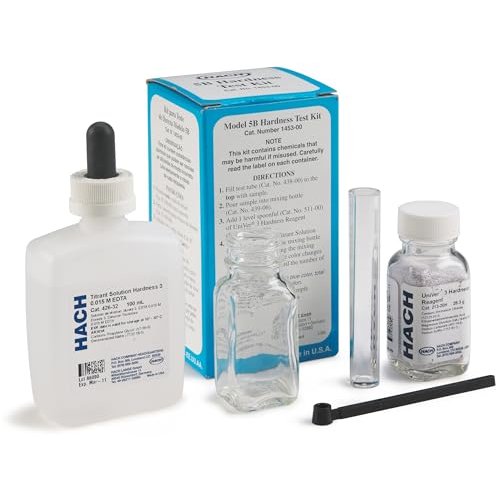
The Hach Total Hardness Model 5-B drop kit ($35.55) is the industry-standard titration kit. Hach is what many water treatment professionals carry on service calls.
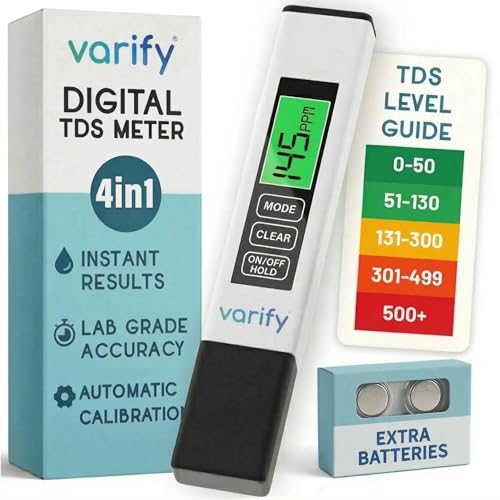
Tier 3: Digital TDS meter ($10–$15)
Important limitation: TDS meters measure total dissolved solids, NOT hardness specifically. They cannot distinguish calcium from sodium, iron, or other minerals.
A TDS meter is useful as a proxy — if TDS reads very low, hardness is probably low too. But a high TDS reading doesn’t tell you how much of that is calcium versus sodium or iron.
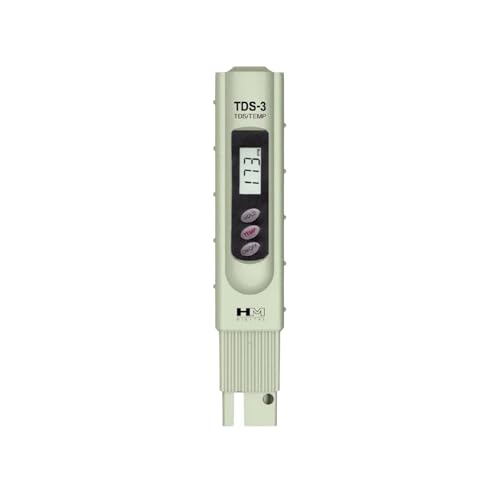
The HM Digital TDS-3 ($13.60) is the classic handheld meter. If you want a modern 4-in-1 that also reads temperature and conductivity, the Varify Instant 4-in-1 ($9.97) covers those for less money.
How to sample without fooling yourself
- Run the tap for 30 seconds before filling your test container — don’t test water that sat in the pipes overnight.
- Use a clean glass or cup. Don’t test from a garden hose or a filtered tap.
- Test cold water, not hot. Heating can precipitate calcium carbonate out of solution, giving you a falsely low reading.
- If you’re on well water, test at the pressure tank or kitchen sink — not after a softener, if you already have one.
Keep a few extra JNW Direct strips on hand so you can retest quarterly — well water hardness can shift with seasons and water table levels.
Don’t use a TDS meter as your hardness number for softener sizing. You’ll over- or under-size the unit and end up with either wasted salt or hard water breakthrough.
Skip retesting if your utility gave you a confirmed gpg number. Municipal hardness stays stable unless the source changes (some utilities blend sources seasonally — worth a follow-up call if you’re in a drought year).
How hardness drives softener size
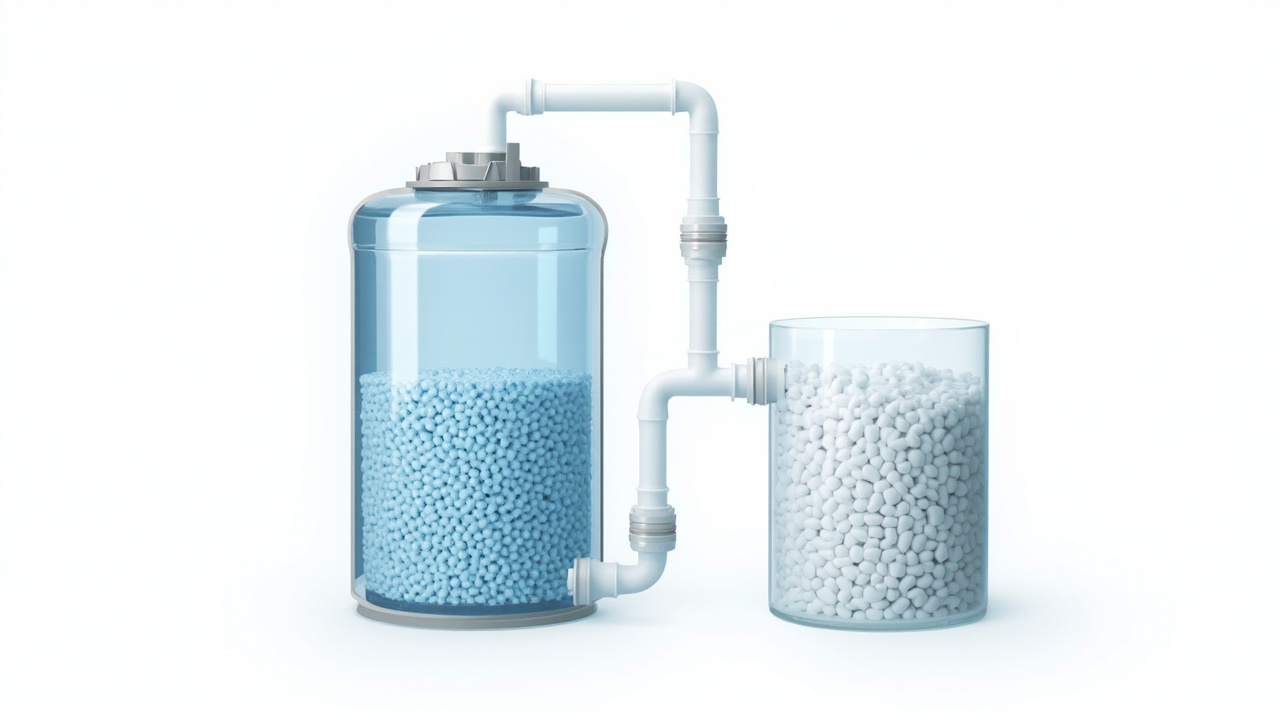
Your gpg number isn’t just trivia — it directly determines what size softener you need.
Softener capacity is rated in grains. A “32,000-grain” unit can remove 32,000 grains of hardness between regenerations. The sizing formula:
Daily grains = people × daily gallons/person × hardness gpg
Example: a family of 4 using 75 gallons per person per day at 10 gpg hardness: 4 × 75 × 10 = 3,000 grains/day.
With a weekly regeneration cycle: 3,000 × 7 = 21,000 grains. Add 30% reserve for variation: ≈ 28,000-grain softener.
This is why knowing your exact gpg matters. A 2-gpg error at 4 people compounds to 600 grains per day — over a week, that’s 4,200 grains of mistimed regeneration. Either you regenerate too often (wasting salt and water) or too rarely (hard water sneaks through).
Plug your number into the softener size calculator to get a grain rating. Then read about how to choose a water softener once you know the size range.
Don’t buy a softener before testing. Oversizing wastes salt every regeneration cycle. Undersizing means the resin exhausts before the next regen and you get hard water mid-week.
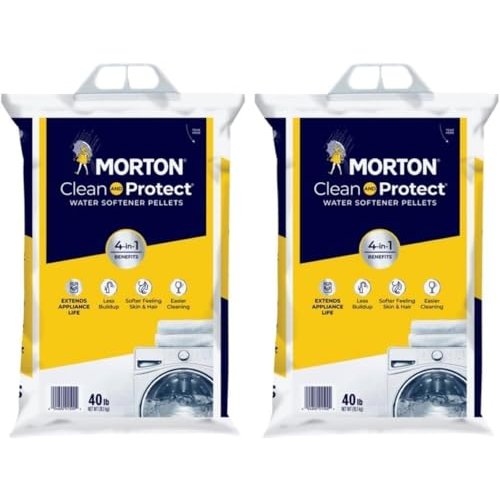
Once you’ve sized and installed your softener, you’ll need salt — salt pellets vs crystals breaks down which type fits your brine tank. Morton Clean and Protect pellets ($38.75 for 40 lb × 2) is a common choice that resists bridging.
Hardness vs TDS vs iron
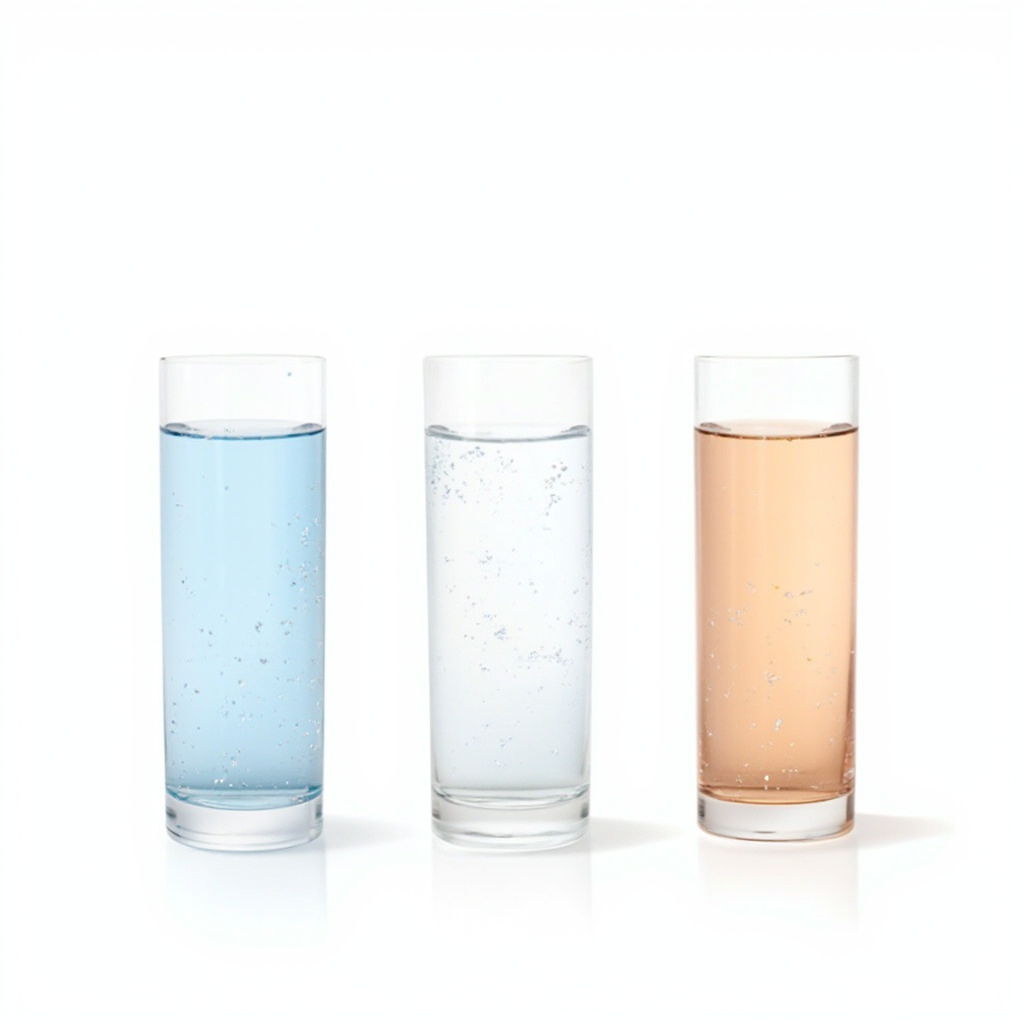
These three parameters get conflated constantly, and the confusion leads to wrong equipment choices.
| Parameter | What it measures | Unit | Is it hardness? |
|---|---|---|---|
| Hardness | Calcium + magnesium only | gpg / ppm | Yes |
| TDS | All dissolved solids (Na, Cl, Ca, Mg, Fe…) | ppm | No — broader |
| Iron | Dissolved or ferric iron specifically | ppm (mg/L) | No — separate issue |
The key distinctions:
- High TDS ≠ hard water. Your TDS could be high because of sodium or chlorides, not calcium. A TDS meter can’t separate them.
- Low TDS usually means soft — if there are few dissolved solids total, calcium is likely low too. But this is a proxy, not a measurement.
- Iron changes water color (orange, rust, reddish-brown). Hardness doesn’t. If your water is discolored, you likely have an iron problem, not just hardness.
- Iron above 0.3 ppm typically needs an iron filter, not just a softener. Some softeners handle low-level iron (under 2–3 ppm), but higher concentrations foul the resin.
The EPA sets a secondary (non-enforceable) standard of 500 mg/L for TDS — this is about taste and aesthetics, not safety EPA NSDWRs. There is no federal standard for hardness. If you want a quick TDS reading alongside your strip test, the HM Digital TDS-3 meter is a $13.60 sanity check — just remember it reads total dissolved solids, not hardness alone.
How to Read Your Water Quality Report (CCR)

If you’re on municipal water, the Consumer Confidence Report (CCR) — sometimes called a “water quality report” — is the most accurate source for your home’s hardness. Federal law requires utilities to publish the results every year.
Where to find your CCR
Three reliable routes, in order of preference:
- Utility website — most post current and historical CCRs as PDFs. Search “[your utility name] water quality report.”
- Mail or bill insert — utilities over 100,000 customers must include the CCR with the annual water bill. Smaller utilities can publish online only.
- Call the utility directly — ask for “the most recent CCR” or “your average hardness in gpg.”
Don’t rely on third-party “CCR aggregators” that rehost last year’s report. Always go to the utility’s own site or phone line.
What to look for on hardness
A CCR lists dozens of analytes — lead, copper, chlorine, nitrates, total coliform, and more. Most homeowners only need three rows:
- Hardness, total (as CaCO₃) — the number for softener sizing. Listed in mg/L (= ppm) or gpg.
- Calcium — listed separately in mg/L. Tells you which mineral drives your hardness.
- Magnesium — listed separately. Same role as calcium for sizing purposes.
If the CCR shows the hardness row but no number, the utility may test seasonally. Call them and ask for an annual average.
For pH alongside hardness, see water pH and alkalinity — pH affects whether you’ll see blue-green staining (copper corrosion) versus white scale. For TDS readings and how they relate to hardness, TDS explained breaks down why a TDS meter alone can’t tell you your gpg.
When CCRs aren’t enough
CCR is the right tool for municipal water. It isn’t the right tool in three situations:
- You just bought a house and the previous owner’s CCR is from last year. Source blends and treatment shift hardness. Use the CCR as a starting number and confirm with a test strip once you move in.
- You’re on well water. Wells are private — no utility publishes a CCR. Use test strips, a drop-count kit, or a state-certified lab. See iron in water for well-side testing.
- Your utility blends sources seasonally. Some mix groundwater and surface water, shifting hardness up to 4 gpg across the year. Ask which blend ratio applies in winter versus summer.
Don’t size a softener from a CCR alone if you moved in within the last 90 days. Verify with a strip at your actual tap before buying equipment. For the full primer on how hardness translates into softener sizing, see how to choose a water softener.
When Hardness Changes: Seasonal and Plumbing Patterns
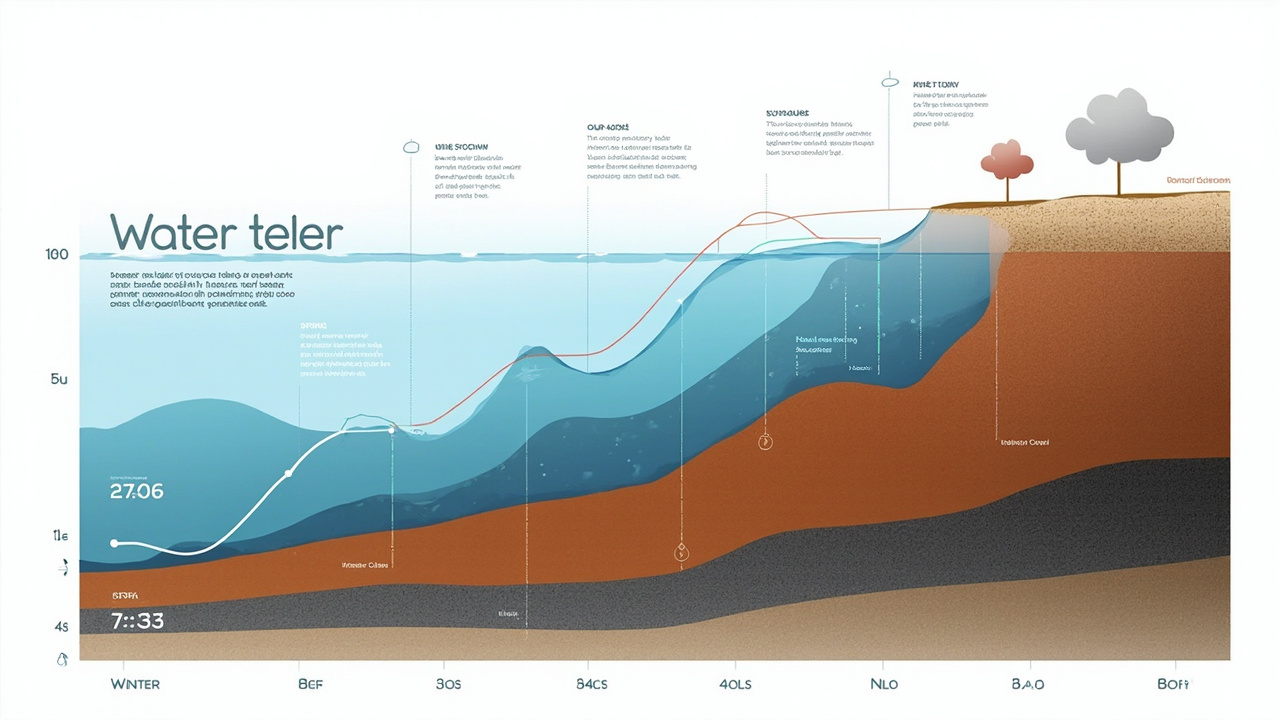
Hardness isn’t always a fixed number. Three situations cause real shifts: well water seasonal cycles, plumbing changes, and post-softener install. Confirm your baseline before relying on a number tested months ago or before a recent change.
Seasonal patterns in well water
Wells draw from groundwater, and groundwater composition shifts with the water table:
- Late summer / early fall — water tables drop after plant uptake and reduced rainfall. Calcium and magnesium concentrations often rise 1–3 gpg.
- Late winter / early spring — snowmelt and rain recharge the aquifer. Hardness can drop 1–2 gpg from dilution.
Municipal water rarely shows these shifts because of reservoir buffering. Wells are more vulnerable.
If you’re on well water and your last strip test was from winter, retest in late summer before sizing a softener. A Varify strip kit at the kitchen tap in August gives you the conservative number.
After a water heater replacement or repipe
Two plumbing changes can shift perceived hardness:
- New copper or PEX plumbing — fresh pipes don’t add hardness, but changed contact time with metal surfaces can shift pH. Lower pH can make existing hardness feel different on fixtures even when the gpg number is unchanged.
- Water heater replacement — a brand-new heater has no sediment, so hardness readings may be temporarily lower for the first week. Normal heating-precipitation resumes after that.
Run the tap for 60 seconds before testing after any plumbing change. First-draw water carries sediment and air pockets that skew strip color matching.
For wells with iron alongside hardness, iron in water covers how iron levels also shift seasonally — testing both at once gives a complete well-water picture.
After a softener install: always retest
The single most common homeowner mistake is treating the softener as a finished answer and never retesting. A softener can fail silently — bad settings, exhausted resin, salt bridging, or a faulty bypass valve — and you won’t know until scale reappears.
Test one week after installation, then monthly for the first three months. A Varify strip kit is the cheapest way. Sample from the softener’s output line, not the kitchen cold tap (which may be plumbed upstream of the softener).
If your “after” reading still shows hard water, see water softener not regenerating — most install-time failures trace to settings errors, stuck valves, or salt bridging. For salt issues, salt pellets vs crystals covers how the wrong salt type can reduce softener effectiveness.
Skip monthly retesting once the softener has run 90 days with consistent readings. The resin is conditioned and salt levels are stable — anything that breaks will show as visible scale, not a subtle gpg drift.
Common mistakes
- Treating TDS as hardness — the most common DIY error. A TDS meter reads everything dissolved in the water. If your sodium is high (from a softener, road salt, or naturally), TDS goes up while hardness goes down. You’ll size the wrong unit.
- Testing hot water — heating precipitates calcium carbonate, so your hot tap will read softer than your actual supply. Always test cold water.
- Using a regional “hardness map” as your number — maps show zone averages based on geological surveys. Your municipal blend or well can differ by several gpg. A map is a hint, not a measurement.
- Skipping the test entirely — “my neighbor has a softener” doesn’t mean your unit-to-unit hardness matches. Well water can vary house to house on the same street.
- Not testing after installing a softener — you need a baseline before and a verification after. Grab a Varify strip kit and test the output line a week after install. If the “after” strip still reads hard, something’s wrong with the install, the settings, or the salt level. See water softener not regenerating for troubleshooting.
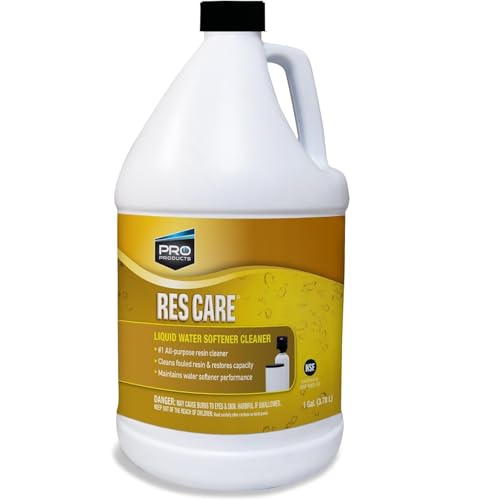
For existing softener owners, resin fouling from iron or sediment is a common cause of hardness breakthrough. A resin cleaner like Res Care Liquid ($28.75) can restore resin capacity if the problem is caught early.
Related
- What is hard water — start here if you’re new to the topic
- Hard vs soft water — sensory and practical differences
- Softener size calculator — plug in your gpg and household size
- Salt pellets vs crystals — which salt type fits your softener
- Water softener not regenerating — troubleshooting if your softener stops working
Key takeaways
- Hardness = dissolved calcium + magnesium, measured as CaCO₃ equivalent — not a health hazard, a nuisance.
- Two units: gpg (industry) and ppm/mg/L (lab). 1 gpg = 17.1 ppm.
- USGS ranges: Soft under 3.5 gpg, Moderate 3.6–7, Hard 7.1–10.5, Very hard above 10.5.
- A $10 test strip answers “do I have hard water?” in under a minute.
- TDS meters don’t measure hardness directly — don’t size a softener from TDS alone.
- Your gpg drives softener grain capacity — a wrong number means wrong sizing.
- Always test cold tap water that’s been run 30 seconds — not hot, not sitting overnight.