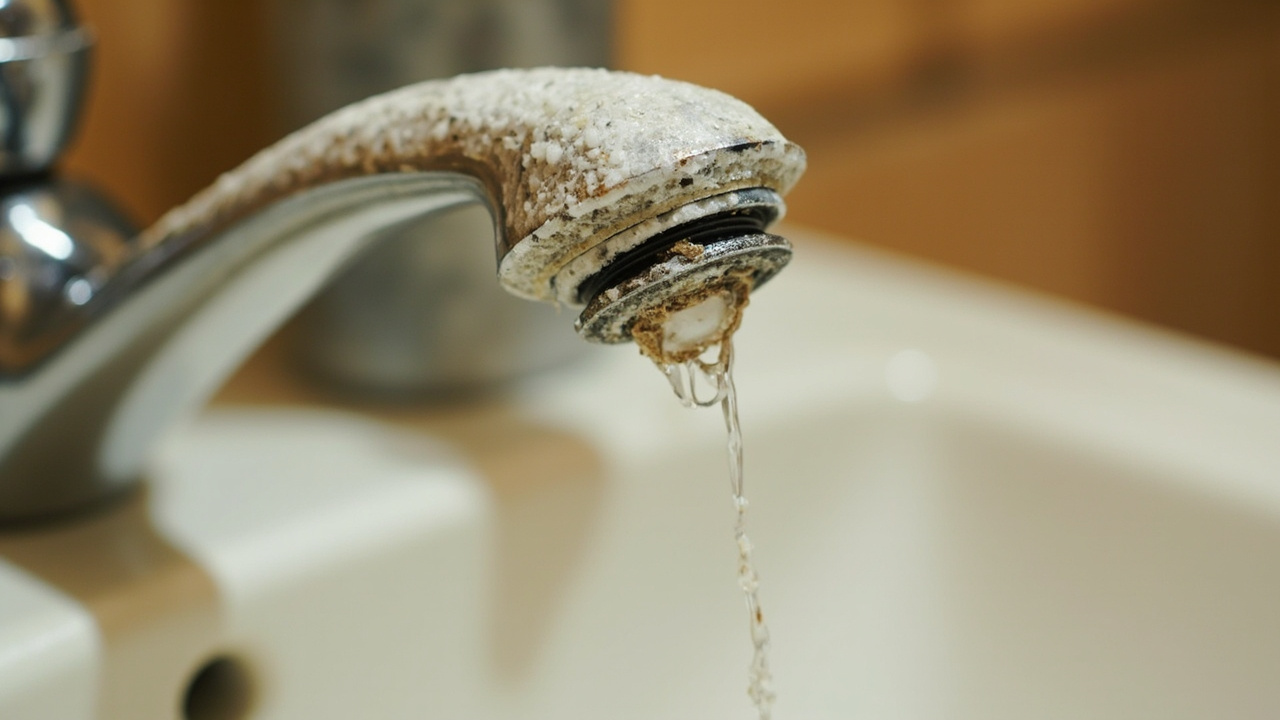
If the chrome faucet looks frosted two days after you clean it, the problem isn’t your wipe — it’s the hardness in your water. Calcium and magnesium leave a chalky film when water evaporates, and at gpg above ~7 that film rebuilds fast. Spray on a limescale remover for spot cleaning, then test your gpg with a strip. Above 7 gpg, plan a softener or whole-house filter; under that, weekly cleaning is enough.
Quick answer
White scale on faucets is calcium and magnesium left when hard water evaporates. A limescale remover spray dissolves fresh film in 2–3 minutes of contact; a pumice stone knocks off set-in crust that spraying alone won’t touch. The mineral film always comes back until you either change the cleaning habit or treat the source water. Test gpg first — under 7 you can stay on cleaners; above 7 you’ll likely want a softener or whole-house filter.
What the white crust actually is
Hard water contains dissolved calcium and magnesium. The exact mix depends on the source — some utilities carry mostly calcium, some run higher in magnesium, and on private wells the ratio swings with the local geology. Either way, the chemistry is similar enough that the cleaning response is the same. On shower heads and aerators, the same film clogs the small openings and reduces flow — a slow-trickling showerhead is almost always mineral buildup, not a failing valve.
The mineral content is measured in gpg (grains per gallon) or ppm (parts per million). 1 gpg = 17.1 ppm. The conversion is small enough that on a strip chart the two readings fall within a hair of each other — round up the higher one. Under 3.5 gpg is “soft,” 3.5–7 is “moderately hard,” 7–10.5 is “hard,” and above 10.5 is “very hard.” Most fixtures start showing daily spotting above 7.
A quick visual rule: if the mineral film is white or pale gray, it’s calcium/magnesium (hardness). If it has an orange, red, or brown tint, iron is in the mix — usually a well water iron issue or old galvanized piping. The cleaning chemistry differs. For deeper context on what your hardness number actually means, see water hardness explained — gpg, ppm, regional patterns.
Color quick-reference (helps tell hardness and iron apart):
- White or pale gray crust — calcium/magnesium. Most common. Responds to limescale remover spray.
- Yellowish or light tan — calcium with a touch of manganese. Same chemistry; cleaner still works.
- Reddish orange or rusty brown — iron. Won’t respond to limescale remover; needs an iron filter upstream.
- Blackish or dark gray — manganese, often alongside iron. May need a different filter media.
- Blue-green tint on copper pipes — copper corrosion; not scale. That’s a plumbing issue, not hardness.
If your crust is more than one color or there’s a ring inside the toilet bowl in addition to the faucet, test both hardness and iron. A combined hardness and iron test kit catches both numbers in the same dip, and the iron filter decision page walks through what to do with high-iron results.
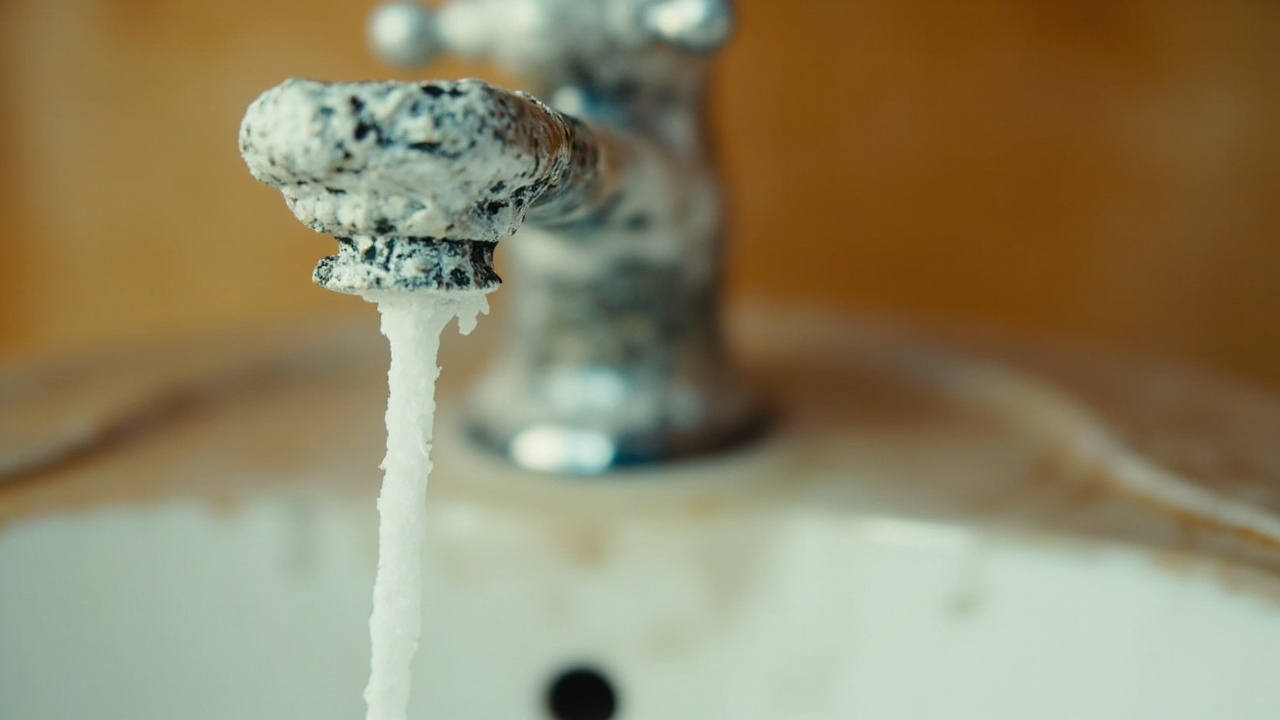
Clean the bowl and fixtures (the spray-and-wipe routine)
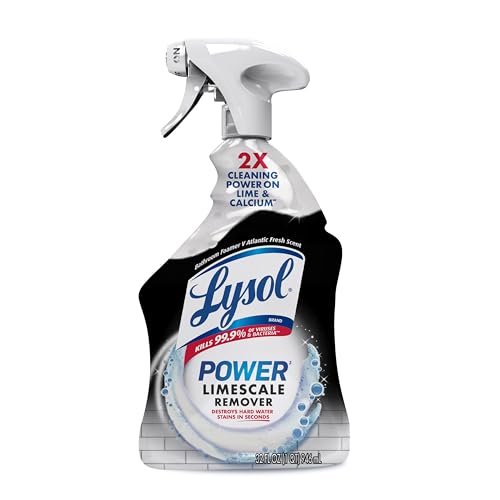
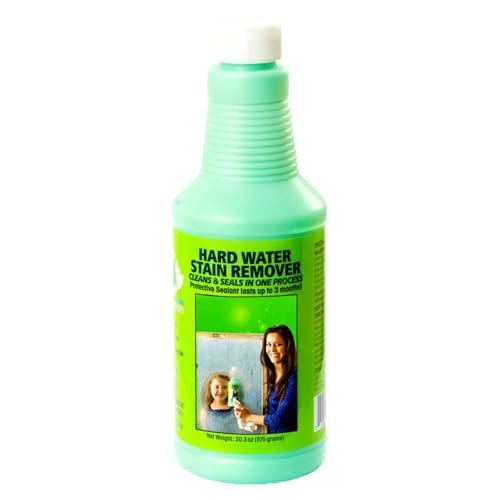
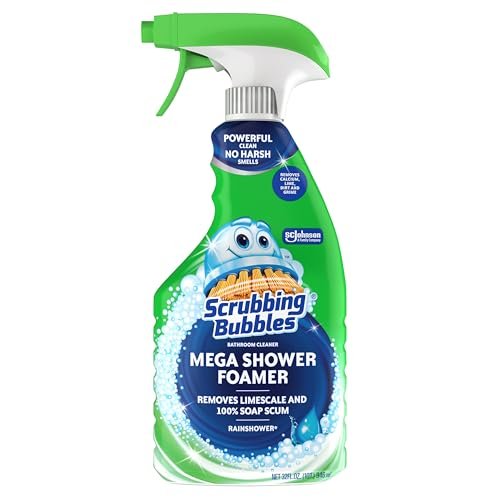
For spot removal, a limescale remover spray is the fastest path. The active ingredients are usually sulfamic acid or citric acid — both dissolve calcium carbonate on contact. Spray, wait, wipe, rinse. Three off-the-shelf options cover most jobs:
- Lysol Power Limescale Remover Bathroom Cleaner Spray — fine-mist for faucets, toilet bowls, and chrome trim. Dwell 2–3 minutes, wipe with a soft cloth.
- Bioclean Hard Water Stain Remover — heavier-duty formula for set-in stains and rust-colored spots where Lysol isn’t shifting it.
- Scrubbing Bubbles Mega Bathroom and Shower Cleaner Spray — foaming action for vertical surfaces (shower doors, tile walls) where a spray would drip before it can dwell.
Apply the spray, wait 2–3 minutes — not longer; long dwell can dull some plated coatings — then wipe with a soft microfiber cloth. For shower heads with clogged spray nozzles, unscrew the head and soak it in a cup of the same descaler for 15 minutes, then flush the nozzles under a tap.
Skip/Don’t: Don’t use vinegar on nickel, brushed bronze, or natural stone surrounds — it etches the finish. Don’t reach for pumice stones on porcelain enamel unless you’re prepared to buff out scratches afterwards. Don’t mix descalers with bleach; chloramine gas is a real risk, especially in a small bathroom with poor ventilation.
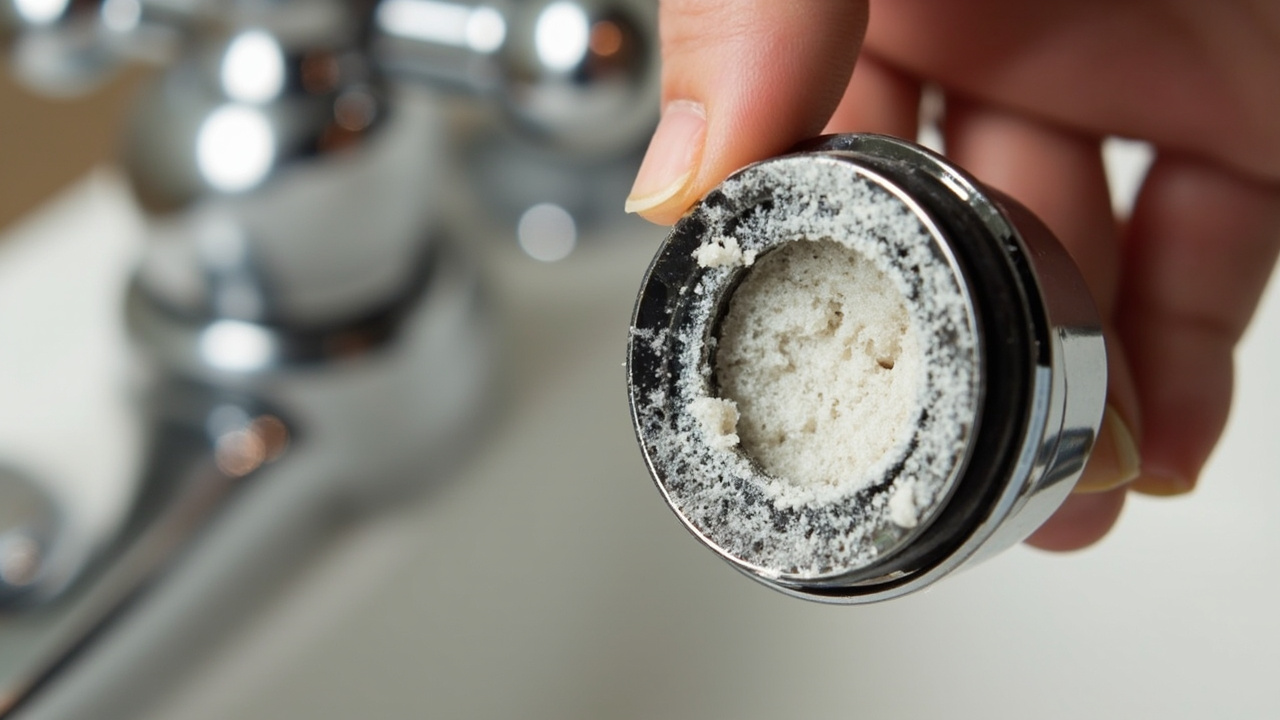
Root cause: hardness minerals
Cleaning fixes the symptom. The cause is the gpg level of your supply water. Once you clean the fixtures, test your gpg before you decide whether to install anything. If gpg is under 7, weekly cleaning plus a quality descaler is enough. Above 7 gpg, the spot-then-clean cycle repeats faster than most people want to keep up with.
The way to think about it: every gallon of unsoftened water at 15 gpg carries about a tenth of an ounce of dissolved mineral hardness. Over a year for a family of four, that’s about 4–6 pounds of calcium and magnesium deposited on your fixtures, water heater element, dishwasher, and washing machine. Cleaning handles the visible part; the invisible part accumulates inside the appliance and shortens its life.
For deeper context on how minerals drive spotting and what gpg numbers actually mean for your home, the water hardness guide walks through units, regional patterns, and how hardness drives softener sizing.
Test before you buy a system
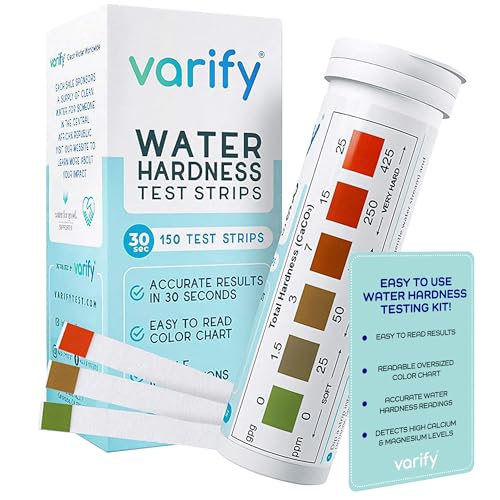
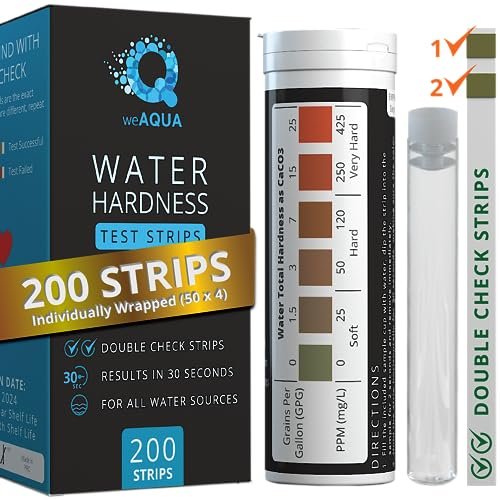
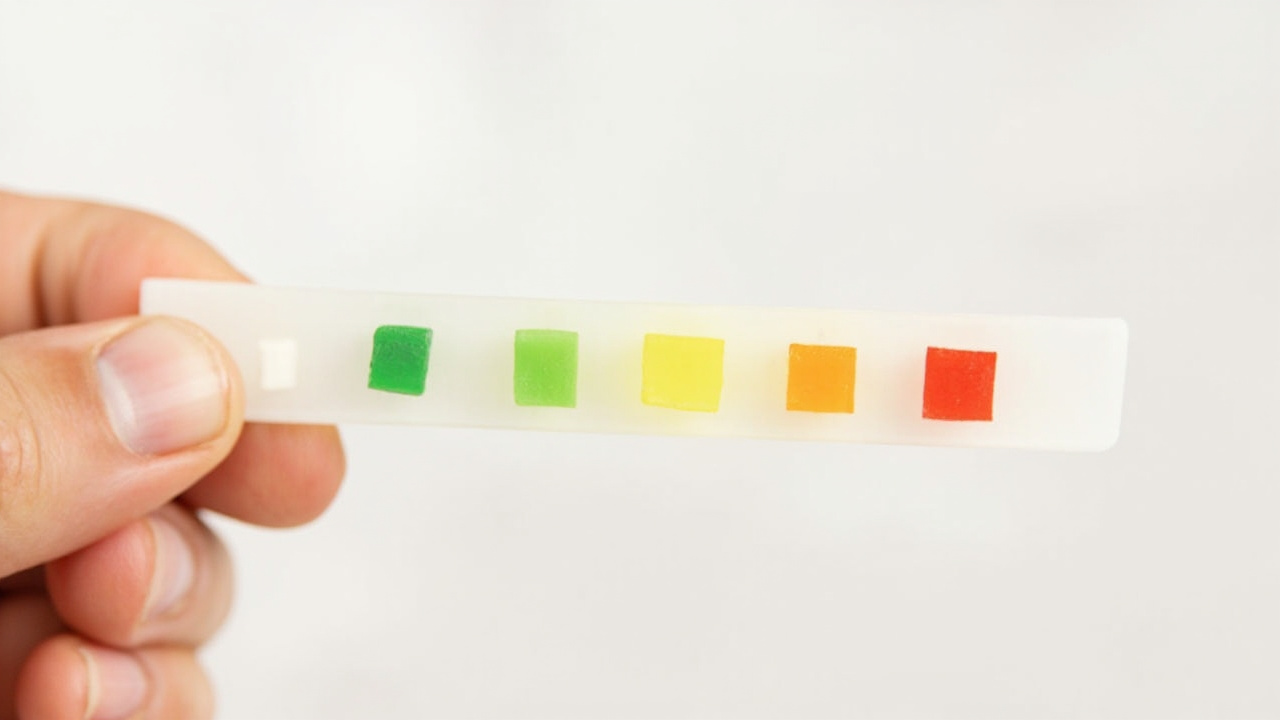
A hardness test strip is the cheapest decision aid you can buy. VARIFY Water Hardness Test Kit gives you a gpg reading in about 30 seconds from a tap water sample. For borderline readings, the WeAQUA DoubleCheck Water Hardness Test Kit splits the read into low (0–25 gpg) and high (25–250 gpg) ranges so the result is tighter on the moderately-hard edge.
Sample from the kitchen cold tap after running for 1 minute; don’t test the hot tap (water heaters add scale and skew the reading). If you’re at the borderline (around 7 gpg), run two strips a day apart — some wells and some municipal supplies swing with seasonal groundwater levels, and a single test can mislead you.
For the full kit comparison (strips vs drops vs digital meters), the hardness test kits page covers when each format makes sense.
Skip/Don’t: Don’t guess. A single wiper-blade test with the wrong color match can read 4 gpg as 9 gpg and tip you toward a softener you don’t need. Buy the strips, take the test, then act.
Fix path: cleaner vs softener
Below 7 gpg: a quality descaler plus weekly wiping is enough. Above 7 gpg: you’ll fight daily spotting without addressing the source. The two realistic options:
Whole-house softener
Drops hardness to under 1 gpg throughout the house. Eliminates scale on every fixture, not just the one you clean. Operates by ion exchange; needs salt top-ups and a drain line. See how water softeners work for the mechanism, or jump to how to choose a water softener if you’re ready to size one. Typical installed cost: $1,500–$3,000 for a metered unit; salt runs roughly $5–$10 a month for a family of four.
Point-of-use softener or cartridge filter on the kitchen cold line
Small-scale fix that covers only the drinking and cooking water. Won’t help with showerhead scaling but stops faucet spotting where it matters most. A 10-inch cartridge filter with a dedicated housing runs about $70–$100 installed; a small point-of-use ion-exchange unit runs $150–$300.
The right pick depends on gpg, household size, and whether you’re also fighting staining in the toilet (see hard water stains in toilet for the sister guide) or on shower glass (hard water stains on glass).
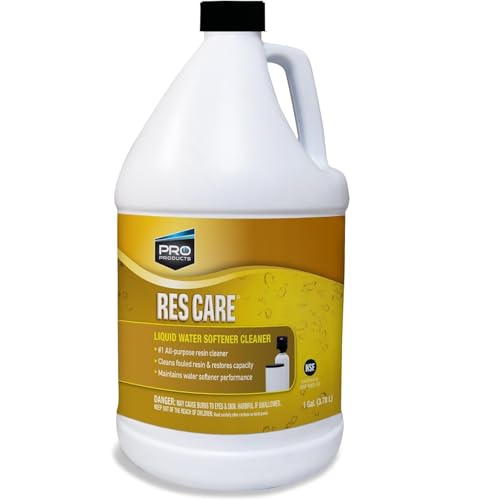
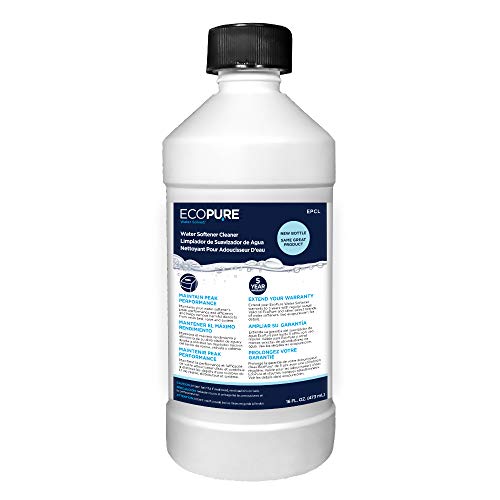
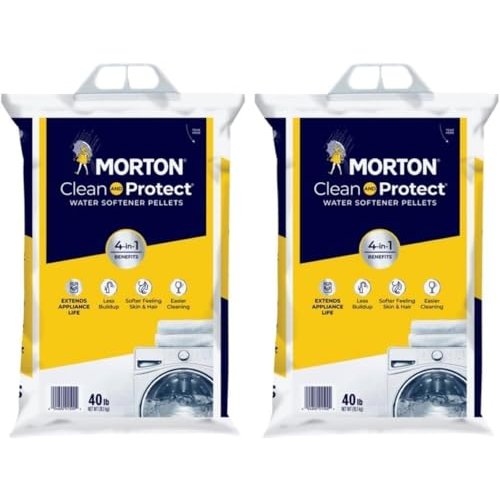
If you already have a softener in place and the spots are coming back, the issue is usually a salt bridge in the brine tank or fouled resin — not bad source water. A bottle of Pro Products Res Care or EcoPure Universal Softener Cleaner restores resin capacity, and a fresh bag of Morton Clean and Protect salt pellets keeps the brine tank clear of bridges so the regen cycle can actually pull water.
Skip/Don’t: Don’t reach for a salt-free “conditioner” thinking it will zero your gpg. Most template-assisted crystallization (TAC) media change how scale sticks, but they don’t actually remove calcium and magnesium. Your strip will still read the same number. If your gpg is over 7 and you want the spots gone, ion-exchange softening is the only thing that does it. See salt vs salt-free softeners for the honest comparison.
Other fixtures that show the same problem
The same mineral chemistry shows up on shower doors, in toilet bowls, and on glass-top stoves — each behaves a little differently.
- Shower doors — mineral film turns into a crusty haze that’s faster to control with daily squeegeeing than weekly scrubbing. Sister guide: hard water stains on glass.
- Toilet bowls — ring forms at the waterline first, then thickens up the rim jets. Sister guide: hard water stains in toilet (mentions pumice scrubbing that’s safer than the porcelain alone). For a quick spray-and-wipe pass on the bowl exterior and tank, a fine-mist Limescale Remover Spray sits for 2–3 minutes before wiping.
- Glass-top stoves — sprinkling a damp cloth over a baking-soda paste, then heating gently, lifts mineral haze in one pass.
Once you know your gpg and pick the right fix at the source, all three fixtures slow down on the same timeline. That’s why testing once and addressing the supply wins over chasing each fixture with cleaner every weekend.
Common mistakes
- Only cleaning, never testing — if you wipe the faucet every two days and never test gpg, you’ll keep buying cleaners instead of solving the problem. One test strip costs ten dollars and changes the decision.
- Using pumice on chrome or porcelain — pumice stones scratch polished finishes. Use them only on unfinished porcelain (toilet bowl interior) and only with light pressure.
- Confusing iron staining with hardness scale — orange or brown stains won’t respond to limescale removers. If your water comes from a well and your stains are reddish, the fix is an iron filter, not a softener.
- Installing a softener without measuring gpg first — you might not need one. If gpg is 4 and you only see spotting in the kitchen, a small point-of-use cartridge is the cheaper fix than a whole-house unit.
- Leaving vinegar or descaler to dwell overnight — extended exposure etches plated finishes and grout. Two to three minutes of contact is enough for calcium; rinse thoroughly afterwards.
If you cleaned twice and the spots keep coming back within days, that’s a gpg problem — confirm with a VARIFY hardness strip before you buy anything else. Strips read in 30 seconds and tell you whether a softener is the next move or whether weekly scrubbing is enough.
When to call a pro
Keep DIY if: cleaning fixtures with a descaler, testing gpg with strips, installing a point-of-use cartridge on the kitchen cold line.
Call a licensed plumber if: cutting into the main supply line, installing a whole-house softener that needs a drain and electrical outlet, persistent low pressure after cleaning (could indicate a deeper pipe issue), or staining that returns within hours of cleaning (could indicate pipe corrosion, not just hardness).
We do not rank local installer companies — see the common mistakes below for what to ask before hiring one.
Related
- Water hardness explained — gpg, ppm, regional patterns, and what your number means
- How water softeners work — ion exchange, brine tank, regeneration cycle
- How to choose a water softener — sizing by people × gpg × gallons
- Hardness test kits — strips vs drops vs digital meters
- Hard water stains in toilet — sister T1 problem page
- Hard water stains on glass — shower door and glass-cleaning sister guide
- Salt vs salt-free softeners — when salt-free “conditioners” can’t replace ion exchange
- Well water iron filters — when the stains are reddish, not white
Key takeaways
- White scale = calcium and magnesium from hard water; orange stains = iron
- Test gpg before you buy anything — a strip costs about ten dollars
- Above 7 gpg, cleaners alone won’t keep up — plan a softener or whole-house filter
- Limescale removers are fine for short contact on chrome; avoid vinegar on nickel or stone
- Whole-house softener eliminates spotting at every fixture; point-of-use only fixes the tap you treat
- If a softener is already installed and spots come back, the answer is resin cleaner or salt, not a new unit