Quick answer
A water softener and a reverse osmosis system solve different problems. A softener treats hardness minerals across the whole house to reduce scale; under-sink RO treats drinking water at one tap and reduces a broader set of dissolved substances. Choose from measured hardness and the actual contaminant or taste concern, not a TDS reading alone. Many homes use both: a softener on the main line, then RO at the kitchen sink. Test first.
What each system actually removes
If you search either term online, every product page claims to “treat your water.” That phrasing is why people spend $1,000 on the wrong box. The table below is the shortest path to the right call.
| Job | Water softener | Reverse osmosis (point-of-use) |
|---|---|---|
| Hardness (calcium, magnesium) | Yes — ion exchange at the main line | Partially in its treated stream; does not cover other fixtures |
| Scale on fixtures, shower, water heater | Yes | No — unless the RO is engineered as a whole-house system |
| Chlorine taste and smell | No | Yes — carbon pre-filter stage in most units |
| Lead, PFAS, dissolved solids (drinking) | No | Yes — when NSF/ANSI 58 certified to the exact claim |
| Where it installs | Whole-house main line | Under-sink, dedicated faucet |
| Typical upfront | $500-$1,500 installed | $200-$600 under-sink |
No single system does both jobs. Softener does not make drinking water safe; RO does not protect the heater from scale.
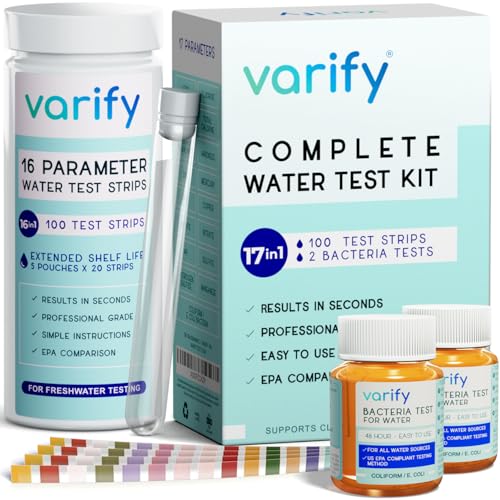
If you don’t yet know your grains-per-gallon, stop here and run a hardness test first. A multi-parameter water test kit costs around $27 and covers hardness plus chlorine, iron, and other screening parameters. For deeper context, see how to read hardness in gpg and ppm and what a TDS reading can and cannot tell you.
Water softener: hardness control at the main line
A water softener uses a tank of resin beads that trade calcium and magnesium ions for sodium or potassium. The result is water that “feels” soft, soap lathers, and scale stops building up on fixtures and inside the water heater. The mechanism is described in detail in how ion-exchange softeners regenerate.
What a softener does not do: filter water for drinking safety. It will not remove chlorine, lead, PFAS, bacteria, or general dissolved solids. It also adds a small amount of sodium. If someone in the household is on a strict sodium-restricted diet, ask their clinician about drinking softened water — we don’t give medical advice.
You probably need a softener if your water tests at or above 7 gpg (about 120 ppm). Anything above 10 gpg is considered very hard and will wreck water heaters, dishwashers, and showerheads over time.
Maintenance: refill salt every 6-8 weeks, clean the resin every 4-6 months, check the brine tank annually.
- Skip a softener if your water tests 3 gpg or below. A softener will not give you a noticeable benefit and adds salt to your wastewater stream.
- Don’t buy a softener to “purify” drinking water. Hardness control is not a general contaminant claim.
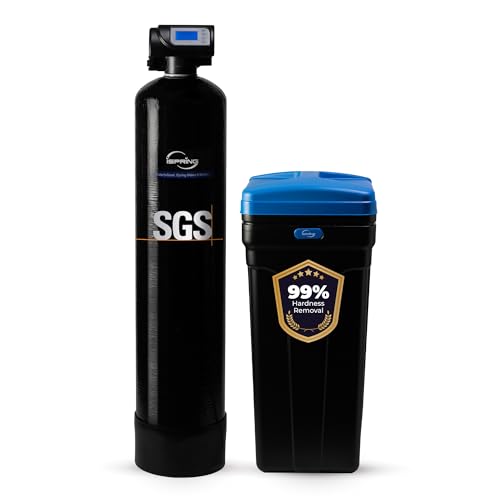
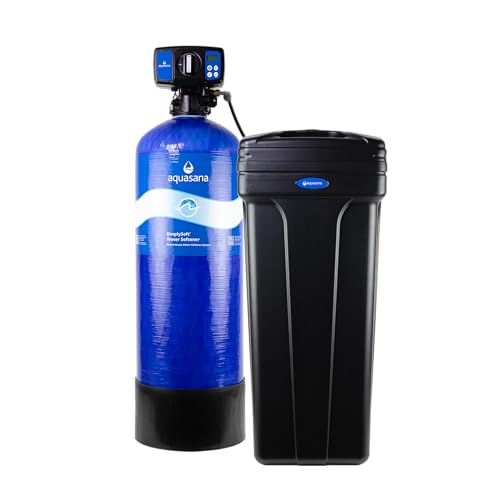
For sizing, see size a softener from hardness and household use. For households on the smaller side, a 45,000-grain whole-house softener covers most 1-3 bathroom homes after sizing. For larger capacity after measured gpg and household demand, the 60,000-grain softener is the next step up.
Reverse osmosis: drinking-tap treatment
Reverse osmosis forces water through a semi-permeable membrane at high pressure, reducing a broad set of dissolved solids, lead, fluoride, chlorine, arsenic, and PFAS in the treated stream per NSF/ANSI 58. The output goes to a dedicated faucet at the kitchen sink and sometimes the fridge.
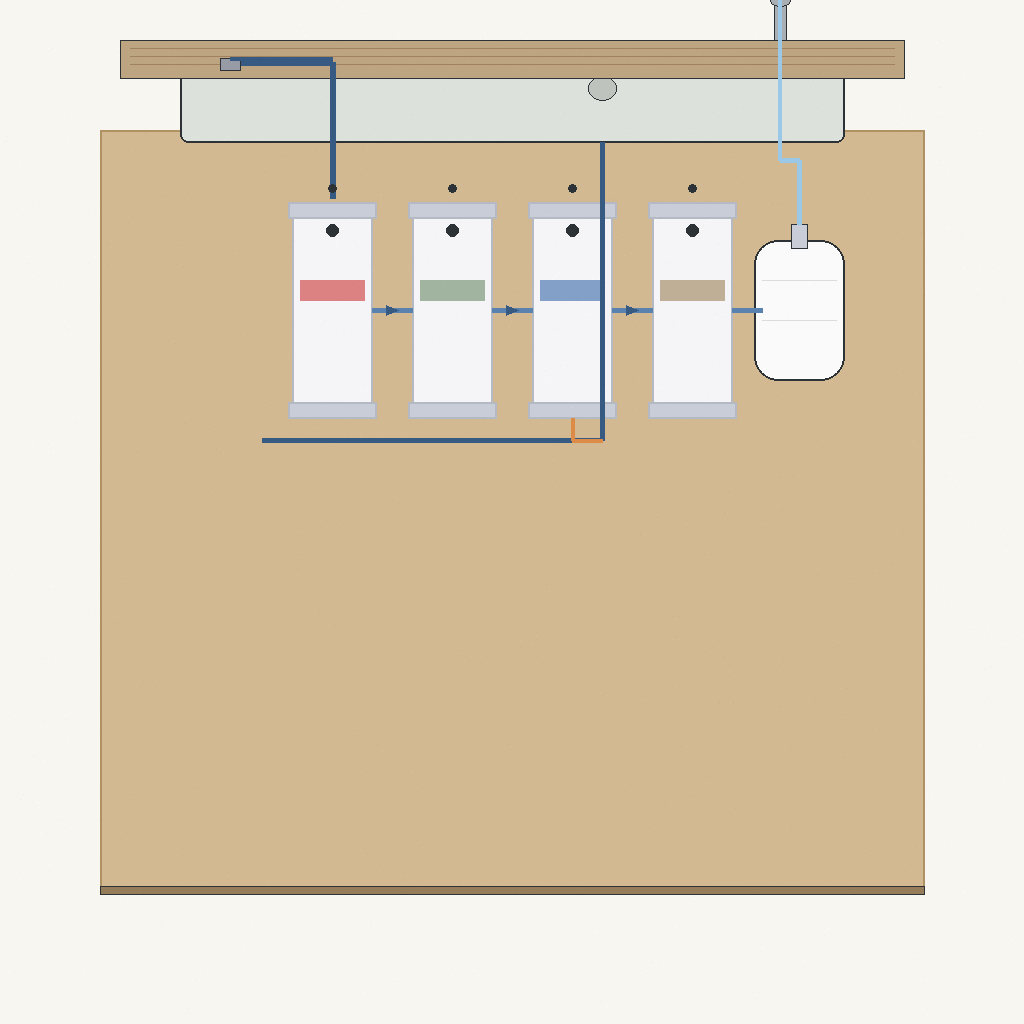
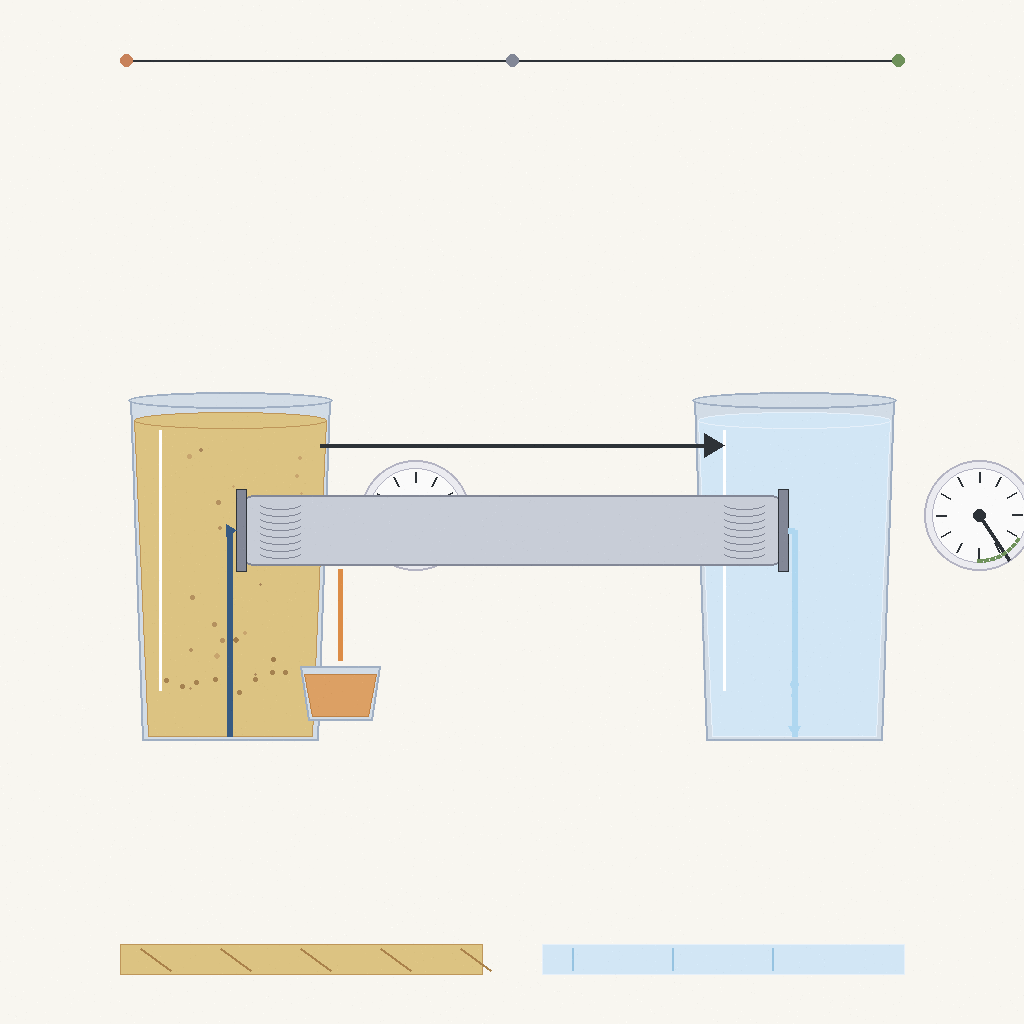
What RO does not do: treat the whole house. It will not protect your water heater, shower, or washing machine from hardness. And it is not a single box that does everything — most units stack a sediment pre-filter, one or two carbon stages, the membrane, and a polish filter before the faucet. See how an under-sink RO system is installed for the typical parts list.
You probably need RO if your tap water fails a lead or PFAS screening, if you are on well water with high total dissolved solids, or if you want bottled-water-quality drinking water without hauling jugs.
Maintenance: replace pre-filters every 6-12 months, the membrane every 2-3 years, the polish filter annually.
- Skip RO if your only problem is hardness. RO does not protect your pipes; use a softener for that.
- Don’t install whole-house RO unless a water specialist confirms you need it. Whole-house RO exists but typically costs thousands of dollars in plumbing and storage tanks and is rarely the right call for a residence.
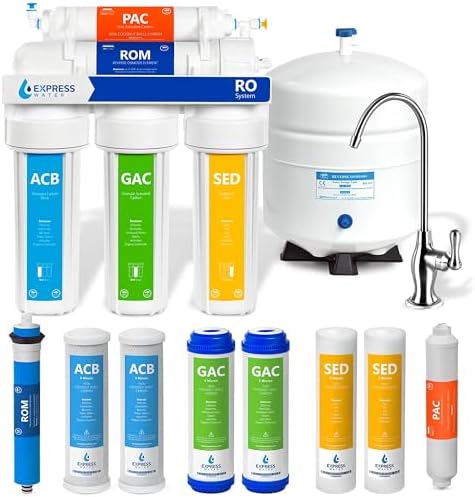
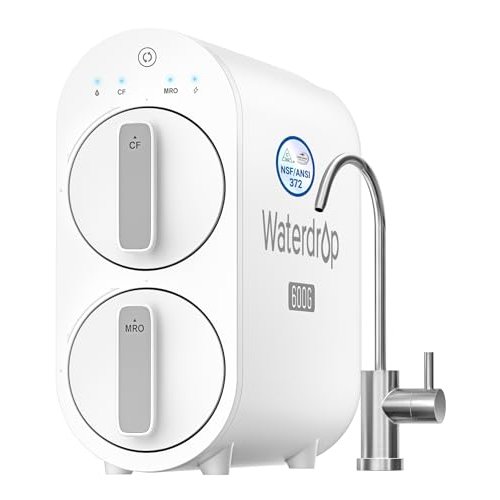
For a conventional 50 GPD under-sink setup, the Express Water 5-stage under-sink RO is a baseline example. For higher output and faster dispensing in a tankless footprint, the Waterdrop G2P600 600 GPD tankless RO is the model the section below uses for wastewater numbers.
TDS is a clue, not a diagnosis
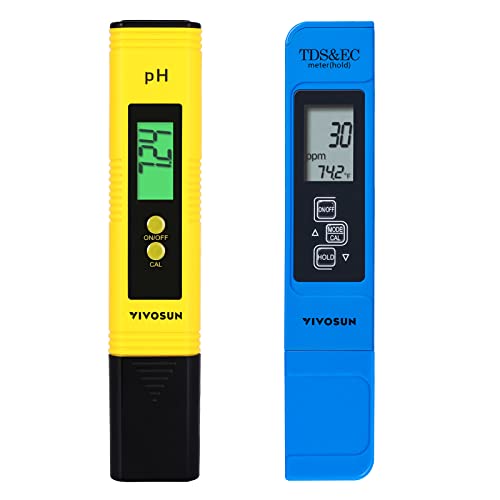
TDS (total dissolved solids) is a single conductivity number that sums many dissolved ions in the water. EPA treats it as a non-enforceable secondary standard for taste, not a health cutoff. A TDS pen can show whether an RO membrane is working — feed vs permeate usually drops the reading sharply. It cannot tell you whether calcium and magnesium hardness are present in meaningful amounts.
Use a TDS/EC meter for before-and-after comparisons on an RO stream only. For hardness, use a hardness strip or drop test; for any contaminant-specific concern (lead, arsenic, nitrate), use a certified lab. See what a TDS reading can and cannot tell you for the limits.
- Skip the TDS pen if you only need a hardness number. It will mislead you into “the softener isn’t working” when in fact the meter is reading a different measurement.
- Don’t treat a low TDS reading as proof of safe drinking water. Low TDS does not mean low lead.
Point-of-use vs whole-house coverage
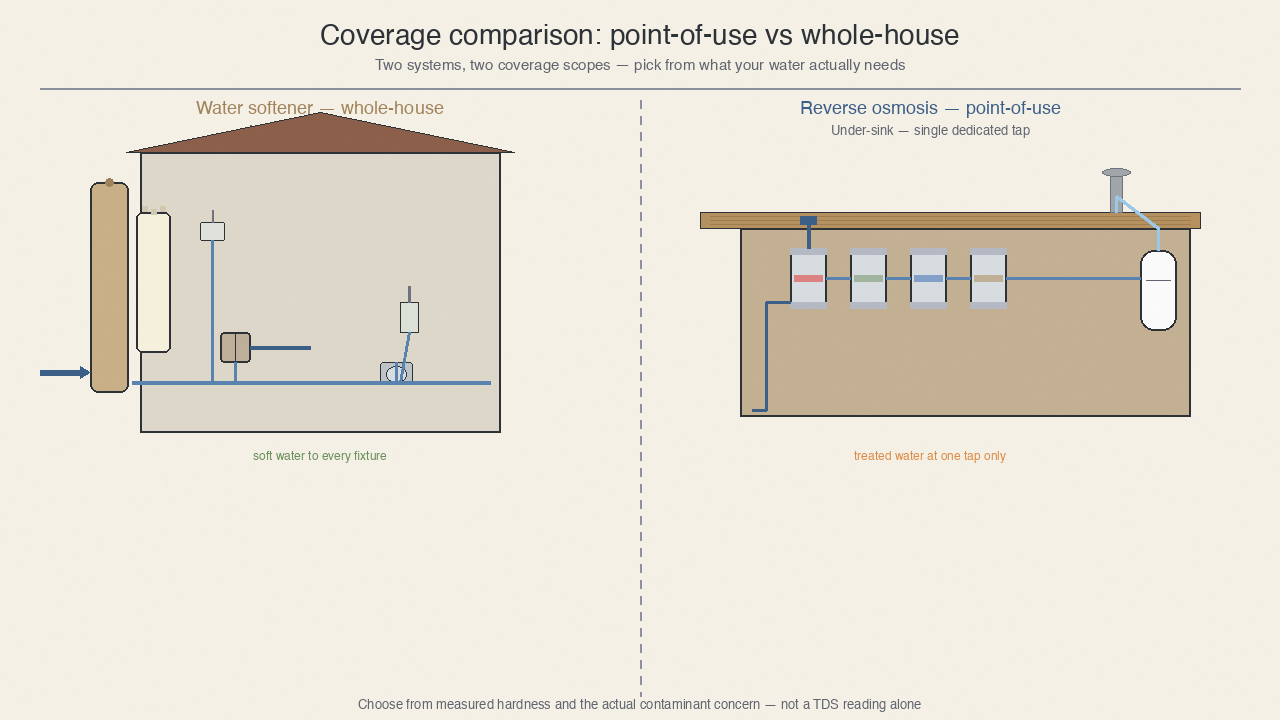
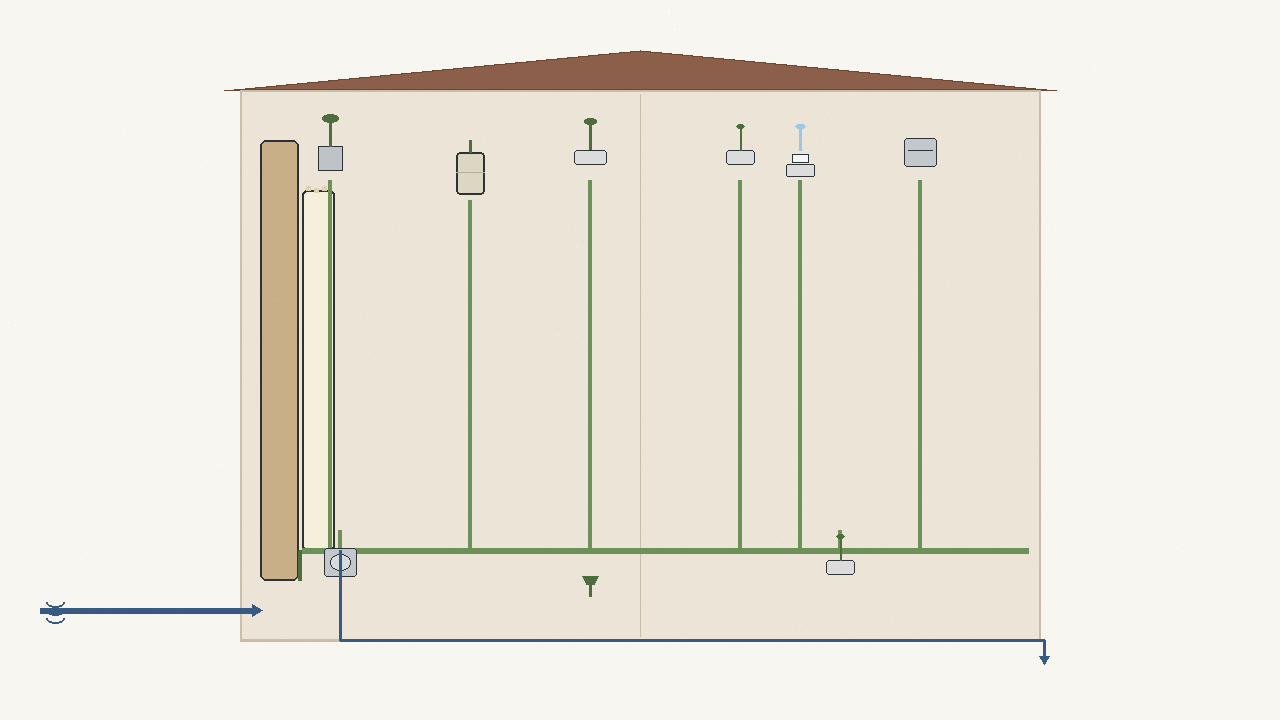
This is where the two systems stop being interchangeable. An under-sink RO is a one-faucet decision: cabinet space, a feed connection, a dedicated faucet, a drain connection, sometimes a small pump or pressure tank, and power for some models. The treated stream goes to one tap. Showers, laundry, and the water heater keep running on whatever the main line feeds them.
A softener sits on the incoming line and changes the water supplied to multiple fixtures. Sizing depends on measured hardness and household demand, not the badge size. The 45,000-grain iSpring softener sits in this whole-house role; the 60,000-grain Aquasana covers larger capacity after measured sizing.
A whole-house filter enters the plan only when sediment or chlorine taste is the actual problem. A cartridge does not soften water. See what a whole-house filter is designed to remove for the boundary.
- Skip the under-sink RO if you only want softer showers. It won’t get there.
- Don’t put RO on the main line without an engineering review. Whole-house RO is a different plumbing project.
Wastewater and efficiency: compare the actual model
RO sends a reject stream to the drain while it produces permeate. The ratio is not universal. Tankless, pump-assisted models, feed pressure, temperature, and membrane condition all change it. The selected Waterdrop G2P600 publishes a model-specific pure-to-drain ratio on its product page; that number belongs to that model, not every RO system. Read the data sheet before you compare systems on “waste.”
A softener’s discharge happens during regeneration, not continuously. Salt use depends on measured hardness, household demand, and the control head’s settings. Quoting a universal “X gallons per regeneration” without naming the model is the kind of generic claim you should not see in a comparison.
Compare the actual job solved, the treated volume, and the manufacturer operating figures. “Less waste” is not enough to choose a system if the house problem is something the system does not even solve.
- Skip wastewater comparisons until you have the specific model in front of you. Generic ratios mislead.
- Don’t route RO reject water to a place without an air gap if your local code requires one.
Installation: where the plumbing changes
An under-sink RO typically needs a cold-water feed tee, a dedicated faucet hole (or an existing soap dispenser hole), a drain saddle connection, and enough cabinet space for the unit plus optional tank. Power is only required for pump-assisted or tankless models. The selected Express Water 50 GPD unit is a conventional installation example. The Waterdrop G2P600 tankless cuts the storage tank out and runs on a small pump.
A softener installation means cutting into the main supply line, a bypass valve, a drain line that meets local code (air gap where required), and a route for salt handling. Most houses without a basement utility area will use a garage or crawlspace.
- Keep DIY if you are tapping a cold-water feed under the sink, adding a drain saddle, or assembling the RO unit itself.
- Don’t cut the main or relocate a softener without a licensed plumber. Active leaks at fittings are also a pro call.
Maintenance and ownership cost
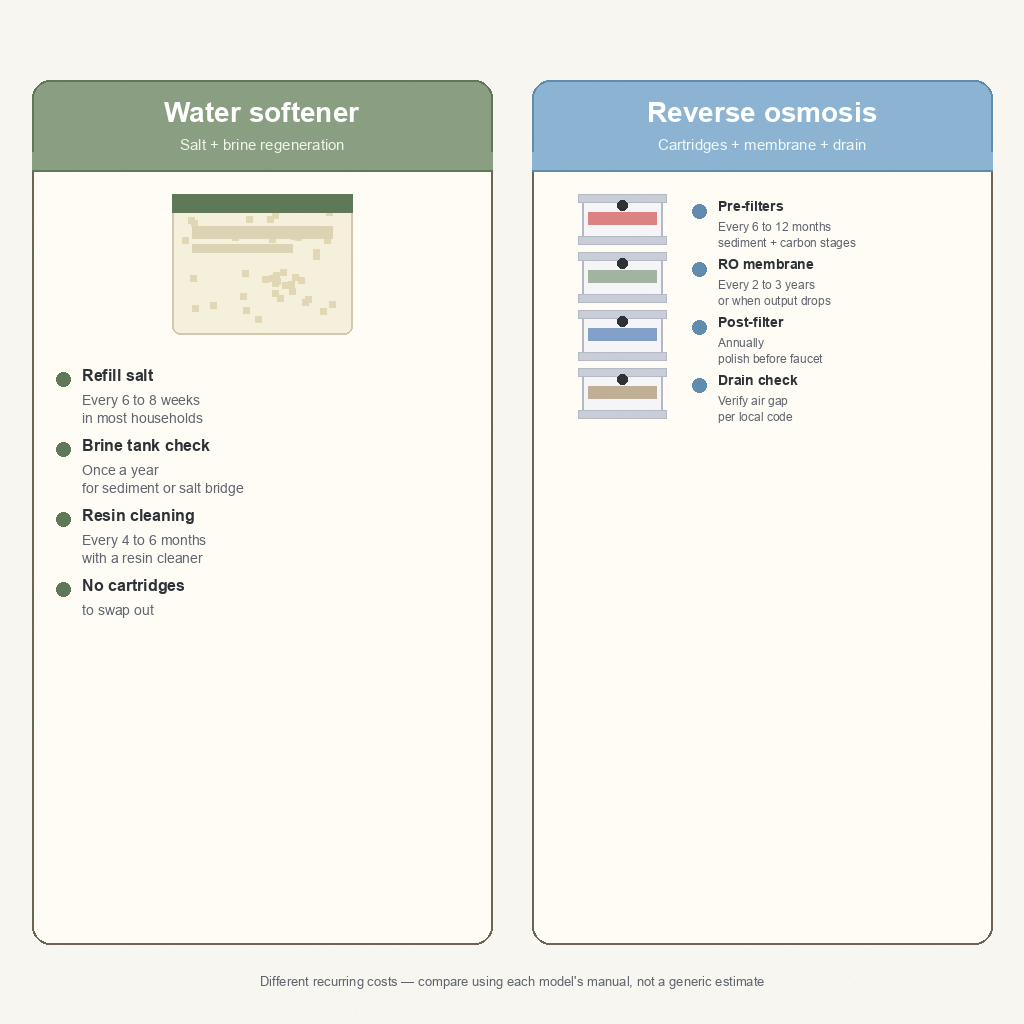
These two systems have different recurring costs, and they don’t share parts.
A softener consumes salt and regenerates on a schedule that depends on measured hardness, household demand, and the control head. Most households refill salt every 6-8 weeks.
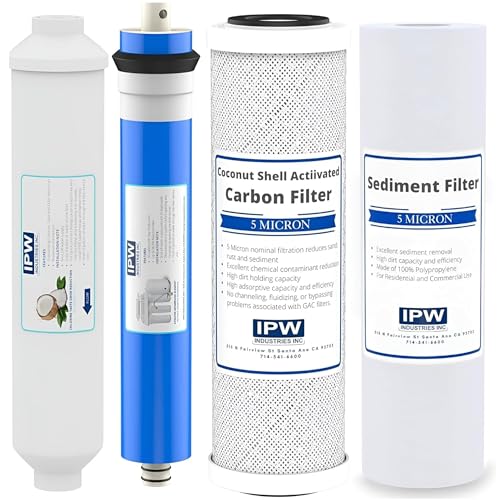
An RO system uses prefilters, a membrane, a postfilter, and drain water during production. Replacement intervals depend on the exact model and feed-water quality. A universal 4-stage RO replacement filter kit shows the typical cartridge cost for a compatible conventional system — verify model compatibility before purchase, since “universal” kits do not match every RO.
Compare the exact replacement schedule from each product manual, your salt use, and your local water and sewer rates before treating either system as “cheaper.”
Cost comparison
Here’s the explicit breakdown, side-by-side, for households choosing between the two — or deciding to run both.
Upfront cost (installed)
- Water softener: $500 to $1,500 installed for a typical 1-3 bath home. The 45,000-grain iSpring softener lands around $700, and a 60,000-grain Aquasana runs about $1,050. Add $200 to $400 if a plumber handles the main-line cut-in.
- Reverse osmosis (under-sink): $200 to $600 for the unit, $50 to $150 for a basic install if you don’t DIY. The Express Water 5-stage RO is about $277. A tankless Waterdrop G2P600 is about $289.
Annual operating cost
- Softener: $80 to $150 per year for salt, occasional resin cleaner, and the extra water that goes down the drain during regeneration. The exact number depends on your measured hardness and household demand.
- RO: $75 to $180 per year for pre-filters, membrane, and post-filter replacements. A 4-stage replacement filter kit runs about $40 per swap; with annual pre/post and a membrane every 2-3 years, most households land in the $80 to $130 range.
Five-year total
- Softener only: $1,000 to $1,800 installed plus operating.
- RO only: $500 to $1,200 installed plus operating.
- Both: $1,500 to $3,000 combined. The dual system is the right call when scale on fixtures AND drinking-water quality both matter — measured hardness above 7 gpg and either a lab-confirmed contaminant or a private well that hasn’t been tested for lead.
Hidden costs to remember
- Water testing up front: a multi-parameter test kit runs $27. Skip it and you risk sizing wrong on either system.
- Permits in some jurisdictions for main-line softener work.
- Possible pressure tank or pump upgrade for an RO on low-pressure feed.
- Higher sewer bills in some areas because both systems send water to the drain.
Don’t size either system by sticker price alone. The five-year math changes a lot between 8 gpg city water and 25 gpg well water. And remember that the softener protects the whole house while the RO protects one tap — you’re paying for two different coverage footprints, not two redundant layers of the same job.
Maintenance comparison
Here’s what you’ll actually be doing each year to keep both systems running. The two have completely different maintenance rhythms, and they don’t share parts.
Water softener maintenance
- Refill salt: every 6 to 8 weeks for a typical 3-bath home. A 40-lb bag of pellet salt runs $6 to $10.
- Clean the brine tank: annually. Check for salt bridging or mushing — both are covered in what stops a water softener from using salt. Don’t ignore a salt bridge; it stops regeneration silently.
- Resin cleaner: every 4 to 6 months. A dose of resin cleaner restores capacity and extends media life.
- Check the control head: annually, confirm the hardness setting matches your measured gpg. If your softener feels like it’s not softening anymore, the most common cause is a setting that drifted, not a broken unit — start with why your water softener isn’t working before calling a pro.
- Replace resin: every 10 to 15 years. Not a recurring annual task, but plan for it.
Reverse osmosis maintenance
- Replace pre-filters: every 6 to 12 months. Sediment and carbon prefilters protect the membrane from clogging.
- Replace the membrane: every 2 to 3 years, depending on feed water and usage. Membrane life drops sharply on high-TDS well water.
- Replace the post-polish filter: annually.
- Sanitize the system: annually. Most manufacturers recommend a peroxide or sanitizing-tablet flush through the lines.
- Check TDS reading: every 6 months. A TDS pen confirms the membrane is still rejecting dissolved solids. If the feed-vs-permeate gap has shrunk, the membrane is failing.
- Replace the storage tank bladder: every 5 to 7 years (tank models only). Tankless units skip this step.
Time investment per year
- Softener: 30 to 60 minutes total, mostly adding salt and a couple of quick checks.
- RO: 60 to 90 minutes total, more frequent but quicker swaps.
Both systems are designed for homeowner maintenance, not professional service calls. The bigger risk is ignoring them — a softener with a salt bridge looks fine until your pipes start corroding from unchecked hardness, and an RO with a tired membrane quietly stops removing what it claims to remove. On a private well, follow up with an iron-in-water check every few months to confirm what the RO is and isn’t catching. Set calendar reminders if you have to; the systems won’t tell you when a swap is overdue.
Who should pick what?
The answer is rarely one or the other in real homes.
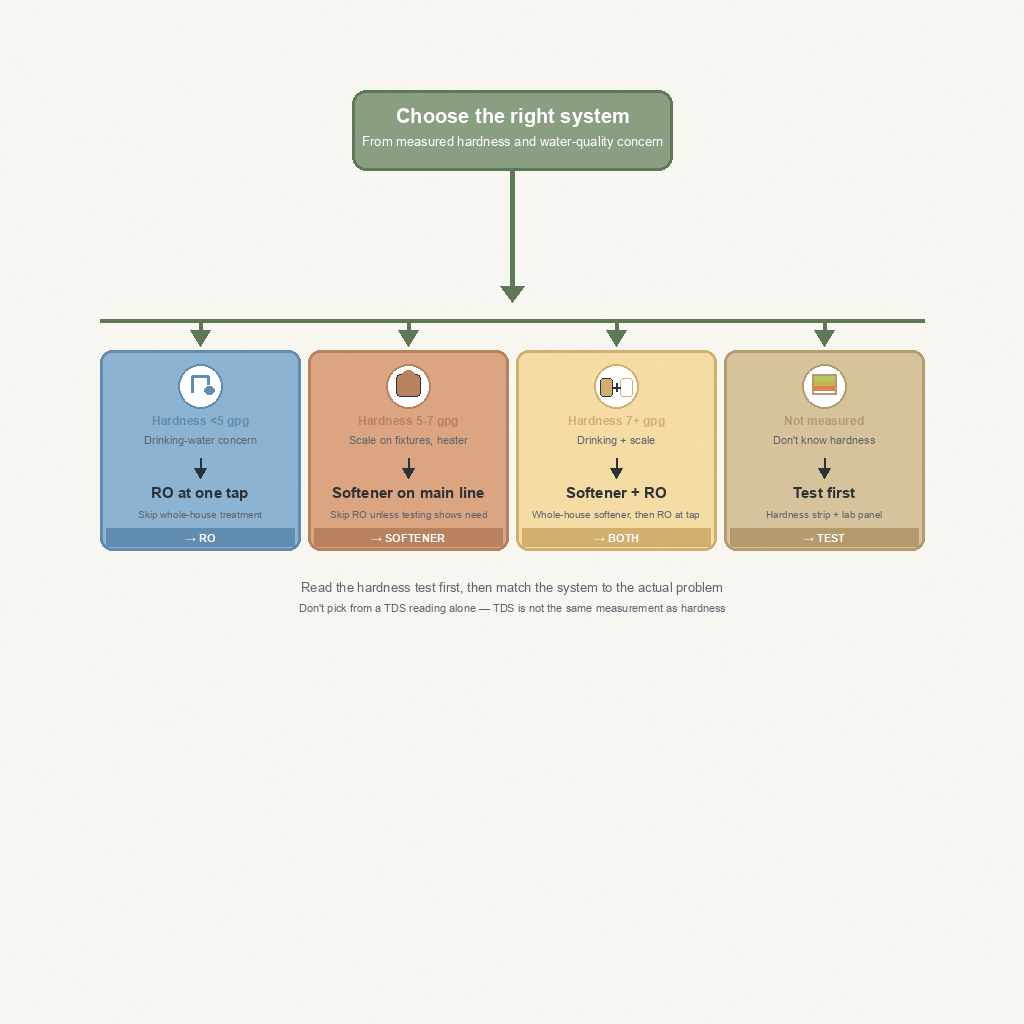
- Pick the softener first if your measured hardness is at or above 7 gpg and your main complaint is scale on fixtures, spots on glass, or short water-heater life. Softener is the right call for whole-house hardness.
- Pick RO first if your measured concern is drinking-water quality at one tap — lead, PFAS, arsenic, or general dissolved solids — and your hardness is mild (under 5 gpg).
- Pick both if hardness is high and you want treated drinking water at the kitchen tap. A common layout is the softener on the main line, then an under-sink RO at the kitchen tap. Confirm pressure, pretreatment, drain, and contaminant limits against each manufacturer’s instructions before installing them together.
- Pick neither yet if you have not measured anything. Test hardness first, then decide.
Common mistakes
- Using a TDS pen as a hardness test. TDS is not the same measurement as calcium and magnesium hardness. A low TDS reading does not mean “soft water.”
- Installing under-sink RO and expecting the shower to stop scaling. Point-of-use treatment does not cover the house.
- Buying a softener and calling it a drinking-water purifier. Hardness control is not a universal contaminant claim.
- Comparing wastewater numbers without checking the model’s ratio definition. Confirm whether the page reports pure-to-drain or waste-to-pure before drawing conclusions.
- Choosing capacity by price or badge alone. Measure water and household demand first; an undersized softener regenerates constantly, an oversized one wastes salt.
When to call a pro
DIY OK: running a hardness test, setting the control head’s hardness number, adding salt, breaking a salt bridge, swapping a cartridge on an existing housing, assembling an under-sink RO under the kitchen sink.
Call a licensed plumber if:
- Cutting into the main or relocating a softener
- Active leak at fittings, drain, or the brine line
- Control board or electrical faults beyond a reset
- Well pump or pressure tank issues
We do not rank local installer directories or match you with contractors.
Safety and limits
- Shut off water and relieve pressure before opening any filter housing.
- Don’t force fittings; overtightening plastic housings cracks them.
- Softener drain lines must meet local code (air gap where required); if unsure, use a plumber.
- Softened water is higher in sodium. If someone is on a strict sodium-restricted diet, ask their clinician about drinking softened water — we don’t give medical advice.
- Keep salt and cleaning chemicals away from kids and pets.
Key takeaways
- A softener targets whole-house hardness and scale; RO targets a treated drinking stream at one tap.
- TDS is not a substitute for a hardness test or contaminant panel.
- Point-of-use RO and main-line softener solve different coverage problems.
- Compare RO wastewater using the exact model’s ratio definition, not a universal number.
- Softener sizing needs measured hardness and household demand, not the badge size.
- Use both only when the measured numbers say both jobs matter.
- Test first, then size, then install — in that order.