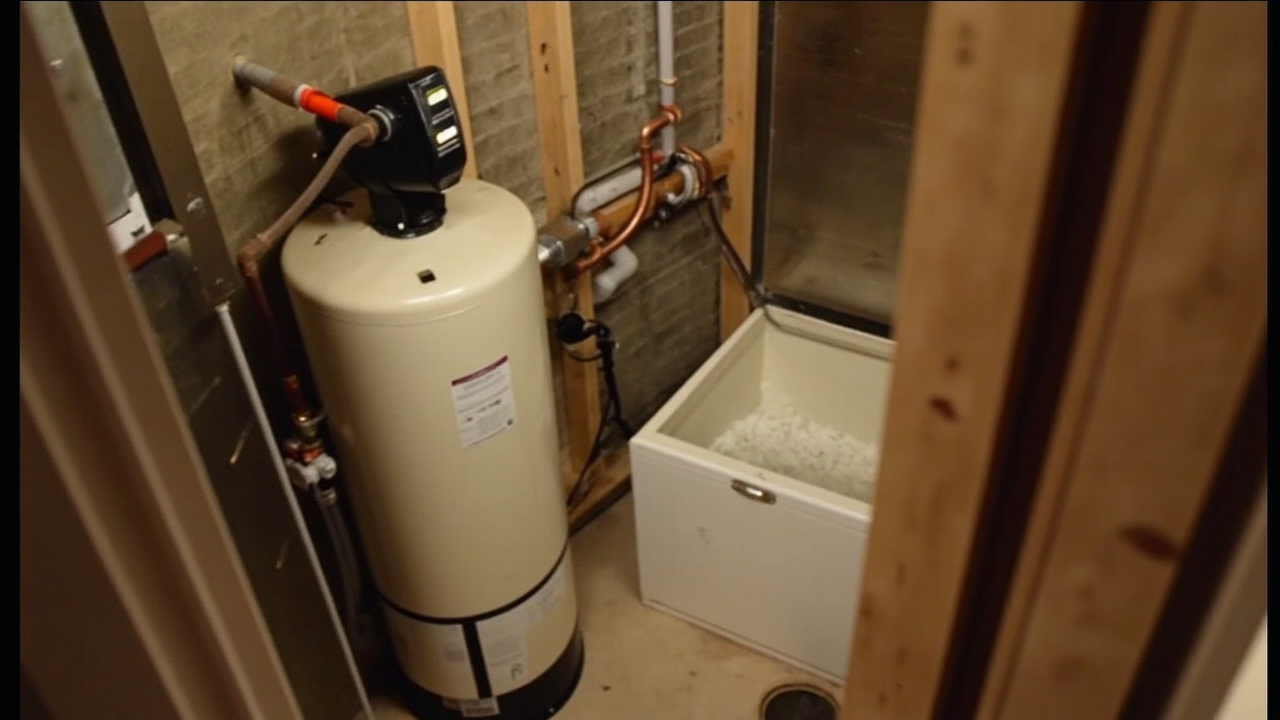
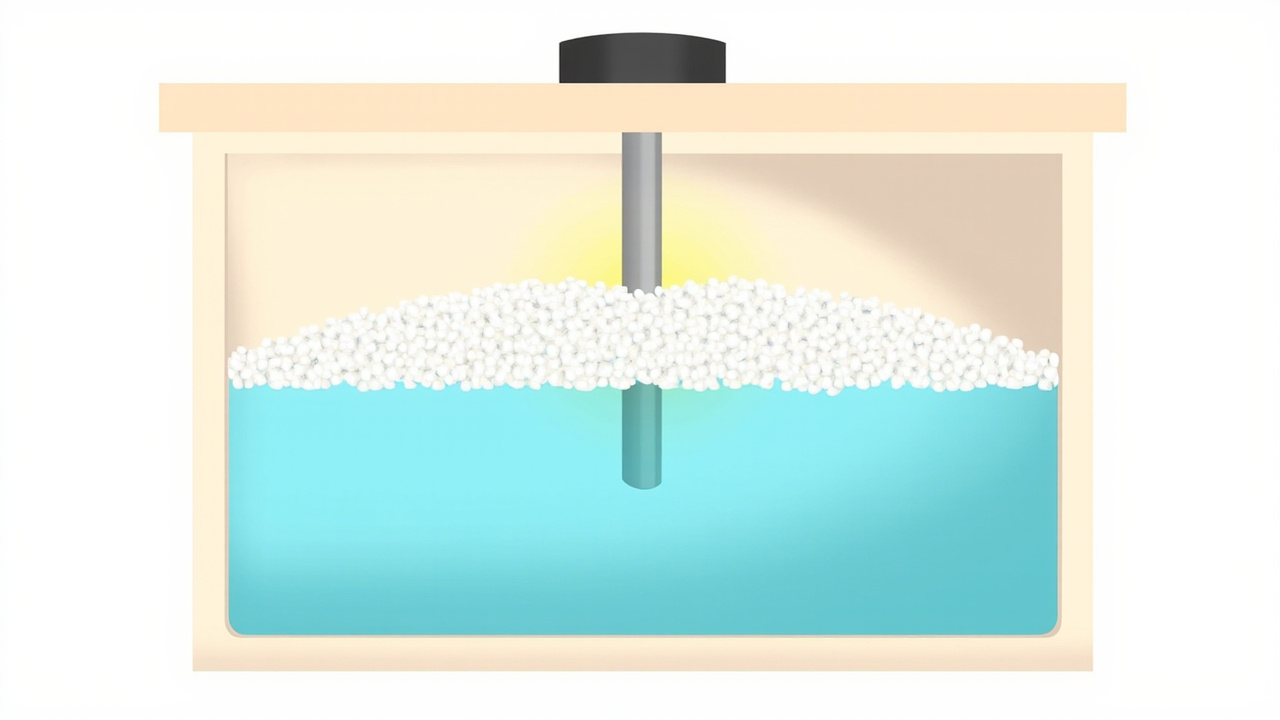
If your brine tank is full but the salt level isn’t dropping week to week, you don’t have a salt problem — you have a flow problem somewhere between the tank and the resin. Diagnose before adding more salt; the wrong move (more salt on top of a salt bridge) wastes money and time. The most common cause is a salt bridge; the symptom tree below walks through it and the other likely culprits in order.
Quick answer
If your softener isn’t using salt, the most common cause is a salt bridge (a hard crust that keeps salt from reaching the water below it). Other causes: the softener isn’t regenerating, the brine line is clogged, or the control valve is stuck. Start with the broom handle test. If you hit a hard crust, that’s the problem. If not, walk through the symptom tree below.
Do this first
Before opening the brine tank or calling a tech, do these quick checks:
- Power — is the softener plugged in? Has the outlet been tripped by a recent power outage? Softeners need continuous power to keep the timer running.
- Bypass valve — is the bypass engaged? Most softeners have a bypass valve that routes water around the unit. If someone (a plumber, a curious kid) accidentally put it in bypass, the water never reaches the softener.
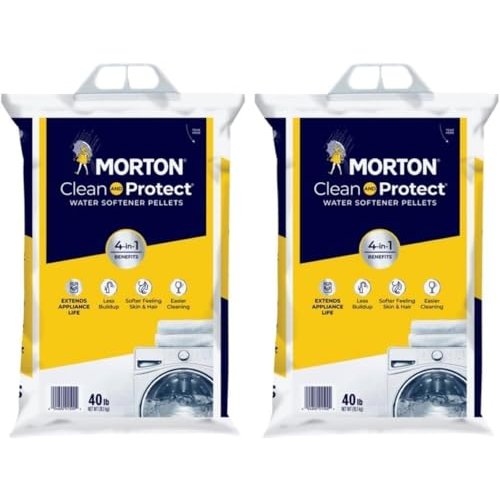
- Salt level — is the tank actually empty, or does it just look low from above? Open the lid and look down. If you see dry salt all the way to the bottom, you may just need to add a bag of Morton Clean and Protect pellets and call it done.
- Water in the tank — is there standing water at the bottom of the brine tank? Some water is normal (it dissolves the salt to make brine). Excessive water suggests the brine line isn’t drawing properly.
If all four check out, move to the symptom tree below.
Skip/Don’t: Don’t add salt to a tank with a salt bridge — the new salt sits on top of the bridge and you’ll still have no brine flow. Don’t force the control valve through a manual regen cycle more than once without diagnosing why the automatic cycle isn’t firing.
Symptom tree
Work through the branches in order. Each ### H3 is a separate failure mode with its own fix.
Salt bridge or mush
The salt looks normal from above (full or near-full tank), but it isn’t going down. Test by pushing a broom handle or long stick straight down into the salt. If you hit a hard crust within a few inches of the top, you have a salt bridge. The salt below the bridge isn’t reaching the water.
- Cause: Humidity cycling, high water temperature, or low-quality salt can form a crust.
- Fix: Break the bridge with the broom handle — use a gentle pushing or poking motion, not a sharp tool. Once broken, the salt below should dissolve normally.
- Prevention: Use high-quality pellets (not crystals or solar salt in humid climates), keep the tank lid sealed, and don’t let the tank go too low before refilling.
Not regenerating
The salt level looks fine and there’s no bridge, but the salt isn’t going down over days. Your softener isn’t cycling through its regeneration.
- Cause: Timer or metered regen sensor broken, control board error, or the regen schedule was set wrong.
- Fix: Check the control head for an error code (most modern softeners show one). Try a manual regen cycle (most units have a button or knob for this). If manual regen works but automatic doesn’t, the timer or sensor needs replacement.
- Prevention: Annual check of control valve settings; replace backup battery on units that have one (typically every 2–3 years).
Brine line clogged or kinked
You watch the tank for a week and the salt level barely changes. The softener may be regenerating, but the brine isn’t being drawn into the resin tank.
- Cause: Brine line clogged with salt sediment, brine line kinked, injector screen clogged, venturi blocked.
- Fix: Inspect the brine line for kinks. Disconnect at the control valve and try to blow through it (should flow freely). Clean the injector screen per the manual. If the brine line is clogged with salt sediment, flush with water.
- Prevention: Use high-purity salt pellets (less sediment than solar salt). Check the brine line annually for kinks or sediment buildup.
Valve stuck in service position
The control valve doesn’t move between service, brine draw, and backwash positions during regen. You’ll hear the motor trying but no water flow changes.
- Cause: Piston seals worn, valve motor broken, debris in the valve body.
- Fix: This is typically a service call. Piston seal replacement is a 30-minute job for a tech but requires valve disassembly. Motor replacement is a 10-minute swap but you need the correct part.
- Prevention: Annual check of valve operation; replace seals every 5–7 years as preventive maintenance.
Resin fouled (salt is being used but water is still hard)
This is the symptom that’s easy to miss: salt is going down, regen cycles are running, but the water still tests hard. The problem isn’t salt flow — it’s the resin bed.
- Cause: Iron in the feed water coats the resin beads, or hardness minerals accumulate beyond the regeneration’s reach.
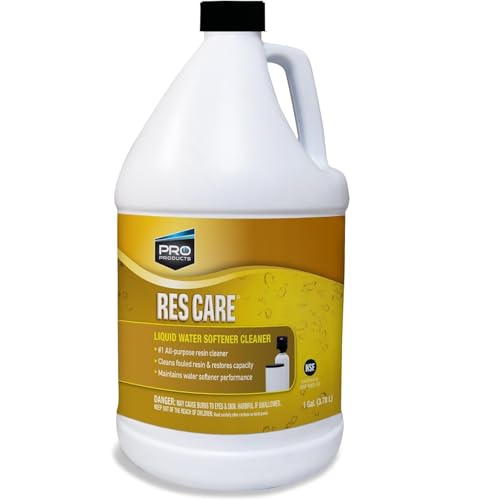
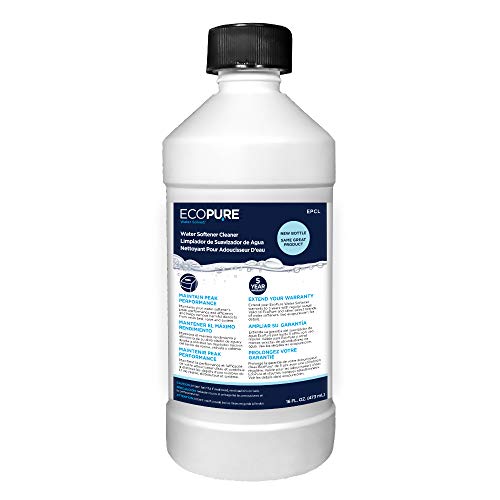
- Fix: Run a bottle of Pro Products Res Care or EcoPure Universal Softener Cleaner through a manual regen cycle. The cleaner flushes iron and mineral scale off the beads.
- Prevention: Annual cleaning cycle. If your water carries iron, run the cleaner every 3–4 months and consider an upstream iron filter.

How to check for a salt bridge safely
The broom handle method is the standard diagnostic. Use a wooden or plastic handle — not metal. Push straight down through the salt.
- No resistance until you hit water (typically 12–24 inches down): salt is loose and dissolving normally. Salt bridge ruled out.
- Hard resistance within 2–6 inches of the top: salt bridge. Break with the broom handle. Use a pushing or poking motion to crack the bridge, then stir gently.
- Hard resistance all the way down: tank is empty or has solidified salt. Add water to dissolve the mass, then add fresh pellets.
After breaking a bridge, run a manual regen cycle to confirm the softener works. If salt starts going down, you’re done. If not, walk through the rest of the symptom tree.
For more on salt bridges and brine tank problems, the brine tank problems sister page covers salt bridges, mush, and tank cleaning in detail.
Settings worth verifying
Once you’ve confirmed the softener is functioning, the regen settings determine how often salt is used:
- Hardness setting (grain capacity) — should match your water hardness in gpg. If it’s set too low, the unit thinks the resin is exhausted earlier and regens more often. If too high, it regens too rarely and you’ll get hard water through.
- People setting (capacity calculation) — the unit multiplies people × gallons/day × gpg to determine when to regen. If your household size is wrong, the calculation is off.
- Regen time — typically 2:00 AM. Make sure the time is set correctly; a power outage resets most units.
For Fleck 5600SXT and similar valves, the Fleck 5600SXT settings page covers the most common programming walkthrough.
Programming reference for common valves
Different valves have different programming paths; here’s the quick lookup for the three most common residential units:
- Fleck 5600SXT: hold the
Setbutton for 3 seconds to enter programming. Use up/down to cycle through hardness, people, regen time. Save by stepping all the way through. - Clack WS1: hold
Nextand>together for 3 seconds to enter programming. The display cycles through days, regen time, hardness, and capacity in order. - Autotrol 255/460i: older models use a dial under the faceplate; newer 460i models use a menu-driven display similar to the Clack.
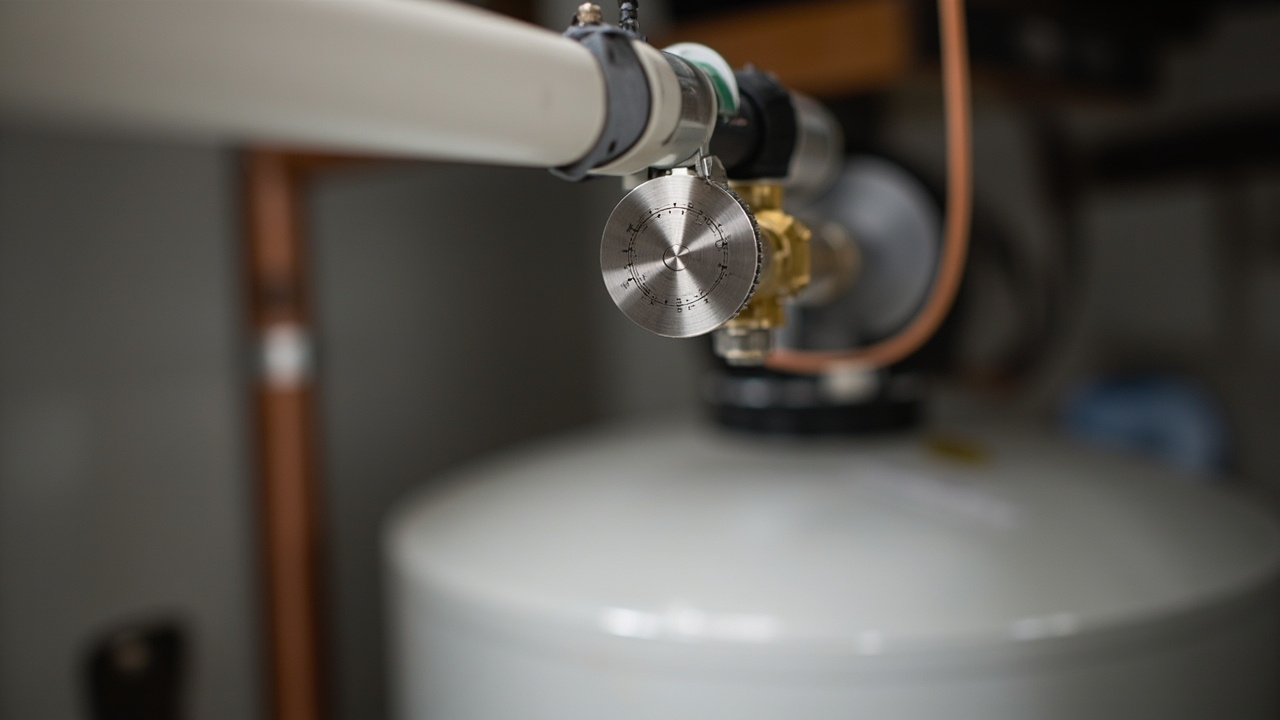
The single biggest source of “softener isn’t using salt” issues we see is a settings reset after a power outage. If your unit lost power in the past month, the regen time defaults to a different time, and the unit may be regenerating when nobody’s awake to notice the salt dropping. Check the regen time first — it’s the cheapest diagnostic on a working softener.
How much salt should you actually use
A family of 4 on 10 gpg water with a metered softener uses 25–50 lb of salt per month on the standard settings. If your salt use is much lower than this, either:
- Your regen settings are too lenient (you’re regenerating less often than you should)
- The unit isn’t regenerating at all (back to symptom tree branch 2)
- Your hardness number is much lower than you think (test strips to confirm)
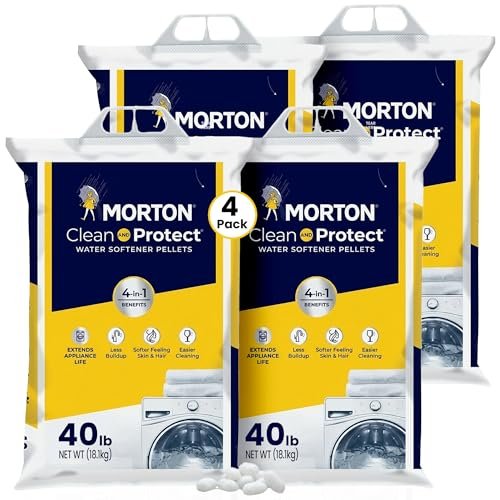
If salt use is much higher than 50 lb/month on a family-of-4 size, you may be regenerating too often. Lower the hardness setting or skip every other regen. For households that push past 50 lb/month every cycle, buying the 4-pack of 40-lb bags saves the second trip to the store and keeps the brine tank fed through a salt-bridge event without panic.
What you might need — after diagnosis
Once you know which branch of the tree applies, the fix may involve:
- Fresh salt pellets — Morton Clean and Protect or equivalent 40-lb bag. If your bridge came from humidity cycling, fresh pellets in a sealed tank will dissolve normally.
- Bulk salt refill — 4-pack of Morton 40-lb bags if you just emptied the brine tank. Covers most households for 3–6 months.
- Resin cleaner — if your softener is using salt but the water is still hard, the resin may be fouled with iron or sediment. Pro Products Res Care or EcoPure Universal Cleaner handles most softener brands.
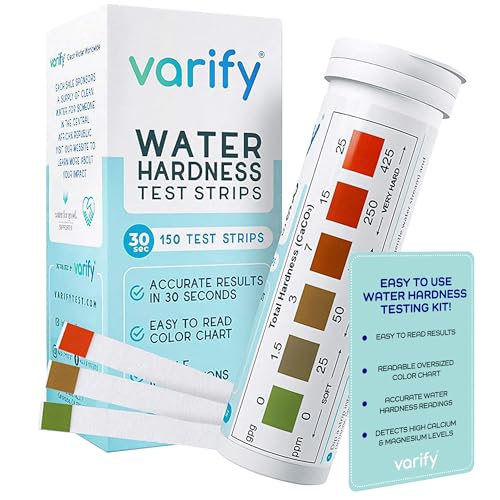
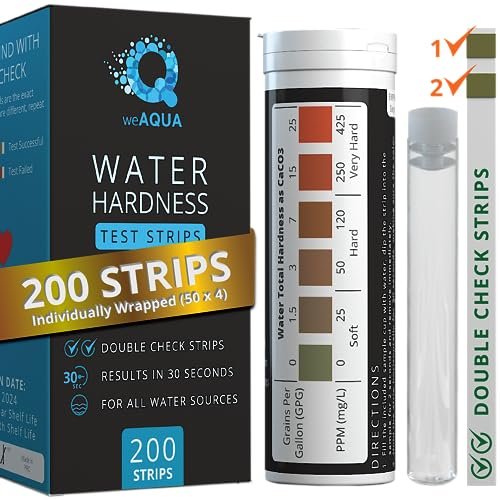
- Hardness test strips — verify the fix worked. VARIFY or WeAQUA strips show you the gpg after regen. If you’re testing weekly during the diagnostic phase, go with the bulk WeAQUA DoubleCheck 200-strip kit — fewer mid-diagnostic reorders.
Skip/Don’t: Don’t replace the softener before checking the salt bridge and brine line. Both are 10-minute fixes for parts that cost under $50.
Common mistakes
- Adding salt to a bridged tank — the new salt sits on top of the bridge and won’t reach the water. Break the bridge first, then add salt.
- Assuming the control valve is broken without testing the basics — 80% of “not using salt” cases are salt bridges or brine line clogs. Both are DIY fixes.
- Running the unit without salt — the resin gets fouled quickly without brine regeneration. If your tank is empty, top up immediately or bypass the softener.
- Ignoring standing water in the brine tank — a small amount is normal. Excessive water (more than 6–8 inches) means the brine isn’t drawing properly and the tank will eventually overflow.
- Mixing pellet and crystal salt — they dissolve at different rates. Mixing causes bridging and mush. Stick with one type per fill.
When to call a pro
Keep DIY if: testing for and breaking a salt bridge, adding fresh salt, replacing the brine line, manually triggering a regen cycle, verifying settings on the control head.
Call a licensed plumber or softener tech if: the control valve doesn’t move during manual regen (piston or motor replacement), the brine line is inaccessible behind finished walls, the unit shows an error code you can’t clear, or you have an older non-standard valve where the manual isn’t available.
Related
- Brine tank problems — sister page for salt bridges and tank cleaning
- Water softener not regenerating — sister page for control valve and timer issues
- How water softeners work — the mechanism behind regen cycles
- Water softener salt overview — pellet types and how often to add
- Fleck 5600SXT settings — if your control head is a Fleck
- How to add salt to a water softener — basic top-up routine
- How to choose a water softener — if you end up needing a replacement
Key takeaways
- 80% of “not using salt” cases are salt bridges or brine line clogs — both DIY
- Test for a bridge with a broom handle before you add more salt
- Walking through the symptom tree in order catches most failures
- Verify regen settings after any repair — hardness, people, and regen time
- Resin cleaner restores performance if salt is flowing but water is still hard
- Standing water in the brine tank means brine isn’t drawing properly