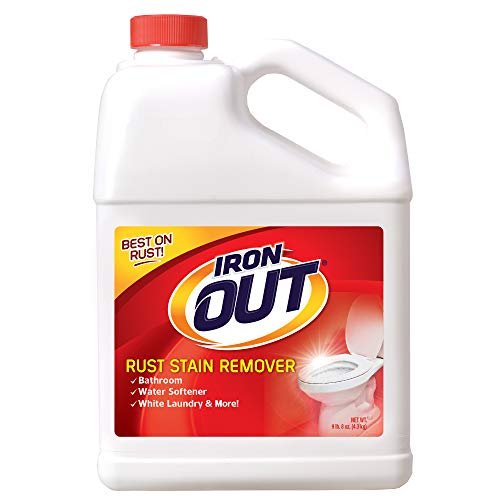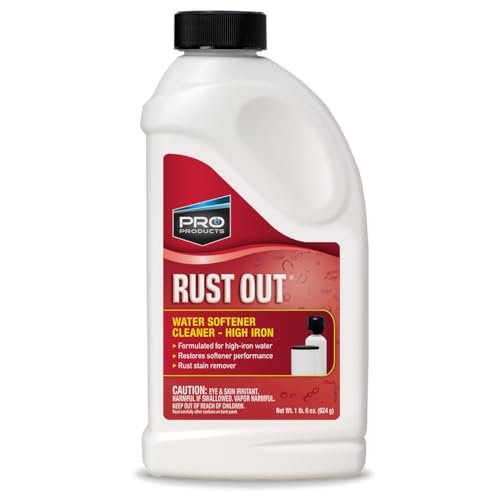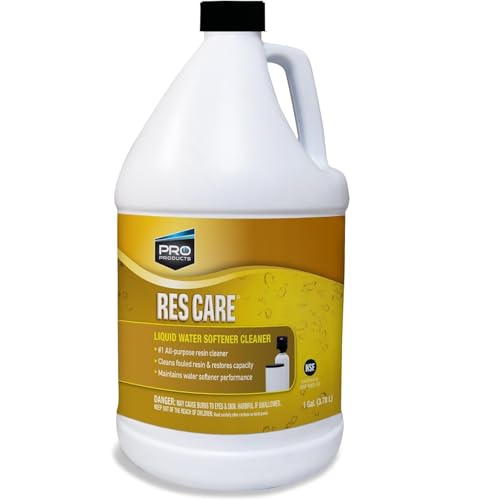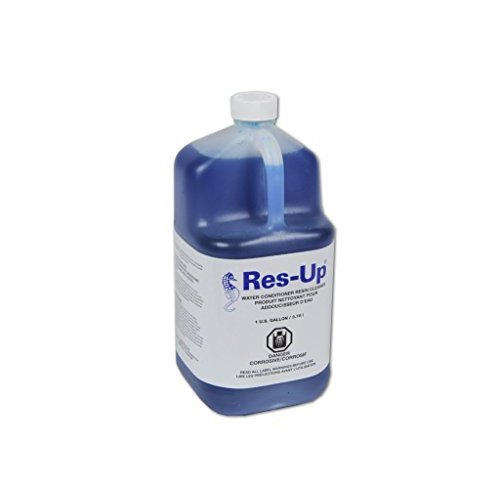
If your softener used to produce spot-free dishes and now leaves faint spots on glassware, the resin bed is probably fouled with iron, manganese, or organic matter. A resin cleaner is the first-line treatment — but only when iron (or organic carry-over from chloramine) is the actual cause. Wrong-cause application wastes $20-50 in chemicals and a regeneration cycle. This guide covers what a softener cleaner does, when it helps, when it doesn’t, and how to dose the common formulas (Iron OUT, Rust Out, Res Up, Res Care, EcoPure EPCL).
Quick answer
Buy Rust Out powder for wells above 0.3 ppm iron, or Res Care liquid for chloramine municipal water with organic fouling. Dose 1/2 cup per cubic foot of resin into the brine well, then trigger a manual regeneration. Skip cleaner if your softener is 10+ years old (resin is exhausted, not fouled) or if brine is clear but treated water still tests hard (valve problem). Test with strips first.
Do this first
Confirm the symptom
Before buying any cleaner, confirm the softener is actually failing. Fill a glass from the cold tap (run for two minutes first to clear line water), add dish soap, and swish. If it barely lathers and leaves a cloudy film, the water is hard. If it lathers fine but the glass still spots, the cause is dissolved minerals or iron staining — not hardness.
Test before you buy
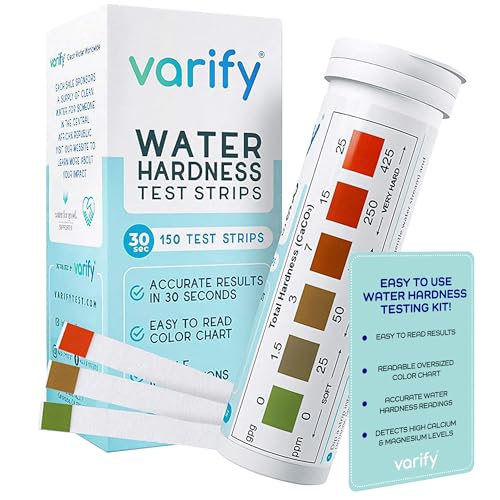
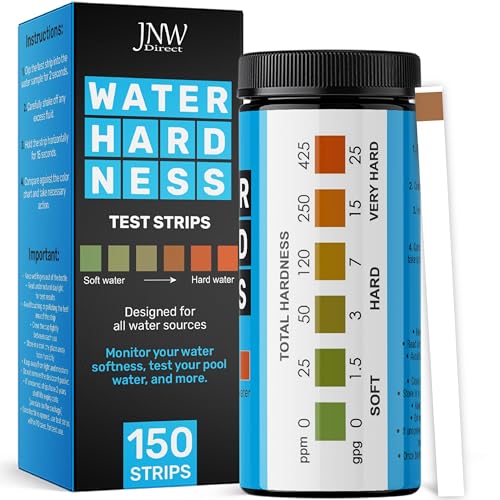
Test your feed water and treated water with the same hardness test strip. If both test above 3 gpg / 51 ppm hardness, the softener is failing. Then test specifically for iron — most hardness strips don’t show iron. Above 0.3 ppm iron in the feed water is when a resin cleaner helps. For high-frequency testing, the JNW Direct 150-count strips is the same price point as the 100-strip VARIFY but lasts longer per box.
Safe first checks
- Don’t pour cleaner directly into the resin tank — it bypasses the brine pathway.
- Don’t assume “more cleaner = better” — excess exits to drain without improving cleaning.
- Do trigger a manual regeneration right after dosing — cleaner must be drawn into the resin tank during the brine draw + slow rinse phase.
- Do bypass the softener if cleaner is unusually foaming or discolored — a sign of severe fouling that may need more than one treatment cycle.
When a cleaner helps (and when it doesn’t)
The iron threshold (above 0.3 ppm = cleaner helps)
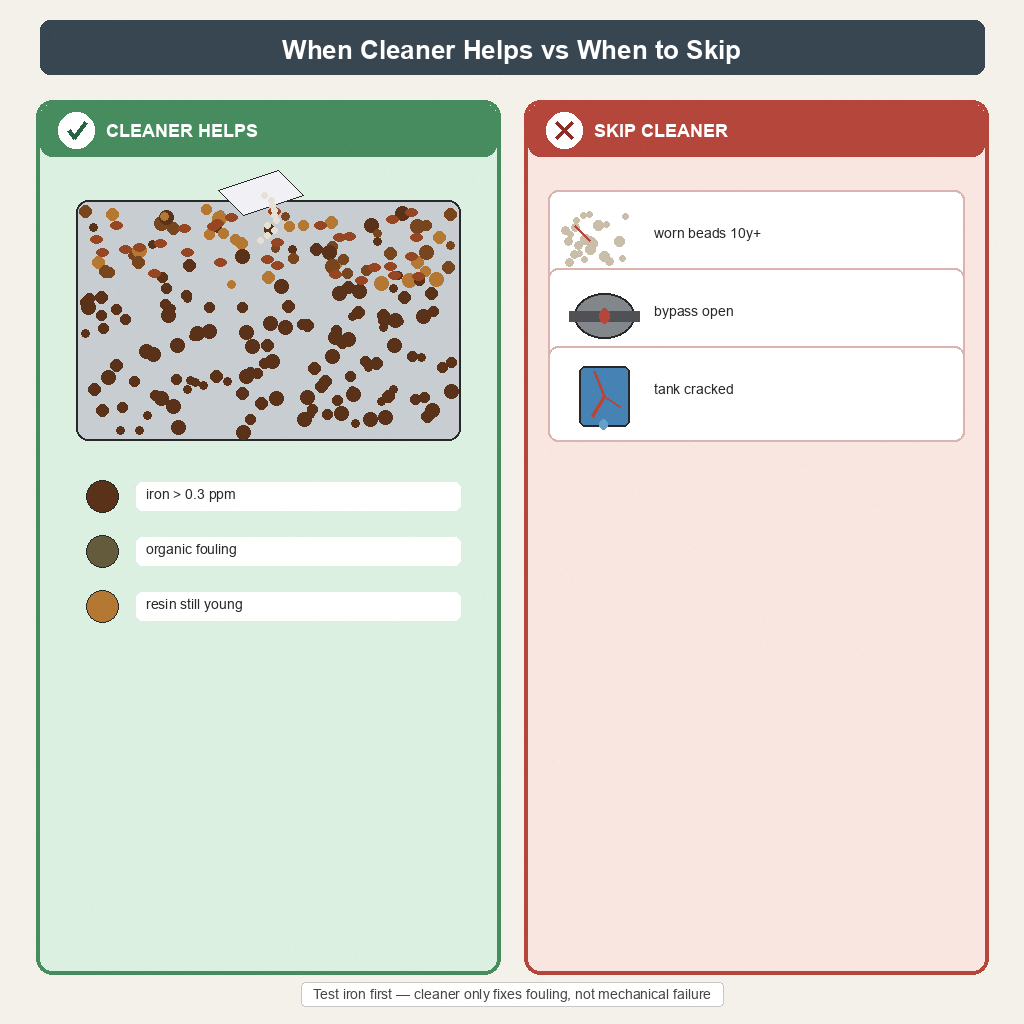
Iron is the most common reason homeowners reach for resin cleaner. Trace iron (0.3 ppm or higher) coats the resin beads over months and reduces capacity. Signal: faint orange staining in standing water, metallic taste in the morning cold tap. If your iron-in-water test reads 0.3-1.0 ppm, one treatment every 6-12 months keeps the bed clear. Above 1.0 ppm, quarterly treatments or an upstream iron pre-filter.
Mechanical wear (skip cleaner)
Standard 8% crosslink styrene-divinylbenzene resin has a service life of 10-15 years. After that, beads crumble, channels form, effective capacity drops. Cleaner cannot repair mechanical wear — you need resin replacement or a new tank. See also not regenerating when the control head is the suspect. Signal: a softener over 12 years old with steadily worsening output.
Valve and settings failure (skip cleaner)
If brine tank water is clear and salt level is normal but treated water still tests above 3 gpg, the cause is almost never the resin bed. It’s the control valve (stuck in bypass), hardness setting dialed too low, or a programming error after a power outage. Cleaner is wasted — re-program the valve per your hardness test kit results.
Channeling and resin loss (skip cleaner)
Visible resin beads in drain water during regeneration, or noticeably lower resin level when you look down the brine well, means the tank’s internal distributor or laterals have failed. Cleaner is irrelevant — resin is physically leaving the tank. Call a softener service tech for distributor replacement or tank swap.
Low-crosslink or non-standard resin (skip most cleaners)
Standard cleaners target 8% crosslink resin. Older softeners (pre-2000) may have 4-6% crosslink or non-standard media, especially in commercial Kinetico tanks. Sodium hydrosulfite can damage these — check the owner’s manual. Citrus-based Res Up or Res Care is gentler.
Anatomy: where cleaner goes and why
The brine well and resin tank
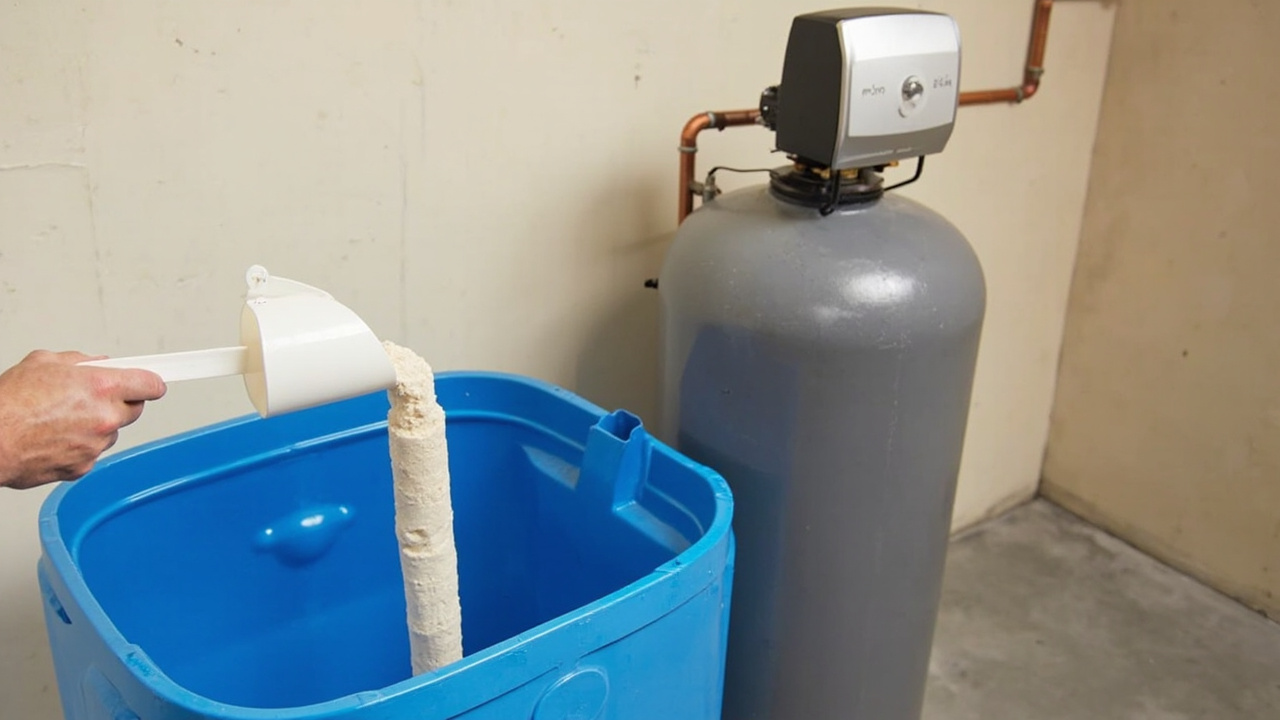
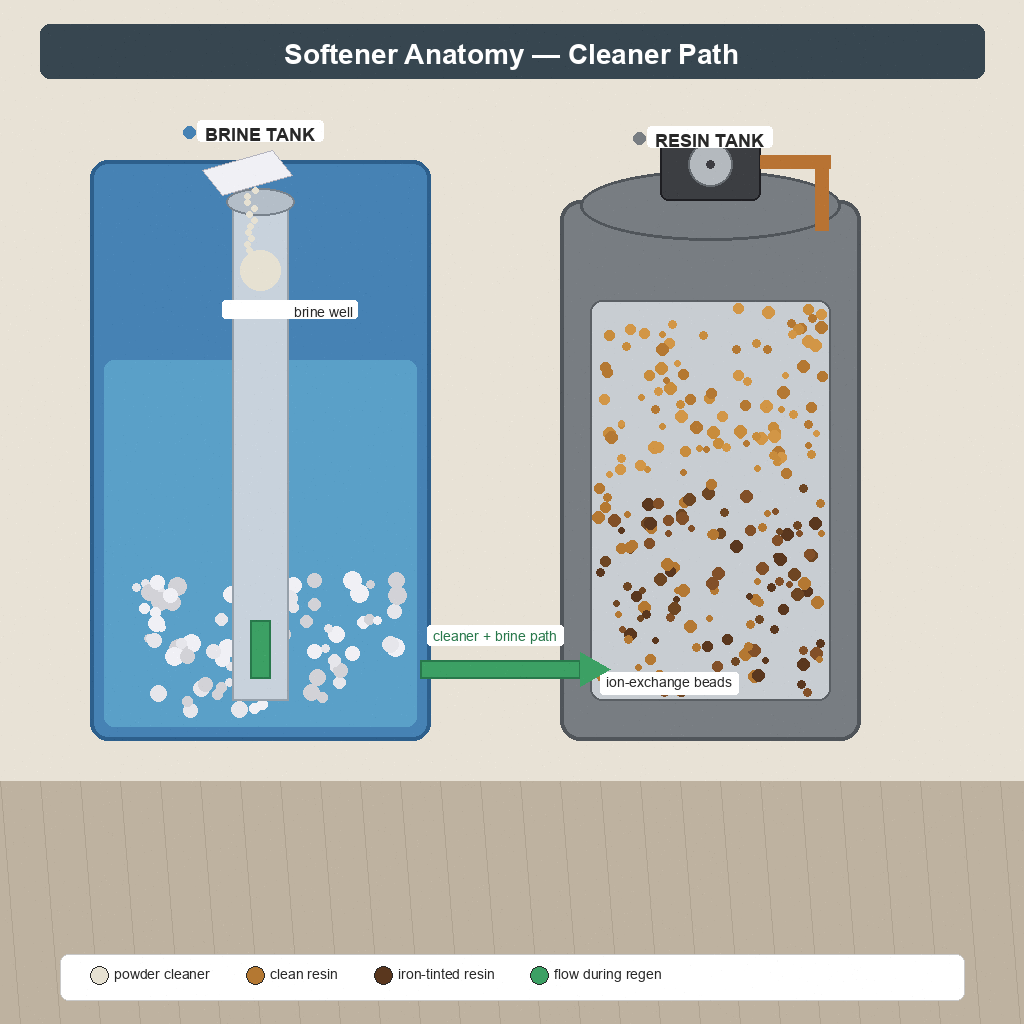
Most residential softeners have two tanks: a tall narrow brine tank (where you pour salt and cleaner) and a wider resin tank (where the ion-exchange beads sit). The brine tank has a vertical pipe called the brine well that reaches near the bottom. Cleaner is poured into the brine well, not directly into the resin tank. During regeneration, the valve draws brine + cleaner from the well, runs it through the resin bed, then rinses with fresh water.
Why the brine well matters
Pouring cleaner directly into the resin tank does nothing useful — the chemical sits on top of the beads, doesn’t get distributed evenly, and exits to drain during the next backwash without contacting the iron-coated bead surfaces. The brine well forces the cleaner into the brine pathway the softener is designed to use. If your brine well is missing, damaged, or shorter than 18 inches, replace it before dosing.
Brine tank anatomy and salt choice
For iron-rich wells, salt choice interacts with cleaner effectiveness. Pellets with built-in iron-cleaning additives provide a low background dose every regeneration. Plain pellets require manual cleaner treatments on a 6-12 month schedule. Crystals dissolve faster but introduce more insoluble residue that contributes to mushing — see the salt bridge and mushing guide.
How to apply cleaner (DIY procedure)
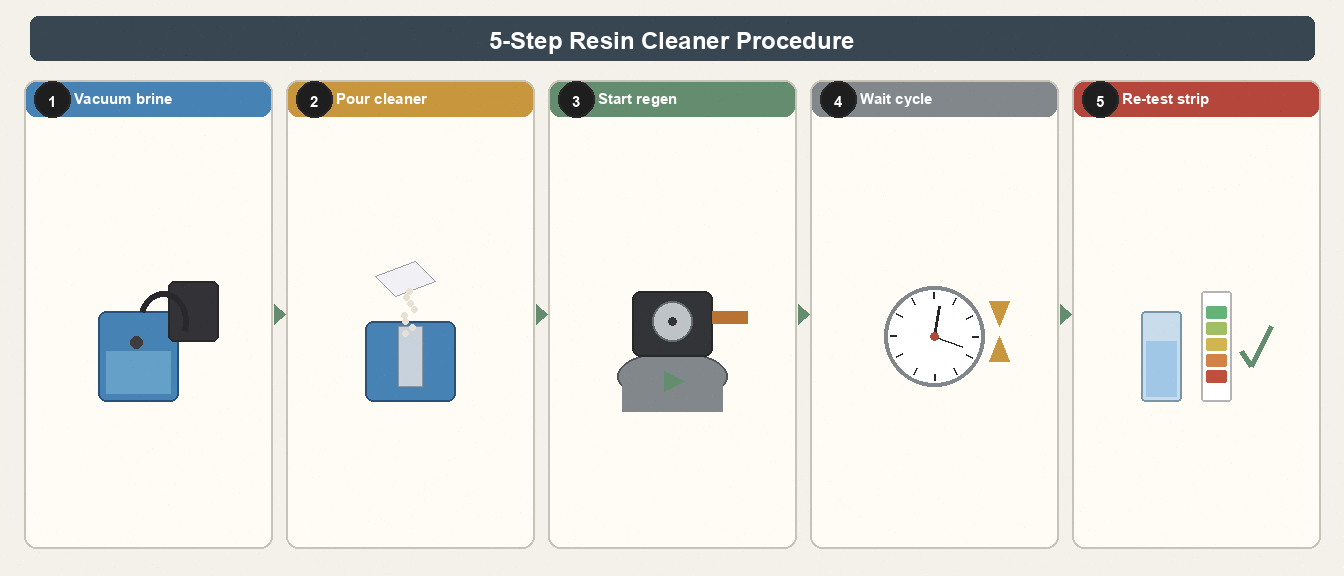
Step 1: confirm symptom and dose
Verify treated water still tests hard with your hardness test kit. Measure your softener’s resin volume (printed on the data plate inside the valve head cover, typically 1.0-2.0 cubic feet). Dose 1/2 cup of powder or 4 oz of liquid per cubic foot of resin.
Step 2: prep the brine tank
Vacuum out standing water and loose sludge with a wet/dry shop vacuum. Refill the tank to half-full with clean salt pellets.
Step 3: pour into the brine well
Locate the brine well cap (4-inch white threaded cap on top of the salt pile). Unscrew it, pour the measured cleaner dose directly down the well, replace the cap. Don’t pour cleaner onto the salt pile.
Step 4: manual regeneration
Within 5 minutes, trigger a manual regeneration cycle. The cycle runs brine draw + slow rinse + fast rinse + brine refill (90-120 minutes total). Cleaner-laden brine contacts resin during slow rinse, strips iron, rinses to drain during fast rinse.
Step 5: re-test after regeneration
Run cold tap water for 3 minutes to flush line water, then test with a fresh hardness strip. Hardness should be below 1 gpg / 17 ppm. If not, repeat the dose in 48 hours.
Brand comparison (Iron OUT vs Rust Out vs Res Up vs Res Care vs EcoPure)
Iron OUT (legacy brand)
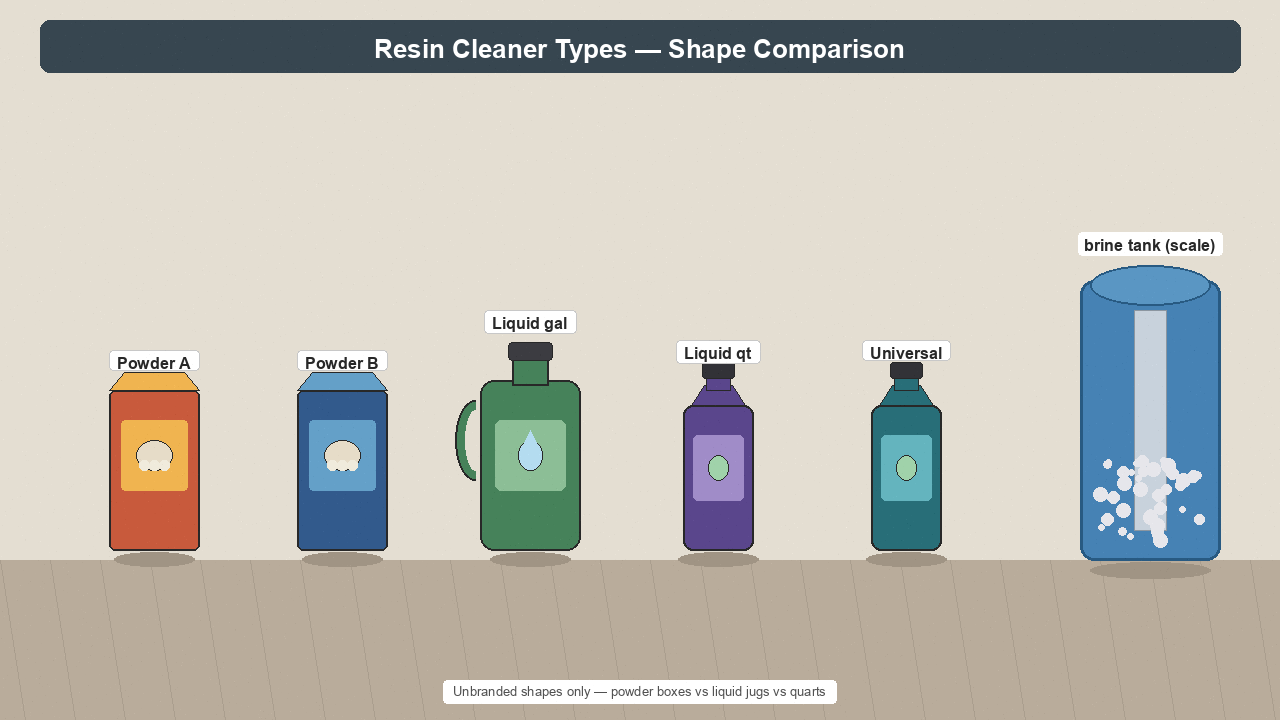
Iron OUT is the original Summit Brands sodium-hydrosulfite powder, sold since the 1960s for rust stain removal. Same active ingredient works in softener brine wells, but Iron OUT is household-focused — marketed for surface rust stains, not specifically for resin. Use it when you want one product for both fixtures and softener.
Rust Out (softener-specific)
Rust Out by Pro Products uses the same sodium hydrosulfite active but is formulated specifically for softener resin. Dose instructions calibrated to cubic feet of resin (1/2 cup per cubic foot), removing the math guesswork. Default choice for most residential softeners.
Res Up (citric, gentler)
Res Up is a citric-acid-based liquid designed only for softener resin. Less aggressive on heavy iron but gentler on the resin matrix. Use on chloramine municipal water (organic fouling), or after repeated Iron OUT cycles when you want a milder treatment.
Res Care (Pro Products liquid)
Res Care liquid is Pro Products’ answer to Res Up — a milder citric-acid liquid for routine maintenance rather than emergency iron stripping. Pair with regular salt additions and you’ll rarely need Iron OUT.
EcoPure EPCL (universal fit)
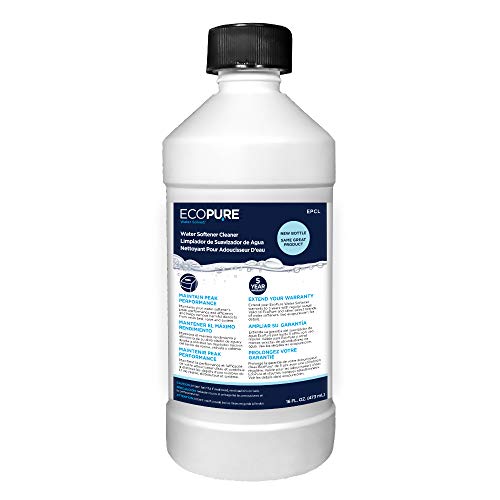
EcoPure EPCL is marketed as universal-fit for Whirlpool, GE, Kenmore, and Morton-branded softeners — the OEM-style replacement when the manufacturer-recommended cleaner is out of stock. Citric + surfactant blend similar to Res Up.
Prevention: stop fouling before it starts
Salt choice (cleaner-augmented pellets)
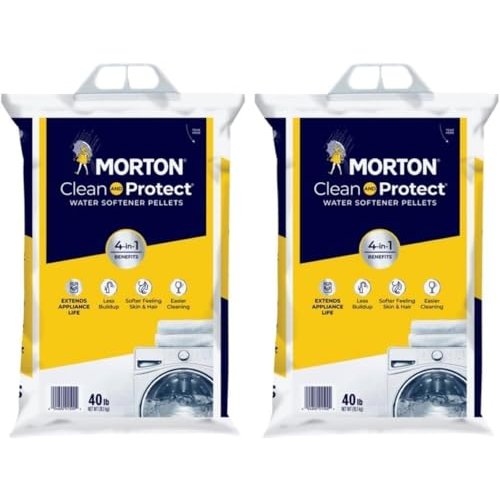
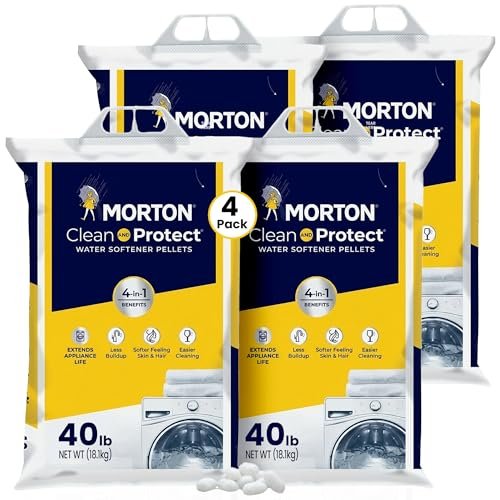
Simplest prevention is pellets with built-in iron-cleaning additive. Morton Clean and Protect adds a small amount of cleaning agent to each regeneration cycle, keeping iron from accumulating on the resin in the first place. Trade-off: cost-per-pound is roughly 30% higher than plain pellets, but you skip the manual cleaner treatment step entirely. For households without iron in the feed water, the Morton plain 4-pack is the bulk best-buy — 160 lb at the lowest cost-per-pound without any additive chemicals.
Tank fill level and humidity
Keep the brine tank between half and two-thirds full. Overfilling causes salt crusted on the lid that falls into standing water, promotes bridging, and reduces brine concentration. Low fill levels mean the softener may not generate enough brine for a full regeneration cycle.
Pre-filter for high-iron wells
If your well tests above 1.0 ppm iron, no cleaner schedule will keep up. Install an upstream iron pre-filter (oxidizing filter with manganese greensand or birm media) ahead of the softener. The pre-filter strips iron before it reaches the resin bed, eliminating the need for routine cleaner treatments entirely.
Cleaning schedule
Pick a schedule based on what your hardness test strip and any separate iron test show in your feed water. The numbers below assume standard 8% crosslink residential resin in a 1.0–2.0 ft³ tank.
Below 0.3 ppm iron (most municipal supplies, treated community wells)
No routine cleaner treatment is needed. Salt-level checks every 4–6 weeks and a treated-water hardness test every 6 months catch problems before they become resin fouling. If the treated water test climbs above 3 gpg / 51 ppm, the cause is salt bridge, valve failure, or resin exhaustion — not iron — and cleaner will not fix it.
0.3–1.0 ppm iron (typical private well with light iron)
Treat every 6–12 months as part of seasonal brine-tank maintenance. A clean cycle in early fall (before winter regeneration loads increase) and another in late spring covers most households. Use 1/2 cup Rust Out powder or 4 oz Res Care liquid per cubic foot of resin. Always trigger a manual regeneration right after dosing. If your feed-water hardness is also above 15 gpg, shorten the interval to every 4 months.
1.0+ ppm iron (high-iron well)
Treat every 3 months, or install an upstream iron pre-filter. Without a pre-filter, every quarterly cleaner treatment still leaves iron accumulating faster than cleaner can strip it. The math: at 2.0 ppm feed iron, a residential softener processes roughly 3–4 g of iron per day; a single cleaner treatment strips maybe 30–50 g. The iron wins over a 3-month cycle unless the resin bed is supplemented by an oxidizing pre-filter.
Chloramine municipal supply
If your municipal utility uses chloramine instead of chlorine (most US systems in the Southwest and Midwest switched in the 2010s), the resin fouls with organic byproducts, not iron. Use Res Care or Res Up every 3–4 months. Iron OUT (sodium hydrosulfite) does not target organic fouling — it is designed for iron.
Confirm the schedule with re-testing
After every cleaner treatment, run the cold tap for two minutes, then dip a fresh strip in the treated water. If hardness is back below 3 gpg / 51 ppm and iron is below 0.3 ppm, the treatment worked and you can stretch the next interval. If either reading is still high, the cause is not fouled resin — see the common mistakes section below.
Common mistakes (5)
- Pouring cleaner into the resin tank directly — bypasses the brine pathway and doesn’t contact the resin. Always pour into the brine well.
- Doubling the dose to “clean harder” — excess cleaner just exits to drain during the next regeneration without improving cleaning. Stick to 1/2 cup per cubic foot of resin.
- Skipping the post-treatment hardness test — you won’t know whether the cleaner worked. Always re-test with a fresh strip after the regeneration cycle.
- Treating a 12-year-old softener with cleaner instead of replacing the resin — at that age, beads are mechanically worn, not just fouled. Cleaner is wasted money. Plan for resin replacement or a new tank.
- Using cleaner on chloramine municipal water thinking it’ll fix iron — chloramine carries organic byproducts, not iron. Use Res Up or Res Care for organic fouling; don’t expect Iron OUT to help.
When to call a pro
Call a softener service technician (not a plumber, not a water treatment salesperson) if you see any of these:
- Visible resin beads in drain water during regeneration (tank internal failure)
- Brine water level rising but no salt consumption (brine valve stuck)
- Treated water hardness stays above 3 gpg after two cleaner treatments 48 hours apart (likely exhausted resin or valve failure)
- Softener is over 15 years old and you’ve never had the resin replaced
The expected cost for resin replacement by a pro is $300-600; the expected cost for a full tank replacement is $600-1200 installed. Compare that to the cost of buying cleaner every month for a year (~$120-200) before admitting the resin is shot.
Safety notes
- Wear nitrile gloves when handling Rust Out or Iron OUT — sodium hydrosulfite is a reducing agent and can irritate skin.
- Pour cleaner into the brine well slowly to avoid splashing. The cleaner is mildly corrosive to metal surfaces (it will stain if spilled on a stainless steel sink and left wet).
- Do not mix different cleaner brands in the same brine well. If switching from Iron OUT to Res Up, run two manual regenerations with plain salt between treatments to flush the previous cleaner.
- All five cleaners listed here are rated safe for septic in normal dose quantities (1-2 cups per treatment). The brine discharge goes to septic and the cleaner exits during the regeneration cycle — same as standard dishwashing detergents.
Resin care
Cleaner addresses fouling. The practices below address everything else that ages resin before its time. Pair these with the cleaning schedule above and most residential softeners stay healthy for 10–15 years.
Salt level and tank fill discipline
Keep the brine tank between half and two-thirds full at all times. Salt crusted on the lid falls back into standing water and promotes bridging — a sister failure mode that prevents brine from reaching the resin even when cleaner is dosed correctly. Check the salt level every 4–6 weeks. Top up before the level drops below the waterline; never let the tank run empty between fills.
Brine tank water quality
If you are on a private well with high iron, vacuum out the brine tank every 6 months before a cleaner treatment. Standing brine absorbs iron from the salt surface and from humidity in the tank. A wet/dry shop vacuum clears the iron-loaded water before the new dose of cleaner goes in, so the cleaner is reacting with resin fouling — not with standing brine iron.
Resin replacement at end-of-life
Standard 8% crosslink residential resin lasts 10–15 years before mechanical wear overtakes fouling as the limiting factor. Once beads start cracking, no cleaner brings them back. Plan for resin replacement (~$300–600 pro service) rather than escalating cleaner doses. A simple diagnostic: if treated water hardness stays above 3 gpg after two cleaner treatments 48 hours apart, the resin is mechanically worn — replace, do not re-treat.
Hardness creep after years of service
A softener that produced 0 gpg treated water for years may start creeping to 1–2 gpg as the resin ages. This is not a cleaner problem. It is the normal exhaustion curve. If you want to extend the useful life, drop the regeneration frequency from every 7 days to every 5 days temporarily and re-test. If creep stops, your household water use grew past the original capacity rating and the softener needs to regenerate more often — not a cleaner issue.
Salt type rotation between seasons
Most households use the same salt year-round, but rotating between cleaner-augmented pellets in the iron-heavy season and plain pellets in low-iron months cuts chemical exposure and cost. If your feed-water hardness and iron both rise seasonally — common in shallow wells during summer drawdown — switch to Morton Clean and Protect from May through September and back to plain pellets the rest of the year. The rotation keeps resin cleaner over a multi-year horizon than a single formula applied year-round.
Iron pre-filter vs cleaner-only strategy
A household with iron in the feed water above 1.0 ppm has two paths: quarterly cleaner treatments forever, or a one-time iron pre-filter install. The pre-filter costs more upfront but eliminates cleaner costs and protects resin life. Most well-equipped homes with high iron eventually move to the pre-filter path because cleaner-only is a recurring cost; pre-filter is a one-time install.
Related
- How water softeners work — the ion-exchange process the cleaner is acting on
- Iron in water — when iron is high enough to need a cleaner
- Salt bridge and mushing — sister brine-tank failure mode
- Water softener not regenerating — when cleaner is the next step after diagnosis
- Water softener not working — umbrella symptom page for “cleaner won’t help” cases
- Hardness test kits — test before you buy
- Water softener brine tank — where cleaner goes and why
- Water softener salt — prevention side of the cleaner/salt loop
Key takeaways
- Test your feed water for iron before buying any cleaner. Above 0.3 ppm is when cleaner helps; below that, the cause of soft water spots is hardness or TDS, not iron fouling.
- Use Rust Out for iron (sodium hydrosulfite powder); use Res Care or Res Up for chloramine / organic fouling (citric liquid).
- Standard dose: 1/2 cup powder or 4 oz liquid per cubic foot of resin, into the brine well, followed by a manual regeneration cycle.
- Skip cleaner entirely if the softener is over 10-15 years old (resin is exhausted), or if the brine tank is normal but treated water still tests hard (valve or settings issue).
- Prevent fouling with cleaner-augmented pellets and an upstream iron pre-filter if your well tests above 1.0 ppm iron.