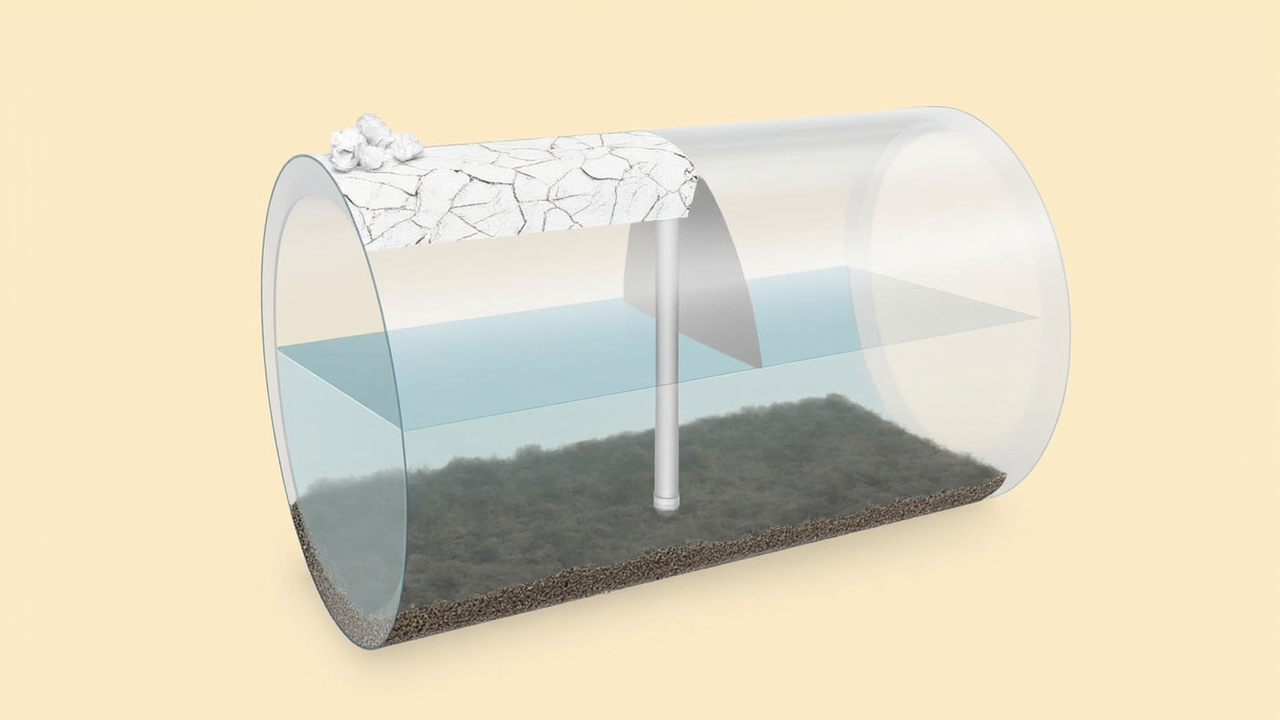
If your softener seems to run fine — salt level keeps dropping — but the shower glass spots and soap won’t lather, the problem is usually inside the brine tank, not the valve head. Two salt-tank failures produce the same symptom (hard water returns) from opposite ends: a salt bridge forms a hard crust across the top, and salt mushing builds sludge at the bottom. Both starve the resin bed of brine, so the softener regenerates with weak brine and never recharges. The fix is different for each, and guessing wrong wastes an afternoon.
This guide covers salt-based ion-exchange softeners — Fleck, Culligan, Whirlpool, GE, Kinetico, Rheem. Salt-free conditioners and RO systems do not use salt. If you’re unsure which system you have, the softener vs filter vs RO page sorts it out.
Quick answer
Tap the salt pile with a broom handle. Hollow sound at the top = salt bridge — break the crust, push chunks into the water, trigger a manual regen. Handle sinks through but hits soft sludge at the bottom = salt mushing — drain the tank, scoop out all mush, rinse, refill with pellets, regen. Both share the same causes (humidity, wrong salt type, infrequent regen, overfilling) and both are preventable with compressed pellets and proper fill level.
Do this first
Confirm the symptom
Before touching the tank, confirm the softener is failing. Run the cold tap for two minutes, fill a glass, add a few drops of dish soap. If it barely lathers and leaves a cloudy film, the water is hard. If it lathers fine, the problem is elsewhere (low salt, wrong settings, bypass left open).
Safe first checks
- Don’t stick a metal tool or knife into the tank to break a crust — one slip punctures the plastic and ruins the brine tank.
- Don’t empty the entire tank before confirming whether the problem is a bridge (top) or mushing (bottom). A bridge is a five-minute fix; mushing is a full cleanout. Diagnose first.
- Do turn off power to the softener and close the bypass valve before doing anything beyond a tap test.
How to diagnose your salt tank problem
This decision tree narrows the failure in under two minutes using one tool — a broom handle — and where it meets resistance.
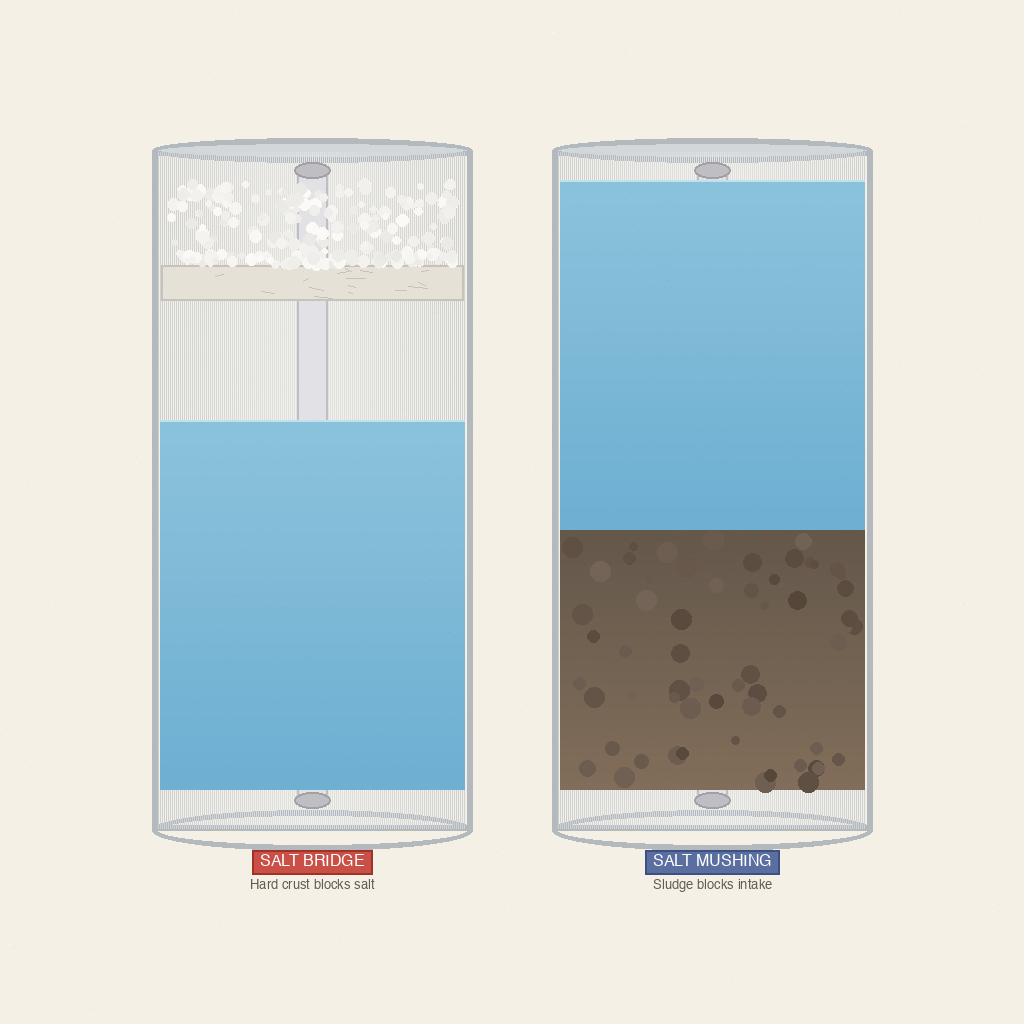
Branch 1 — Hollow sound when tapping the top
Tap the salt surface with a broom handle. A hollow, drum-like sound means a hard crust floats above empty space or stale water. This is a salt bridge — salt underneath has dissolved, but new salt can’t fall through.
Branch 2 — Soft mush at the bottom
Push the broom handle straight down. If it passes through the top but meets soft, wet, spongy resistance near the bottom, that is salt mushing — salt has partially dissolved and recrystallized into sludge around the brine intake.
Branch 3 — Salty water but no soft water
If the tank looks normal but water is still hard, the brine valve or drain line may be blocked. Check that the float is not stuck and the drain tube is clear — this is a valve issue, not a salt issue.
Branch 4 — Tank is fine, still hard water
If the salt and tank are healthy, the problem is upstream: regen frequency too low for your hardness, resin exhausted, or softener undersized. Test your water hardness and compare against the grain capacity.
Fix — break a salt bridge
A bridge is the easier fix. You don’t need to drain the tank.
- Turn off the softener and close the bypass valve.
- Push a broom handle or wooden dowel straight down through the crust. Start near the tank wall and work around the edge, then move to the center. Apply steady downward pressure — do not jab.
- Push the broken crust pieces down into the water below so they dissolve. The goal is to reopen the path for salt above to reach the water.
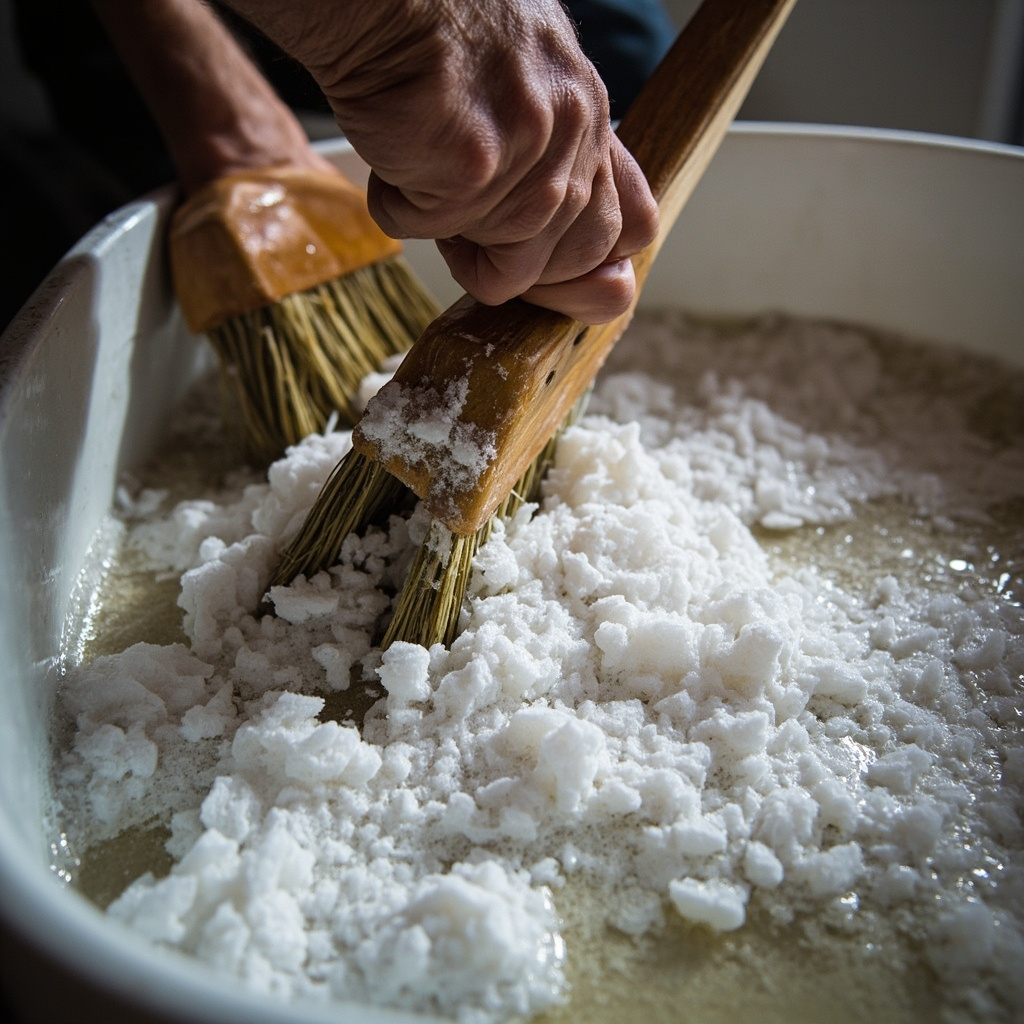
- If the crust is thick and will not break, pour two to three gallons of warm (not hot) water over the top. Wait one to two hours, then try again. Warm water softens the crust without shocking the tank.
- Level the remaining salt so it sits evenly, not piled against one wall.
- Restart the softener and trigger a manual regeneration. This flushes the newly dissolved brine through the resin bed and restores softening.
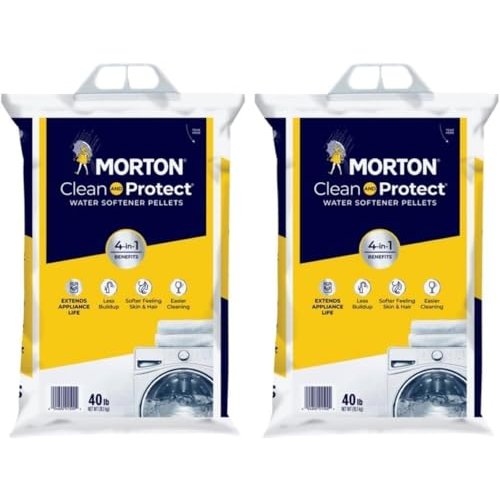
The whole process takes five to fifteen minutes. Do not refill with new salt until the existing salt is below the water line — piling fresh Morton Clean and Protect pellets on top of a half-broken bridge starts the cycle over.
Fix — clear salt mushing
Mushing is messier — sludge sits at the bottom and blocks the brine intake. A broom handle won’t fix it. You need to drain and clean the tank.
- Turn off the softener and close the bypass valve. Disconnect the brine line from the valve head if you can reach it.
- Drain the remaining water. A CRAFTSMAN 2.5 gallon wet/dry shop vacuum is the fastest way — suck out the standing water first, then the wet sludge.
- Remove all mushed salt and sludge. Use a plastic scoop or your hands (wear gloves — the mush is salty and gritty). Scrape the bottom and sides until you see clean plastic.
- Rinse the tank interior with warm water and vacuum it out again. Repeat until the water runs clear.
- Check the brine intake screen at the bottom of the tank. If it’s clogged with hardened salt, clean it gently with a brush.
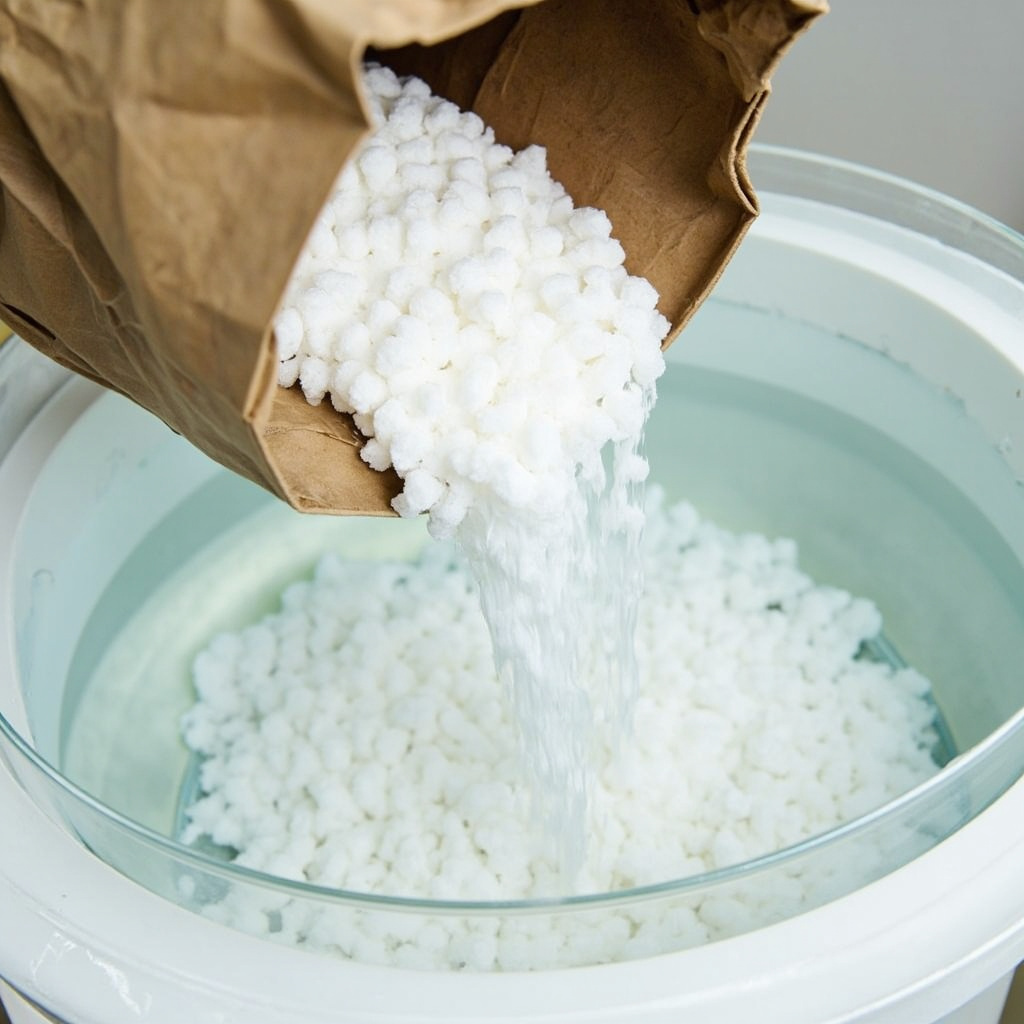
- Reconnect the brine line and refill with compressed pellets — not rock salt, not loose crystals. Fill to half to two-thirds full. Morton Clean and Protect pellets are a solid default for most homes.
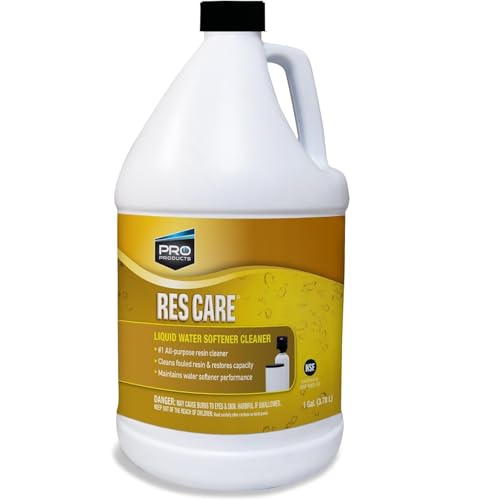
- Add a resin cleaner to the brine well to flush any iron or sediment the mush left behind. Pro Products Res Care cleaner strips iron fouling from the resin bed.
- Restart the softener and trigger a manual regeneration. Run a second regen the next day if the water still feels hard.
This takes 30 to 60 minutes depending on tank size and how thick the mush is. For the full refill protocol — how high to fill, when to top up, and how to avoid overfilling — see how to add salt to your water softener.
Why both happen — shared root causes
Bridging and mushing look different but share the same triggers. Understanding the cause tells you why the fix alone is not enough.
Humidity and moisture cycling
Salt is hygroscopic — it pulls moisture from the air. In a humid basement or garage, salt absorbs water, partially dissolves, then dries and recrystallizes. Repeated cycles build the crust on top or sludge at the bottom. Tanks with loose-fitting lids are worst.
Wrong salt type
Rock salt (large, irregular chunks mined from salt deposits) is the biggest offender. It contains insoluble impurities — dirt, minerals, grit — that settle to the bottom as sludge and accelerate mushing. Its irregular shape also packs unevenly, which promotes bridging. Loose solar crystals bridge more than compressed pellets because their irregular edges interlock under pressure. Compressed pellets (extruded sodium chloride, uniform in size) flow freely and dissolve evenly, making them the standard recommendation. Brands like Morton Clean and Protect even include a built-in resin cleaner to reduce bridging.
Infrequent regeneration
If your softener regenerates only every 7 to 10 days, salt sits stagnant longer between cycles. Stagnant salt absorbs more moisture, driving both bridging and mushing. A properly sized unit regenerating every 2 to 4 days keeps the salt bed fresher. For the full mechanics, see how water softeners work.
Overfilling
Filling the tank to the brim increases compaction pressure on the salt below. The weight presses lower layers together, accelerating crust formation. Keep the tank half to two-thirds full.
For a deeper look at why the salt form matters, see salt pellets vs crystals.
Prevention — stop it coming back
Fixing the problem once does nothing if the cause stays. These habits prevent both bridging and mushing.
Use pellets, not rock salt
This is the single most effective change. Compressed pellets like Morton Clean and Protect dissolve uniformly and resist both bridging and mushing. Rock salt should never go in a residential brine tank. Solar salt crystals are acceptable but bridge more often than pellets. See the water softener salt overview for brand-by-brand guidance.
Keep the tank half to two-thirds full
Overfilling causes compaction; underfilling lets salt dry out. Check monthly and top up when the level drops to about four inches above the water line.
Check for bridging monthly
Once a month, push a broom handle into the salt. If it passes freely, no bridge is forming. If it hits resistance, break the crust before it hardens — early intervention takes one minute versus fifteen for a hardened bridge.
Store spare salt dry
Keep unopened bags in a dry, climate-controlled area — not on a damp garage floor or against a basement wall. Salt bags absorb moisture through the plastic, and pre-moistened salt bridges faster in the tank.
Try potassium chloride if pellets still bridge
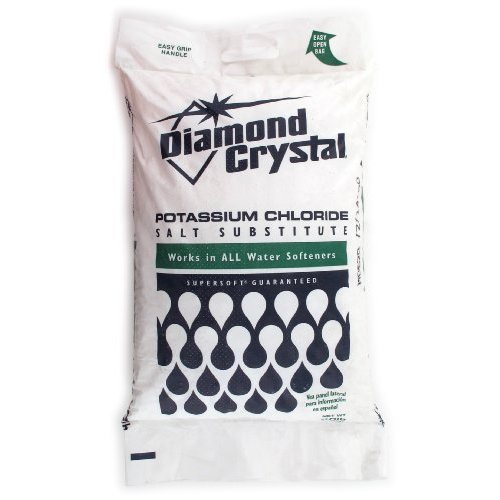
If you have switched to pellets, keep the level right, and still bridge every few months, potassium chloride pellets like Diamond Crystal KCl dissolve more uniformly and leave fewer insoluble residues. They cost roughly 50 to 70 percent more than sodium pellets but reduce bridging in stubborn tanks. After switching, add Res Care cleaner to the brine well every few months to flush residual iron.
Common mistakes
- Using rock salt because it’s cheaper. The insoluble impurities in rock salt settle as sludge and guarantee mushing within months. The money saved per bag is lost to tank cleanouts and resin fouling. Switch to compressed pellets — the per-bag cost difference is small and the prevention is significant.
- Jabbing the crust with a metal tool. A screwdriver or knife can puncture the brine tank wall. Use a broom handle or wooden dowel — always.
- Refilling on top of a half-broken bridge. Pouring fresh salt over a crust you did not fully clear pushes the bridge deeper and makes the next break harder. Always confirm the handle passes through to the bottom before adding salt.
- Filling the tank to the top “so I don’t have to refill as often.” Overfilling compacts the lower salt and accelerates bridging. Half to two-thirds full is the correct range.
- Ignoring a recurring bridge. If you break a bridge and it reforms within a month, the cause is still active (wrong salt, humidity, infrequent regen). Switch to Morton pellets and check the regen frequency — do not just keep breaking the crust.
When to call a pro
Call a licensed plumber or water-treatment technician if:
- The brine tank is cracked or leaking after a bridge break (you may have used a metal tool).
- Mushing returns within two weeks of a full cleanout despite using pellets — the brine valve or intake screen may be damaged.
- The softener regenerates but still delivers hard water after two manual regens with fresh salt — the resin bed may be exhausted or fouled beyond what cleaner can fix.
- You find standing water above the salt level — this signals a blocked drain line or failed valve, not a salt problem.
We do not rank “water softener near me” companies. If persistent bridging means your unit may be undersized, see how to choose a water softener.
Related
- Water softener salt overview — all salt types, brands, and purity grades
- Salt pellets vs crystals — why pellets resist bridging
- How to add salt to your water softener — the refill protocol
- How water softeners work — the brine cycle explained
Key takeaways
- A salt bridge is a hard crust across the top of the salt; salt mushing is sludge at the bottom. Both stop the softener from making brine.
- Diagnose with a broom handle: hollow sound at the top = bridge; soft mush at the bottom = mushing.
- A bridge takes five minutes to break; mushing takes a full tank cleanout with a shop vac.
- Switch to compressed pellets (never rock salt), keep the tank half to two-thirds full, and check monthly.
- Potassium chloride pellets bridge less if sodium pellets still fail.