If the shower door looks frosted two days after you cleaned it, you don’t need a stronger scrubber. You need a hardness number. Hard water stains are calcium and magnesium left behind when water dries. The right acidic cleaner dissolves them in minutes; the wrong abrasive ruins glass permanently. Below: which remover works on which surface, what wastes your money, and when a softener matters more than another bottle of spray.
Quick answer
Hard water stains are calcium and magnesium minerals left behind when water evaporates. The most effective removers are mildly acidic cleaners like CLR or Bio Clean that dissolve the mineral bond without scratching the surface. Abrasive scrubbers work on toilets but etch glass for good. The real fix isn’t better cleaning. It’s a water softener or filter that stops stains from forming. Pick a remover for your surface first, then test water hardness to decide if you need a system.
Why hard water leaves stains
When water carries dissolved calcium and magnesium through your pipes, those minerals are invisible. The problem starts when water sits on a surface and evaporates. As the water leaves, the minerals crystallize behind it, bonding to glass, porcelain, chrome, and tile. Day one: a faint haze you can still wipe off. Month three: chalky white spots that laugh at dish soap. Year two: crusty scale that needs acid to dissolve. Left even longer on glass, and the minerals etch the surface itself. At that point no cleaner on the shelf can fix it. You’re replacing the glass.
Learn what your hardness number actually means before you shop for any removal product or treatment system.

Don’t confuse mineral stains with soap scum. Soap scum is surfactant residue, not mineral deposit. It wipes off with dish soap and a sponge. Mineral stains need acid to dissolve the calcium-magnesium bond. If your spot wipes off with soapy water, it’s scum. If it laughs at elbow grease, it’s hard water.
- Skip if the spot wipes off with dish soap and warm water. That’s soap scum, not mineral scale. Acid won’t hurt, but it’s overkill and wastes product.
How stain removers work
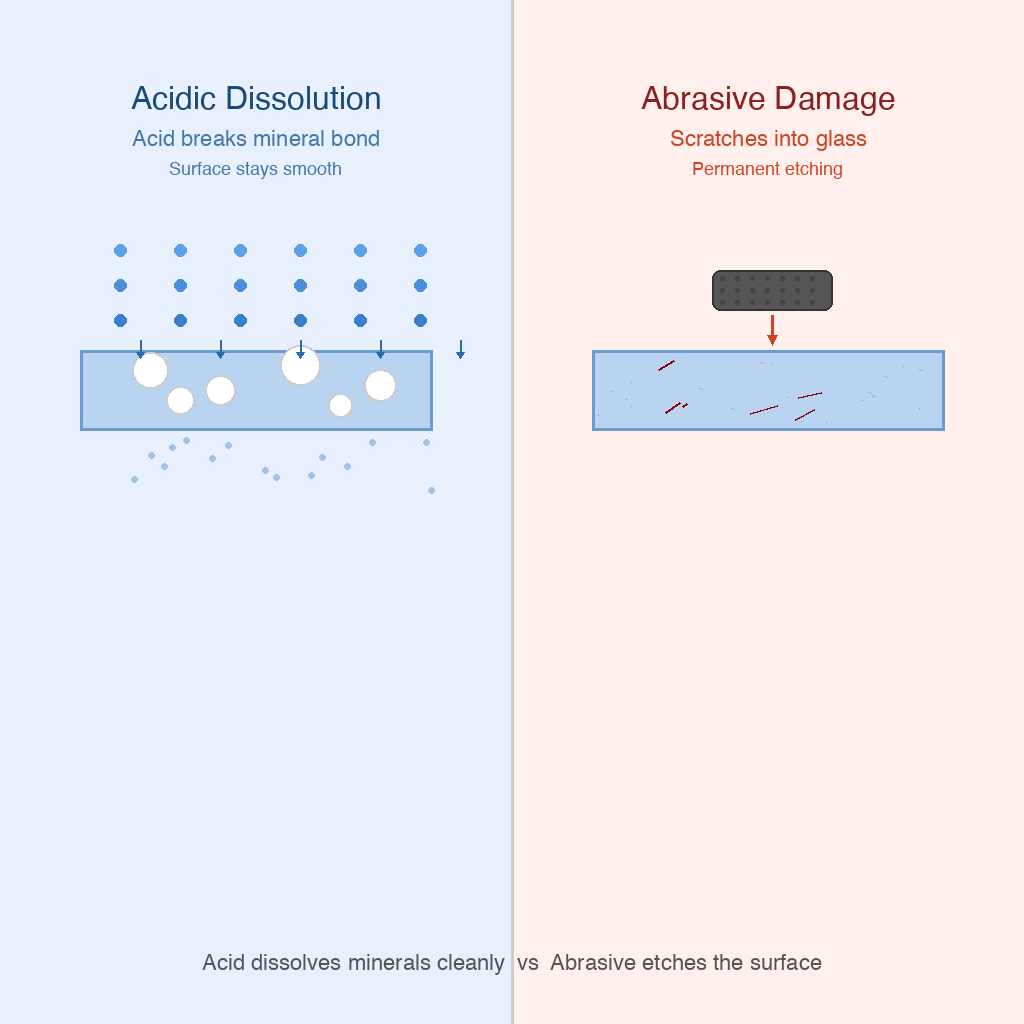
Two mechanisms handle hard water deposits. Acidic dissolution breaks the chemical bond between the mineral and your surface. The acid reacts with calcium carbonate and magnesium, converting the bond into something water-soluble that rinses away. Mechanical abrasion physically grinds deposits off the surface. Abrasion works fast on durable surfaces but destroys anything soft.
Commercial descalers rely on mild acids. CLR uses sulfamic and lactic acids. Bio Clean leans on citric acid. The lower the pH, the faster the dissolution, but also the higher the risk to sensitive finishes. Gel and cream formulas solve a real problem: they cling to vertical surfaces like shower glass and tile, giving the acid more contact time to work before gravity pulls it down. Sprays are faster on flat surfaces but run right off vertical glass.
DIY vinegar is acetic acid at roughly 5%. It works on fresh, light haze but is too dilute for established scale. Commercial sulfamic acid blends sit at 8-10% effective strength and dissolve the same deposit in a fraction of the time. Vinegar also carries a real risk on natural stone. Marble, travertine, and granite react with acid. Vinegar on marble leaves a dull, permanently etched spot where the shine used to be.
What works on each surface
Glass and windows
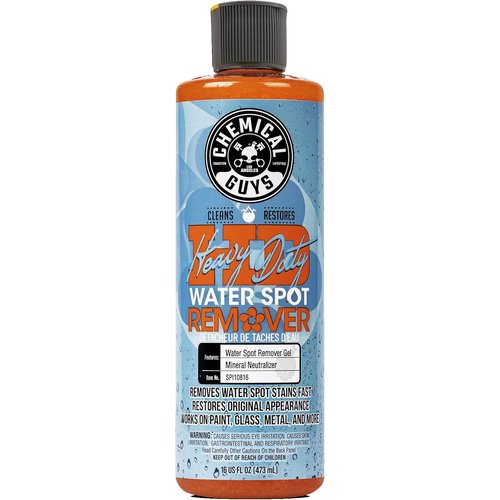
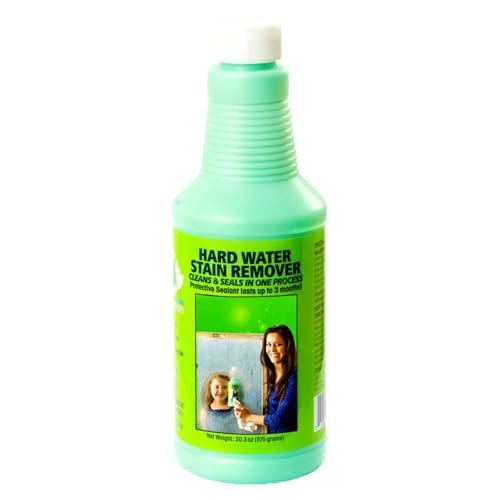
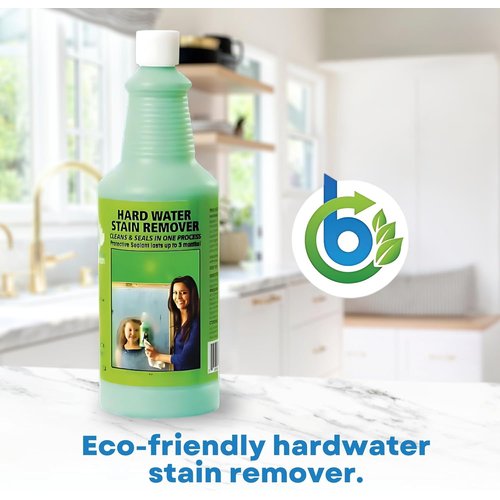
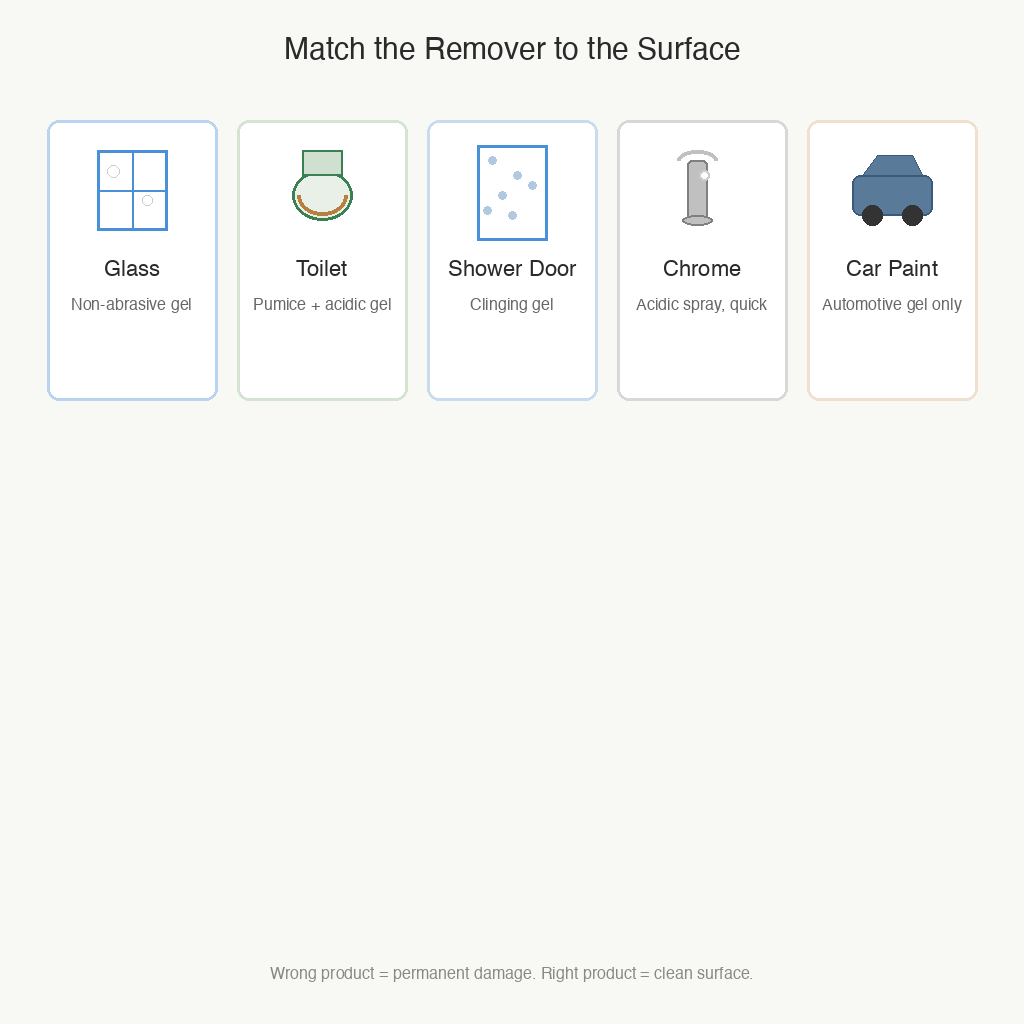
Glass is unforgiving. Once minerals etch into it, no amount of cleaning restores the clarity. Use a non-abrasive acidic spray or gel. For shower glass, the Bio Clean Hard Water Stain Remover is a citric-based option that won’t damage surrounding stone or metal trim. For car windows, skip household cleaners entirely and reach for the Chemical Guys Water Spot Remover Gel. It’s pH-balanced for automotive clear coat and glass.
For full step-by-step glass cleaning, see our guide to hard water stains on glass.
- Don’t use steel wool or razor blades on tinted or coated glass. You’ll scratch the coating permanently. Only use a plastic razor scraper on uncoated, untinted glass.
Toilets and sinks
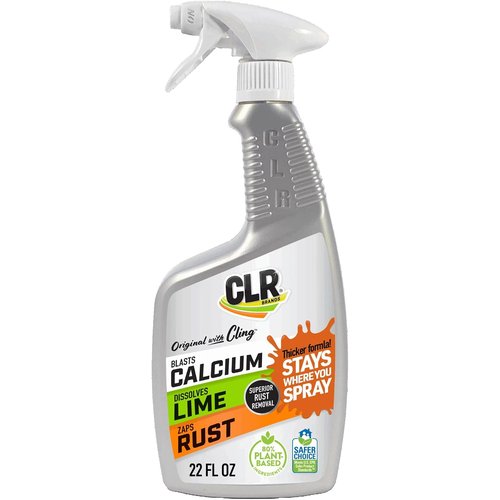
Porcelain tolerates more punishment than glass. A pumice stone handles toilet bowl rings that no liquid can touch. Pair the pumice with an acidic gel on the bowl rim and under the edge where liquid sprays run straight into the water. The CLR with Cling is designed exactly for those vertical edges where regular spray just slides off.
For toilet-specific techniques, read hard water stains in the toilet.
Shower doors and tiles
Shower doors are the number-one frustration for hard water. Every shower deposits more minerals, and the glass sits wet long enough for them to bond. A gel formula beats spray here because it actually stays on the glass long enough to work. Use CLR with Cling for established scale and the Bio Clean remover as a gentler weekly maintenance option.
For the full shower glass deep-clean process, see hard water stains on shower glass.
Stainless steel and chrome fixtures
Faucets and showerheads collect scale at the waterline and inside the aerator. Wipe the acidic cleaner on, scrub lightly with a non-scratch pad, and rinse within 2-3 minutes. Don’t let it sit longer. Extended acid contact can dull the chrome finish or leave permanent watermarks on brushed stainless. The CLR Lime & Rust Remover spray handles quick faucet wipes for under five dollars.
For aerator descaling and faucet-specific steps, see our guide on scale on fixtures.
Car paint and windows
Automotive clear coat and paint are different chemistry from household surfaces. Household descalers like CLR are too aggressive for car paint and can strip the clear coat or leave cloudy marks. Use a dedicated automotive water spot remover instead. The Chemical Guys Heavy Duty Gel clings to vertical panels and is formulated to respect clear coat. Apply in shade on a cool surface. Never on hot paint or in direct sunlight.
Product types compared
No single product handles every job. Here’s how the main categories stack up:
| Type | Best for | Limitation | Price range |
|---|---|---|---|
| Acidic spray | Daily wipe-downs on flat surfaces | Runs right off vertical glass | $4-6 |
| Clinging gel | Shower doors, tiles, vertical surfaces | Slower acting than spray | $14-20 |
| Eco non-toxic | Natural stone, homes with kids and pets | Milder acid means more scrubbing | $20-40 |
| Pro-grade bulk | Heavy scale, large areas, multiple bathrooms | Stronger fumes, big bottle | $25+ |
| Pumice stone | Toilet rings only | Scratches everything else | $5-8 |
| DIY vinegar | Budget, fresh light stains only | Too weak for scale, etches stone | $2-3 |
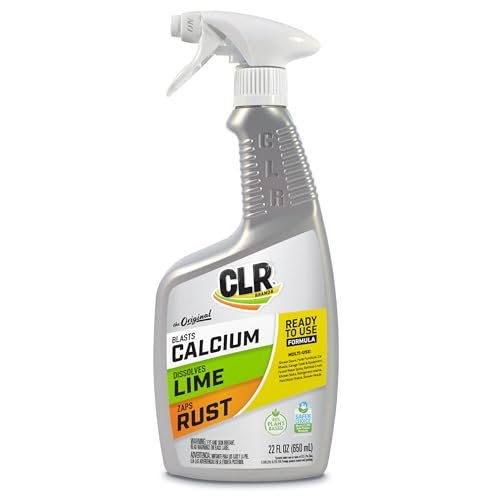
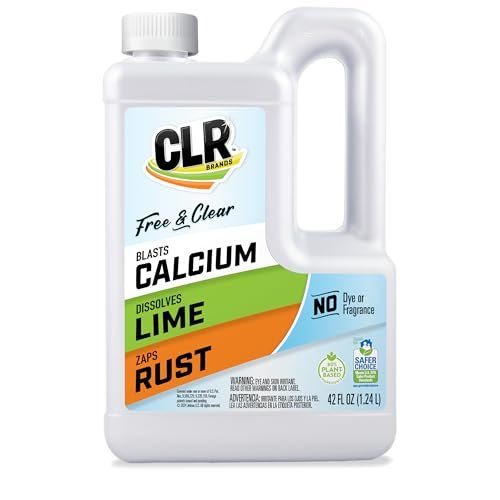
For flat surfaces like sinks and counters, the CLR 22oz spray is the cheapest entry point. For shower glass, the CLR with Cling gel gives the contact time you need. For odor-sensitive homes, the CLR Free & Clear 42oz drops the harsh scent without losing the acid strength.
Budget picks vs heavy-duty
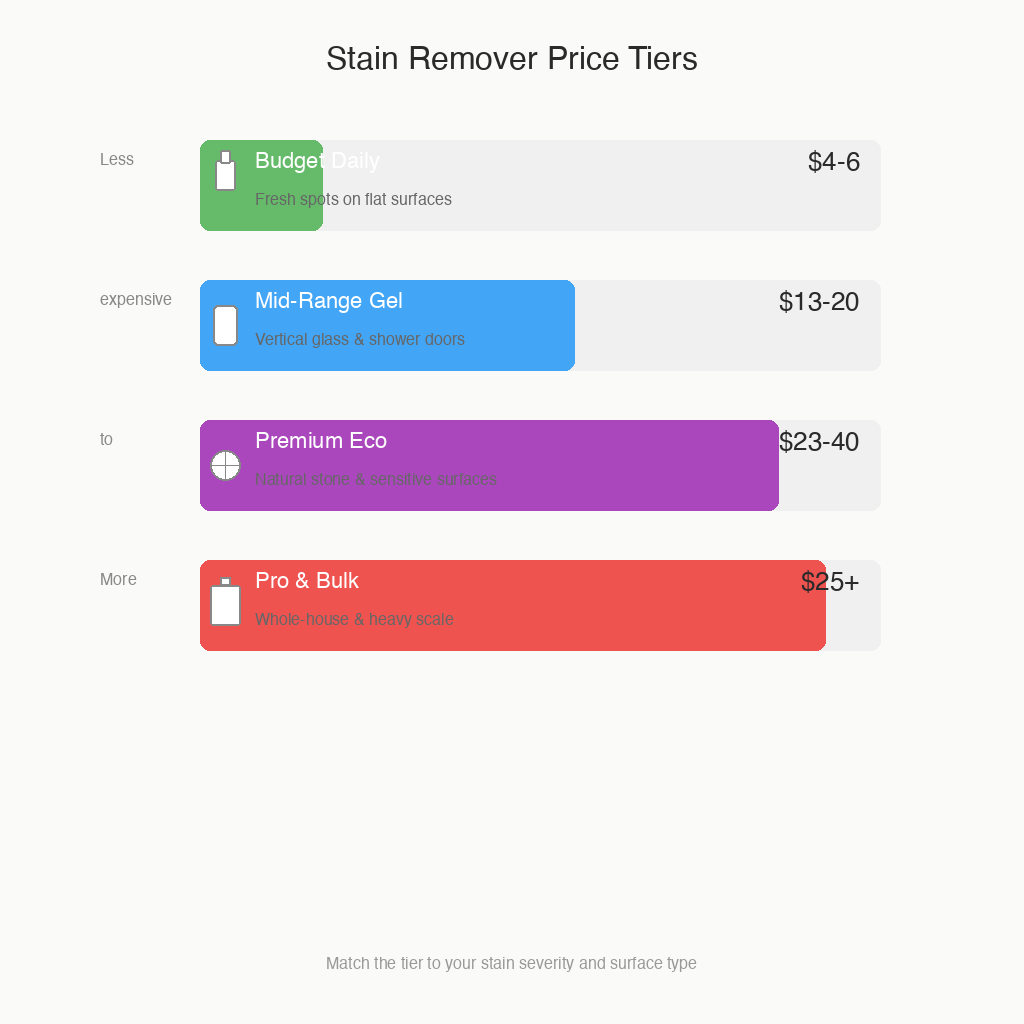
You don’t need to spend $30 to clean a faucet. But you also can’t expect a $5 spray to dissolve months of shower-door scale. Here’s how the tiers break down:
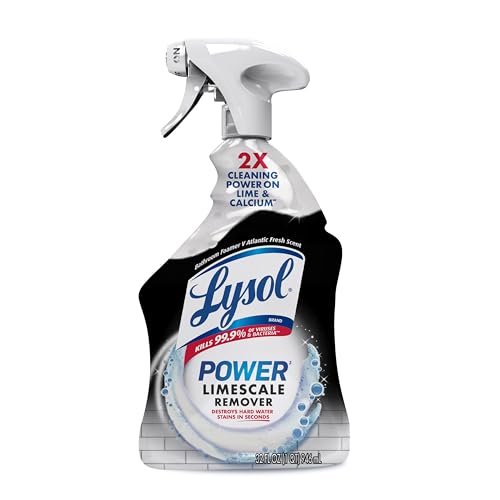
- Budget daily ($4-6): The Lysol Power Limescale Remover doubles as a disinfectant for showers and tubs. The CLR 22oz spray is the standard light-maintenance pick. Both handle fresh spots on flat surfaces.
- Mid-range ($13-20): The CLR with Cling sticks to vertical glass. The CLR Free & Clear gives you a larger 42oz bottle without the fumes.
- Premium eco ($23-40): The Bio Clean 20.3oz is the go-to for natural stone. The Bio Clean 40oz Pack of 2 gives you 80oz total if you’re maintaining multiple bathrooms.
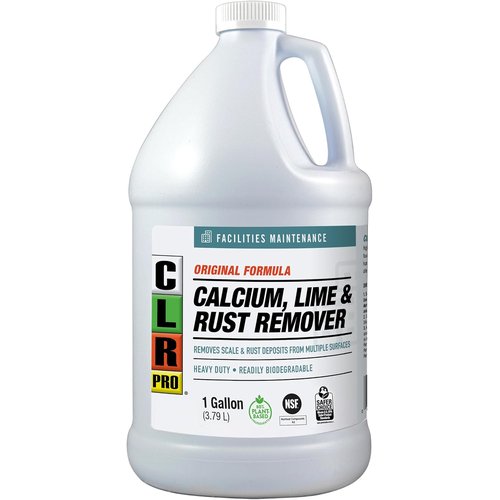
- Pro and bulk ($25+): The CLR Pro 1 Gallon is for property managers or anyone deep-cleaning a whole house at once.
What doesn’t work
Some remedies waste time. Others cause damage.
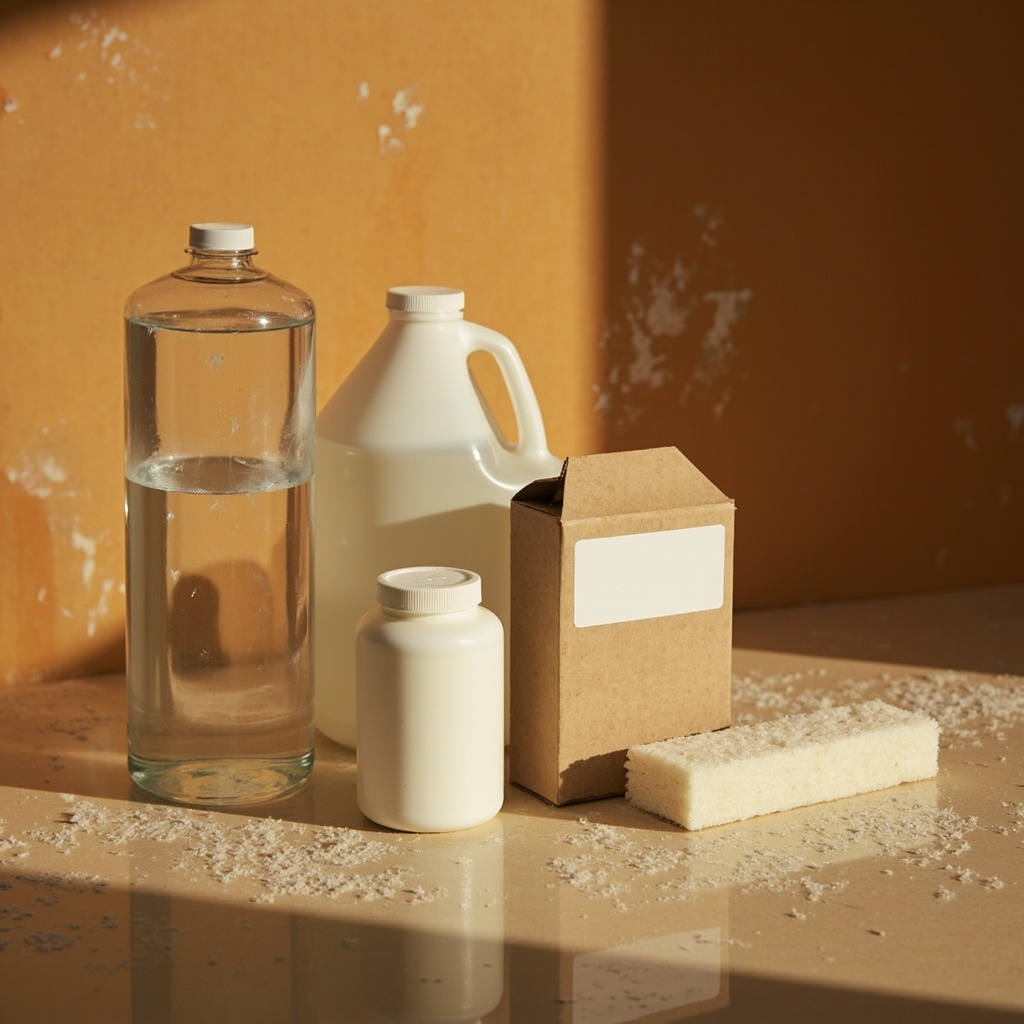
Vinegar alone is too weak for established scale. Acetic acid at 5% simply doesn’t have the strength to dissolve months of bonded calcium carbonate. People spray vinegar, scrub hard, see no change, and assume hard water is permanent. It isn’t. They just need a stronger acid.
Bleach doesn’t dissolve minerals at all. Bleach kills bacteria and removes organic stains. Hard water deposits are inorganic. People pour bleach on a toilet ring, see it look brighter, and think the scale is gone. It isn’t. The bleach just whitened the background.
Baking soda paste is mildly abrasive. Fine for soap scum, useless on mineral deposits. You’re scrubbing against a chemical bond with a physical abrasive that’s softer than the deposit.
Magic erasers are melamine foam, which is a fine abrasive. They remove the stain by removing your surface finish. On porcelain, fine. On glass, stainless, or chrome, you’re creating micro-scratches that trap minerals faster next time.
Boiling water on glass risks temperature shock. Pouring boiling water on tempered glass shower doors can crack them. Don’t.
Common mistakes
- Using abrasive pads on glass — Steel wool and scouring pads permanently etch glass. Once etched, stains return faster because the roughened surface gives minerals more grip. Use a non-scratch pad or microfiber cloth instead.
- Leaving acidic cleaner on too long — More contact time doesn’t mean better results. Acid can dull chrome, stainless, and natural stone if left beyond 5 minutes. Set a timer. Rinse thoroughly.
- Skipping the hardness test — Buying a $2,000 softener without knowing your gpg is how people overspend. You might only need a $10 shower filter. Test your water first.
- Treating the symptom, not the cause — Re-cleaning every weekend when a softener eliminates the problem entirely. If your hardness is above 7 gpg, no amount of CLR will keep up.
- Using household CLR on car paint — Household descalers are formulated for bathroom and kitchen surfaces, not automotive clear coat. Use a dedicated car product like the Chemical Guys Gel instead.
Preventing stains (fix the cause)
Cleaning products manage the symptom. Prevention stops the problem. Here’s how to decide what you actually need.
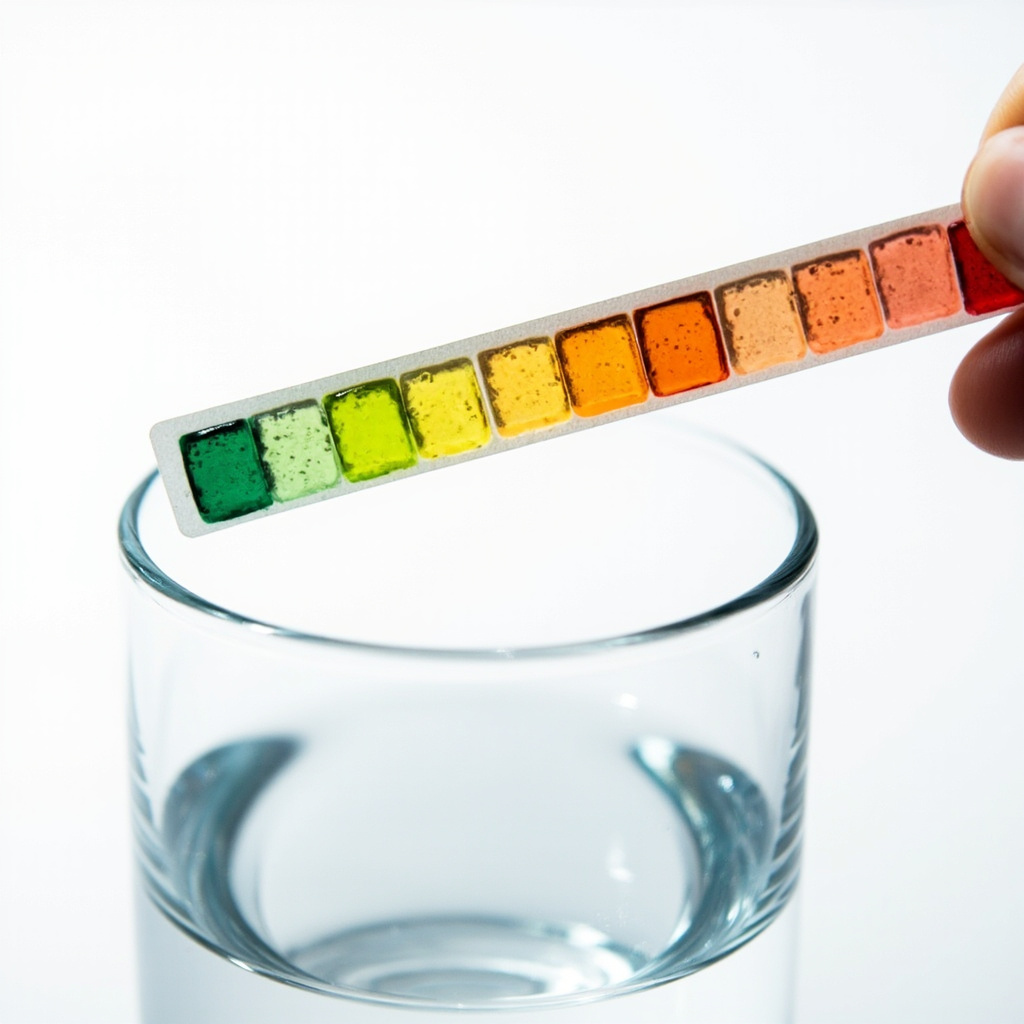
Test first. Before you spend on any treatment system, know your hardness in gpg. A hardness test kit costs $8-15 and tells you whether you need a $10 filter or a $2,000 softener.
If 3-7 gpg: The stains are annoying but manageable. A whole-house filter plus regular maintenance cleaning with an acidic spray will keep things under control.
If 7+ gpg: Stains form fast and return quickly. A water softener removes calcium and magnesium before they reach your fixtures. Learn how to choose the right softener for your home size and hardness level.
If 10+ gpg or iron is present: You need a softener plus possibly an iron treatment system. At this hardness, cleaning alone is a losing battle. See how water softeners work for the mechanics behind prevention.
Shower-only fix: If you rent or can’t install a whole-house system, a shower-head filter reduces spotting. It won’t soften the water (salt-free conditioners don’t bring hardness grains to zero), but it catches sediment and reduces the mineral load on glass.
Softener vs filter vs RO (quick disambiguation):
- Softener (salt-based): swaps hardness minerals. Fixes scale and spotting at the source.
- Whole-house carbon or sediment filter: improves taste, chlorine, and dirt. Doesn’t soften water.
- RO (under sink): polishes drinking and cooking water. Doesn’t affect every shower or faucet.
When to call a pro
Keep DIY if: testing hardness, applying stain removers, setting a control head, adding salt, breaking a salt bridge, or swapping a filter cartridge.
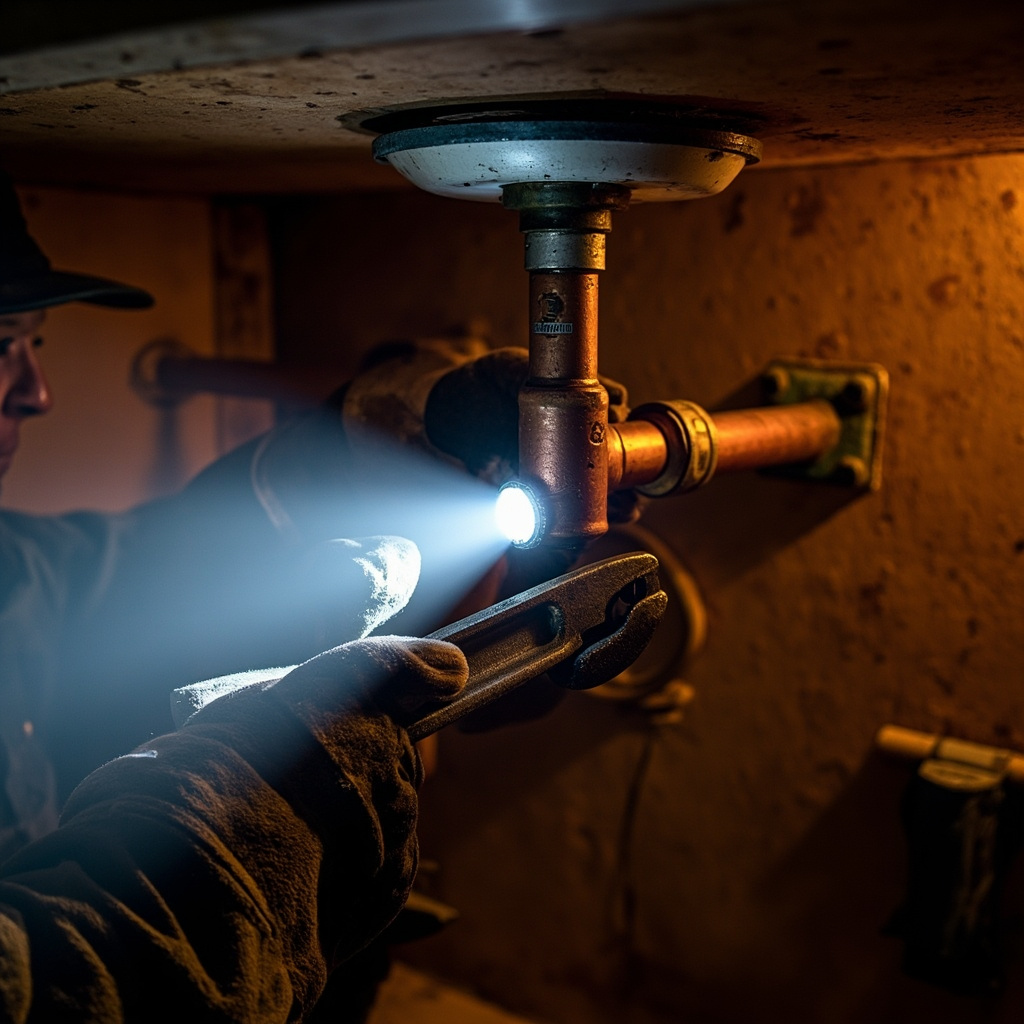
Call a licensed plumber if:
- You’re cutting into the main water line to install a softener or filter
- There’s an active leak at fittings or the drain line
- The control board or electrical connection is beyond a simple reset
- Your well pump or pressure tank is acting up
We don’t rank local-service lists or installer directories. Test, decide what you need, then find a licensed plumber for anything that involves cutting pipes.
Related
- Hard water stains on glass — detailed glass cleaning steps
- Hard water stains in the toilet — toilet bowl ring removal
- Hard water stains on shower glass — shower door deep clean
- Scale on fixtures — faucet and aerator descaling
- Water hardness explained — what gpg and ppm mean
- Hardness test kits — test before you buy a system
- How to choose a water softener — sizing and features
- How water softeners work — the mechanics of prevention
Key takeaways
- Hard water stains are evaporated calcium and magnesium deposits, not dirt or soap
- Acidic cleaners dissolve the mineral bond; abrasives just scratch your surface
- Match the remover to the surface: gel for vertical glass, spray for flat areas, pumice for toilets only
- Don’t use household CLR on car paint. Automotive-specific gels are pH-balanced for clear coat
- Budget daily sprays ($4-6) handle light maintenance; gels ($13-20) tackle established scale
- Test your water hardness before buying any treatment system. Prevention beats re-cleaning
- Above 7 gpg, a softener eliminates the source of the problem entirely