If your shower door looks frosted two days after you cleaned it, the problem isn’t your effort — it’s your water. Hard water stains on glass come from dissolved calcium and magnesium minerals that crystallize every time a droplet dries. You scrub them off, they come back, and the cycle repeats until either the glass gets etched or you fix the water. Here’s how to remove what’s there now and stop it from returning.
Quick answer
Hard water stains on glass are cloudy white spots and crusty scale left when dissolved calcium and magnesium dry onto the surface. To remove them: soak in white vinegar or a descaler for 5-10 minutes, then scrub with a non-scratch pad. To prevent recurrence: squeegee after every shower, apply a glass sealant quarterly, and if stains keep returning test your water hardness and consider a softener.
What those white spots actually are
The chalky residue on your shower door is calcium carbonate and magnesium mineral deposits. When hard water evaporates on glass, the dissolved minerals stay behind and crystallize. The U.S. Geological Survey defines hard water as water with high levels of dissolved calcium and magnesium ions — the same minerals that form the spots you see.
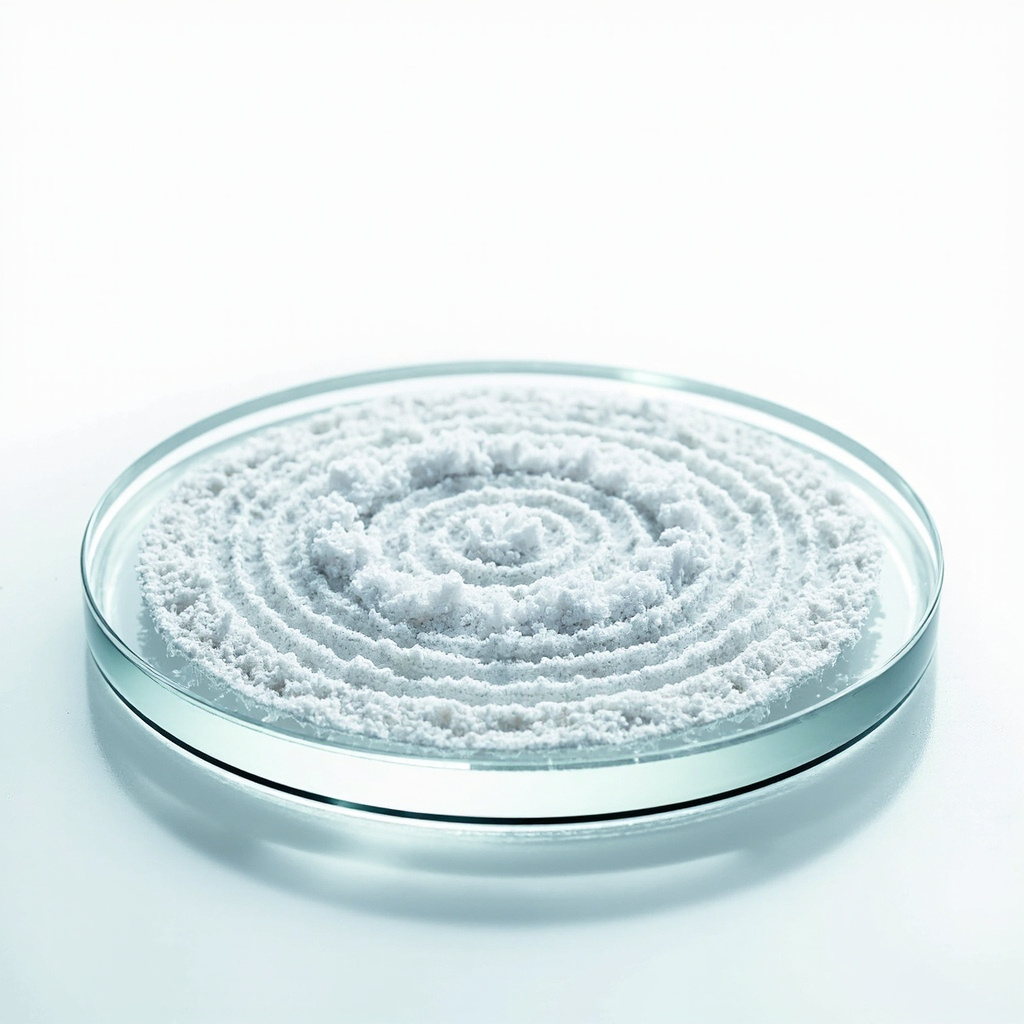
This is different from soap scum. Soap scum forms when calcium and magnesium react with fatty acids in bar soap, producing a sticky, cloudy film. Mineral deposits, by contrast, are pure crystallized mineral — they feel gritty, look chalky white or slightly pink, and harden over time into crusty scale.
How the deposits form:
- Water droplet drying: minerals concentrate at the edges of each droplet as water evaporates, creating a ring pattern
- Shower doors: repeated wet-dry cycles layer crusty scale on top of itself, week after week
- Glassware: dishwasher hard water leaves a cloudy film when minerals deposit during the heated dry cycle
- Windows: sprinkler spray or rain splash carries minerals that bake into exterior glass under sunlight
The key distinction for treatment: early-stage spots dissolve with mild acid (vinegar). Etched glass — where minerals have eaten into the surface itself — may need professional polishing, and no household cleaner fixes that permanently.
Identify the stain level first
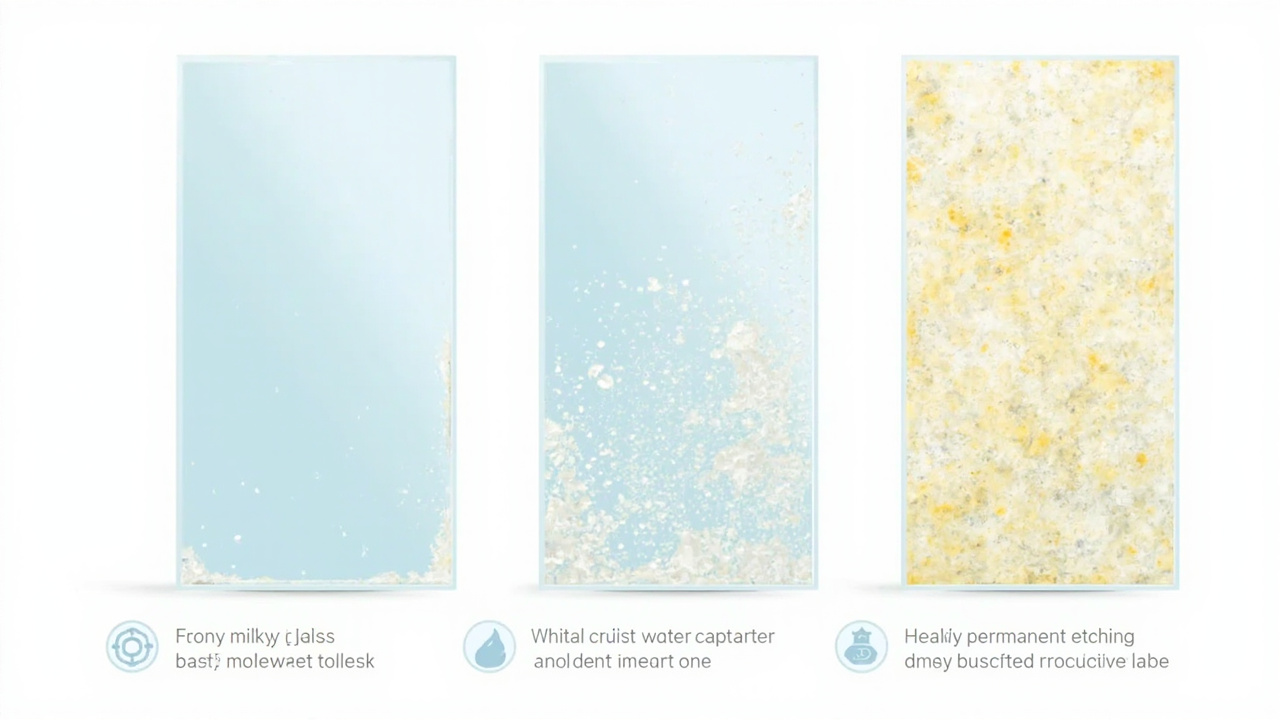
Before you grab a product, figure out what you’re dealing with. The method depends on how far the minerals have progressed.
Light spotting
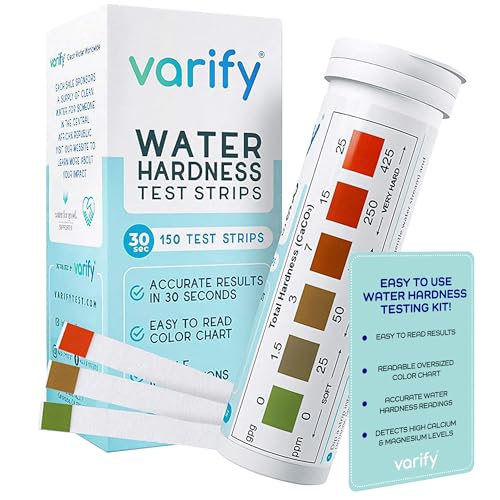
A faint haze that wipes with a damp cloth, typically less than two weeks old. A vinegar soak is sufficient — no commercial cleaner needed yet. If you’re not sure whether your water is actually hard, test your water hardness with a 150-strip test kit. If the reading is under 3 gpg (51 ppm), the culprit may be soap film, silicone residue from manufacturing, or acid rain on windows — not mineral deposits.
Moderate scale
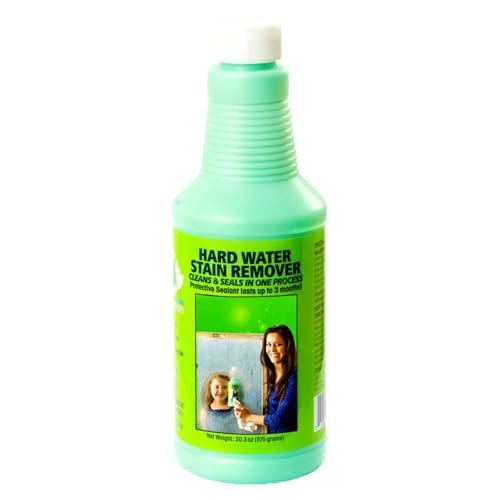
Visible crusty deposits that need soaking. Run your fingernail across the glass — if you feel texture, the minerals have built up enough to require a commercial descaler rather than vinegar alone. A dedicated hard water stain remover formulated for stubborn scale can cut through moderate deposits that vinegar leaves behind. Apply with a sponge, let it work for the time on the label, then scrub and rinse.
Heavy or etched
Thick crust where the glass feels rough to the touch, or a permanent cloudy film that doesn’t respond to cleaning. At this stage, the minerals may have etched into the glass surface. A professional-grade hard water stain remover can tackle stubborn deposits, but if the glass itself is etched, you may need glass restoration or replacement.
Removal methods by surface
Different glass surfaces need different approaches because of how water behaves on them.
Shower glass doors
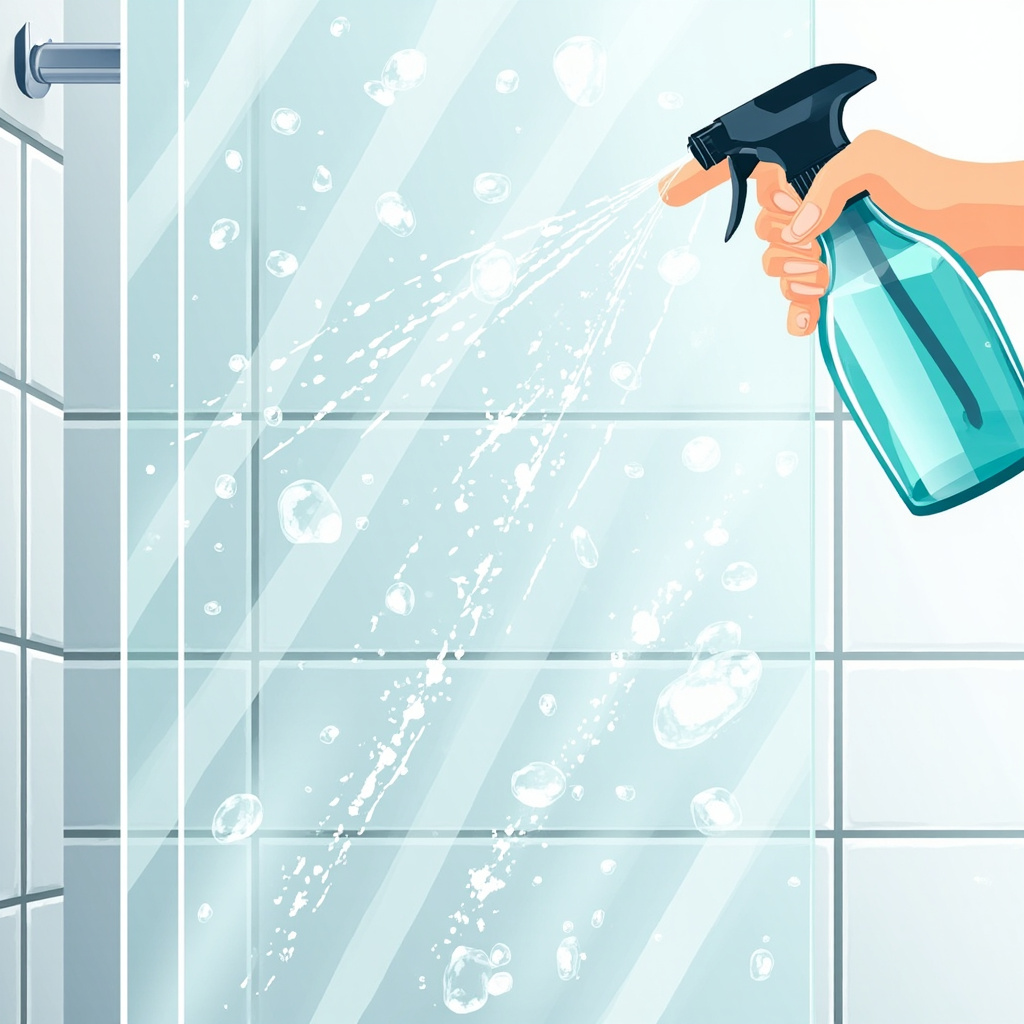
Shower doors are the most common battleground because they get sprayed, heated, and left to dry — the perfect conditions for mineral crystallization.
-
Vinegar soak: Spray full-strength white vinegar onto the glass, let it sit 5-10 minutes, then scrub with a non-scratch sponge. For moderate scale, repeat the soak two or three times. Rinse with warm water and dry with a lint-free microfiber cloth to avoid leaving new water spots.
-
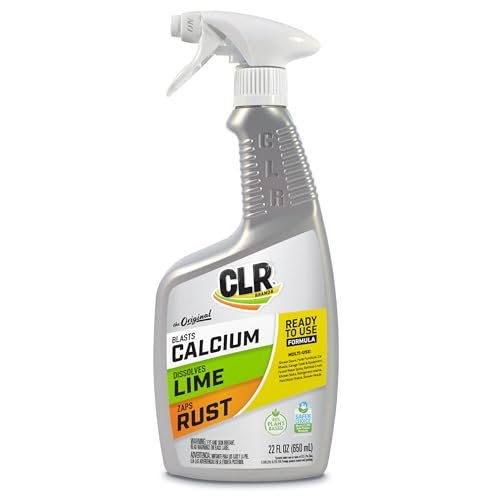
Commercial descaler: When vinegar isn’t enough, a calcium-lime-rust remover spray dissolves mineral scale faster. Spray it on, wait 2-3 minutes — never longer than the label says — scrub gently, and rinse thoroughly with plenty of water. The acid in these products is stronger than vinegar, so timing matters.
-
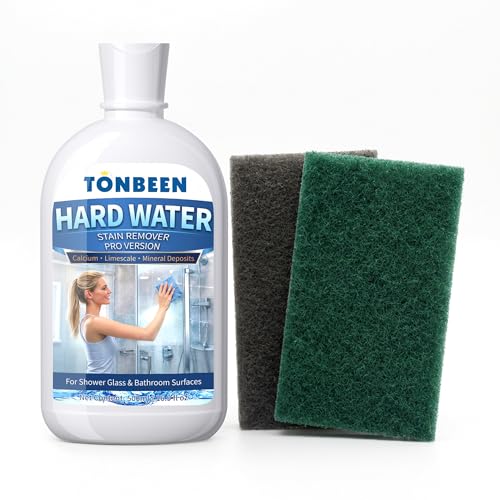
Paste and polishing: For thick crust on vertical surfaces where liquid sprays run off before they can work, a cling paste with polishing pads stays put. Apply the paste, let it sit for the recommended time, then use the included pads for mechanical scrubbing power that liquid cleaners can’t match.
Warning: Do NOT mix vinegar with bleach — this creates toxic chlorine gas. Do NOT use abrasive powders like Comet or Bar Keepers Friend on coated or tinted glass, because they scratch the protective coating.
Windows and exterior glass
Mineral spotting from sprinklers or rain is harder to remove than shower scale because it bakes into the glass under direct sunlight. Soak a towel in full-strength vinegar, press it flat against the glass for 10-15 minutes, then scrub with a non-scratch pad. For baked-on spots that vinegar won’t touch, a commercial calcium-lime-rust remover spray applied with a sponge is faster and more effective than repeated DIY attempts.
Glassware and dishes
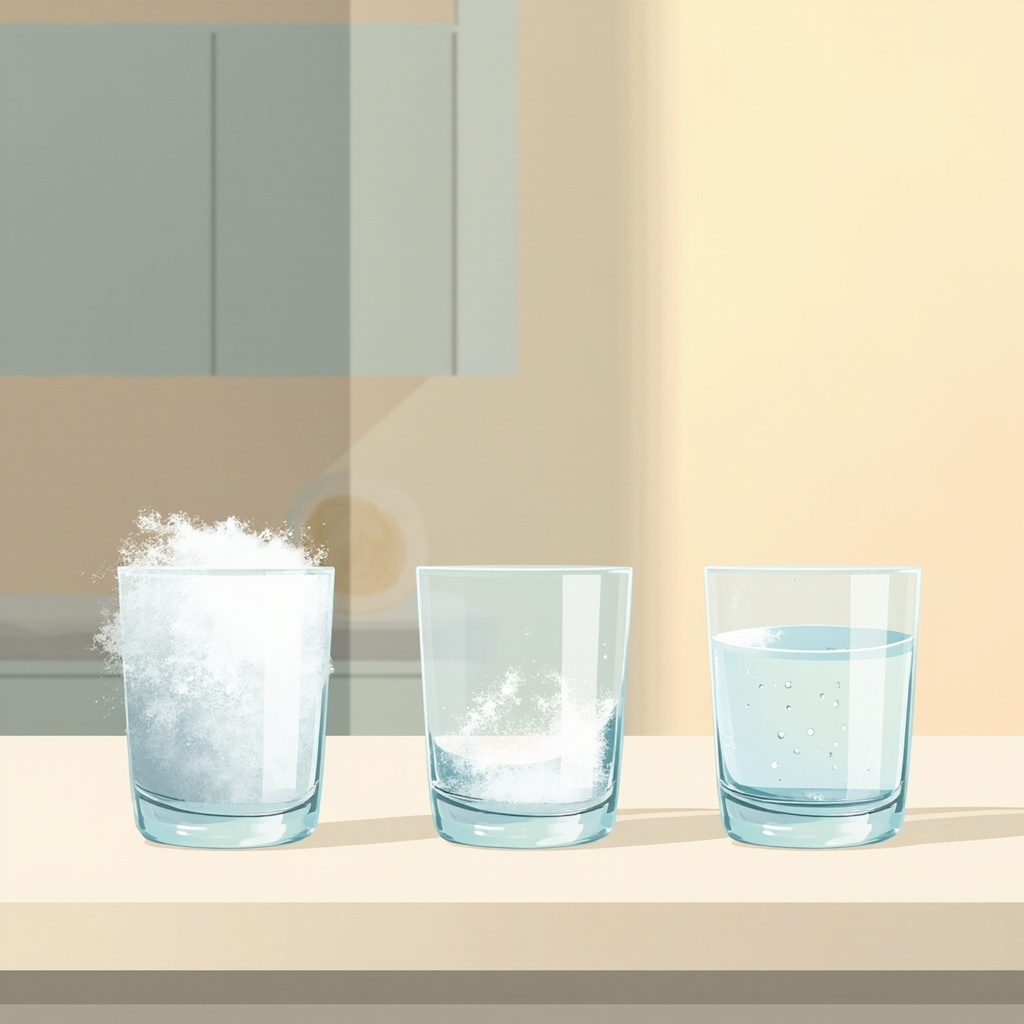
Cloudy glasses from the dishwasher happen when hard water minerals deposit during the heated dry cycle. To clear them: run an empty cycle with 1/4 cup of citric acid in the detergent cup — this dissolves mineral buildup inside the dishwasher and on glassware simultaneously. For individual glasses, soak them in 50/50 white vinegar and warm water for 30 minutes, then hand-dry with a microfiber cloth rather than air-drying, which lets new spots form.
Prevention: stop stains from coming back
Removing stains is only half the job. If you don’t change what happens after the water hits the glass, the spots return within days. Here are the three prevention steps that actually work.
Daily: squeegee after every shower
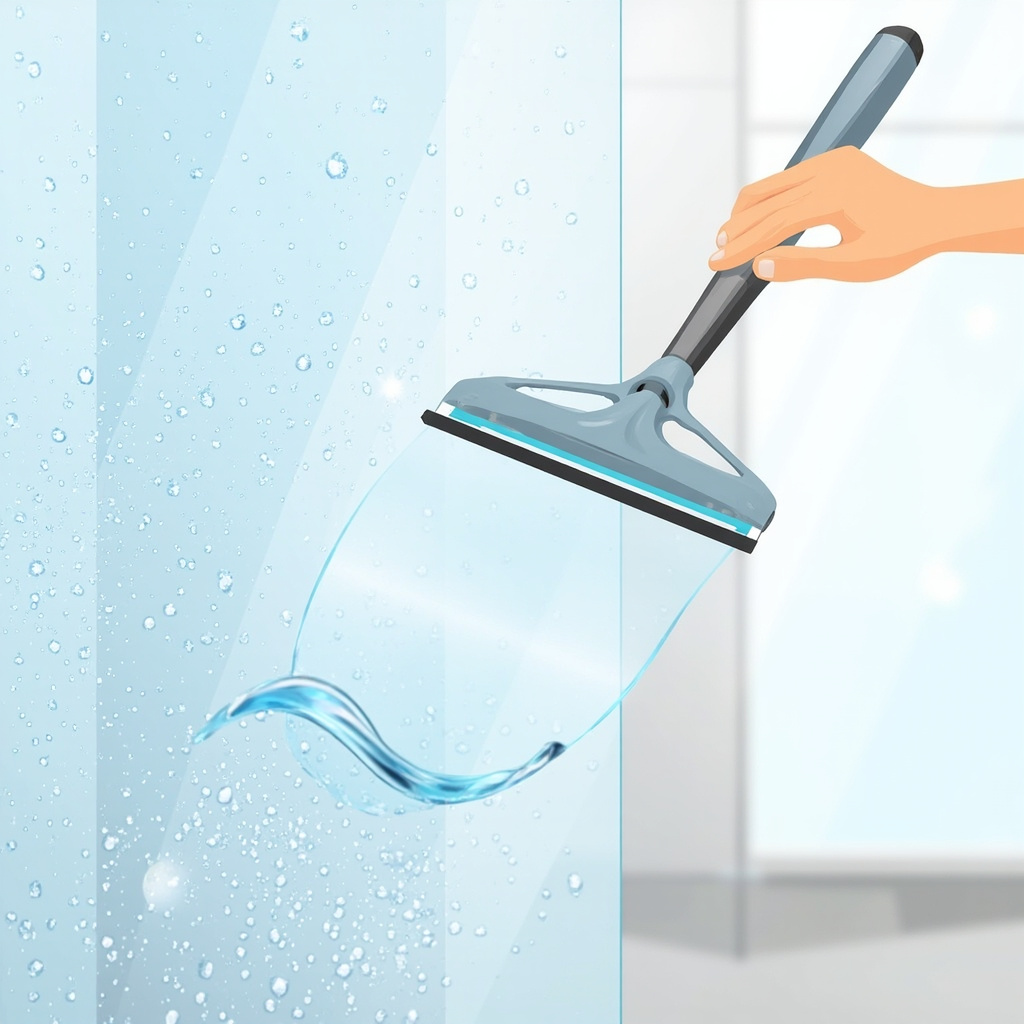
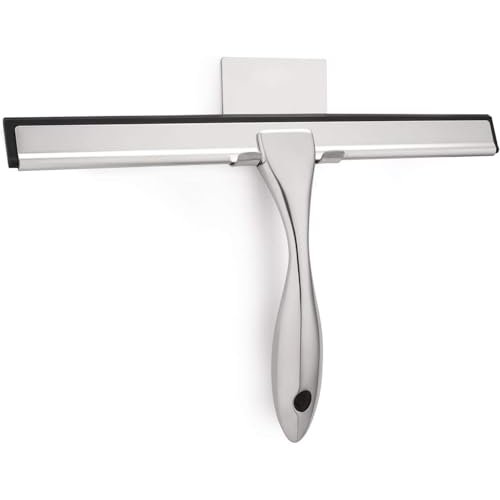
A shower squeegee takes about 10 seconds and removes roughly 90% of the water before it can evaporate and deposit minerals. This is the single most effective prevention step — more impact than any cleaner or coating. Keep the squeegee in the shower where you’ll actually use it, not in a cabinet.
Quarterly: apply a glass sealant
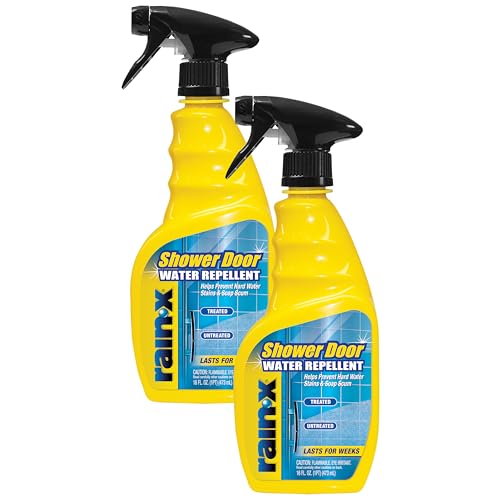
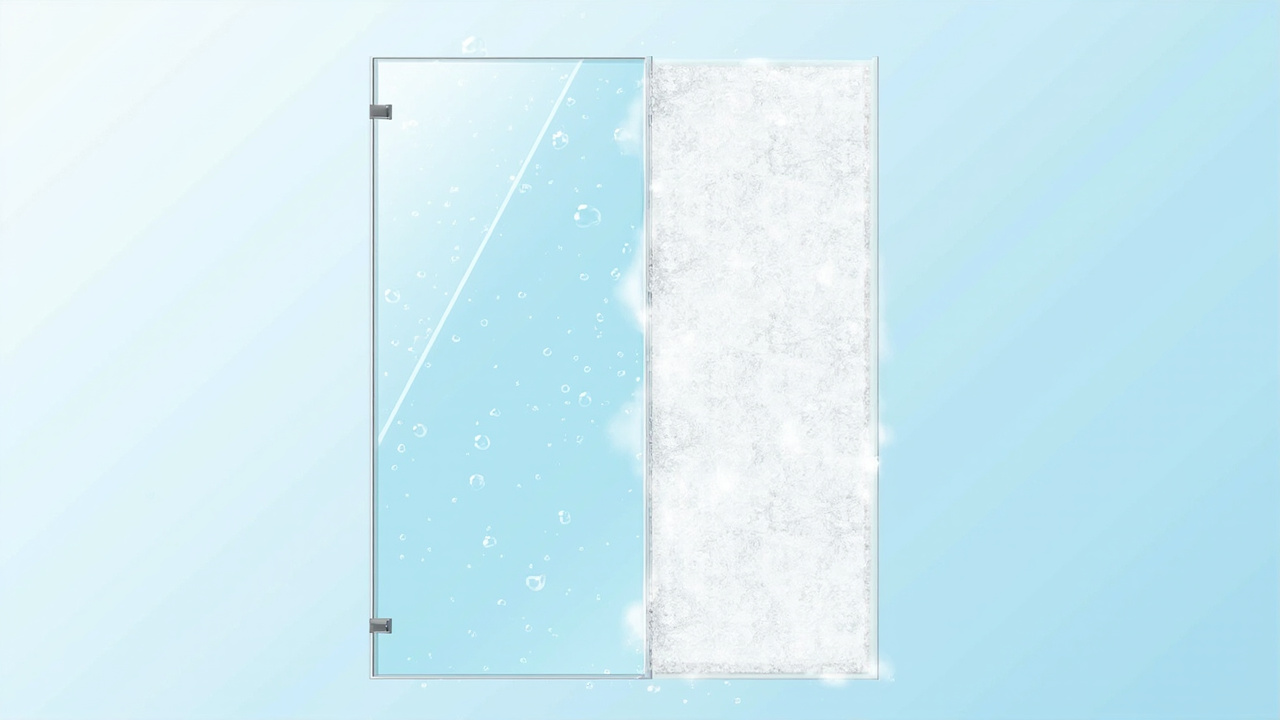
A water-repellent coating designed for shower glass causes water to sheet off in a continuous film instead of forming individual droplets. No droplets means no mineral rings. Reapply every 2-3 months for ongoing protection, because the coating wears down gradually with each shower and each cleaning.
Every 6 months: deep clean
Even with daily squeegeeing and a sealant coating, trace minerals accumulate slowly. A twice-yearly deep clean with vinegar prevents that slow buildup from hardening into etched scale that no cleaner can reverse. Think of it the same way you think of dental cleanings — daily brushing handles most of the problem, but periodic deep work catches what routine misses.
The cost of skipping prevention is real. Repeated cleaning with harsh descalers wears down any glass coating faster, and once minerals etch into the surface, you’re looking at $150-400 per door for professional glass polishing — or full replacement. A $10 squeegee and a $20 sealant bottle are the cheapest insurance you can buy.
Root cause: it’s your water
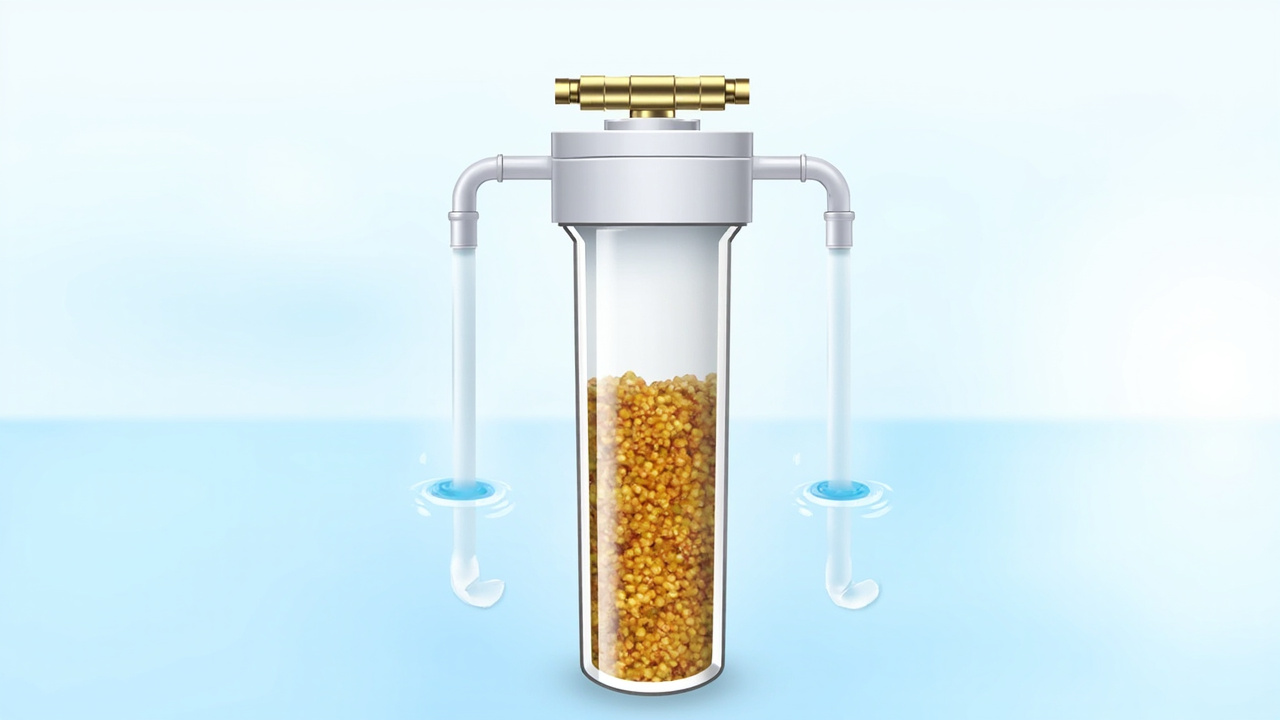
Cleaning removes the symptom. If stains return within a week or two of cleaning, the root cause is your water hardness level. Understanding what hard water actually is — dissolved calcium and magnesium picked up as groundwater passes through limestone and chalk deposits — helps explain why cleaning alone never permanently solves the problem.
Softener vs filter vs RO (one screen)
If you’re considering a water treatment system, here’s the quick disambiguation:
- Softener (salt-based): swaps hardness minerals (calcium, magnesium) for sodium ions via ion exchange — this is what actually stops stains at the source.
- Whole-house carbon or sediment filter: improves taste, removes chlorine and dirt — does nothing for hardness.
- Reverse osmosis (usually under-sink): polishes drinking and cooking water to near-zero dissolved solids — not connected to your shower or glass.
For hard water stains on glass, only a softener addresses the root cause. A filter or RO system won’t change what comes out of your showerhead.
Test before you buy a system
Before spending $500-2000 on a water softener, test your water hardness with strips — a 150-strip test kit costs about $10 and gives you a definitive number. If you’re above 7 gpg (120 ppm), a softener is the permanent solution.
Fix path: cleaning routine vs softener
| Situation | Fix | Cost |
|---|---|---|
| Mild hard water (3-7 gpg), occasional spots | Descaler + squeegee routine | $30-50 |
| Moderate (7-15 gpg), weekly cleaning needed | Descaler routine + consider choosing a water softener | $50-1200 |
| Severe (15+ gpg), stains return in days | Water softener is the only permanent fix | $800-2000 |
Skip this: Don’t buy a softener if you haven’t tested your water first. Don’t buy “magnetic descaler” pipe attachments — they have no peer-reviewed evidence of effectiveness for household scale reduction. Many salt-free systems are conditioners that may change how scale sticks to surfaces, but they typically do not bring hardness grains to zero on a test strip. Match the product claim to your actual goal before you spend money.
Common mistakes
-
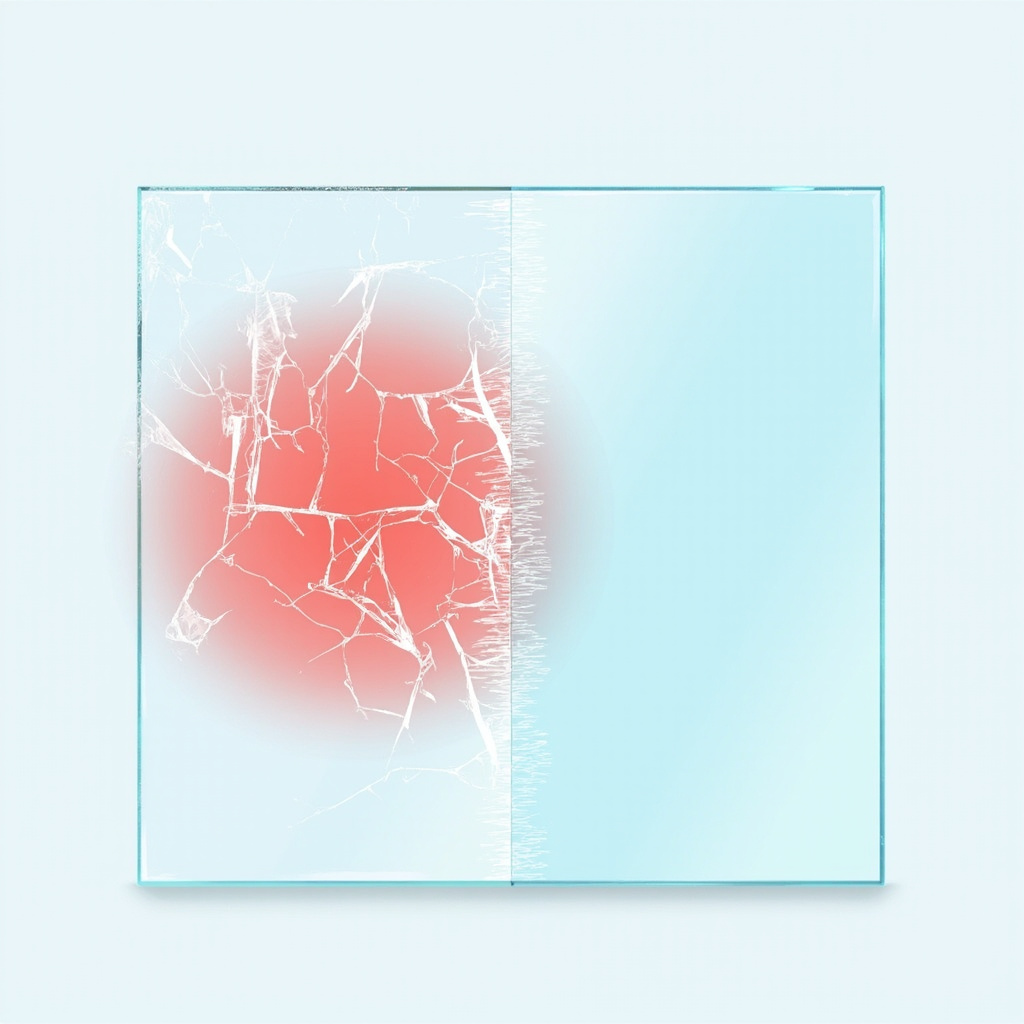
Scrubbing with steel wool or abrasive pads — this permanently scratches glass. Once scratched, no cleaner or polish restores the surface. Always use non-scratch sponges or microfiber cloths on glass.
-
Leaving CLR or acid cleaner on too long — the acid that dissolves mineral scale can also etch glass if left beyond the recommended contact time. Follow label timing (usually 2-5 minutes max) and rinse immediately with plenty of water.
-
Mixing cleaning products — vinegar plus bleach creates toxic chlorine gas. Use one cleaner at a time, rinse fully between products, and ventilate the bathroom while you work.
-
Skipping the hardness test — treating hard water stains without knowing your gpg is like taking medicine without a diagnosis. You might spend months scrubbing when a $10 test strip would tell you that a softener is the real fix.
-
Ignoring the root cause — no amount of CLR changes the fact that your water is 20 gpg. A squeegee delays stains; a softener eliminates them. If stains come back within days, cleaning is the wrong battle.
When to call a pro
Keep it DIY if: testing hardness, applying cleaners, squeegeeing, applying sealant coatings, or running citric acid through the dishwasher. These are all straightforward homeowner tasks.
Call a professional if:
- The glass is permanently etched — cloudy even after thorough cleaning with vinegar and descaler. A glass restoration company can polish the surface, but expect $150-400 per door, and results depend on etch depth.
- You have so many mineral-affected surfaces — faucets, fixtures, toilets, shower doors, windows — that whole-house water treatment is more cost-effective than treating each surface individually.
- Your water test shows extremely high hardness (20+ gpg) or you suspect iron contamination (reddish-brown stains). A licensed water treatment professional can recommend the right system size and configuration.
We do not rank local installer directories or match you with specific companies. For system installation involving your main water line, use a licensed plumber in your area.
Related
- What is hard water — the science behind dissolved minerals and where they come from
- Water hardness — how to measure gpg and ppm, and what your number means
- How to choose a water softener — the permanent fix if stains keep coming back
- Hard vs soft water — the practical difference and what changes when you treat your water
- Salt pellets vs crystals — which softener salt to use once you have a system
- Water softener not regenerating — troubleshooting if your softener stops working
Key takeaways
- Hard water stains on glass are calcium and magnesium minerals that crystallize when water evaporates on the surface.
- Vinegar dissolves light spots; commercial descalers handle moderate scale; paste and polishing tackle heavy crust.
- Never use abrasives on glass — scratches are permanent and no cleaner fixes them.
- A daily squeegee prevents roughly 90% of shower stains by removing water before it can evaporate.
- A glass sealant applied quarterly makes water sheet off instead of depositing mineral rings.
- If stains return within weeks, test your water hardness — you likely need a softener, not more cleaning products.
- Above 7 gpg, cleaning is a losing battle; the only permanent fix is treating the water at the source.