The closet bag says salt, but the brine tank wants a different salt. Dumping the bath bag in costs a regeneration cycle and a scoop-out, so check the chemistry and clean up if a bag already went in.
| Question | Answer |
|---|---|
| Can you pour Epsom salt in the brine tank? | No. Magnesium sulfate doesn’t recharge resin. Use sodium or potassium chloride. |
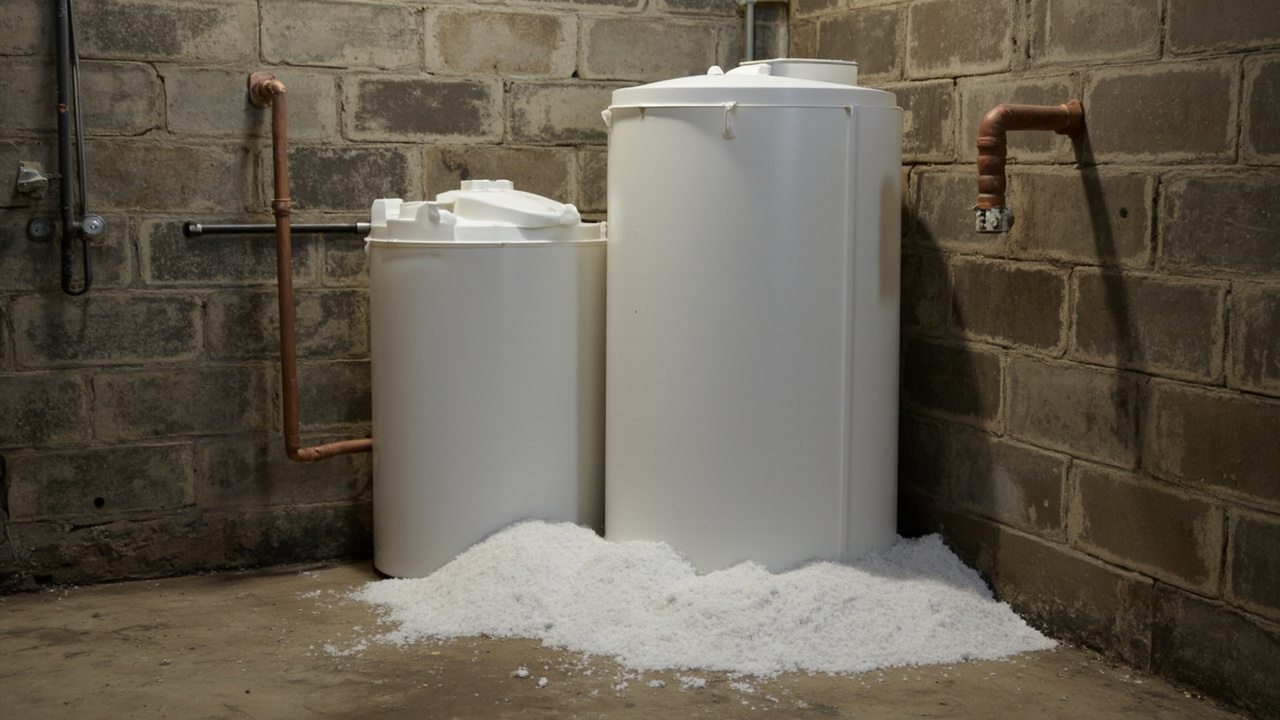
| Already poured some in? | Scoop the solids out. Don’t top the mess off with real salt. |
| What belongs in the tank? | Softener pellets, solar crystals, or potassium chloride. Not a bath bag. |
Quick answer
No. Don’t pour Epsom salt into a water softener. Epsom salt is magnesium sulfate. The brine tank needs sodium chloride, or potassium chloride if you are avoiding sodium, to knock calcium and magnesium off the resin. Magnesium sulfate can’t do that swap. A cup in a bath is a different question and doesn’t soften the tap. If a bag is already in the tank, scoop it out before the next regeneration.
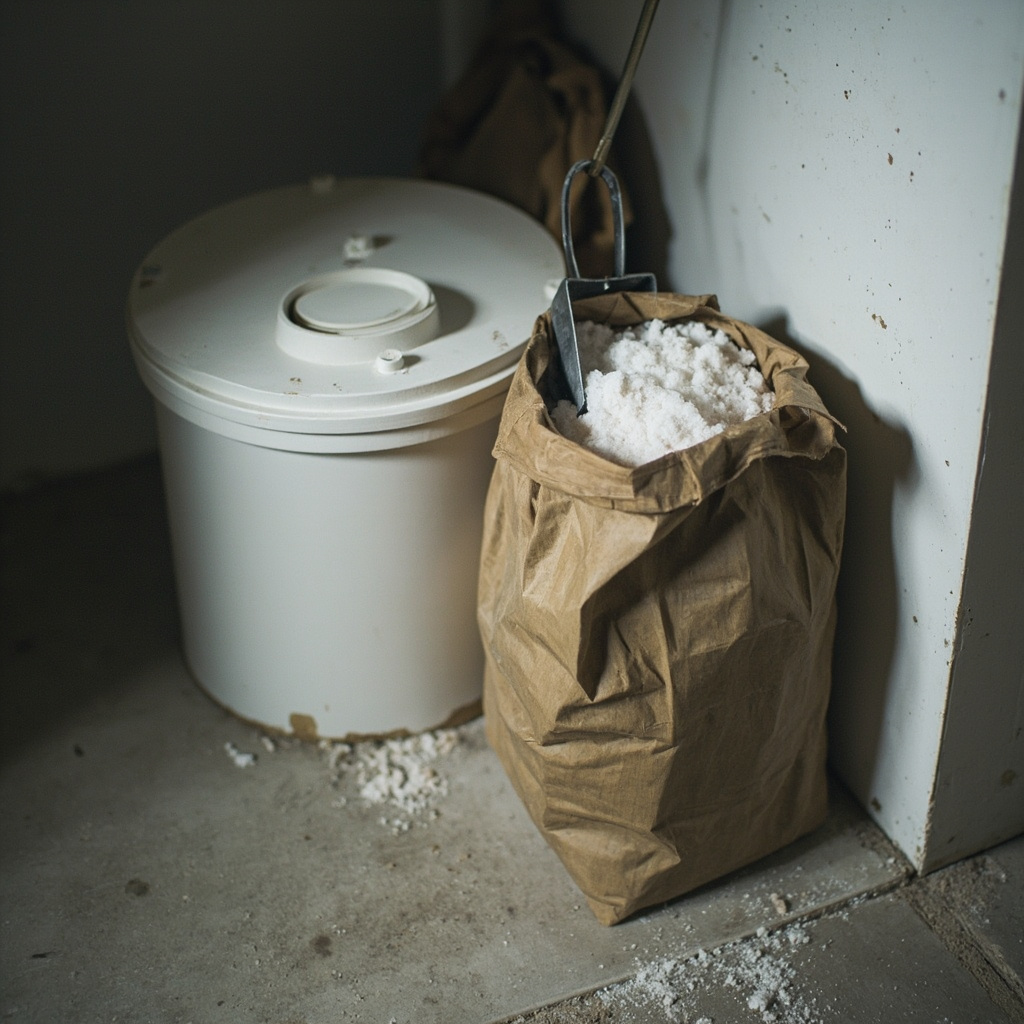
What the brine tank is actually for
Hardness is dissolved calcium and magnesium, not dirty water. USGS puts it that way. Hardness is those two minerals in the water. Soap film is a symptom you can see, not a lab method (USGS, Hardness of Water).
The resin in a salt softener holds those ions during the service cycle. Regeneration pushes them off with a concentrated brine. Diamond Crystal says the salt for that job is sodium chloride or potassium chloride. Recharging the beads is what lets them keep taking hard-water minerals out (Diamond Crystal, Water Softener Salt). The site walk-through of that cycle is on why the brine cycle needs sodium or potassium chloride, not magnesium sulfate.
Epsom salt dissolves into magnesium and sulfate. Adding more magnesium doesn’t strip magnesium off the resin. That is the whole chemical no. You can’t swap the ion you are trying to remove for the ion the resin is supposed to release.
EPA’s secondary standards treat hardness and sulfate taste as nuisance issues, not a health-violation headline. The secondary sulfate standard is two hundred fifty milligrams per liter for salty taste. TDS at five hundred milligrams per liter is tied to hardness, deposits, staining, and salty taste. Those standards are not mandatory MCLs (EPA, Secondary Drinking Water Standards). Don’t write this up as “hard water is unsafe” or “Epsom salt is toxic in the tank.” Neither claim is supported.
A salt softener, a carbon filter, and an under-sink RO are three different tools.
- A softener swaps hardness minerals. That is the spotting and scale job.
- A whole-house carbon or sediment filter takes out chlorine taste and dirt. It doesn’t soften.
- RO polishes drinking and cooking water. It doesn’t run every shower.
If the complaint is spots on glass, the filter doesn’t fix it. If the complaint is chlorine taste at the kitchen tap, the softener doesn’t fix it either. The side-by-side is on softener vs filter vs RO.
- Don’t read a slippery Epsom bath as proof the salt softened your water. A slick feeling on your hands is not a hardness reading, and a bath doesn’t change the tap.
Does Epsom salt soften water?
This is the question the search results actually rank, and most of them answer a bath, not a brine tank. A dissolved magnesium salt can change how soap feels in the tub and how a load of laundry looks in the drum. It doesn’t lower the calcium and magnesium already in the supply. SciFun and the chemistry explainers split the same way: a bath salt and an ion-exchange cycle are different tools. A soak write-up is not a plumbing answer.
Glass spots, kettle scale, and laundry that stays stiff are hardness symptoms. A bath salt doesn’t reach the pipes.
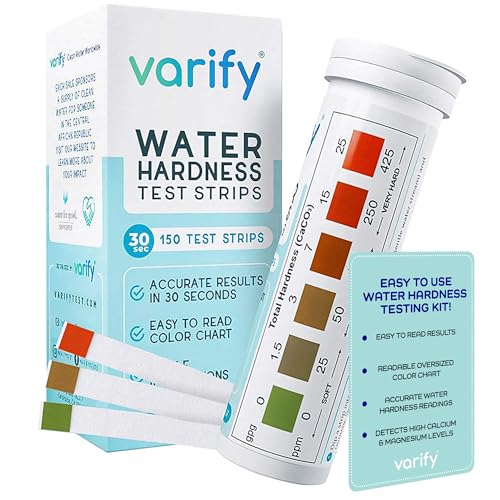
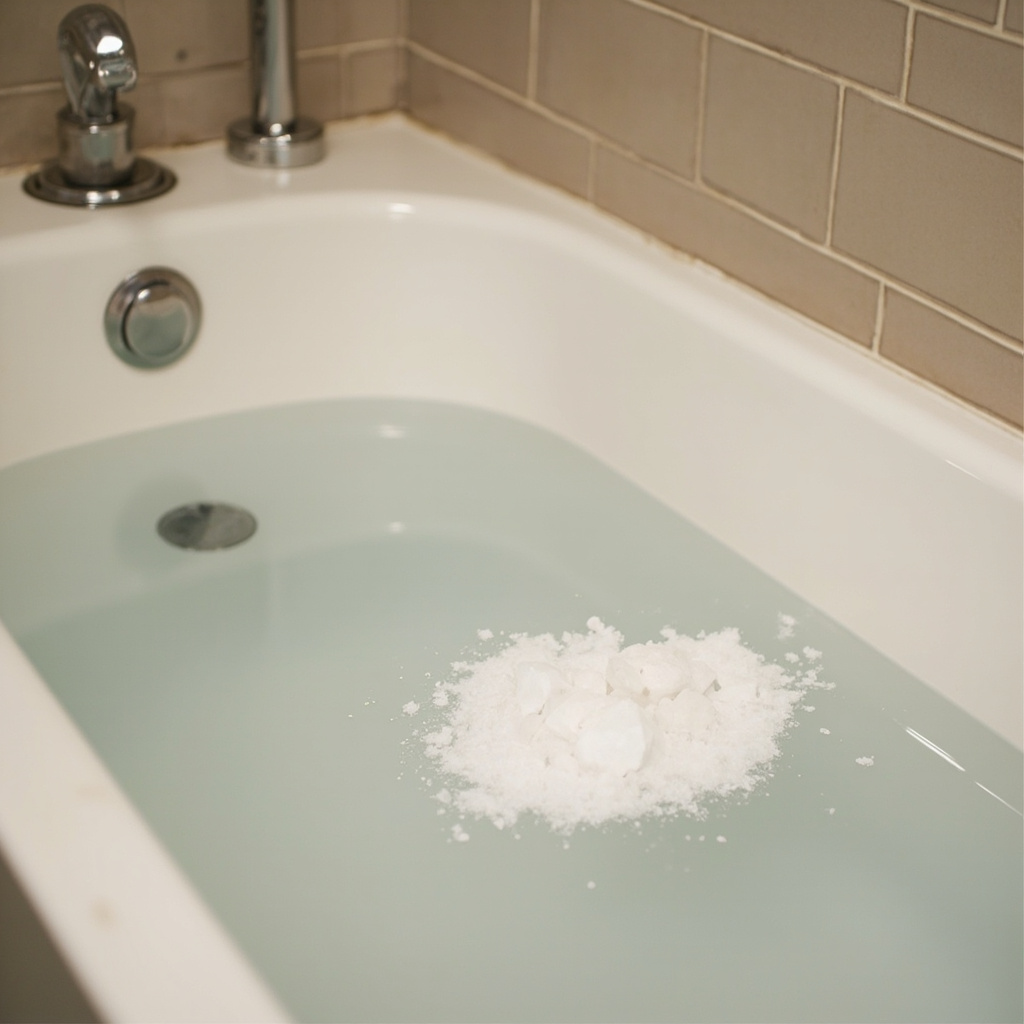 If you don’t know the grains-per-gallon number yet, the next step is a strip, not another salt experiment. A hardness test strip kit is the cheap way to get that number before you blame the tank. The method page is how to read a hardness test.
- Don’t add Epsom salt to the washing machine and call it a softener. That is a laundry myth. It doesn’t regenerate anything, and it doesn’t change the hardness of the next fill.
If-then: keep it, scoop it, or call
Three branches. No product list here.
- You haven’t added it yet. Leave the Epsom bag for baths. Buy softener salt. The pellet, crystal, and block choice lives on pellets vs crystals, the salts that actually belong in the tank.
- You already poured some in, and the unit still regenerates. Scoop out solids. Flush the brine tank with clean water. Refill with sodium chloride or potassium chloride. Run one manual regeneration only if the manual says so. Then test hardness at a cold tap.
- The tank is a paste, the unit won’t draw brine, or hardness didn’t drop after a real regeneration. Stop experimenting. That is a bridge, a mush, or a failed recharge, not a shopping problem. The failure modes are on what a wrong salt does to the brine tank. Call a tech if you can’t clear the brine line.
- Don’t top off a half-dissolved Epsom mess with a bag of real salt and hope the next cycle sorts it out. You’ll mush both, and the brine well clogs before the resin sees a clean brine.
- Skip a new softener because one wrong bag went in the tank. Diagnose the brine tank first. A new unit doesn’t fix a tank you haven’t emptied.
What to put in the tank instead
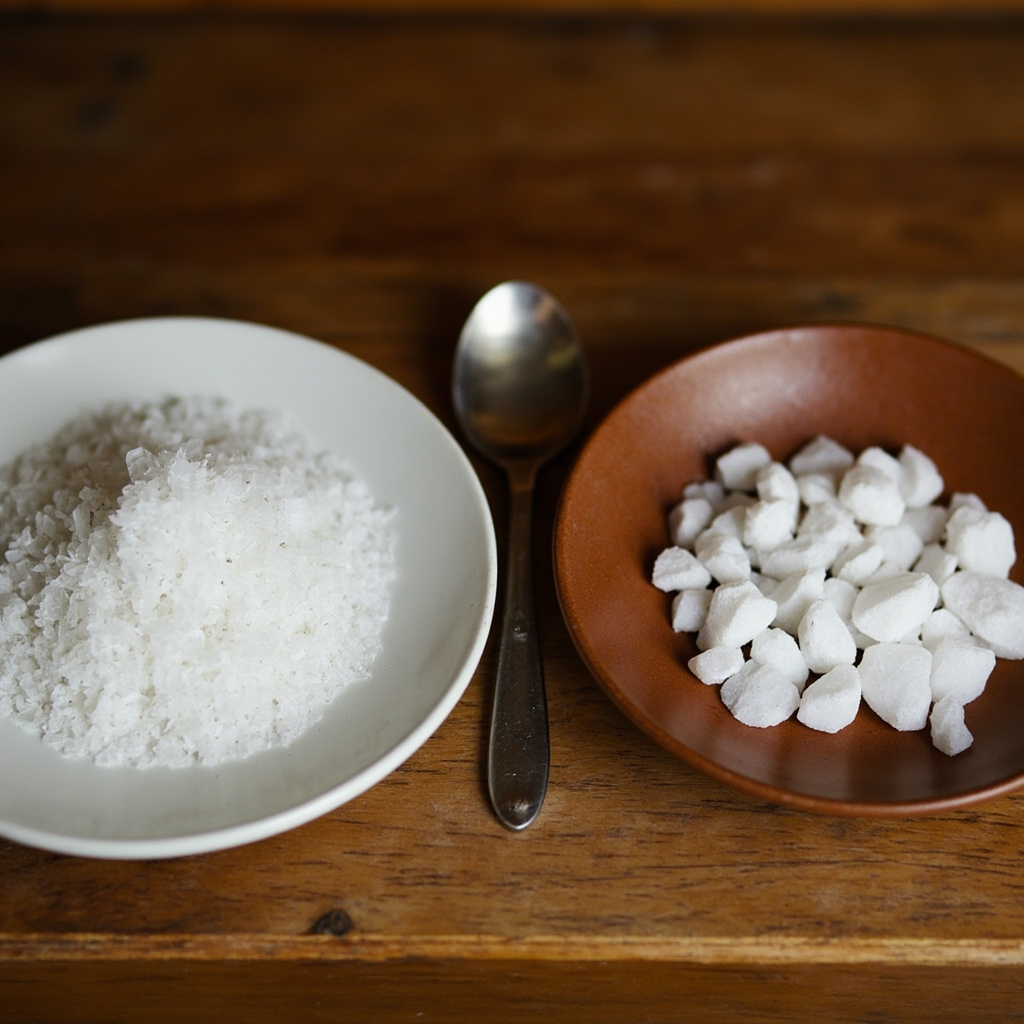
The default is sodium chloride labeled for water softeners. Morton’s own softener line is sodium chloride variants plus a potassium chloride it calls a nearly sodium-free alternative. No Epsom product sits on that page (Morton Salt, Water Softener). Diamond Crystal says the same pair: sodium chloride or potassium chloride, used to recharge the beads. Pellets and solar crystals are both in that pair. Which shape to buy is one paragraph here, then the sister page.
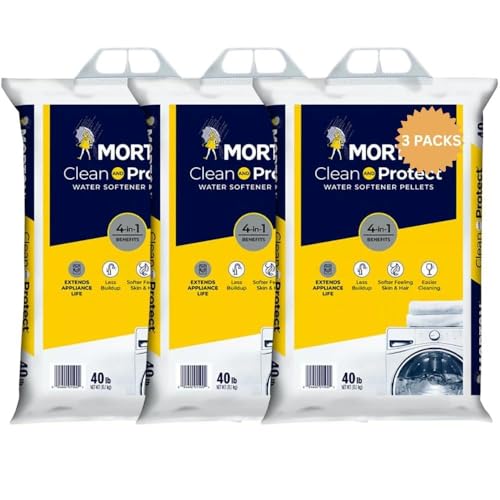
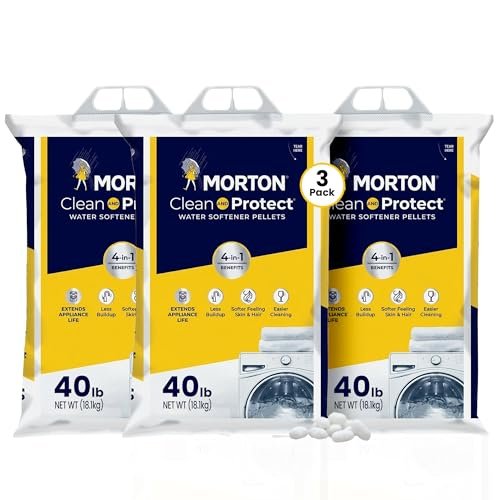
A forty-pound pellet bag is the usual refill when the manual doesn’t call for a block. A three-pack of forty-pound softener salt pellets covers a few months for a typical household, not a year, and not a single weekend. If you want the Morton name on the bag rather than a multipack title, the Morton-titled pellet three-pack is the same job. Link that child listing, not a parent pack. The overview of every legal salt type is the water softener salt types overview.
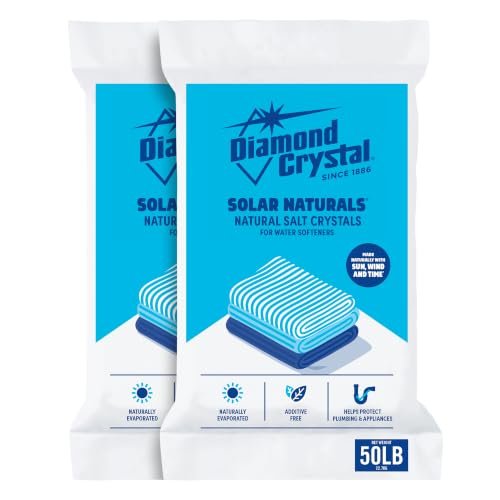
Solar crystals are the other sodium chloride shape. They dissolve a bit differently and they are what some tanks prefer after a bridge. A two-pack of solar softener salt crystals is the crystal branch, not a second brand of pellets. The full pellet-vs-crystal call is on pellets vs crystals.
Blocks only if the manual calls for a block. One sentence. Don’t open a block-vs-pellet essay on this page.
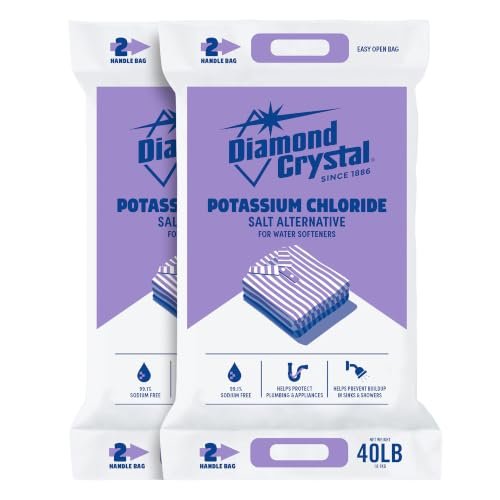
Potassium chloride is the low-sodium brine, and only for a household that was already told to limit sodium. It is still a chloride brine. It is not Epsom salt, and it is not a salt-free conditioner. The price jump is real: a potassium chloride two-pack for softeners runs well above a sodium chloride three-pack of similar weight. Don’t buy it as the cheap swap. If a clinician set a sodium limit, ask that person before you change what the household drinks. This page doesn’t give that advice.
Salt-free conditioners are a different product again. Many of them change how scale sticks. They usually don’t bring hardness grains to zero on a strip. Epsom salt is not that product, and neither is potassium chloride. Don’t file all three in one “no sodium” bucket.
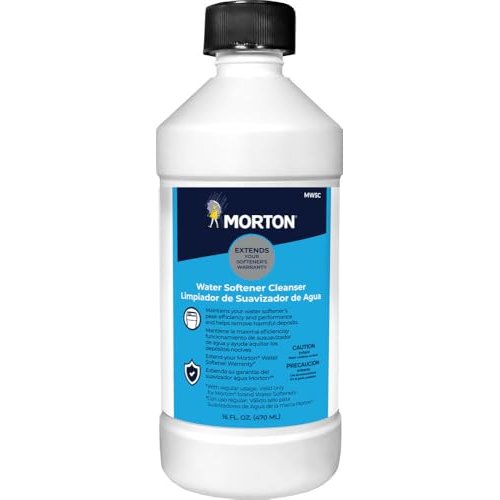
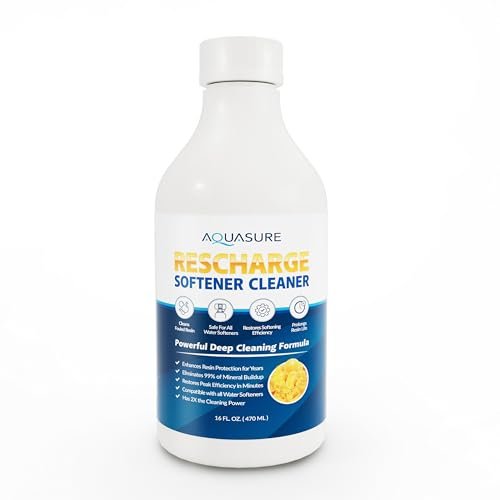
A resin cleaner is only for iron-fouled resin, and only if the manual lists one. A cleaner doesn’t replace salt, and it doesn’t undo an Epsom pour by itself. If the resin is iron-fouled after you have the right salt back in the tank, a resin bed cleaner is the add-on, not the substitute. The salt-add procedure, including which salts to skip, is on what salt to skip when you add salt.
- Don’t substitute table salt, rock salt, pool salt, ice-melt, or bath salts. The add-salt page already skips table salt. This page adds Epsom to that skip list and doesn’t repeat the scoop-and-pour steps.
Already poured it in? What to do before the next regeneration
Short steps. This is the part the bath articles don’t answer.
- Bypass if the manual makes that the safe first move. Don’t open the resin tank.
- Unplug only if you are about to move the control head. Power-off isn’t required just to scoop salt.
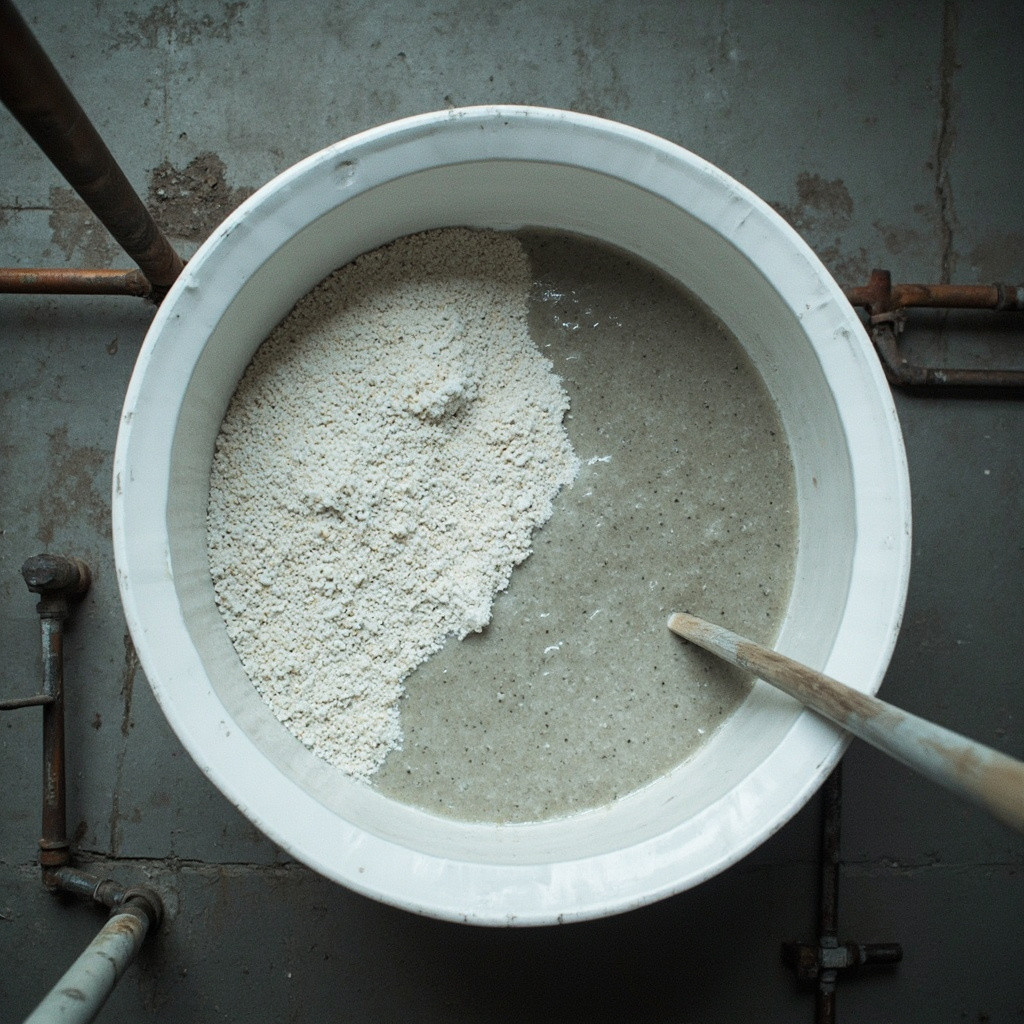
- Remove solid Epsom salt and bag it. Default is trash the solids and flush the tank with a bucket of clean water. Don’t rinse a sulfate sludge down a drain that a septic tank or the softener brine line feeds, unless local rules say that drain can take it.
- Wipe mush off the brine well and the grid if you can see the bottom. If you can’t see the bottom, stop. That is the bridge page’s job, on salt bridge and mushing.
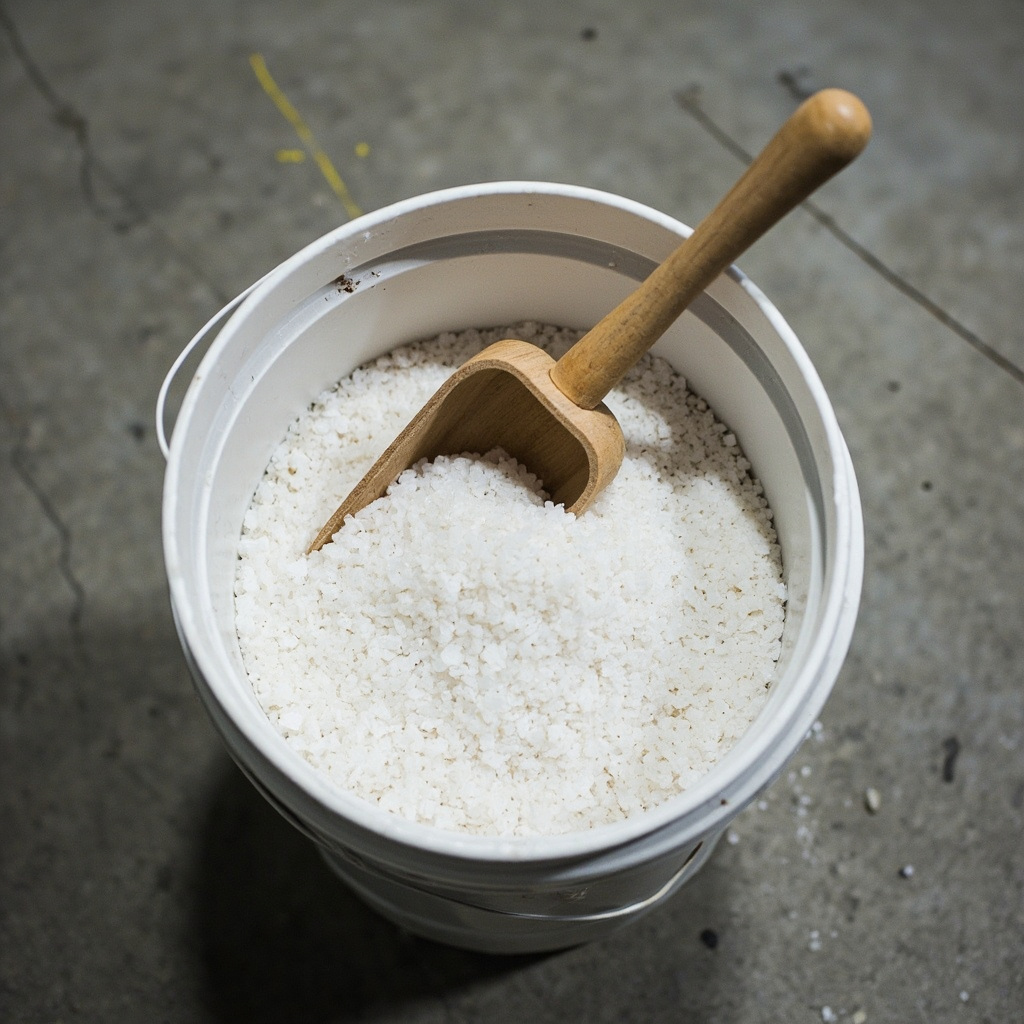
- Refill with the correct salt to the normal level, not to the lid. Overfilling is how the next bridge starts.
 6. Regenerate only if the manual’s “after a brine-tank clean” step says to. Then test a cold tap.
Don’t mix chemicals into the sludge. Don’t add vinegar, bleach, or a resin cleaner in the same step as an unknown salt paste. Clean the tank first. Add the cleaner later, on its own, if the manual calls for it.
What to buy
Roles, not a ranking. Prices below are the October thirteenth product check, not a sale.
| Role | Buy this | Don’t buy |
|---|---|---|
| Confirm hardness | Hardness strips (about $9.98) | A TDS pen as a hardness meter |
| Default brine | Forty-pound pellet three-pack (about $51.98) or Morton-titled pellets (about $50) | Epsom salt, table salt, pool salt |
| Crystal branch | Solar crystals, two-pack (about $61.79) | Bath crystals, ice-melt |
| Low-sodium brine | Potassium chloride two-pack (about $137.98) | “Magnesium” bath salts |
| Cleaner, only if iron-fouled | Morton resin cleanser (about $22.50) or a sixteen-ounce liquid resin cleaner (about $15.99) | A cleaner as a stand-in for salt |
A TDS pen reads dissolved solids. It doesn’t read grains of hardness. Don’t use one to decide the brine tank is fine.
If you already have a gpg number from the city report, you don’t need a second strip this week. You still need the right salt. The pellet three-pack is the refill once the tank is empty of the wrong salt. Sizing a whole new softener is a different page, on how to choose a water softener. This page doesn’t sell a unit.
Safety and limits
- Shut the water off and relieve pressure before you open any filter housing. The brine tank lid is not that job, but a housing on the same loop is.
- Don’t force plastic fittings. Overtight housings crack.
- Softener drain lines have to meet local code, including an air gap where the code requires one.
- Softened water carries more sodium than the raw tap. If someone in the house is on a strict sodium limit, ask their clinician about drinking it. We don’t give medical advice.
- Keep salt bags and resin cleaners away from kids and pets. An Epsom bag is not a snack, and it is not a brine refill.
When to call a pro
Keep it DIY if you are testing hardness, setting the control head, or adding the correct salt. Breaking a salt bridge you can see is still DIY. So is swapping a cartridge on a housing you already own.
Call a licensed plumber if any of these are true:
- You are cutting into the main or moving the unit.
- There is an active leak at a fitting or at the drain.
- The control board is faulting past a reset.
- A well pump or pressure tank is part of the failure.
- You can’t see the bottom of the brine tank and the unit won’t draw brine after a scoop.
We don’t rank local-service lists or installer directories.
Common mistakes
- Calling Epsom salt “softener salt” because both are bags of white crystals. Read the ingredient line. Magnesium sulfate is the stop sign. Sodium chloride or potassium chloride is the pass.
- Trusting a bath article for a brine-tank decision. The pages that rank for this query talk about soaks and laundry. Different tool. A slippery soak doesn’t recharge resin.
- Pouring potassium chloride and Epsom salt into the same “salt-free” bucket. Potassium chloride is a real brine. Epsom salt isn’t salt-free softening either. Salt-free conditioners usually don’t zero a hardness strip.
- Skipping the hardness test after the cleanup. If you don’t test, you can’t tell a fixed tank from a dead resin bed. A cold-tap strip after one real regeneration is the check.
- Buying a whole new softener from this page. Wrong role. Size and brand choice live on the choose-a-softener guide, not here. One wrong bag is a tank problem.
Related
- Water softener salt types overview for the salts that belong in the tank.
- Pellets vs crystals when you are choosing a shape, not a substitute.
- What salt to skip when you add salt for the add procedure this page doesn’t repeat.
- What a wrong salt does to the brine tank if the grid is already buried.
- Why the brine cycle needs chloride, not magnesium sulfate for the regeneration steps.
- Softener vs filter vs RO if the complaint might not be hardness at all.
- Hardness in gpg and ppm if the strip number needs a unit check.
- Glass spots from hard water if the symptom is the shower door, not the tank.
Key takeaways
- Epsom salt is magnesium sulfate. Softener brine is sodium chloride or potassium chloride.
- A slippery bath isn’t a hardness test and isn’t a regeneration cycle.
- Don’t pour it in. If it’s already in, scoop it out before you add real salt on top.
- Test hardness after the cleanup. No number, no conclusion.
- Potassium chloride is the low-sodium substitute. Epsom salt isn’t, and salt-free conditioners usually don’t zero grains.
- This page doesn’t sell a softener. It stops a bad substitute.