If your shower glass is spotting again and the soap won’t lather, the salt level in your brine tank is the first thing to check — not the resin, not the valve head. A softener running with an empty or bridged salt tank burns through regen cycles without actually softening anything, and you keep paying for the water and salt you waste. The fix is usually a five-minute refill once you know the quarter-tank rule, which salt to buy, and how to break a bridge before pouring.
Note: this article covers salt-based ion-exchange softeners only. Salt-free conditioners don’t use salt at all — they crystallize calcium to reduce scale but don’t bring hardness grains to zero on a test strip. RO systems and whole-house carbon filters also don’t use brine salt. If you aren’t sure which system you have, check your owner’s manual before buying anything.
Quick answer
Check the brine tank monthly. When the salt pile drops below roughly one-quarter full — or sits at the water line — it is time to refill. Break any hardened bridge first, then pour in high-purity pellets, solar crystals, or blocks until the tank is two-thirds to three-quarters full. Never overfill past the fill line. Use the same salt type each time, and only run a manual regeneration if the tank was completely empty for more than two weeks.
When to add salt
The quarter-tank rule
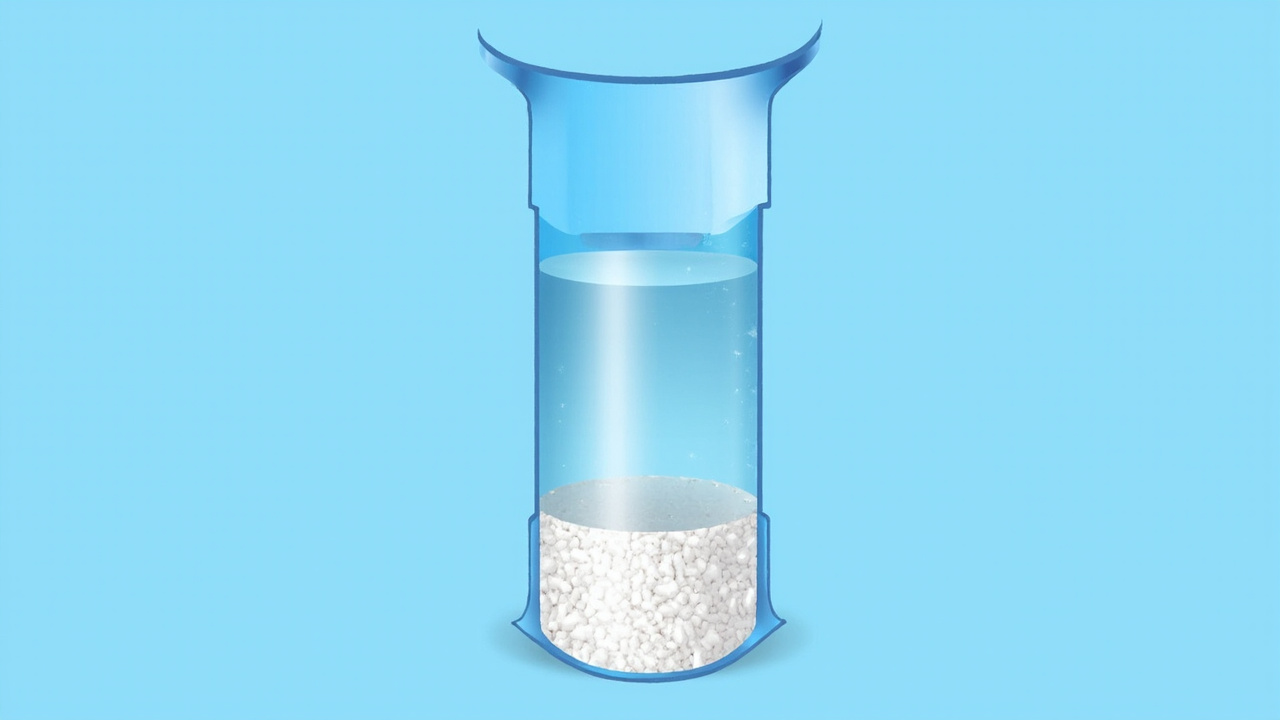
Open the brine tank lid once a month and look inside. The salt should sit above the water line by at least 4 to 6 inches. When the pile drops below roughly 25% of the tank’s total height — the quarter mark — refill it. Most brine tanks have a fill line molded into the plastic interior; that line is your upper boundary, not your target.
This rule works the same whether you have a Fleck, Culligan, Whirlpool, Kinetico, GE, or Rainsoft unit. The tanks differ in size and valve design, but the salt-to-water relationship is the same across all ion-exchange softeners. If you want a deeper walkthrough of salt types, brands, and purity grades before buying, see the water softener salt overview.
How much salt per month
Salt usage tracks household size and water hardness. Here is what most homes see:
- 1 to 2 people: about 20 to 30 lbs per month — one 40 lb bag lasts 6 to 8 weeks.
- 3 to 4 people: about 40 lbs per month — one 40 lb bag every 4 to 5 weeks.
- 5 or more people: about 60 to 80 lbs per month — two bags every 5 to 6 weeks.

Two variables push these numbers up: higher hardness (a home at 20 gpg uses roughly double the salt of a home at 5 gpg) and iron in the water (iron-fouled resin needs extra salt or a dedicated iron-removal formulation). If you are refilling more often than the schedule above suggests, check whether your hardness setting on the control head matches your actual water test — use a hardness test kit if you have not tested recently. A setting that is too high wastes salt, and one that is too low lets hard water through.
When NOT to add salt
Skip the refill in these three situations — adding salt will not fix the underlying issue and may make it worse:
- Skip if the tank is already more than half full. Overfilling compresses the salt pile and accelerates bridging. Wait until it drops to the quarter mark.
- Skip if water is visible above the salt line. That signals a drainage problem — the brine tank is not emptying between regen cycles. Adding salt on top of standing water creates mush. Head to the brine tank troubleshooting guide instead.
- Skip if the salt looks brown, grey, or mushy. Break the bridge and clean the tank before adding fresh salt. Pouring clean pellets on top of contaminated sludge just buries the problem.
First refill after a new install
New systems need salt only after the initial regeneration cycle completes — typically 2 to 3 hours after setup. Fill to the fill line marked on the tank interior. Do not exceed it, even if the tank looks like it has room. If you are still choosing a softener or want to understand how sizing works, see how to choose a water softener.
What you will need
Salt — pick one type and stick with it
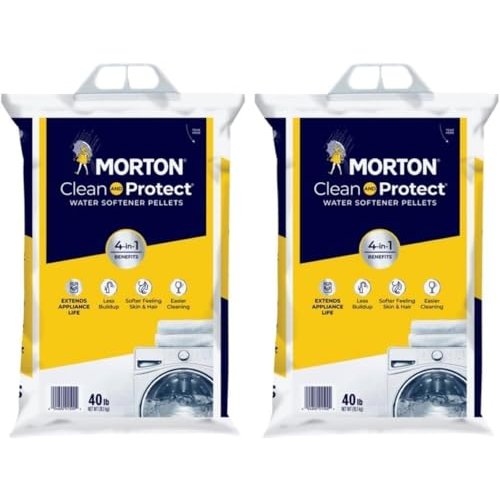
Pellets are the default for most homeowners. They dissolve evenly in deep brine tanks and resist bridging better than loose crystals. Morton Clean and Protect pellets (40 lb, 2-pack) is a typical household purchase — 80 lbs covers one full refill cycle for a standard deep tank.
If your water has high iron or mineral load, Diamond Crystal Bright & Soft pellets (50 lb, 99.8% purity) minimizes tank residue and extends resin life. The higher purity means less insoluble grit at the bottom of the tank over time.
Solar crystals are the cheaper-per-pound option. All Natural Solar Salt (50 lb) dissolves evenly but may bridge more in humid tanks — check the lid seal if you go this route. For the full form-factor comparison, see salt pellets vs crystals.
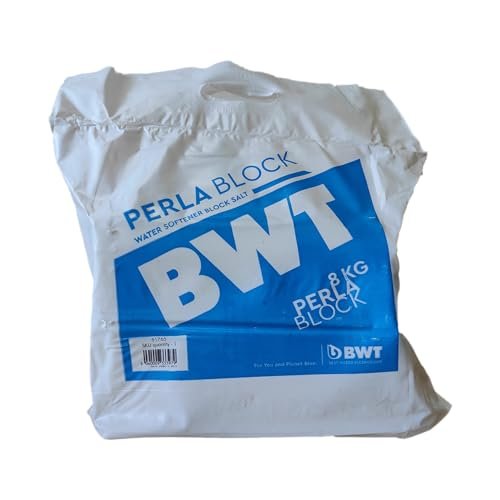
Blocks fit specific cabinet-style compact softeners. BWT SALTBLO block salt (8 kg set) is food-grade purity and easy to handle without bags. Only buy blocks if your manual specifies them — never drop a block into a pellet tank.
Optional accessories
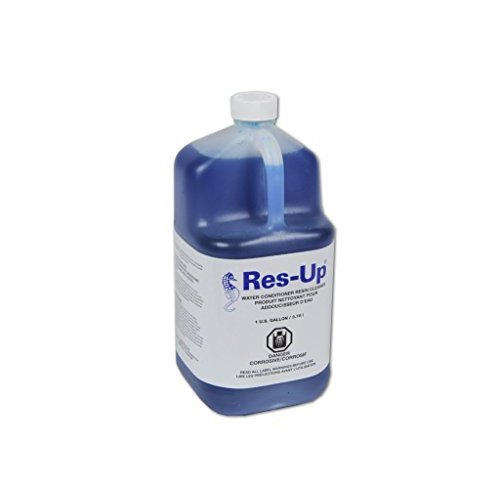
- Resin cleaner: Res-Up cleaner (1 gallon) — add every 3 to 4 refills to keep the resin bed clean, especially if your water has iron.
- Flashlight: opaque tanks need a light to see the salt level clearly.
- Long-handled scoop or plastic cup: never use metal — it corrodes in salt.

Skip and do not buy
- Skip rock salt and de-icing salt. Too many impurities — dirt and minerals clog the resin bed permanently.
- Skip table salt. Too fine, dissolves too fast, floods the brine chamber.
- Skip potassium chloride unless a clinician recommends sodium-free softening. It costs 3 to 4 times more per pound and dissolves slightly slower. We do not give medical advice — ask your doctor if sodium from softened water is a concern.
Step-by-step: how to add salt
Step 1 — Check for and break any salt bridge
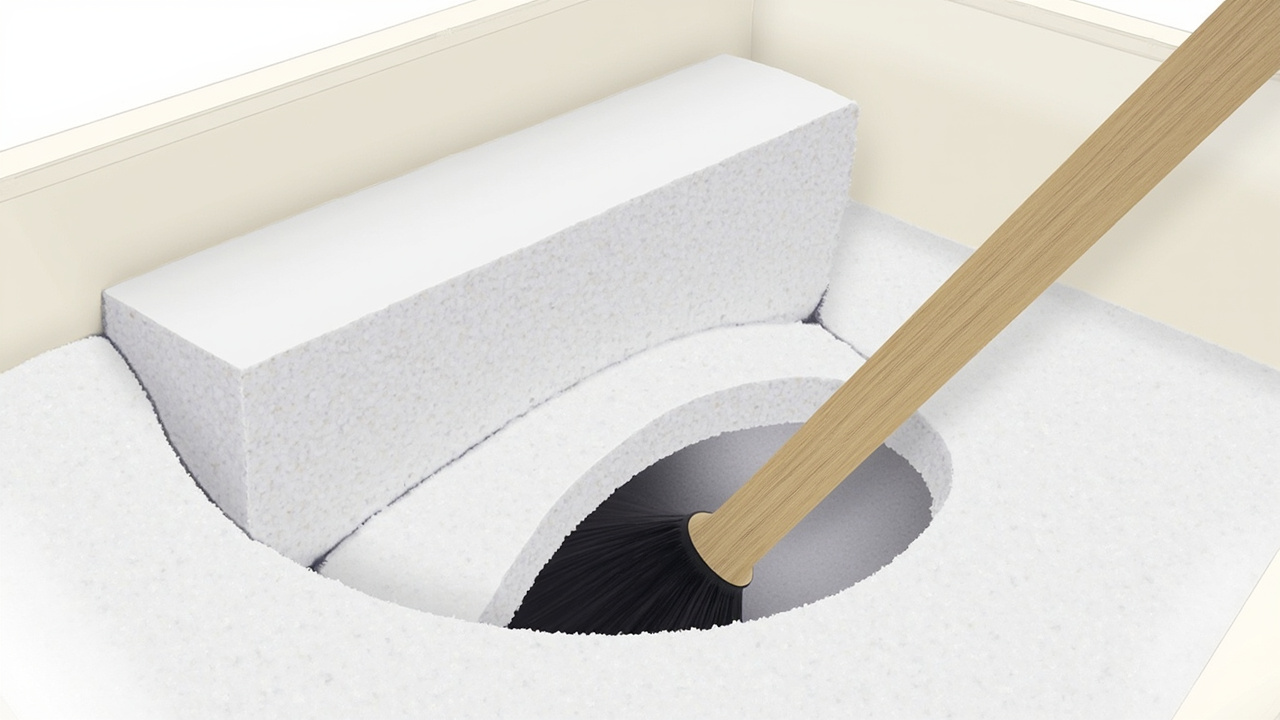
Tap the side of the brine tank with a broom handle. A hollow sound means a bridge has formed — a hard crust spanning the tank with an empty cavity below. If you hear that hollow ring, carefully push a broom handle or PVC pipe straight down through the salt to break the crust. Remove large chunks by hand (wear gloves — salt dries skin).
Do not skip this step. Adding fresh salt on top of a bridge makes it thicker and harder to break later. The softener will keep running its clock, draw weak or zero brine, and your water stays hard even though the tank looks full.
Step 2 — Note the water level
Look at the bottom of the tank. Water should sit below the salt, not above it. If water has risen above the salt line, stop here — you have a drainage problem, not a salt shortage. Adding salt will not fix it. Go to the brine tank troubleshooting guide for the diagnostic steps.
Step 3 — Open your salt
Use the same salt type you have been using. Mixing pellets and crystals in the same tank creates inconsistent brine concentration — finish one type before switching. If you are using Morton Clean and Protect pellets, cut the bag open with scissors near the tank — 40 lb bags are heavy and awkward to carry across a room. For solar crystals, pour more slowly since the chunkier pieces shift and spill more easily.
Step 4 — Pour salt into the brine tank
Pour slowly to avoid dust and spillage. Fill until the salt level reaches two-thirds to three-quarters full — never above the fill line molded into the tank interior.
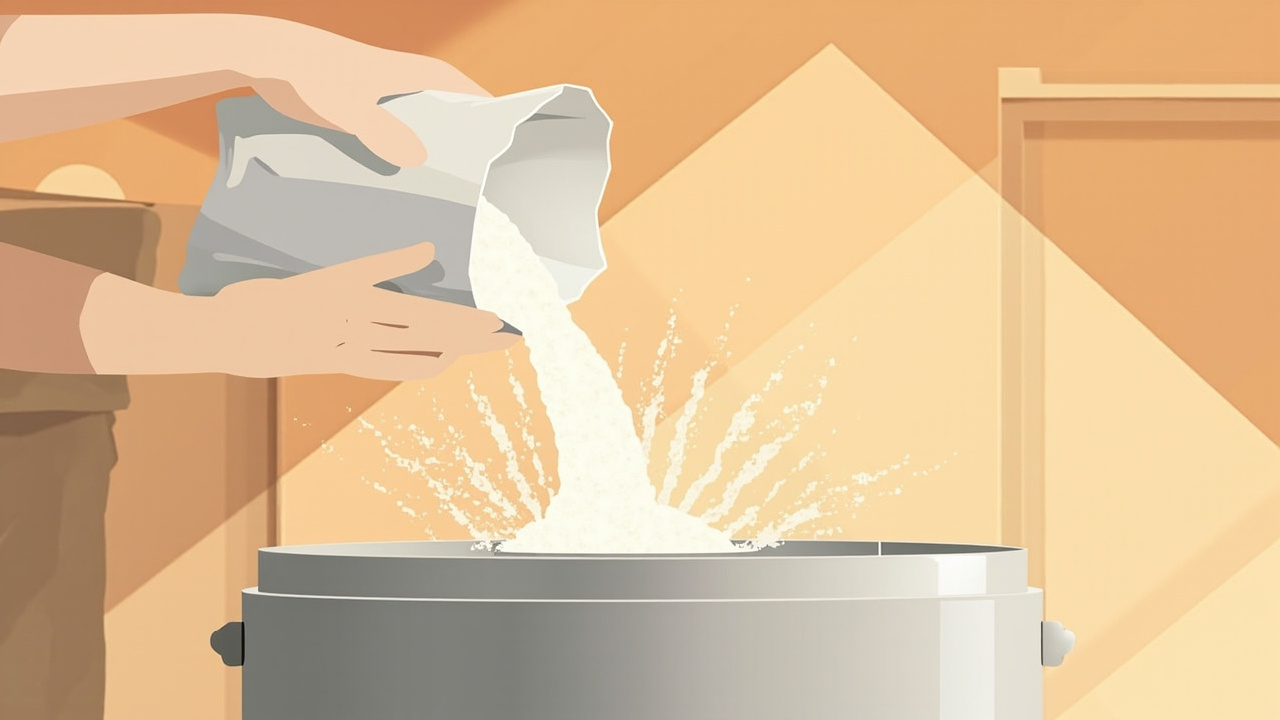
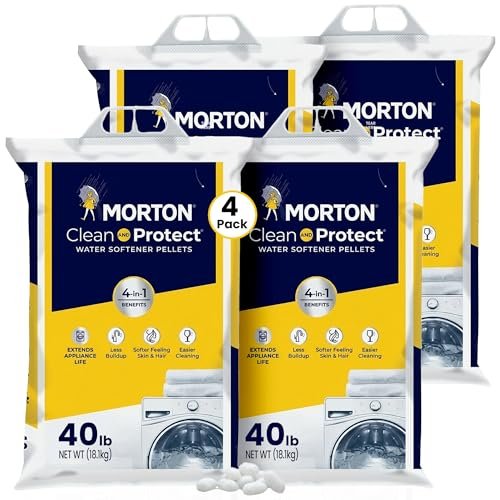
Leave 4 to 6 inches of space below the lid for air circulation. If you are buying Morton pellets in bulk (4-pack, 160 lbs), store the remaining bags upright in a dry spot rather than pouring them all in — overfilling is the most common mistake we see. For block salt, place the blocks flat on the grid plate at the bottom of the tank, not stacked on top of loose pellets.
Step 5 — Clean up spills
Wipe any spilled salt from the tank exterior and sweep the floor around the base. Salt attracts moisture and corrodes nearby metal parts — valve bolts, shelving brackets, copper fittings. A 30-second cleanup prevents rust stains and salt creep.
Step 6 — Close and verify
Replace the lid firmly. A loose lid lets humidity in and causes clumping. Check that the brine float valve moves freely and is not buried in salt. Wait for the next scheduled regeneration — no manual cycle is needed unless the tank was completely empty for 2 or more weeks.
After the refill: do you need a manual regeneration?
Usually no. The softener’s timer or demand meter will trigger the next regen on its normal schedule, and the fresh salt will be drawn into brine at that point.
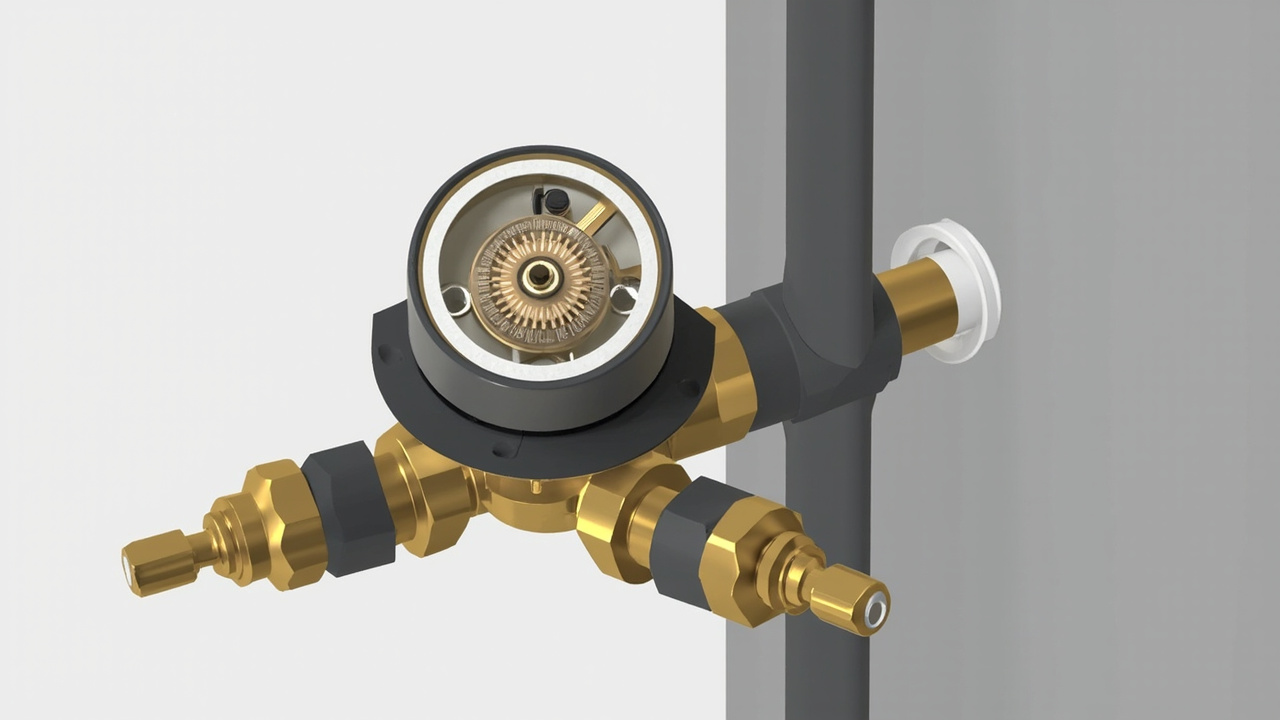
Run a manual regen only if the tank was completely empty for more than 1 to 2 weeks. The resin bed has been running on weak or zero brine and needs a full flush cycle to recharge. Most control heads have a button for this:
| Brand | Manual regen button | Cycle time |
|---|---|---|
| Fleck 5600SXT | ”Extra Cycle” — hold 3 seconds | ~90 min |
| Culligan | ”Recharge” on control valve | ~90 min |
| Whirlpool | ”Recharge” — press and hold | ~2 hours |
| GE | ”Recharge” on timer | ~2 hours |
| Kinetico | No button — fully metered | Just add salt and wait |
Add resin cleaner during the refill
If you are due for resin maintenance (every 3 to 4 refills), pour the recommended dose — usually 4 to 8 oz, check the product label — directly into the brine well before adding salt. Res-Up cleaner dissolves iron and mineral fouling on the resin beads and restores exchange capacity. It is not a substitute for correct salt form — use it alongside pellets or crystals, not instead of them.
For homes with high iron, Diamond Crystal Bright & Soft pellets (99.8% purity) paired with a resin cleaner dose gives the best results — the high purity means less insoluble grit that would otherwise clog the brine draw over multiple cycles. If the softener still produces hard water after a manual regen with fresh salt and resin cleaner, the problem is likely mechanical — see water softener not regenerating for the full diagnostic tree.
Common mistakes
Mistake 1 — Overfilling the tank
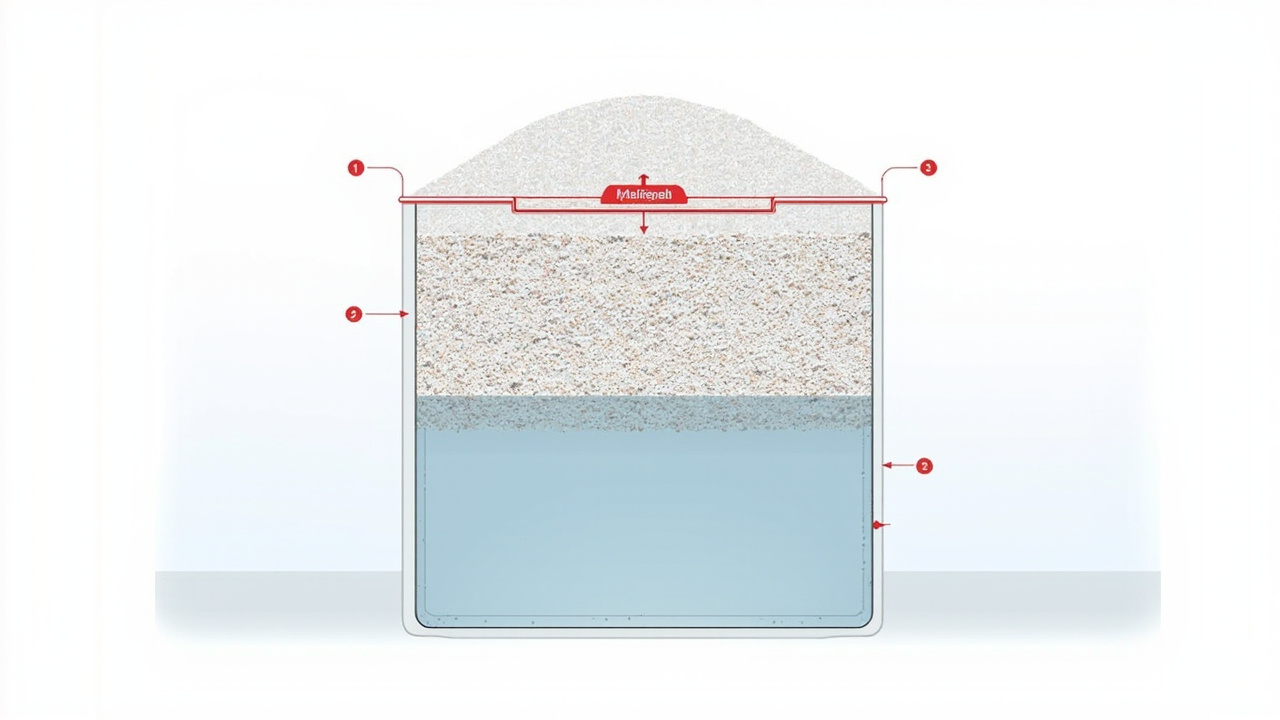
Filling past the fill line compresses the salt pile, which accelerates bridging and mushing. The extra 5 or 10 lbs of salt saves nothing and creates a crust that blocks water flow. Fix: stop at two-thirds full. If you buy in bulk, store the remaining bags upright in a dry area rather than pouring the whole supply in at once.
Mistake 2 — Mixing salt types
Pellets plus crystals plus blocks in the same tank means inconsistent brine concentration. Different forms dissolve at different rates — the softener draws brine that is too weak some cycles and too strong others. Fix: finish one type before switching. If you must change, wait until the tank is nearly empty and use your current pellets consistently until then.
Mistake 3 — Adding salt without breaking a bridge
Fresh salt on top of a bridge makes the crust thicker. The water at the bottom never touches the new salt, so the softener runs its regen cycle drawing zero brine — your water stays hard even though the tank looks full. Fix: always tap the side and break bridges before adding new salt.
Mistake 4 — Using the wrong salt
Rock salt, de-icing salt, and table salt are not water softener salt. Rock salt contains dirt and minerals that clog resin beads permanently. Table salt dissolves too fast and floods the brine chamber with over-concentrated brine that does not regenerate properly. Fix: only use salt labeled “water softener salt” — pellets, solar crystals, or blocks.
Mistake 5 — Ignoring the brine tank for months
A tank checked quarterly instead of monthly develops mush at the bottom — a hard cake of dissolved-and-reformed salt that blocks water flow and smells stale. Fix: set a monthly phone reminder. Clean the tank annually using the steps in the brine tank cleaning guide. Add Morton pellets after cleaning — starting fresh with high-purity salt reduces mushing recurrence.
When to call a pro
Keep it DIY if you are testing hardness, setting the control head, adding salt, breaking a salt bridge, or swapping a resin cleaner dose. These are all homeowner-level tasks that take minutes and require no tools beyond a broom handle.

Call a licensed plumber if:
- You need to cut into the main water line or relocate the softener unit.
- There is an active leak at fittings, the drain line, or the bypass valve.
- The control board or valve head has an electrical fault beyond a simple reset.
- A well pump or pressure tank issue is interfering with regen cycles.
We do not rank local installer directories or recommend specific companies. If you need a pro, look for a licensed plumber with water-treatment experience and ask whether they service your specific brand (Fleck, Culligan, Kinetico, etc.).
Softened water is higher in sodium than the incoming hard water. If someone in the household is on a strict sodium-restricted diet, ask their clinician about drinking softened water — we do not give medical advice. Keep salt bags, resin cleaners, and brine tank additives away from children and pets.
Related
- Water softener salt overview — types, brands, purity grades, and buying guide
- Salt pellets vs crystals — which form factor is right for your system and climate
- Brine tank problems — salt bridging, mushing, overflow, cleaning, and low-salt alarms
- Water softener not regenerating — diagnostic tree when the softener stops working after a salt refill
Key takeaways
- Check the brine tank monthly — refill when salt drops below one-quarter full.
- Break any salt bridge before adding fresh salt.
- Fill to two-thirds full — never past the fill line.
- Use the same salt type consistently: pellets, solar crystals, or blocks.
- Only use salt labeled “water softener salt” — never rock salt, table salt, or de-icing salt.
- No manual regeneration needed unless the tank was empty for 2 or more weeks.
- Add resin cleaner every 3 to 4 refills to keep the resin bed at full capacity.