If your well water is leaving orange stains on the toilet bowl, the laundry, or the kitchen faucet, you don’t have a cleaning problem — you have iron in the supply. The right fix depends on your iron level (test first) and whether hardness is in the mix too. Three common approaches work for most wells; the one you pick depends on your numbers, not a brand preference.
Quick answer
Well-water iron filters oxidize and trap dissolved iron before it reaches fixtures. Three approaches: air-injection filters (no chemicals, auto-regenerate), manganese greensand filters (need chemical regeneration), and combined softener + iron units (single valve handles both jobs). For light iron under 2 ppm, a softener with iron rating can manage; above 5 ppm, an iron filter upstream is the better path. Test your iron level first.
What an iron filter actually does
Iron in well water is usually ferrous iron (Fe²⁺) — dissolved, clear, soluble. When the water sits or is exposed to air, ferrous iron oxidizes to ferric iron (Fe³⁺) — orange, insoluble, stains everything. The orange ring in your toilet bowl is ferric iron that oxidized after the water sat.
An iron filter does two things:
- Oxidizes the ferrous iron into ferric iron (using air injection, chlorine feed, or manganese media)
- Traps the ferric particles in a filter media bed (greensand, birm, or sand)
After the filter, water is clear and won’t stain. The filter backwashes every few days to flush the trapped iron out a drain line.
YMYL framing: At typical household levels, iron in water is an aesthetic concern, not a health crisis. The EPA secondary MCL is 0.3 mg/L — aesthetic standard for taste, color, and staining, not a health-based limit. If your well has bacterial contamination (coliforms, E. coli), that’s a separate problem requiring disinfection (chlorination, UV), not an iron filter. We don’t give medical advice; for your specific well, contact your state health department.
If iron concentrations approach or exceed 10 mg/L (10 ppm) in your well water, that’s worth flagging to your local health department even though it’s still an aesthetic standard at EPA level — some states have stricter guidelines and recommend treatment at lower numbers. The DuraWater Air Injection Iron Eater handles up to ~7 ppm of ferrous iron; above that level you may need a birm or greensand system instead.
Skip/Don’t: Don’t rely on a single inline filter to address iron across the whole house — point-of-use cartridges (kitchen-only) miss the rest of the plumbing and won’t stop staining in the bathroom or laundry. Don’t try to use chlorine bleach to clean iron-stained fixtures — it sets the iron into the surface and makes the stain permanent. Don’t skip the iron test; guessing at iron level leads to either an undersized filter or overspending on a heavy-duty unit you don’t need.
Air-injection vs manganese media vs softener+iron
Three filter types, three different operating models. The right pick depends on your iron level (test first), your hardness level (gpg), and whether you want one system or two.
Air-injection iron filters
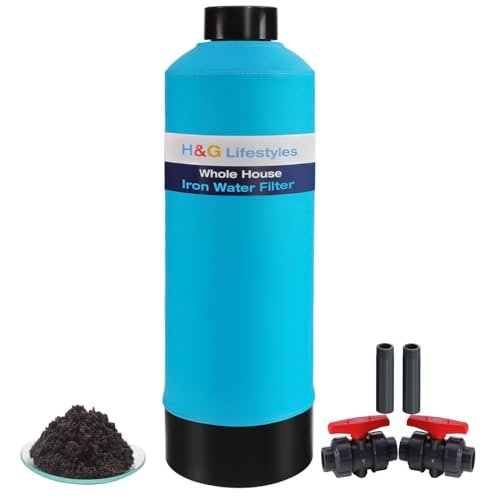
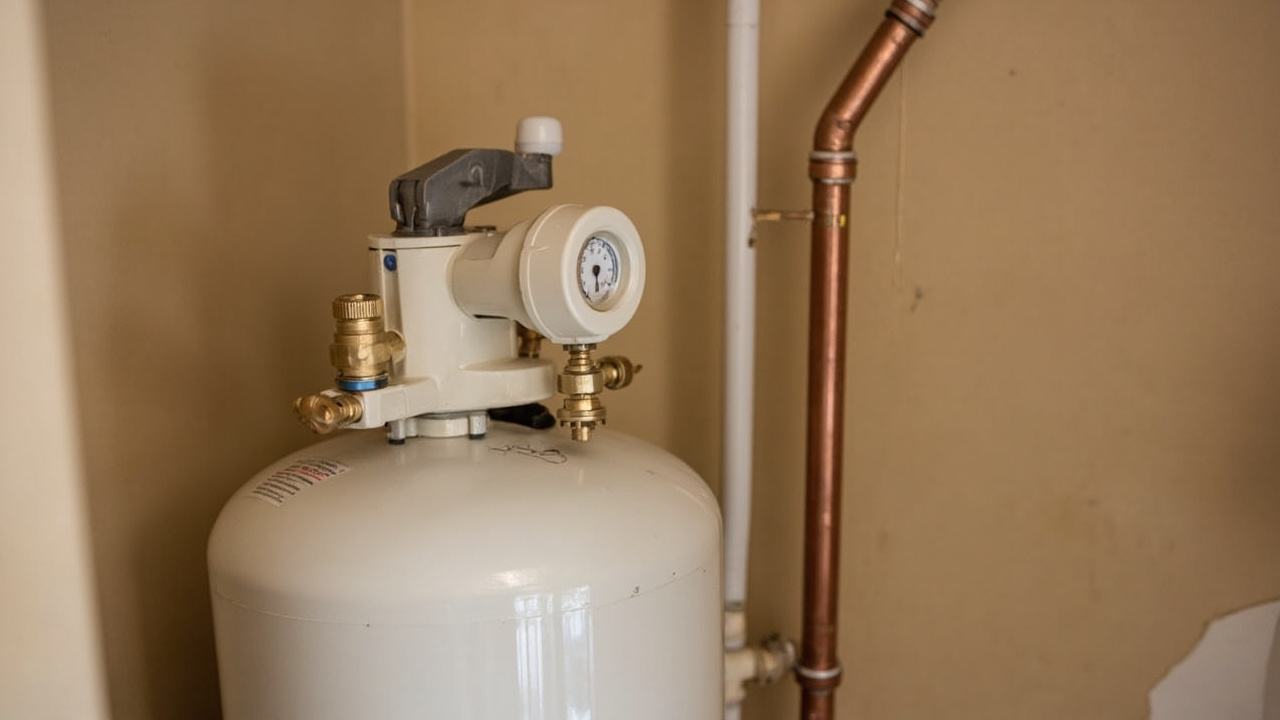
Draw air into the tank during each service cycle, oxidizing ferrous to ferric iron inside the filter media. No chemicals to add. The control valve regenerates automatically on a schedule (typically every 3–7 days depending on iron level and water usage). The standard residential unit is the DuraWater Air Injection Iron Eater — handles moderate iron up to 7 ppm without chemicals.
- Best for: Moderate iron (3–7 ppm), homes without a separate softener
- Examples: DuraWater Air Injection Iron Eater, H&G Lifestyles Iron+Manganese
- Trade-off: Need electricity for the control valve; drain line required for backwash
Manganese greensand / birm filters
Use manganese-coated media to convert ferrous to ferric iron. Greensand filters need periodic regeneration with potassium permanganate; birm filters work with dissolved oxygen only (no chemicals).
- Best for: Lower iron levels (1–5 ppm), homes already on a chemical-feed system
- Examples: Various commercial units; less common in residential
- Trade-off: Greensand requires chemical handling; birm needs adequate dissolved oxygen in source water
Combined softener + iron units
A single control valve (typically Fleck 5600 SXT or similar) drives both ion-exchange softening and iron filtration with one tank of media. The resin is rated for iron tolerance, and periodic resin cleaner restores performance. The standard whole-house unit for this category is the DuraWater Fleck 5600 SXT 48K iron filter — handles iron and hardness in one tank.
- Best for: Light to moderate iron (1–4 ppm) and hardness; one system, one install
- Examples: DuraWater Fleck 5600 SXT 48K Iron Filter, Aquasure Harmony Iron
- Trade-off: At higher iron (above 5 ppm), the resin fouls faster and the cleaner becomes a frequent chore
Filter media matters
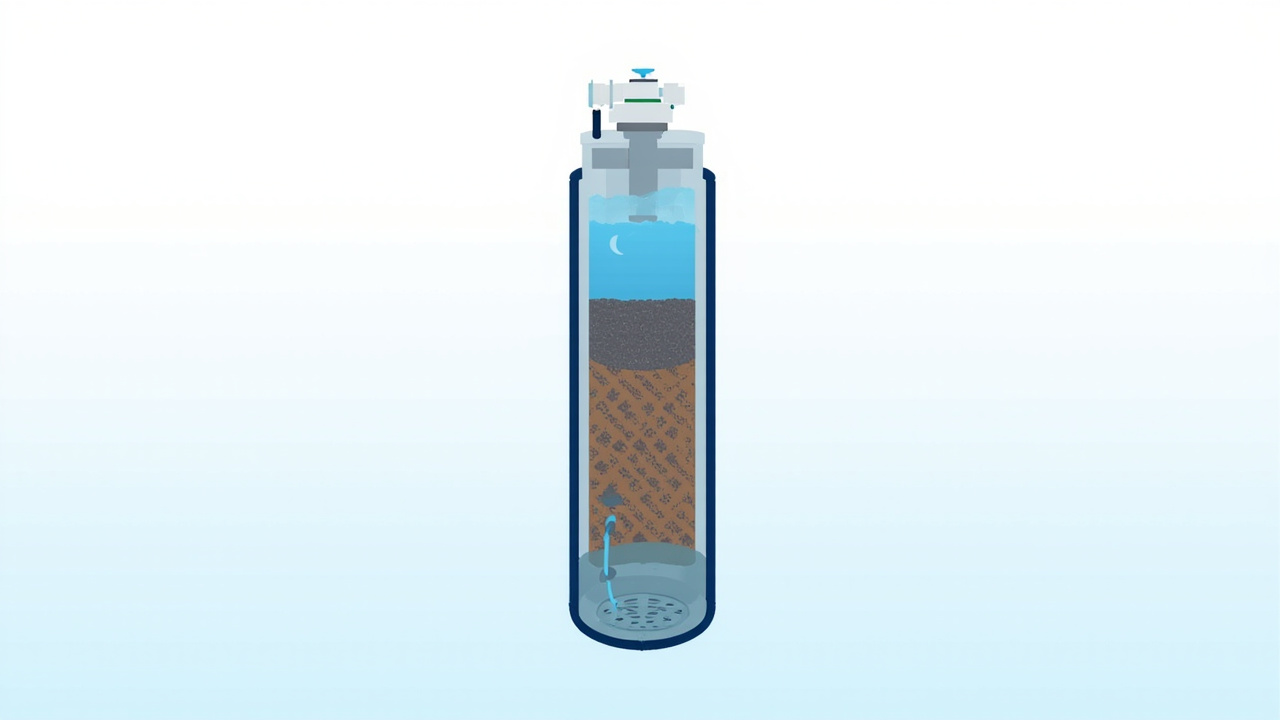
The media inside the tank is what actually traps iron. Common options:
- Birm — smooth, durable, requires dissolved oxygen in source water; works without chemicals
- Manganese greensand — higher capacity than birm, requires potassium permanganate regeneration
- Sand/anthracite — mechanical filtration only; usually part of a multi-stage system rather than the iron-removing stage itself
- Resin (in softener+iron units) — same ion-exchange resin as a softener, with iron-tolerant formulation; needs periodic resin cleaner
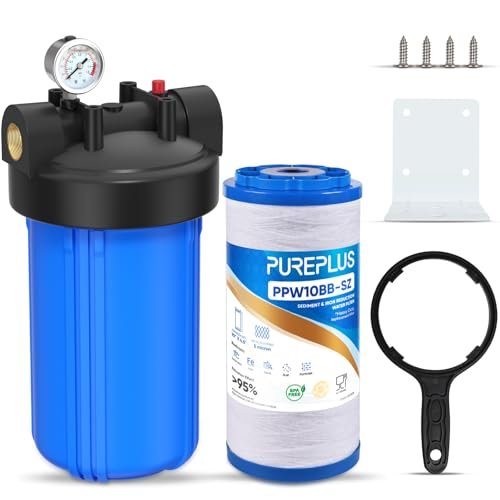
Replacement cartridges for 10-inch or 20-inch housings (the PUREPLUS 1-Stage with Iron/Manganese Cartridge for 10-inch) work if you already have a whole-house filter setup — just swap the standard carbon cartridge for an iron and manganese-rated cartridge.
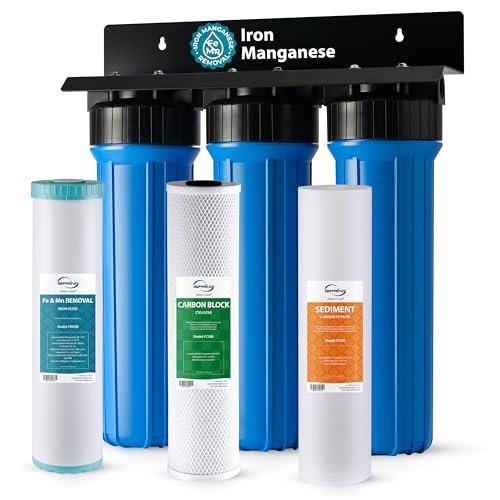
For heavier-duty installs, the iSpring WGB32BM Iron and Manganese 3-stage combines sediment, carbon, and iron media in one housing. That handles iron + manganese + sediment in a single unit for homes under 1,500 sq ft.
Skip/Don’t: Don’t pick birm if your source water has no dissolved oxygen — sealed well systems and water straight from a pressure tank after lengthy stagnation often run anaerobic, and birm needs oxygen to oxidize iron before the media can trap it. Don’t assume a softener with iron-tolerant resin replaces a dedicated iron filter on water with 3+ ppm iron — the resin fouls fast and you’ll spend more on cleaner than the filter would have cost.
When iron rating exceeds softener capacity
If iron is above 5 ppm, running iron-heavy water through a standard softener clogs the resin. You’ll know because:
- Water suddenly goes hard again after months of working
- Salt consumption goes up
- Resin cleaner every 2–4 weeks doesn’t fix it
The fix is an iron filter upstream of the softener. The iron filter does the heavy lifting; the softener handles hardness downstream. This pairing works for iron up to about 10 ppm. Above that, consider a dedicated air-injection iron filter and re-evaluate whether a softener is needed at all (with most iron removed, the residual hardness may be tolerable).
For deeper context on how iron interacts with hardness and when one system can do both jobs, the softener vs RO vs whole-house filter comparison page covers the trade-offs.
For a step-by-step on testing your iron and hardness before buying, see hardness test kits — strips will read both iron and hardness in a single dip if you pick the right kit.
Treating orange staining (existing fixtures)
An iron filter stops new staining. For existing orange stains in sinks, toilets, and tubs, you’ll need a separate treatment:
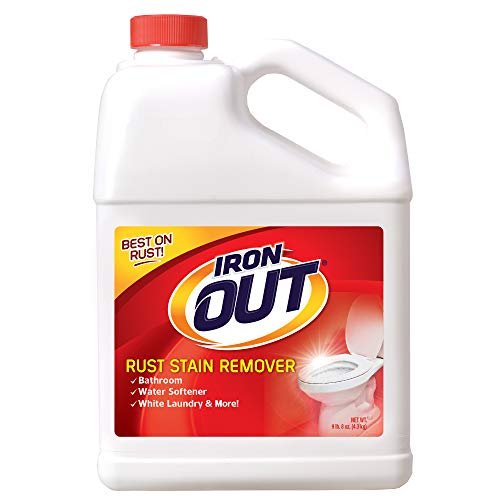
- Iron OUT powder — sodium hydrosulfite-based; dissolves ferric iron stains. Pour into standing water, wait 15 minutes, scrub. Works on porcelain, tile, and most fixtures.
- Pumice stick — for toilet bowl interior only; light pressure or you’ll scratch the glaze.
- Avoid chlorine bleach on iron stains — it sets the stain rather than removing it.
The powder is cheap insurance even after you install the filter. You’ll need it once for the cleanup and then occasionally for the toilet bowl.
What an iron filter doesn’t solve
An iron filter is one piece of the puzzle. It doesn’t address:
- Bacterial contamination (coliforms, E. coli) — requires disinfection (UV, chlorination)
- Hardness — a separate softener or salt-free conditioner
- Sulfur smell (hydrogen sulfide) — needs aeration or oxidation; sometimes iron filters help, sometimes not
- Sediment — turbidity from a new well or after heavy rain; pre-filter with a sediment cartridge. If your existing 10-inch housing has an iron/manganese slot, a PUREPLUS replacement cartridge handles iron and manganese in the same drop-in.
- Lead — old galvanized well casings or lead solder in older pump systems; whole-house carbon filter or POE replacement
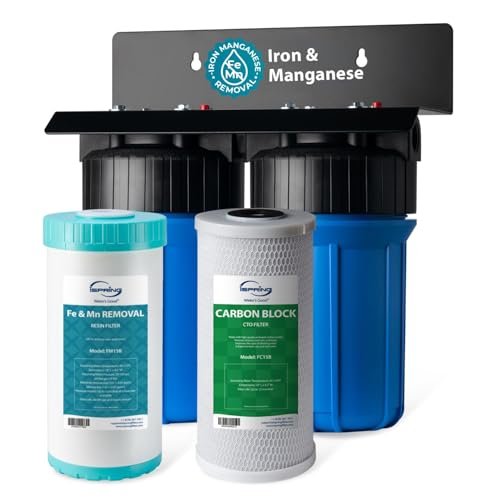
The most common upgrade path is iron filter first, then a sediment cartridge before any drinking-water polishing. Wells with iron + sediment benefit from running them in series: iron filter oxidizes and traps, sediment cartridge catches what bled through during the backwash cycle. A two-stage setup like the H&G Lifestyles Iron and Manganese Filter bundles both media in one housing.
For the full range of well-water issues and the standard treatment train, the whole-house water filters page lays out common configurations.
When iron and hardness both need a fix
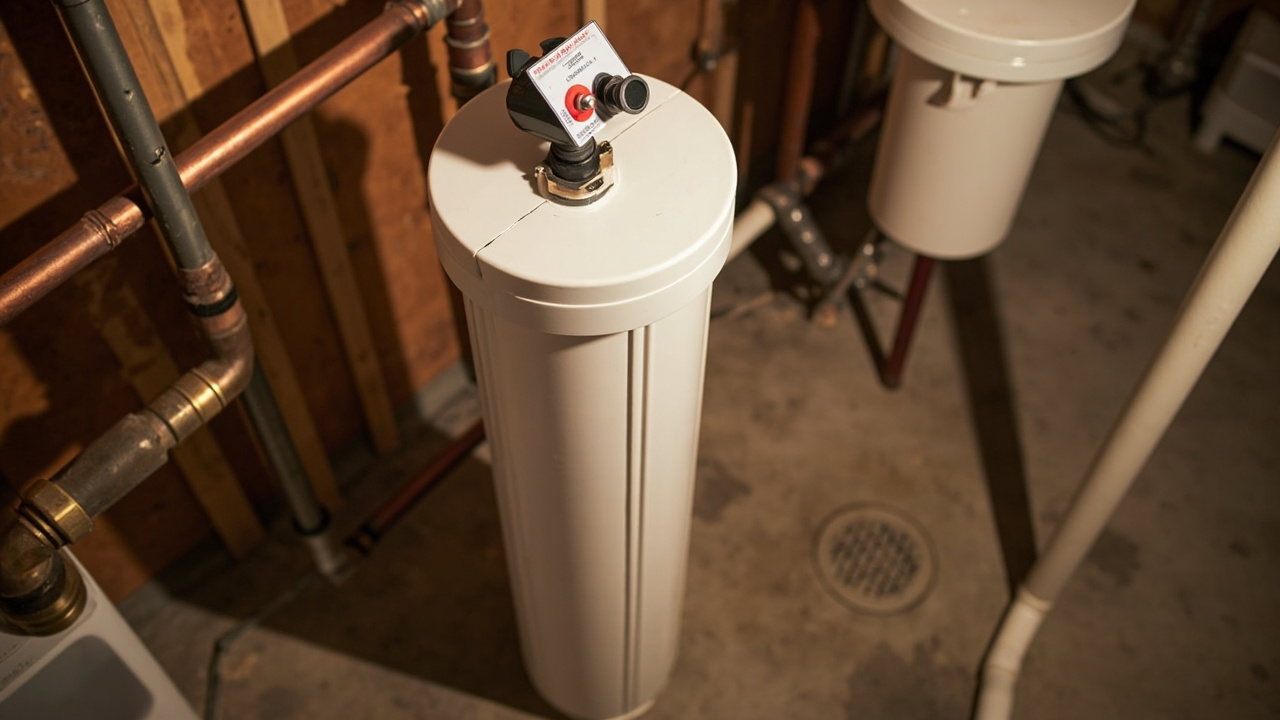
Most wells with iron also carry some hardness. The decision tree depends on which is more of a problem:
Iron is the dominant issue (3+ ppm), hardness is light (under 7 gpg)
Run a dedicated iron filter upstream of whatever you do for hardness. The iron filter handles the staining; the softener (if you install one) handles residual hardness. Two systems, two jobs, but the softener stays clean because iron never reaches it.
Both iron and hardness matter (3+ ppm and 7+ gpg)
A combined softener with iron rating handles both in one tank. The Fleck 5600 SXT iron-rated valve is the standard residential pick. Trade-off: iron-rated resin costs more per cubic foot than standard resin, and you’ll run resin cleaner on a 4–6 week cycle instead of quarterly.
Hardness dominates, iron is light (under 2 ppm)
A standard softener with iron rating handles both. Run Iron OUT powder or a similar cleaner through the softener every 90 days to keep the resin capacity where it should be.
The wrong sequencing is iron filter after the softener. The softener resin fouls before the iron filter can do its job.
Why iron and hardness are usually a package
Most well water with iron also has hardness — the same geology that puts iron in the aquifer typically puts calcium and magnesium there too. That means planning for one system is rare; you almost always end up addressing both. A practical budget for a 4-person home on typical well water:
- Iron filter alone: $200–$1,000 plus $300–$600 install
- Softener with iron rating: $800–$1,200 plus $300–$600 install
- Iron filter + standard softener in series: $1,000–$2,200 plus $500–$1,000 install
The single-system option (softener with iron rating) is cheaper to install and easier to maintain; the two-system option is more flexible if conditions change later. Most homeowners pick based on whether they want one monthly task (salt top-up) or two (salt + backwash timer).
Common mistakes
- Buying an iron filter without testing iron level first — a $25 test kit or $80 lab result prevents a $800 mistake. The right filter depends on whether you’re at 2 ppm or 8 ppm. The iSpring WGB21BM 2-stage is the entry-level pick once you know your number.
- Routing the iron filter drain line without an air gap — backwash water can siphon contaminants back into the system if the drain line lacks an air gap. Local code requires the gap; check before installing.
- Trying to treat iron with a softener alone at high levels — above 5 ppm, the resin fouls fast and you’ll spend more on cleaners than the iron filter would have cost.
- Confusing iron staining with rust from old galvanized pipes — if you have galvanized plumbing, the rust is in the pipe, not the water. Replace the pipe section or accept the staining.
- Skipping periodic resin cleaner on softener+iron units — every 4–6 weeks is a typical interval; skipping it lets iron build up and kills softening performance.
When to call a pro
Keep DIY if: installing a drop-in 10-inch cartridge filter, swapping filter media on a birm unit, treating fixture stains with Iron OUT powder.
Call a licensed plumber if: cutting into the main supply line before the pressure tank, installing an air-injection filter with a backwash drain line, wiring the control valve, or any install where the well pump or pressure tank needs adjustment.
We do not rank installer companies.
Related
- Water hardness explained — test both iron and hardness
- Softener vs RO vs whole-house filter — when one system can handle both
- Whole-house water filters — pre-iron sediment protection
- Reverse osmosis under the sink — if drinking water purity is also a concern
- How water softeners work — ion exchange for hardness
Key takeaways
- Iron in well water is aesthetic (staining, taste), not a primary health concern at typical levels
- Test iron first; filter choice depends on the ppm number
- Air-injection filters need no chemicals; greensand filters do
- Above 5 ppm iron, run an iron filter upstream of any softener
- Combined softener+iron units work for light-to-moderate iron + hardness
- Treat existing fixture stains with Iron OUT powder after install
- Bacterial contamination is a separate problem; iron filters don’t address it