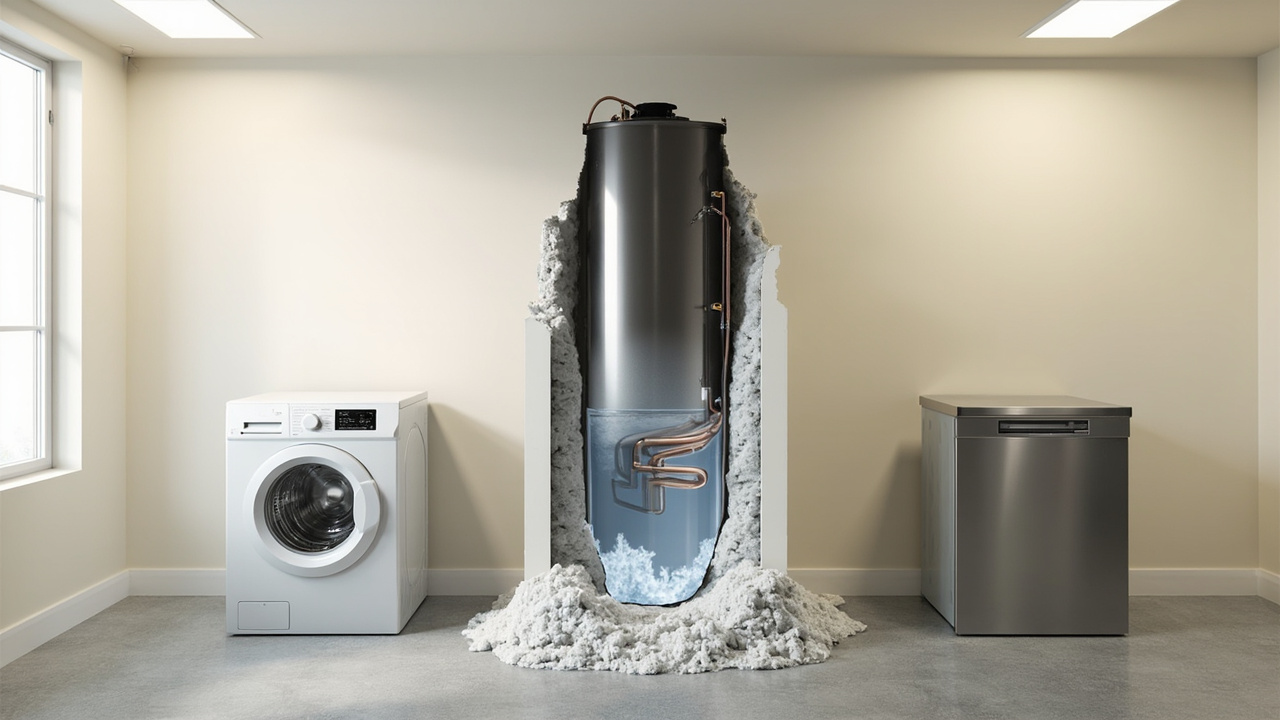
If your water heater takes longer to reheat every winter, the dishwasher leaves white film no matter how much rinse aid you pour, and the coffee maker shuts off mid-brew — you are probably looking at hard water damage, not aging appliances. The cost shows up gradually: higher energy bills, doubled detergent use, and components that fail years before they should. Below: what scale does inside five common appliances, what it costs per year, and a four-step decision tree from testing to whole-house treatment.
Quick answer
Hard water leaves calcium and magnesium scale inside your water heater, dishwasher, washing machine, coffee maker, and ice maker. The DOE/Battelle study found just 1/16 inch of scale cuts water heater efficiency by about 11%. Scale shortens appliance lifespan by an estimated 30-50% and adds $270-700 per year in extra energy and detergent costs. Testing your water hardness is step one — everything else depends on that number.
What this is not
- Not a fixture cleaning guide. Surface stains on shower glass and faucets are covered in our hard water stains guide. This page is about the damage you cannot see — inside the appliances.
- Don’t skip testing. If you treat water you haven’t measured, you are guessing. A softener sized for 5 gpg wastes money at 15 gpg, and a 32,000-grain unit at 3 gpg runs inefficiently. Test first.
- Not a softener sales pitch. We cover four treatment levels — from monthly descaling to whole-house softening. The right answer depends on your gpg number.
- Not a health claim. The EPA classifies hardness as an aesthetic concern, not a safety standard. Hard water won’t hurt you to drink — it hurts your appliances.
How hard water damages appliances
Hard water carries dissolved calcium and magnesium. When water heats up inside an appliance, these minerals precipitate as solid calcium carbonate — the same white crust you see on showerheads, but building up inside heating elements, valves, and pipes where you cannot scrub it.
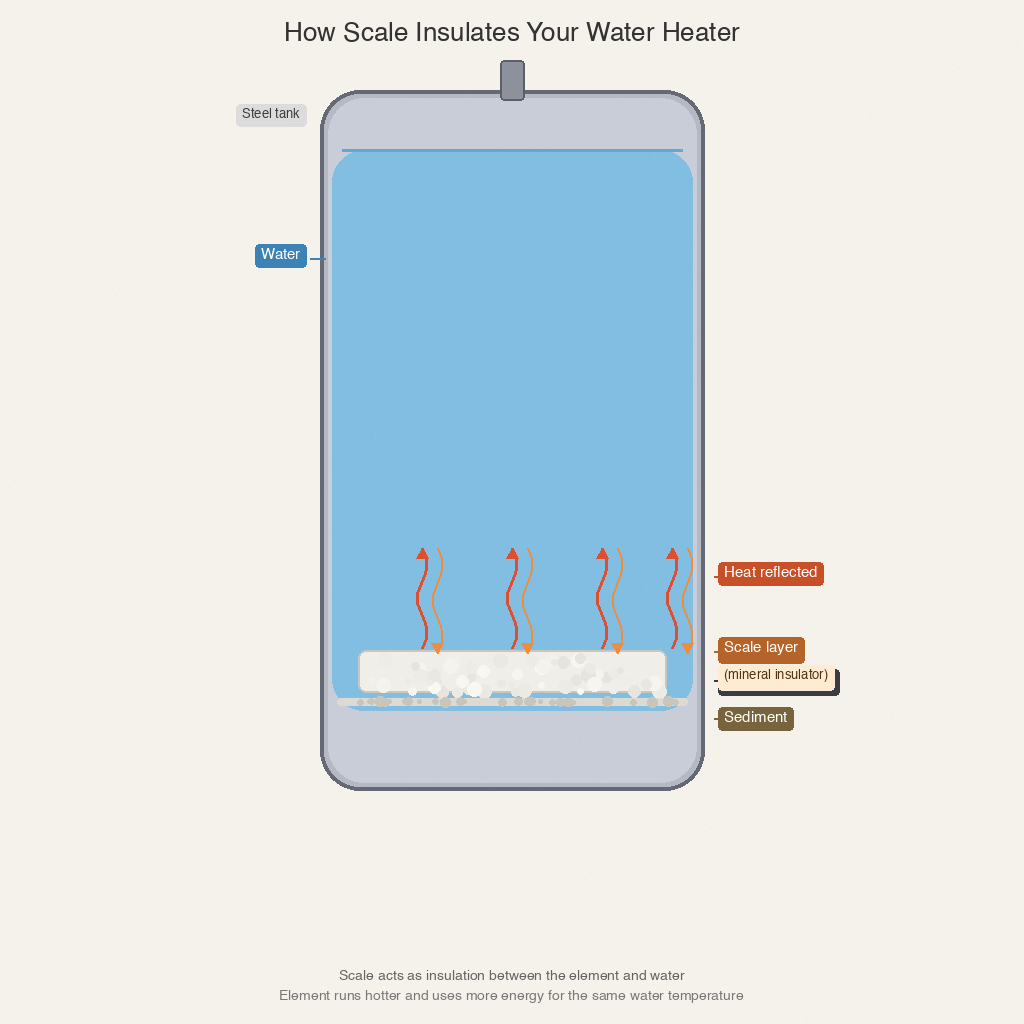
Scale is an insulator. A thin layer between the heating element and the water means the element runs hotter to deliver the same water temperature, which costs more energy and stresses the metal. The same scale narrows valve openings, clogs spray arm nozzles, and restricts flow in narrow heat exchanger channels.
The DOE/Battelle Memorial Institute study (commissioned by the Water Quality Association) quantified the mechanism: approximately 11% efficiency loss at 1/16 inch of scale, scaling up to 24% at 1/8 inch. Those numbers apply to anything that heats water.
Three failure modes repeat across all five appliance categories:
- Insulating scale on heating elements — longer heat-up times, higher energy bills
- Scale in valves and spray arms — reduced flow, poor cleaning performance
- Cumulative buildup — eventual component failure, shorter replacement cycle
Appliance-by-appliance breakdown
Water heater (tank and tankless)
The water heater heats more water than any other appliance, so scale builds up fastest. Tank units collect sediment at the bottom — the rumbling or popping you hear is steam bubbles escaping through the scale layer. Tankless units have narrow heat exchanger channels that restrict flow and trigger error codes when scale clogs them.
- Tank: Bottom sediment reduces capacity and forces the element to work harder. Lifespan reduction: 2-5 years in hard water.
- Tankless: Most manufacturers require annual descaling to maintain warranty. Skipping it voids coverage and shortens heat exchanger life by 3-5 years.
- Cost: $100-300 per year in extra energy (DOE/Battelle efficiency loss applied to average operating cost).
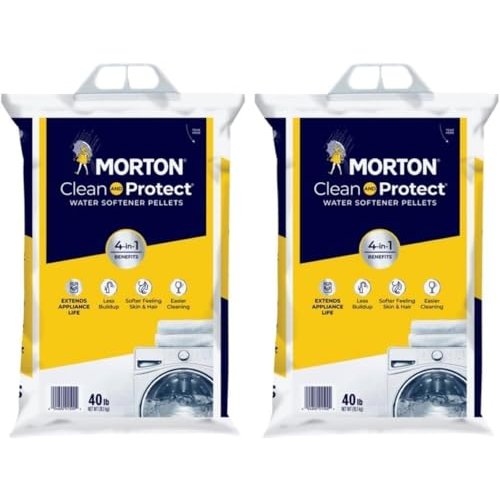
If you already have a softener, keep it maintained with Morton salt pellets — an empty salt tank means the softener stops removing hardness and the heater starts scaling again.
Dishwasher
Scale deposits on the heating element and spray arm nozzles. Hard water also reacts with detergent — WQA data shows it can take up to twice the soap to get the same clean in hard water.
- Symptoms: Cloudy glassware, white film on dishes, dishes not drying at cycle end
- Mechanism: Heating element scale extends the dry cycle. Clogged spray arms reduce wash pressure.
- Cost: Extra detergent ($40-80/year), heating element replacement ($150-300)
For monthly maintenance, a rinse aid formulated for hard water helps prevent spotting and film between descaling cycles. For the full breakdown of what causes cloudy dishes and how to fix it, see dishwasher spotting and film.
Washing machine
Scale builds up in the drum, heating element, and internal hoses. Front-loaders are more sensitive because they use less water per cycle, which concentrates mineral deposits.
- Symptoms: Stiff or gray laundry, detergent residue on dark clothes, musty smell from trapped sediment
- Mechanism: Heating element scale plus drum deposits reduce cleaning efficiency. Hard water can require up to 2x detergent per WQA data.
- Cost: Extra detergent ($60-120/year), shorter heating element life
If you’re not sure what “hard” means in your area, start with what hard water actually is for the basics.
Coffee maker and espresso machine
Scale in the boiler or thermoblock is the top killer of coffee makers. Even a thin layer slows heating, triggers auto-shutoff sensors, and eventually causes pump failure when scale fragments break loose.
- Symptoms: Longer brew time, weak coffee, machine shutting off mid-cycle
- Mechanism: Scale on the heating block means slower temperature recovery. Safety cutoffs trip when the element overheats trying to compensate.
- Cost: $20-50/year in descaling solution, or $100-500 for pump or boiler replacement
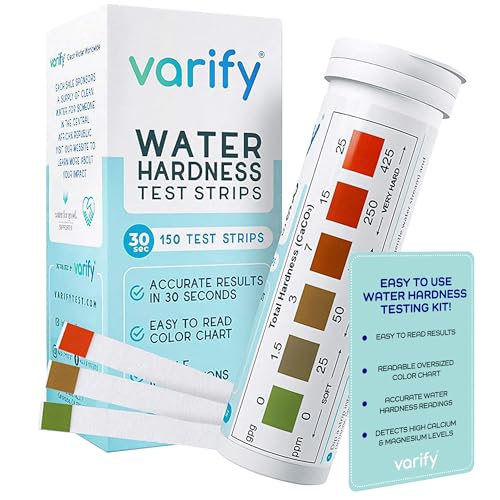
- Descaling frequency: Every 3-6 months depending on hardness. At 10+ gpg, check every 3 months. Use a hardness test strip to know where you stand.
Ice maker
Scale in the water inlet valve and fill tube is the most common failure. Partial blockages produce smaller, cloudy ice. Full blockages stop ice production entirely.
- Symptoms: Cloudy ice, hollow cubes, slow production, whistling or humming from the inlet valve
- Mechanism: Scale narrows the valve opening, reducing water pressure to the ice mold. The valve eventually fails completely.
- Cost: $80-200 for inlet valve replacement (parts and labor)
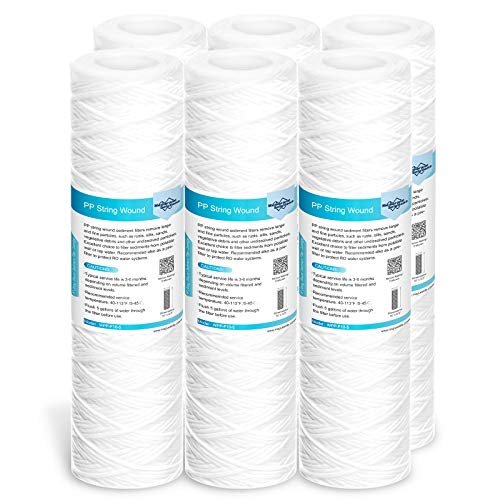
A whole-house sediment filter catches particulates before they reach the ice maker supply line, reducing valve clogging.
The real cost
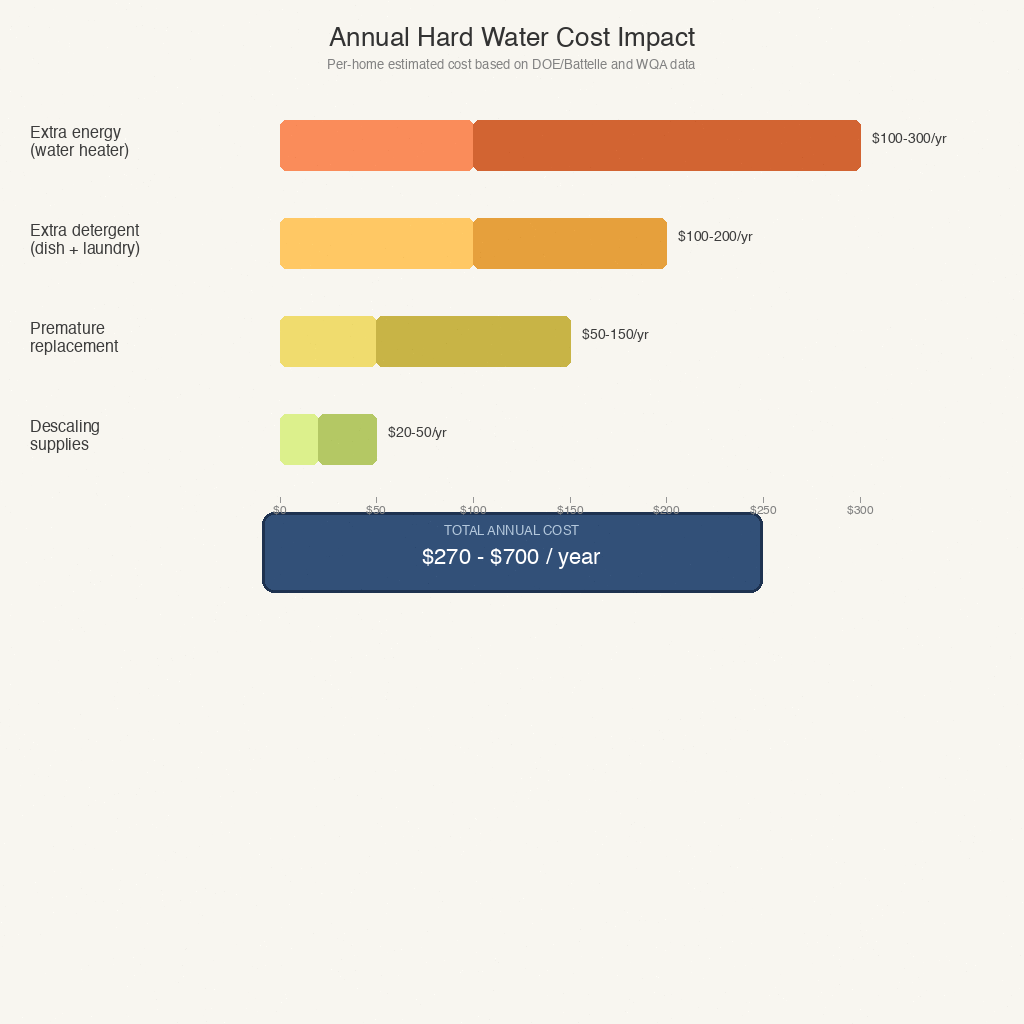
Adding up the damage across appliances, based on DOE/Battelle efficiency data and WQA detergent studies:
| Cost category | Annual cost | Basis |
|---|---|---|
| Extra energy (water heater inefficiency) | $100-300 | DOE/Battelle: 11-24% efficiency loss |
| Extra detergent (dishwasher plus laundry) | $100-200 | WQA: up to 2x detergent needed |
| Premature appliance replacement | $50-150 amortized | 30-50% lifespan reduction |
| Descaling supplies (if no softener) | $20-50 | Market data |
| Total | $270-700 | Depends on hardness level |
The range depends on your gpg. Use the hard water gpg and ppm conversion chart to measure your level, then check signs of hard water in your home for other symptoms you may have missed.
What you can do
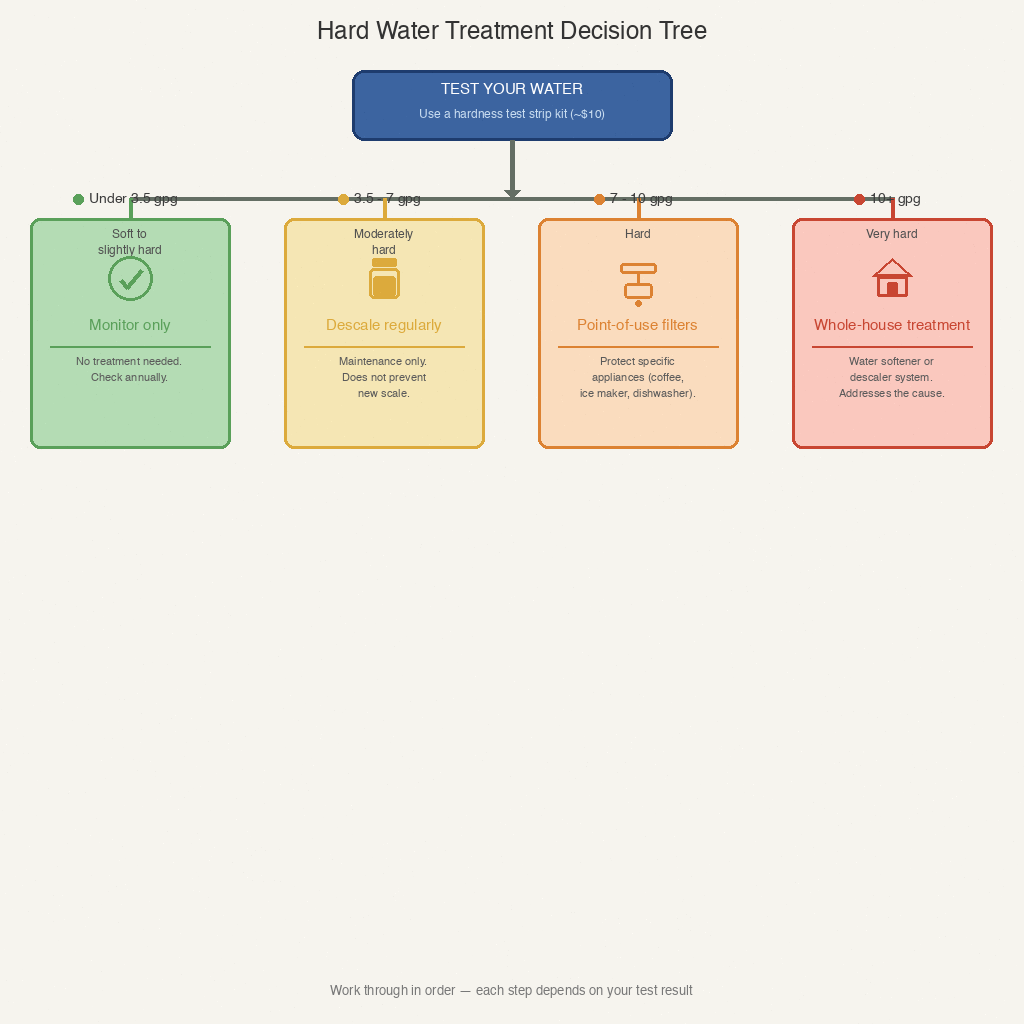
A four-step decision tree. Work through it in order — each step depends on the number from the previous one.
Step 1: Test your water first
Don’t buy anything before testing. You need your gpg (grains per gallon) to size any treatment system. A hardness test strip kit costs about $10 and gives you a reading in 3 seconds.
If you’re on municipal water, your utility’s annual water quality report lists hardness — usually in ppm or mg/L. Divide by 17.1 to get gpg. Well owners should test directly, since well hardness varies seasonally.
Step 2: Descale regularly (maintenance, not prevention)
If you’re at 3-7 gpg (moderately hard), regular descaling may be enough to keep appliances running:
- Water heater: Annual tank flush or tankless descale cycle
- Dishwasher: Monthly descale with hard water rinse aid
- Coffee maker: Monthly descale cycle (every 3 months if above 10 gpg)
- Washing machine: Monthly cleaning cycle with descaler
Skip this as your only strategy if you’re above 7 gpg. Descaling removes existing scale but doesn’t stop new scale from forming. At higher hardness, the recurring cost of descaling products approaches the cost of prevention.
Step 3: Point-of-use protection
For individual appliances, add targeted filtration:
- A whole-house sediment filter cartridge catches particulates before they reach downstream appliances — it won’t soften water, but it reduces the load on internal screens and valves
- Under-sink reverse osmosis for coffee and espresso machines extends boiler life
- In-line filters for ice makers reduce valve clogging
See our whole-house filter cartridge guide for sizing and compatibility, or browse whole-house water filters for system options.
Step 4: Whole-house treatment (10+ gpg)
If your test shows 10+ gpg (very hard), per-appliance maintenance becomes a losing battle. Whole-house treatment addresses the cause:
- Water softener (ion exchange): Removes dissolved calcium and magnesium so scale can’t form. See how to choose a water softener for sizing. If you already have one, maintain it with Morton salt pellets and watch for salt bridge and mushing.
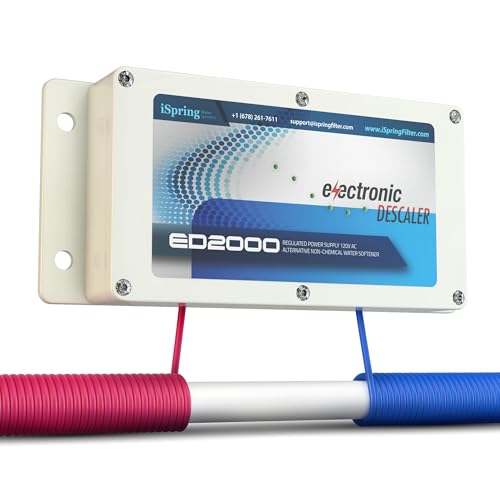
- Electronic descaler (salt-free): Wraps around the pipe and changes how scale adheres. An option for renters or homes without a drain line. Be honest about the limitation — the iSpring ED2000 may reduce scale formation, but it typically doesn’t bring hardness grains to zero on a test strip.
A quick disambiguation: a softener swaps hardness minerals for sodium. A whole-house filter removes sediment, chlorine, and taste — it doesn’t soften. RO polishes drinking water under the sink. They solve different problems and aren’t interchangeable.
Common mistakes
- Buying a softener before testing — You can’t size a system without your gpg number. Test first with $10 strips, then decide.
- Thinking the appliance is just old — Scale is a slow killer. If your water heater is 8 years old and takes twice as long to reheat, scale is more likely than age. Descaling can buy another 2-3 years.
- Using more detergent instead of treating the water — Doubling detergent costs $100-200/year and doesn’t prevent scale inside the machine. The heating element still fails. Don’t confuse cleaner dishes with protected appliances.
- Ignoring manufacturer descale intervals — Most tankless water heater warranties require annual descaling. Coffee maker manuals specify 3-6 month cycles. Skipping them voids coverage and shortens component life.
Key takeaways
- Hard water scale reduces water heater efficiency by up to 11% at 1/16 inch and 24% at 1/8 inch (DOE/Battelle).
- Annual cost of hard water damage to appliances: $270-700 depending on hardness level.
- Appliance lifespan shortened by an estimated 30-50% without treatment.
- Water heaters, dishwashers, and coffee makers are most vulnerable because they heat water.
- Test your hardness first — the right fix depends entirely on your gpg number.
- Descaling is maintenance, not prevention — it removes existing scale but does not stop new deposits from forming. Above 7 gpg, consider point-of-use or whole-house treatment.
- Softener, filter, and RO solve different problems. Match the tool to the problem, not the marketing pitch.