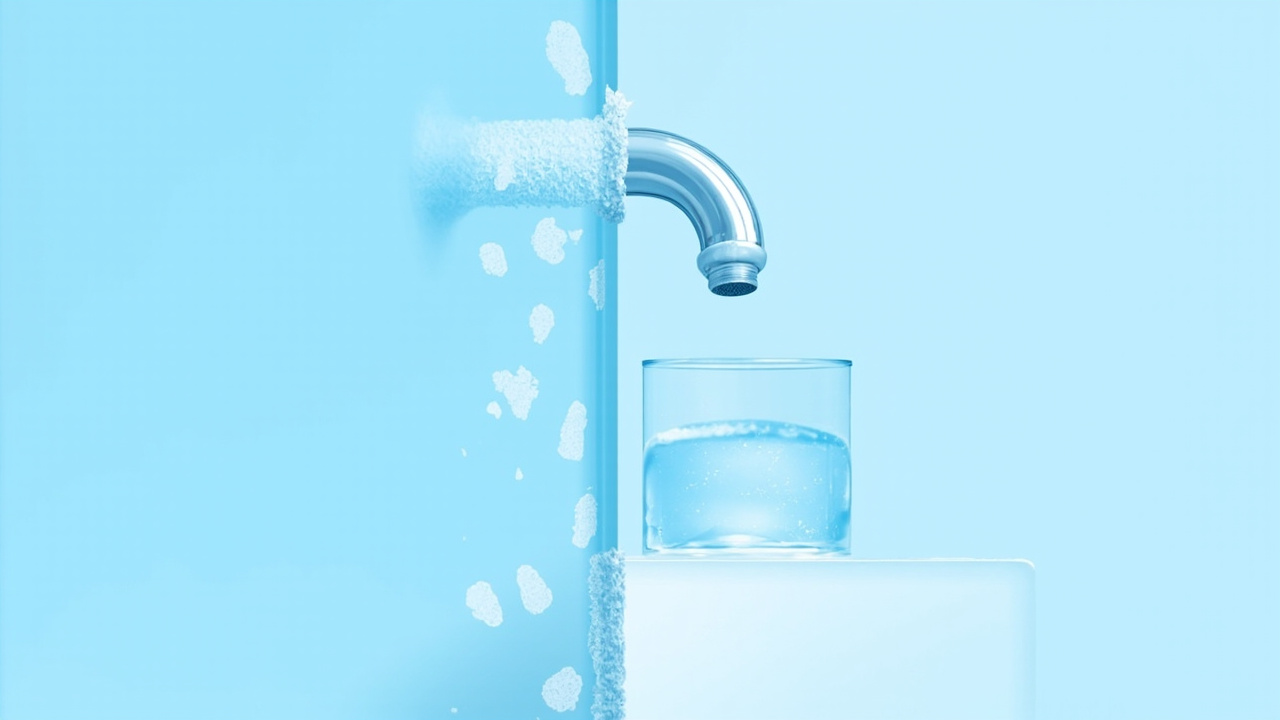
If the shower door fogs with white film two days after you clean it, you don’t need a harder scrubber — you need a hardness number. Guessing from an ad that says “64,000-grain unit for your family” is how people buy the wrong softener, keep scrubbing the same glass, and wonder why the water heater sounds different this winter. Below: what hard water actually is, the visible signs, the numbers that matter, and the common dead-ends to skip.
Quick answer
Hard water is tap water carrying dissolved calcium and magnesium. It leaves white chalky film on glass, soap scum in the shower, and scale inside heaters and pipes. You measure it in grains per gallon (gpg) — under 1 is soft, over 7 is hard, over 10.5 is very hard. The fix starts with a $10 test, not a new showerhead.
What hard water is (and isn’t)
Hard water is tap water with higher-than-normal concentrations of dissolved calcium (Ca²⁺) and magnesium (Mg²⁺) ions. These minerals dissolve as groundwater passes through limestone, dolomite, and gypsum deposits before reaching your tap. The more mineral-rich the aquifer, the harder your supply — which is why two homes on the same street can have very different hardness if one is on a well and the other on municipal water drawn from a different source.
The USGS defines hardness by the concentration of polyvalent cations, principally calcium and magnesium, expressed as calcium carbonate (CaCO₃) equivalent. It is not dirt you can filter out with a finer screen. The minerals are dissolved at the molecular level — they pass through any standard sediment filter.
What it isn’t (disambiguation)
- Not contamination or unsafe water. The EPA classifies hardness under Secondary Drinking Water Regulations — aesthetic parameters like taste, odor, and color that affect how water looks and performs, not primary health-based limits. Hard water is not a safety violation.
- Not the same as iron. Iron leaves rust-colored brown, orange, or red stains. Hardness leaves white, chalky, or gray residue. They can coexist, but they are different problems with different treatments.
- Not physically “hard.” The word refers to mineral content, not water pressure, temperature, or physical hardness. Soft water and hard water feel similar to the touch — the difference shows up on glass and in soap behavior.
If you want the side-by-side on what actually changes between hard and soft water at home, see hard water vs soft water compared.
Signs you’ll actually notice
You usually spot hard water before you test for it. The signs are visible, repeatable, and show up in the same places every time.
On glass and shower doors
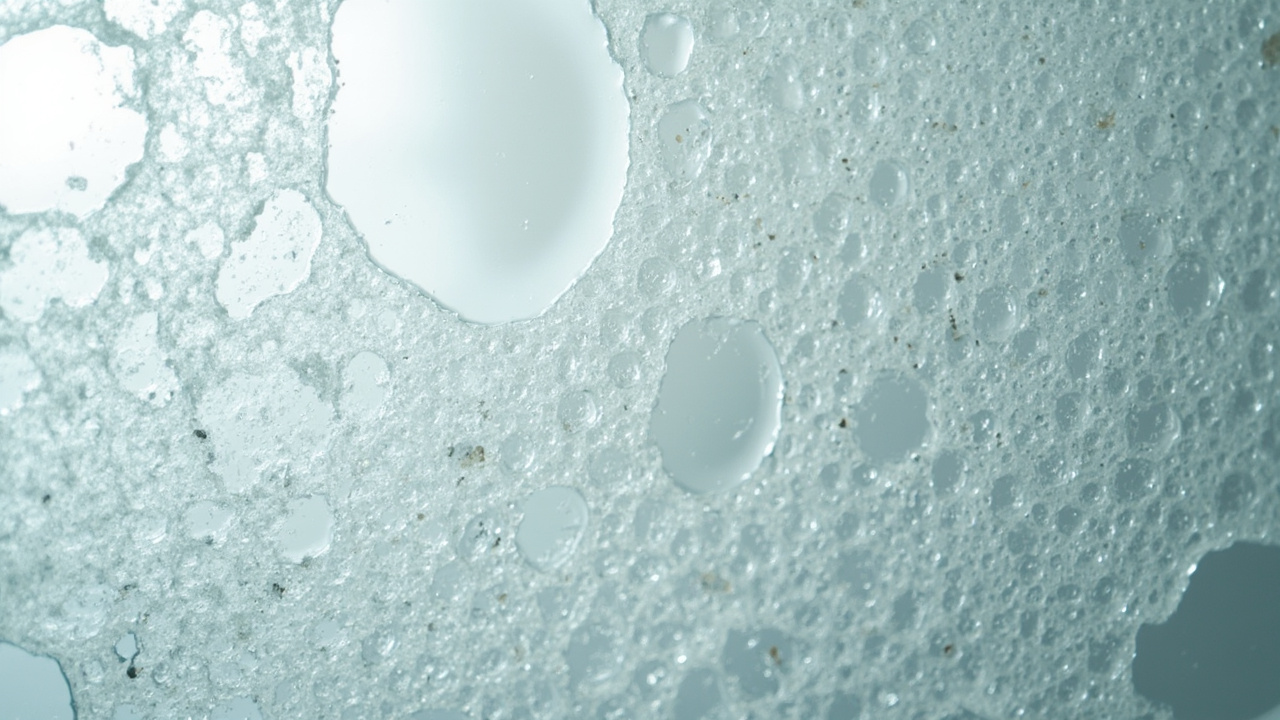
White chalky film, water spots that don’t wipe off with regular glass cleaner, and haze that returns within two days of cleaning. This is the #1 sign most homeowners notice first. The film is calcium and magnesium carbonate residue left behind when water droplets evaporate.
In the shower and on fixtures
Soap that won’t lather properly, soap scum that sticks to tile and grout, and white crust building up around faucet aerators and showerhead nozzles. Hard water reacts with soap to form an insoluble curd — the scum you keep scrubbing. The crust around aerators narrows flow openings over time, which is why your shower pressure may feel weaker even though the supply pressure hasn’t changed.
In the toilet bowl
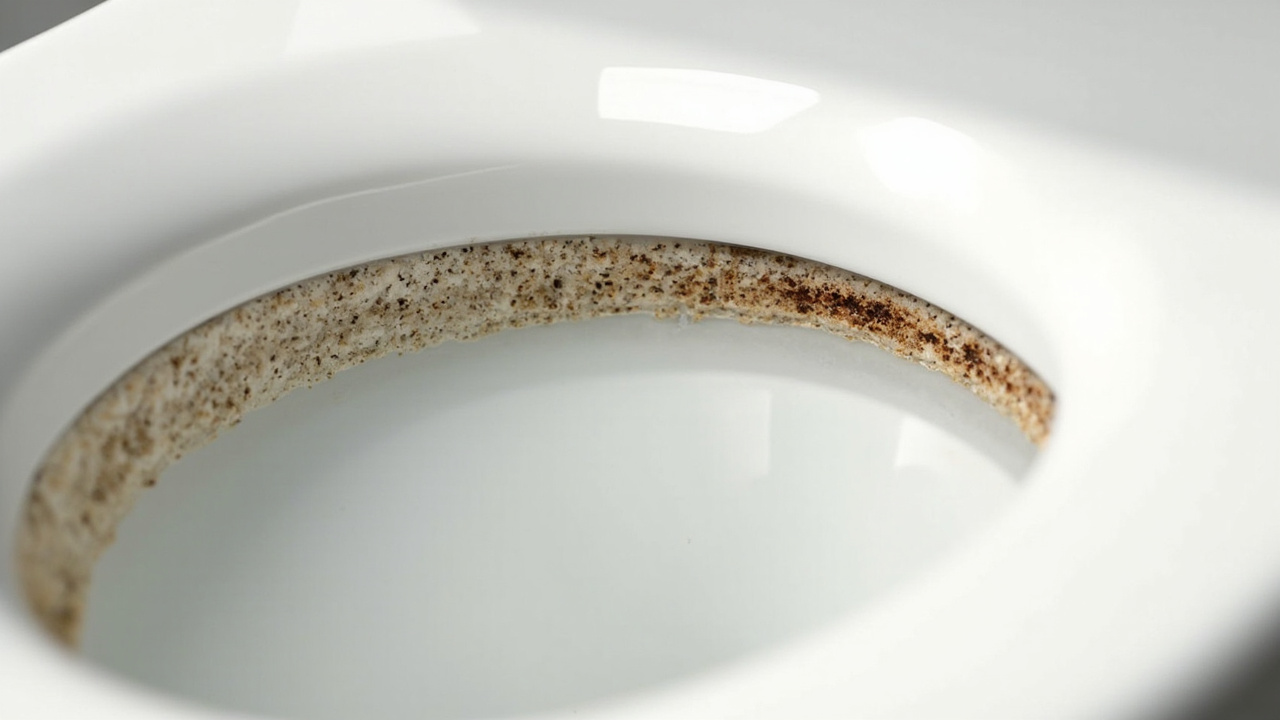
A persistent ring at the waterline that brushing alone doesn’t remove. This is usually calcium and magnesium carbonate depositing where the water surface meets the porcelain. Chemical toilet bowl cleaners dissolve it temporarily, but it returns within a week if the hardness is untreated. For a deeper treatment of this specific problem, see our guide on hard water stains in toilets.
Inside the water heater and pipes
This one is invisible but costly. Scale builds up on the heating element and inside pipe walls. You may hear popping, rumbling, or cracking sounds from the water heater as trapped water bubbles escape through the scale layer. Reheat times get longer. The heater works harder to deliver the same amount of hot water — which is where the real cost of hard water lives.
Hardness numbers: gpg and ppm
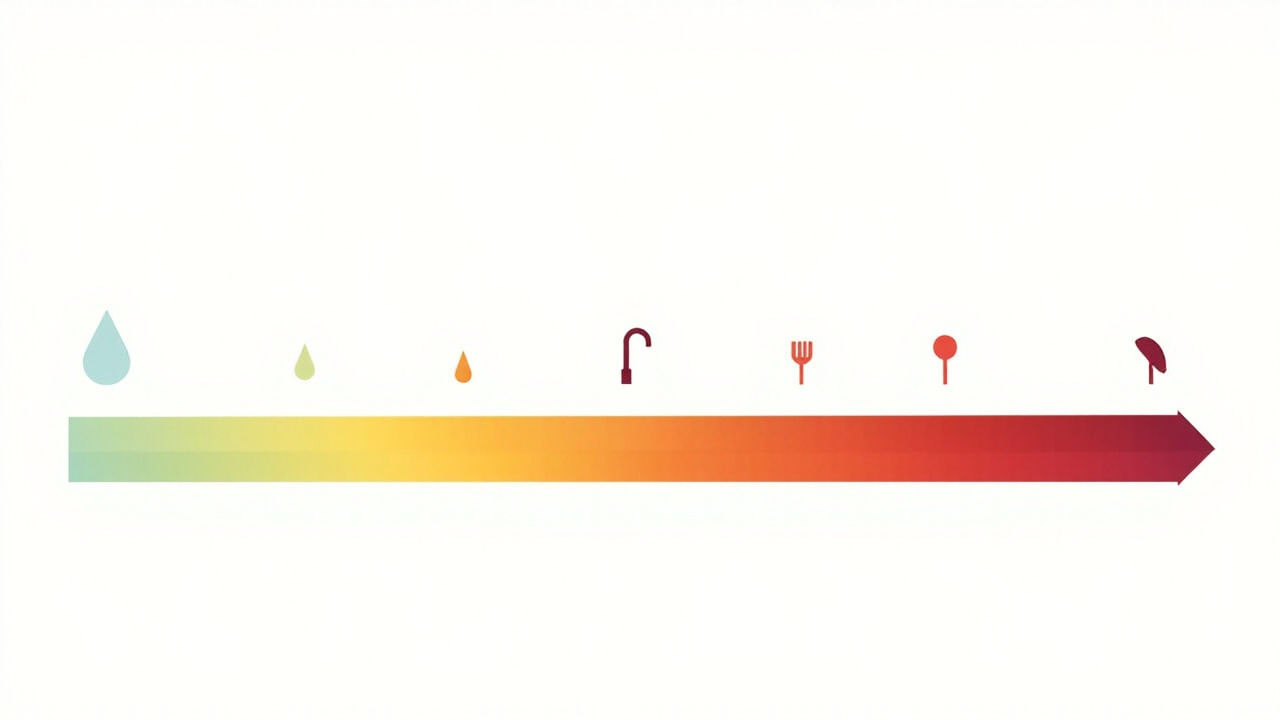
Hardness is measured two ways in the U.S.: grains per gallon (gpg) and parts per million (ppm), also written as mg/L. One gpg equals 17.1 ppm. Softener capacity is rated in grains, so gpg is the number you need for any equipment decision.
gpg classification table
| gpg | ppm (mg/L) | Classification |
|---|---|---|
| < 1 | < 17 | Soft |
| 1–3 | 17–60 | Slightly hard |
| 3.5–7 | 61–120 | Moderately hard |
| 7–10.5 | 121–180 | Hard |
| > 10.5 | > 180 | Very hard |
Source: USGS Water Science School and WQA consumer classification. Ranges vary slightly by lab — this is the common residential scale.
Why your gpg number matters
Softener sizing uses three inputs: your gpg, daily water use (gallons per person), and household size. A 32,000-grain unit handling 10 gpg at 75 gallons per day for a family of four regenerates roughly every four days. At 15 gpg, the same unit regenerates every two and a half days — burning more salt and wearing the valve faster. Guessing your gpg is how people end up with an undersized unit that runs nightly, or an oversized unit that channels and never cycles properly.
For the full breakdown of how gpg and ppm map to softener sizing decisions, see water hardness scale (gpg and ppm). You can also plug your numbers into the softener size calculator once you have a gpg reading.
What it does to fixtures and appliances
The cost of doing nothing isn’t safety — it’s efficiency, lifespan, and the time you spend cleaning. Here’s where hardness hits hardest.
Water heater efficiency
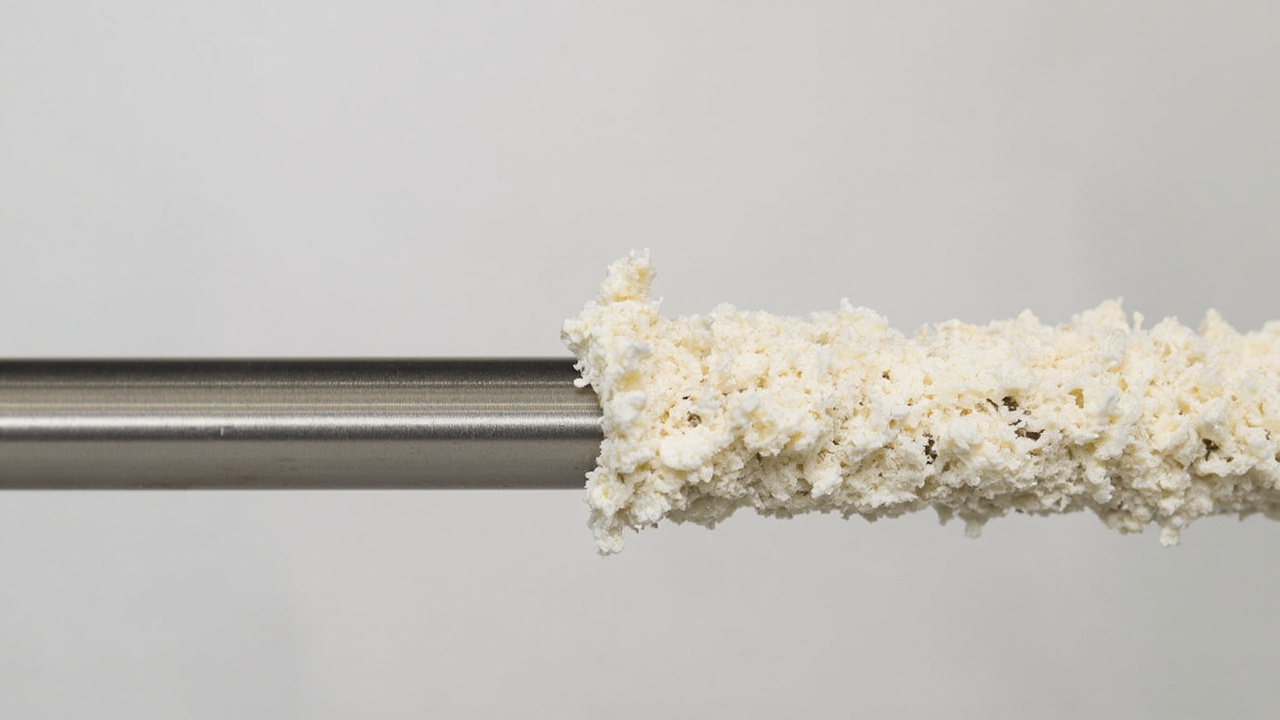
Scale on the heating element acts as insulation between the heat source and the water. Industry data from the U.S. Department of Energy suggests that as little as 1.6 mm (about 1/16 inch) of scale buildup can reduce water heater efficiency by roughly 12 percent. A heavily scaled element runs longer to heat the same volume, which shows up on your energy bill months before the element fails entirely.
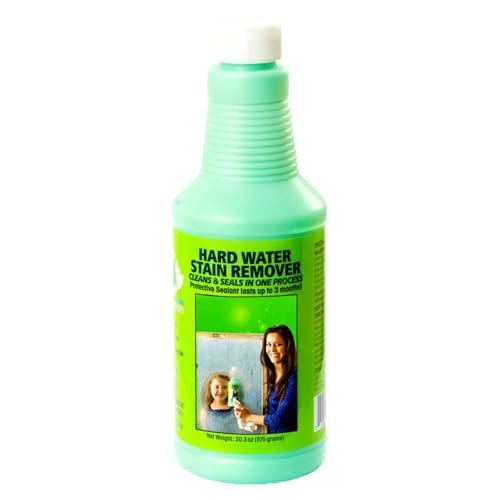
If your heater already has visible scale, a descaler like CLR lime and rust remover clears surface deposits on fixtures and external components. For heavier buildup on shower doors and glass where mineral etching has set in, Bioclean hard water stain remover handles deeper staining without abrasive scratching.
Faucets, showerheads, and aerators
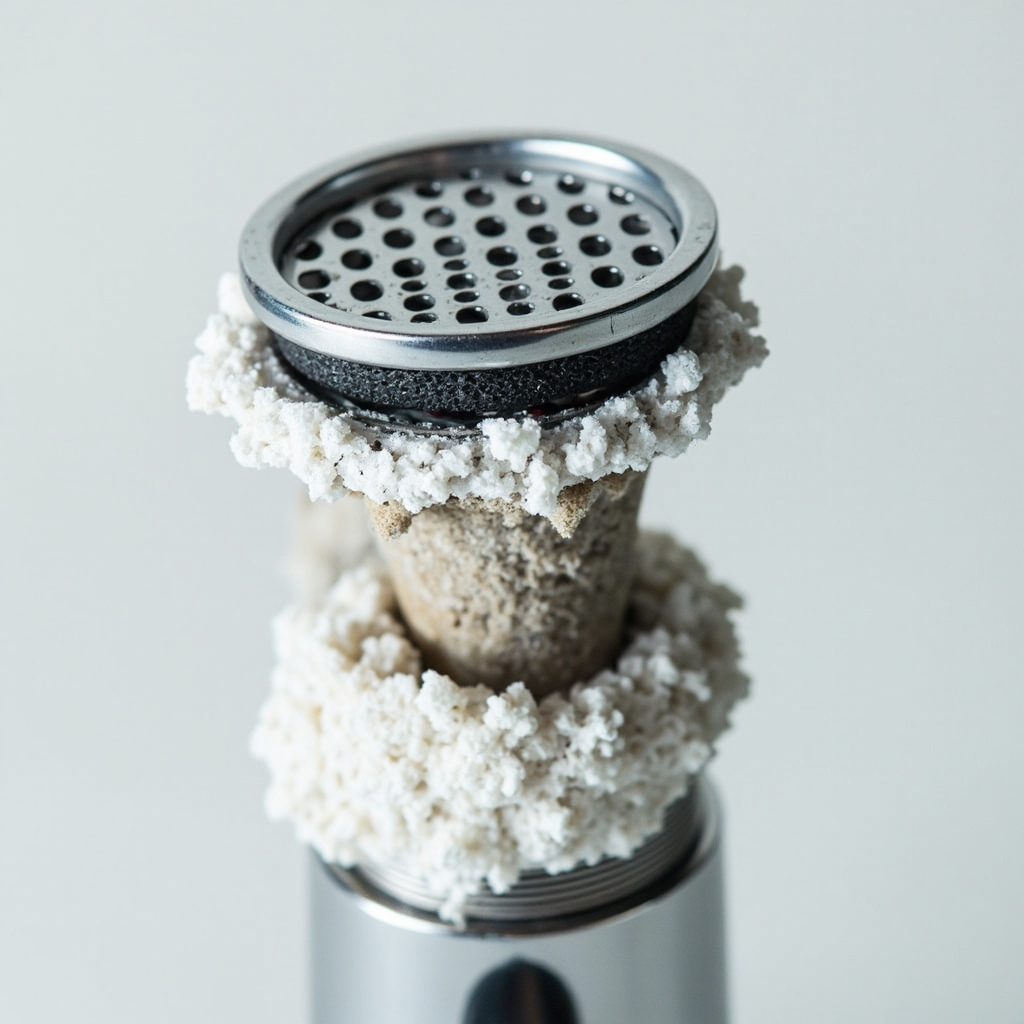
Mineral crust narrows the small openings in aerators and showerhead nozzles. You replace aerators more often, showerheads start to dribble instead of spray evenly, and the white crust around the base of the faucet becomes a weekly cleaning chore. A quick spray of CLR descaler dissolves fresh crust before it hardens — but it won’t stop new crust from forming unless you address the hardness itself.
Pipes, dishwashers, and small appliances
Dishwasher heating elements, coffee makers, washing machines, and irons all accumulate scale in the same way the water heater does. Coffee makers and kettles show it fastest — that white film inside the carafe is hardness precipitating during heating. Appliances fail early in hard-water homes, often months before their rated lifespan. A CLR descaler spray helps keep small appliance openings clear between deep cleans.
Soap and detergent waste
Hard water bonds with soap to form scum (an insoluble curd), so you use more detergent per load and still get spots on glassware. The WQA and NSF educational materials note that hard water can increase soap and detergent consumption significantly — you may use two to four times more product and still see film on dishes and stiff laundry.
For existing scale on shower doors and fixtures where regular cleaners have failed, Bioclean stain remover is formulated for heavier mineral buildup without toxic fumes.
What hard water is NOT solved by
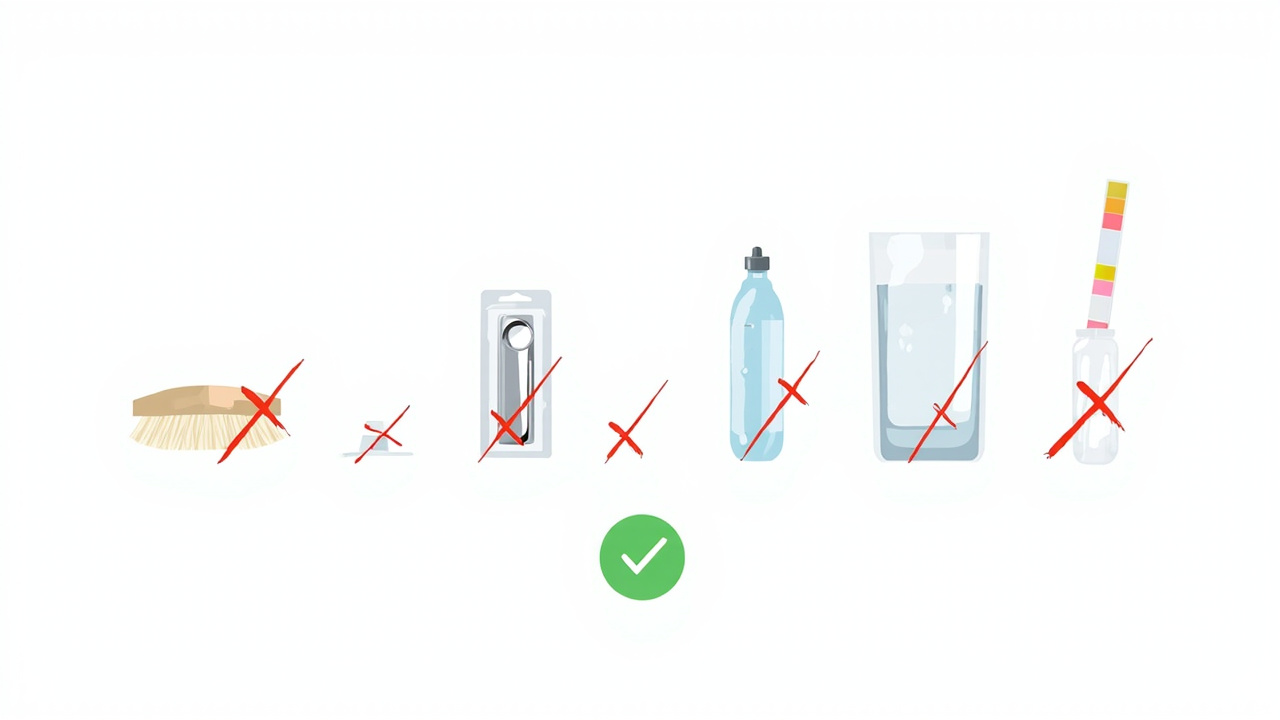
Before you spend money, here are the dead-ends that don’t fix hardness. Knowing what doesn’t work saves you more than knowing what does.
Just scrubbing harder
Abrasives and elbow grease remove the visible stain, but the minerals come back with the next shower. Cleaning without treating the hardness is a treadmill — you’re removing yesterday’s deposit while today’s is already forming. Descalers help with existing buildup, but they are maintenance, not a fix for the hardness itself.
Just replacing the showerhead
A new showerhead flows well for a few weeks, then crusts again. The hardness is in the water supply, not the fixture. You replaced the symptom, not the cause.
Just a faucet-mounted carbon filter
Carbon pitchers and faucet filters (Brita, PUR basic) reduce chlorine, taste, and odor. They do not remove dissolved calcium and magnesium. You’d still have hard water in the shower, the heater, the dishwasher, and the laundry. Only ion-exchange softeners, reverse osmosis, or distillation actually reduce dissolved hardness.
Just bottled water for drinking
Bottled water fixes the drinking glass — but not the shower, the water heater, the dishwasher, or the laundry. It’s the most expensive per-gallon option and it doesn’t touch the systems where hardness does its real damage.
Next steps: test first, then decide
You now know what hard water is and what it costs. Here’s the path forward — short steps, not a shopping cart.
Step 1 — Get a hardness number
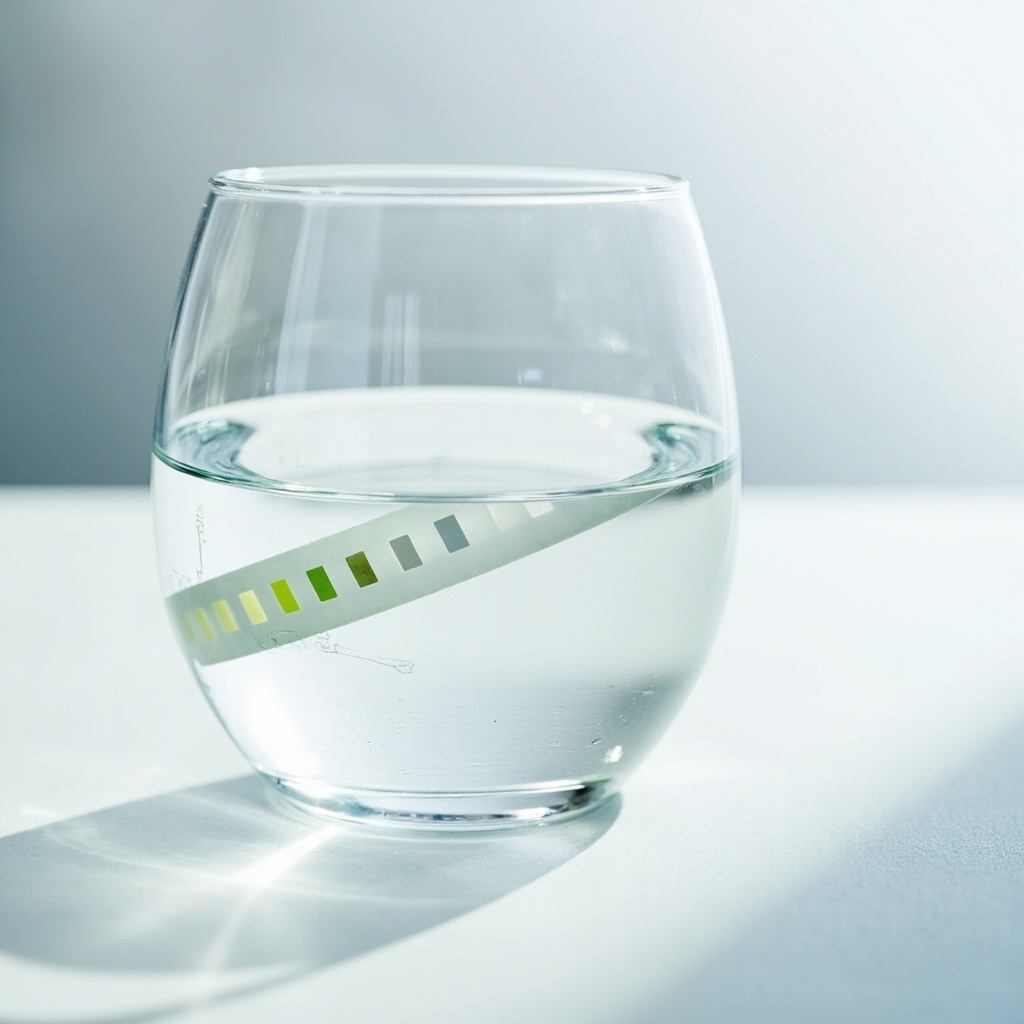
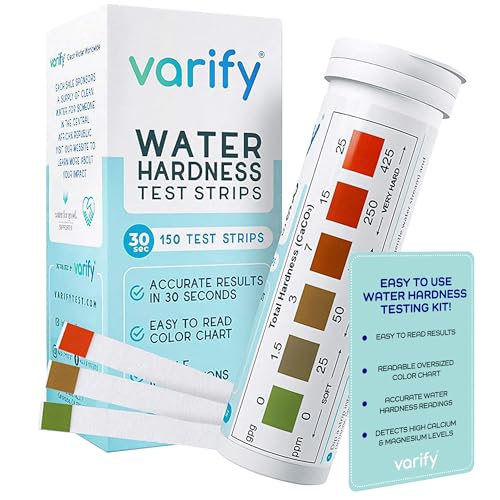
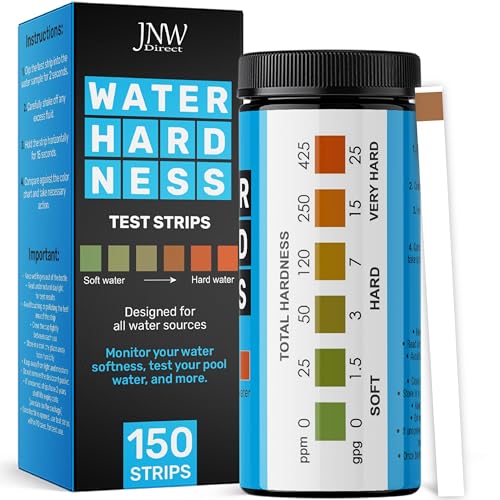
A Varify hardness test kit with 150 strips tells you your gpg in under a minute. Dip the strip, match the color, and you have a number. If you want an alternate brand at the same price, JNW Direct test strips work the same way with 150 strips per kit.
If you are on municipal water, your utility’s annual Consumer Confidence Report (CCR) sometimes lists average hardness — but a home test is more accurate for your actual tap, since hardness varies by neighborhood and season.
Step 2 — Read the hardness scale
Once you have a number, cross-reference the gpg table above. Under 3.5 is barely noticeable. 3.5 to 7 is where spots and scum start. Above 7 is where most people decide to treat. For the detailed scale breakdown, see water hardness explained.
Step 3 — Decide: softener, RO, or descaler-only
- Whole-house softener — fixes showers, heaters, laundry, and pipes. Start here if your gpg is above 7. Once you own one, Morton Clean and Protect salt pellets are the consumable that keeps it running. If you already have pellets stocked, JNW test strips confirm whether the softener is actually bringing your gpg down. For the full decision framework, see our guide on how to choose a water softener.
- Under-sink RO — fixes drinking and ice water only. Does not help the shower, the heater, or the laundry. Relevant if your only complaint is taste or drinking quality, not scale.
- Descaler and better soap only — fine for gpg 3 to 7 if you don’t mind the maintenance. Keep CLR spray on hand for fixtures and accept that you’ll clean more often.
If you already own a softener and want to understand salt options (pellets vs crystals vs blocks), see salt pellets vs crystals. If your softener stopped working and hardness came back, check water softener not regenerating before buying anything new. For the ion-exchange cycle itself, see how water softeners work.
Common mistakes
-
Buying a softener without a hardness number. Sizing by guess leads to undersized units that regenerate every night (wasting salt) or oversized units that channel and fail to cycle properly. Test first — a $10 strip prevents a $500 sizing mistake.
-
Treating only the drinking water. A Brita pitcher or under-sink RO fixes the glass but leaves the shower, water heater, and pipes scaling. The real cost of hard water lives in fixtures and appliance efficiency — not in the drinking glass.
-
Assuming “hard” means contaminated or unsafe. Hardness is aesthetic per the EPA — it is not a regulated contaminant. Don’t panic about drinking it. The case for treatment is fixtures, soap efficiency, and appliance life, not safety.
-
Replacing fixtures instead of treating the water. New showerhead, new faucet, new coffee maker — all scale again within months. The water is the problem, not the fixture.
-
Ignoring the water heater. Scale in the tank is invisible until efficiency drops or the element fails. Annual descaling or a whole-house softener extends heater life significantly and pays back in energy savings.
Key takeaways
- Hard water is dissolved calcium and magnesium — not contamination, not dirt, and not unsafe to drink.
- White film on glass, soap scum, toilet ring, and declining water heater efficiency are the visible signs.
- Measure in gpg: under 1 is soft, 3.5 to 7 is moderate, 7 to 10.5 is hard, over 10.5 is very hard.
- The cost lives in fixtures, water heater efficiency, and soap waste — not drinking safety.
- Scrubbing harder, replacing showerheads, and carbon filters do not fix hardness.
- Test first with a $10 strip kit, then decide softener, RO, or descaler-only.
- Size any softener from your actual gpg — not by guess.