If the dishes still spot even though you topped off the tank last month, the salt you’re adding isn’t the problem you think it is. A pink jar of Himalayan salt will regenerate your resin. It just won’t do it cheaply, evenly, or without the real risk of a salt bridge that makes your softener do nothing. Here’s the verified math, the bridging failure mode, and what to buy instead so you’re not paying $3/lb for a $0.72/lb job.
Quick answer
Chemically yes, practically no for the food-grade jar: pink Himalayan salt is mostly NaCl, and a softener just needs NaCl to make brine. The verified economics land against the jar — $3.00/lb vs $0.72–0.82/lb for made-for-softener salt — and fine grain bridges in brine tanks. Test your gpg first; under 7 gpg the salt debate is noise.
Test first: your hardness number drives the math
Whether any salt decision is worth optimizing depends on one number: grains per gallon (gpg). The USGS classifies hardness by calcium carbonate concentration in roughly four bands from soft to very hard [USGS, accessed twenty twenty-six]. To convert mg/L to gpg, divide by seventeen point one. A home at fifteen gpg uses meaningfully more salt per regen than a home at five gpg — that ratio is what drives both your refill cadence and your annual salt bill.
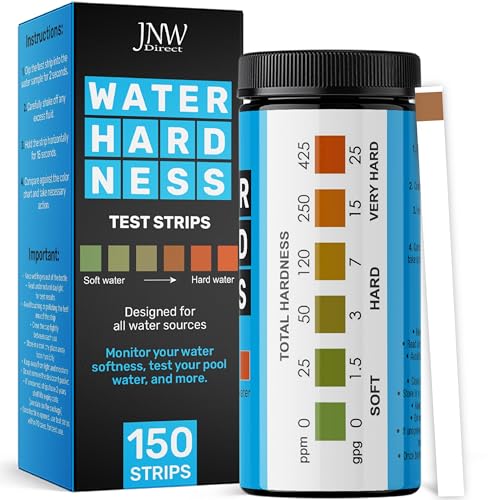
Below roughly seven gpg the salt-cost debate is noise. The cheapest made-for-softener salt and the most expensive pink salt will both regenerate the same number of grains; you’ll never feel the difference on the glass or in the kettle. Strips cost less than ten dollars and take two minutes. A one-fifty-strip hardness kit under $10 is enough for years of spot-checks. The full kit-and-method walkthrough is on hardness test kits.
- Skip the test kit if you already have a gpg number from a municipal water report or a recent service call.
- Don’t buy any salt — himalayan or pellets — before you have a gpg number; under seven gpg the premium-salt debate is noise.
How a softener uses salt (30-second refresher)
Salt and water make brine. During regeneration, that brine flushes through the resin bed and strips off the calcium and magnesium the resin collected during the service cycle. The salt is a consumable — not a one-time fill, not a filter. Without enough salt dissolving in the right window, the brine is too weak to fully recharge the resin. You get hard-water breakthrough: spots on glass, soap that won’t lather, scale in the kettle.
Most residential softeners regenerate every five to ten days based on gallons used. Each regen pulls roughly three to six lb of salt into the brine well to recharge the resin. A home at 15 gpg hardness burns somewhere between twenty-five and fifty lb of salt per person per month, depending on the unit’s efficiency setting and regen frequency. The whole brine cycle is detailed in how water softeners work — the relevant beat for this page is just “the salt must dissolve cleanly, cheaply, every cycle.”
That’s why “does Himalayan salt work” reduces to three sub-questions: does it dissolve cleanly, does it dissolve cheaply, and does it do that every cycle? The chemistry says yes to all three. The economics and the form say mostly no — covered in the next sections.
The three ways people run himalayan salt in a softener
People asking about Himalayan salt usually mean one of three specific setups. Each has different economics, different failure modes, and a different verdict.
Food-grade jars poured into the brine tank
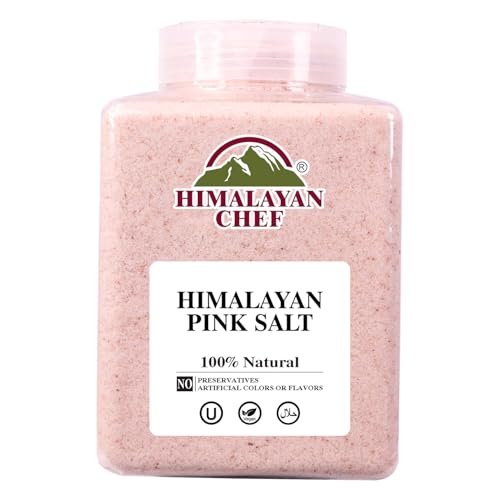
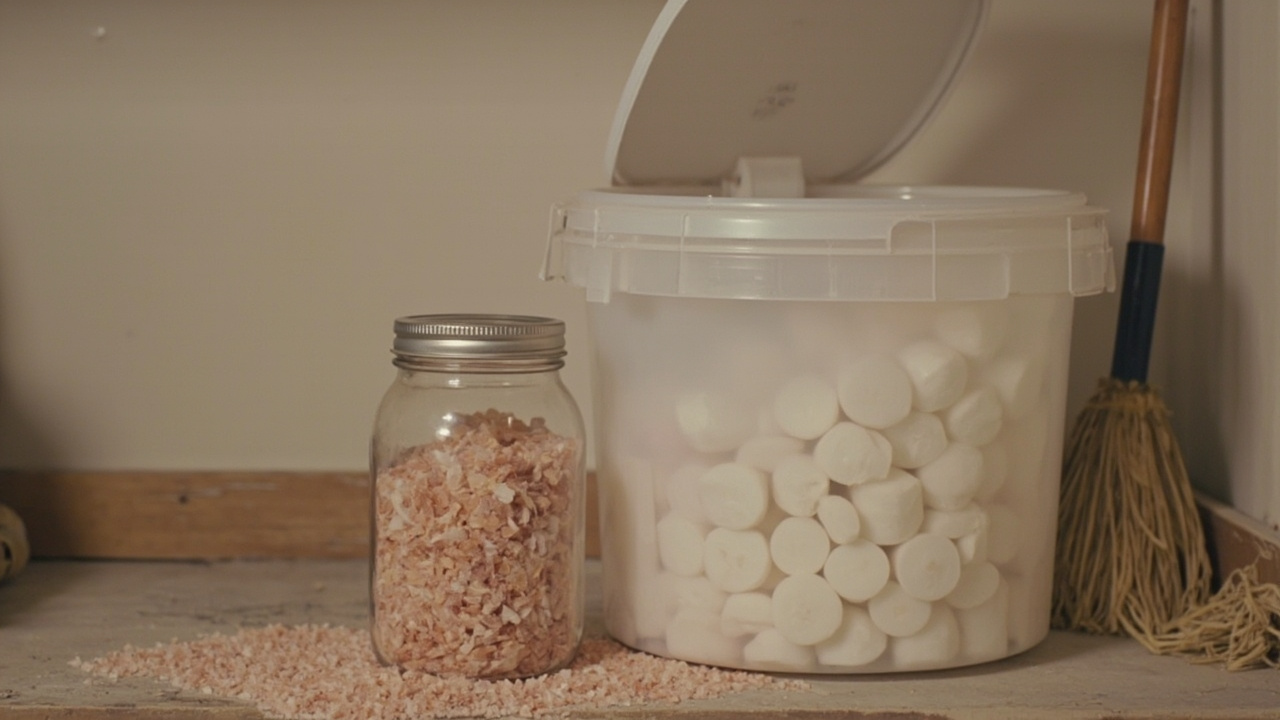
This is what Reddit threads actually describe — kitchen-grade pink salt tipped out of a five-lb jar straight into the salt well. Fine grain, no anti-caking agent, no grading for brine-tank use. Verified Amazon pricing puts a five-lb jar of Himalayan Chef fine grain at $14.99 ($3.00/lb) — that’s the cost anchor for the whole “is it worth it” question.
The first sign this isn’t working isn’t dramatic. Soap doesn’t lather quite as well as it did two months ago. The kettle picks up a faint white film again. By the time the brine well has a visible hollow crust under the salt, you’ve probably run two or three jars through. That’s roughly forty extra dollars over what made-for-softener salt would have cost. The recovery then costs another $20 in cleaner on top.
- Don’t pour food-grade fine-grain salt into a full brine bed — the fine crystals pack down under their own weight and form a hollow crust (a salt bridge). If it’s already in there, chip it out from the top edge before the bridge hardens; don’t try to dissolve it back in by adding water from above.
Himalayan-branded softener pellets
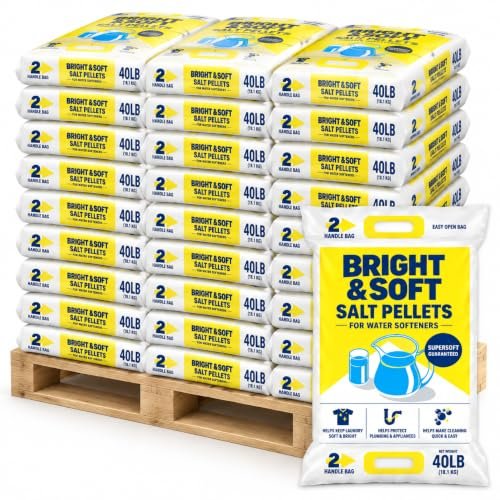
One real US Amazon product exists in this category: the HSD Himalayan Salt Direct pallet runs over a thousand dollars for a full bulk pallet. This is the “pure” version of the ask — pellets in brine-tank form, branded himalayan — but priced for buyers who already have a pallet-grade source or a commercial operation. The listing doesn’t publish a bag count, so no per-pound number goes on the page. UK shops (himalayansaltdirect.co.uk, himalayansaltstore.co.uk) sell smaller bagged versions, observed in the SERP top-10 on 2026-10-12, but those don’t ship to US addresses.
The pellet form solves the bridging failure mode that plagues the food-grade jar. The pellet form solves the bridging failure mode that plagues the food-grade jar. It does not resolve the price gap. Even at the bulk-pallet price, you’re paying for the brand and the trace-mineral profile — not for any regeneration chemistry that pellets or crystals from any source can’t match.
Blending pink salt with pellets
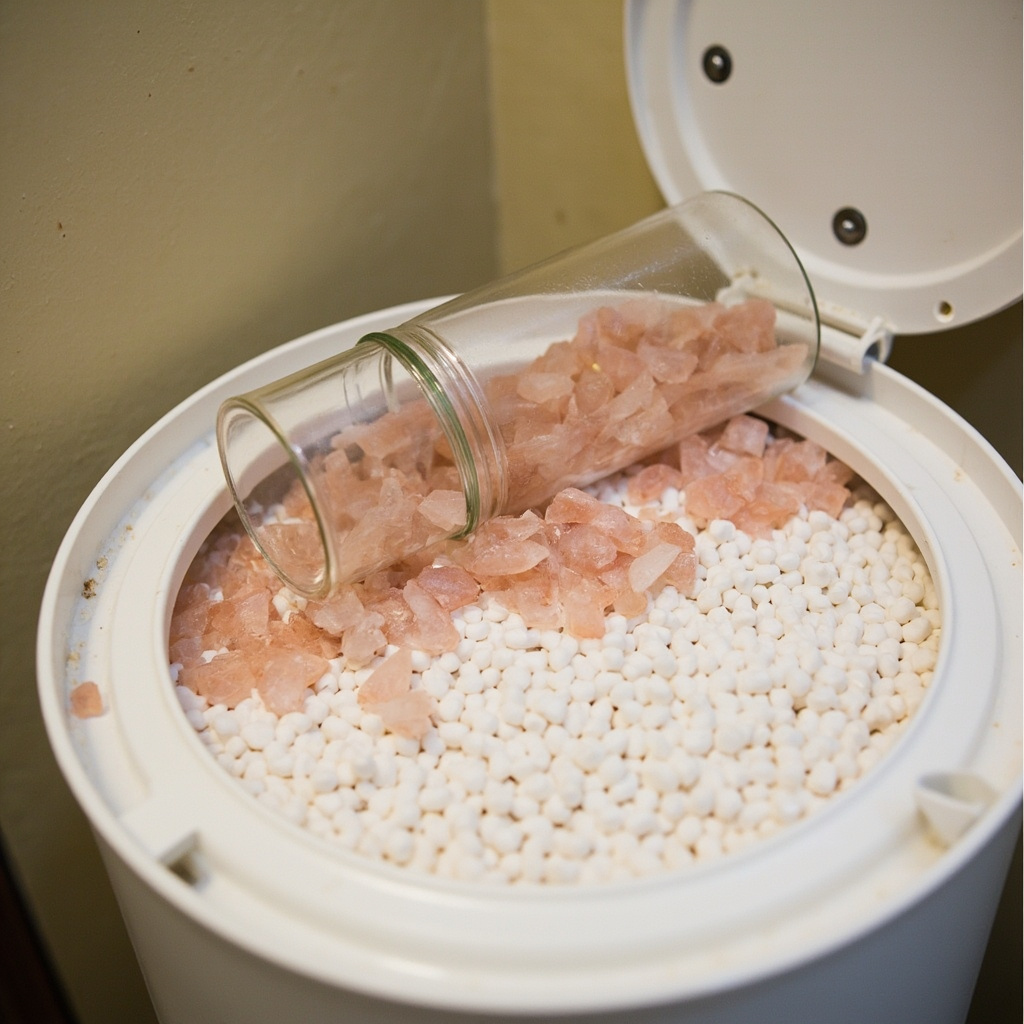
Some owners tip a jar into a partial bag of pellets to scratch the “I want the minerals” itch without re-engineering the whole tank. It’s the least-bad DIY variant. The pellets still carry the brine draw while the pink crystals dissolve around them. But the bridging risk from the fine fraction is still there. It’s not a recommendation; it’s the option if you’ve already bought the jar and don’t want to waste it.
The cost math: what your brine tank really costs
Consumption scales with people × gallons per day × gpg. A family of four at ten gpg hardness typically burns thirty to sixty lb of salt per month depending on regen settings and actual usage. At those rates the food-grade jar habit costs roughly $90–180/month against $22–49/month for proper softener salt — the entire “minerals premium” is the difference.
Here’s the verified per-pound comparison, all prices from Amazon (PA-API, accessed October twenty-twenty-six):
| Product | Pack size | Total price | Per-pound | Notes |
|---|---|---|---|---|
| Himalayan Chef Fine Grain Jar | five lb | $14.99 | $3.00/lb | The DIY cost anchor — fine-grain, kitchen-graded |
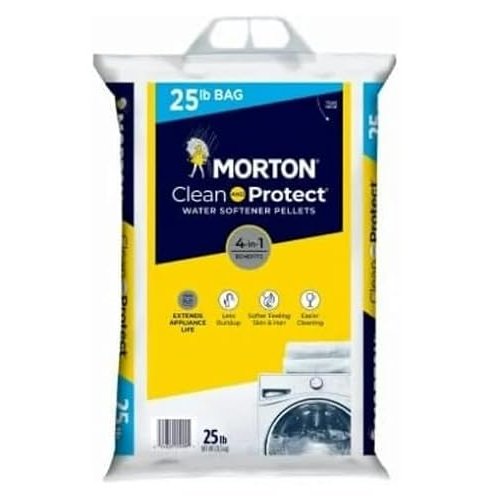
| Morton Clean & Protect Pellets | twenty-five lb | $20.57 | $0.82/lb | The default pellet pick for one-bag trial runs |
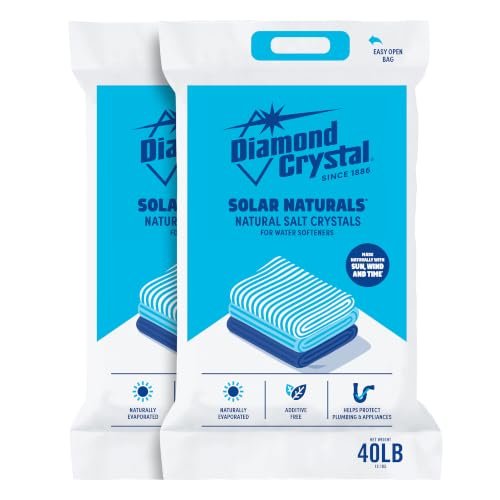
| Diamond Crystal Solar Naturals Crystals | 2 × forty lb (80 lb) | $57.39 | $0.72/lb | Lowest verified $/lb; eighty lb of solar crystals for the price of two jars |
The jar runs roughly four times the price of pellets per pound and over four times the price of crystals. The chemistry is the same; the form and the grading are the difference. The “minerals premium” is the entire difference — and that premium is paid up front for a softener that doesn’t care about minerals.
What actually matters in softener salt (form, purity, dissolve rate)
Three properties of the salt itself decide whether regeneration works in your tank.
Form. Pellets (extruded, uniform) resist bridging and dissolve evenly. Solar crystals (loose, irregular) are cheaper per pound but can pack and cake in humid brine tanks. Rock salt is the budget alternative for high-capacity municipal setups but rarely makes sense in a residential tank. Blocks are a cabinet-unit item, not a tall-brine-tank item. The full form comparison — bridge behavior, dissolving rates, purity grades — is on the sister page salt pellets vs crystals.
Purity. Made-for-softener salt is washed and graded for brine use. Food salt is graded for your kitchen, not your resin bed. Morton sells culinary Himalayan Pink Salt and water-softener salt as separate product lines for a reason. The producer documentation lists the methods — solar evaporation, rock salt mining, vacuum pan evaporation — without giving a published NaCl percentage [mortonsalt.com, accessed 2026-10-12]. We won’t print a number we can’t source.
Dissolve rate. The brine draw happens in a fixed window. The salt must dissolve inside that window or the regen runs weak. Fine grain dissolves fast in theory but cakes into crusts in practice. Irregular crystal dissolves clean. This single mechanism explains every practical downside the rest of this page lists. It also explains why “salt-free softener” marketing is misleading. Those units aren’t brine-less in the chemical sense. They crystallize hardness so it doesn’t stick to surfaces — but they don’t zero out your hardness grains on a strip. If a sales pitch promises zero hardness without salt, ask which grains-per-gallon reading they’re targeting.
What’s actually in pink salt (purity and impurities)
The pink color is real — it comes from trace minerals, mostly iron oxide and a handful of other elements. A peer-reviewed ICP-MS analysis of ten gourmet salts including Himalayan pink found that “Al, Ca, Fe, Mn, Ni, and Zn ranged significantly among the samples” (Di Salvo et al., Toxics twenty twenty-three). The trace-mineral content is real but uncontrolled — the same brand can vary bag to bag.
What that means for a softener: the resin doesn’t care about trace calcium from salt. It does care about fines, humidity, and uncontrolled impurities combining to form bridge crusts and sludge. Staining or rusting claims don’t show up in the manufacturer documentation and aren’t supported by the peer-reviewed evidence, so they stay off the page too. The honest-limits framing: if your water is very hard (above one-eighty mg/L), salt form and purity matter more because consumption is higher. If your water is soft-ish, almost nothing about the salt matters.
- Skip the purity-shopping detour if your goal is just clean regeneration on schedule — the cheapest clean pellet or salt move does that for a fraction of the pink-salt price.
The bridging and mushing problem
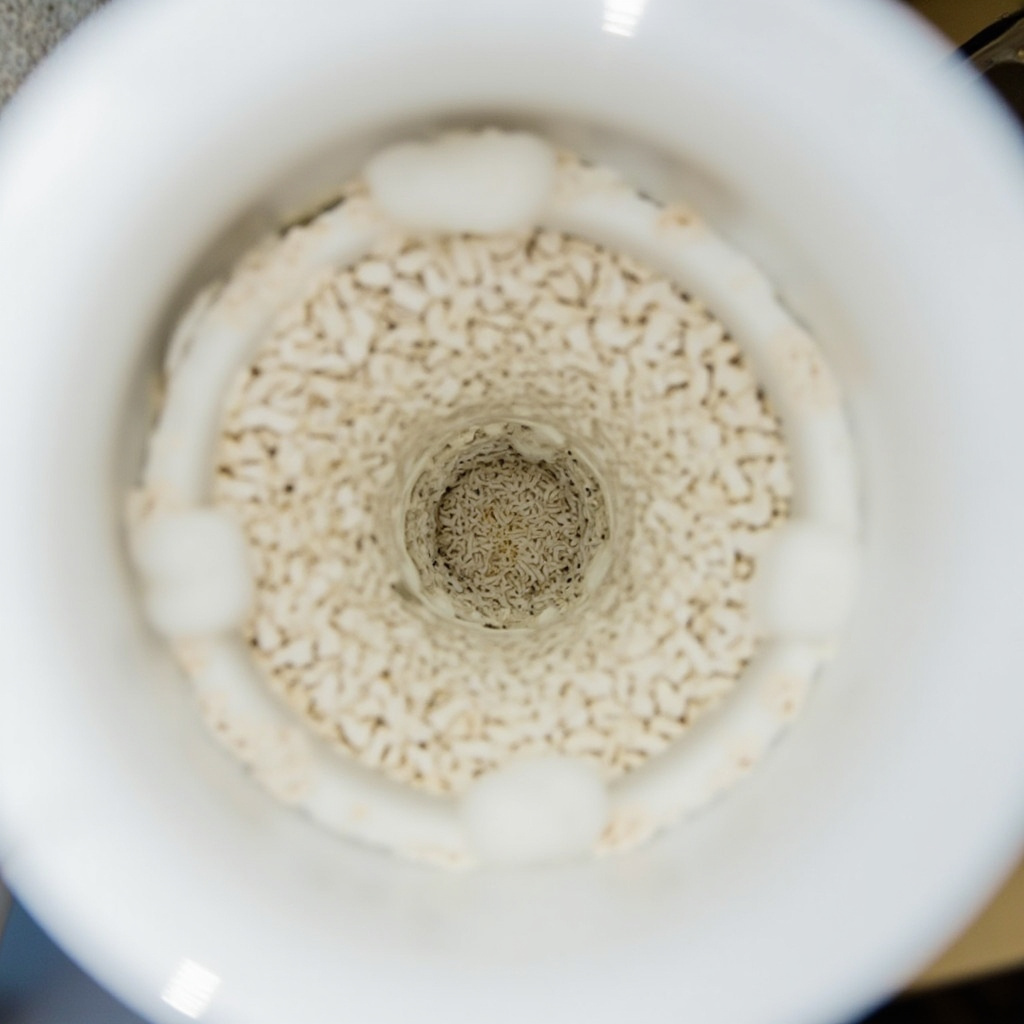
Fine or irregular salt plus humidity equals hollow crusts and sludge. The symptoms are familiar to anyone who’s run food-grade salt for a few months. The salt level looks fine at the top, but no brine draws down during regen. Hard water creeps back mid-cycle. The mechanics and the full recovery playbook live on the sister page salt bridging problems.
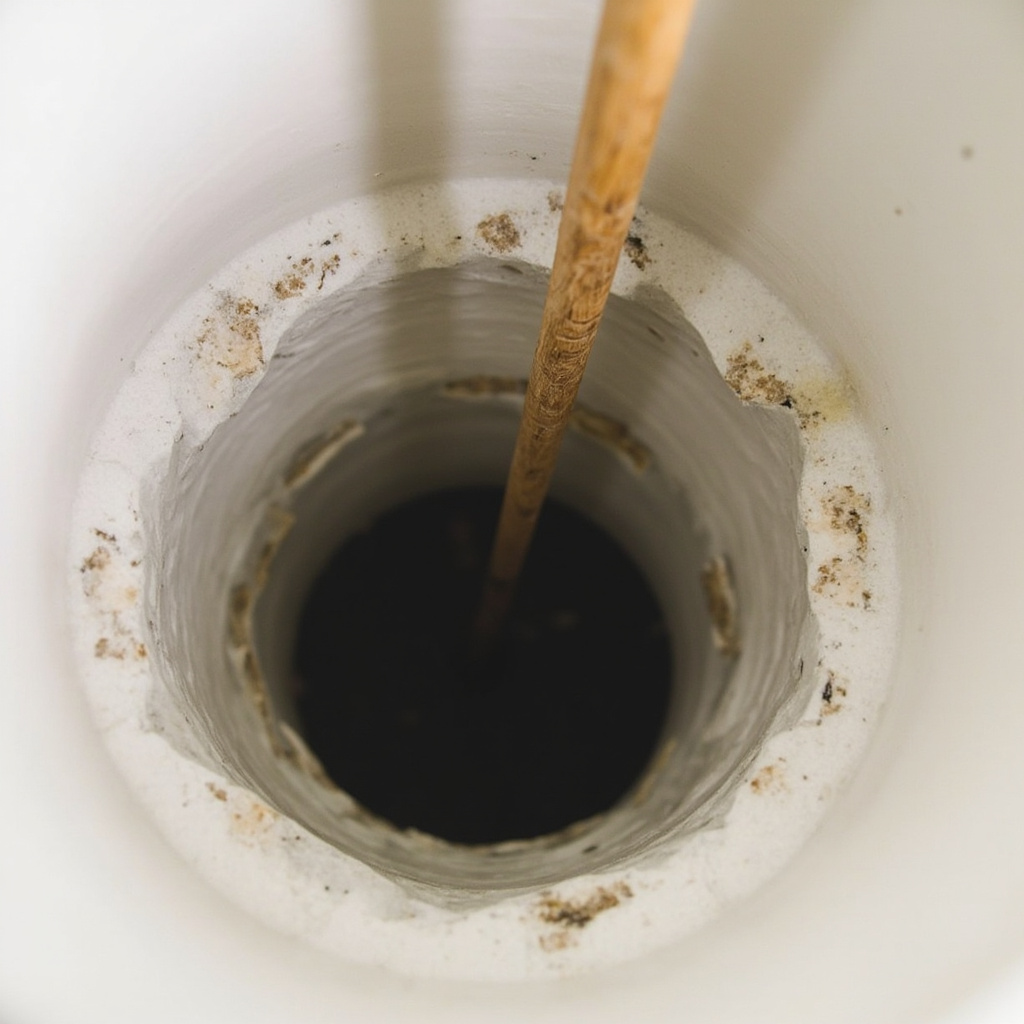
- Don’t attack a salt bridge by stabbing deep with a screwdriver while the tank holds water. Break the crust from the top edge with a broom handle, then scoop out any mush. If the tank has turned to sludge, scoop and reset rather than dissolving it back in: dissolving mush just feeds the next regen a dirty brine.
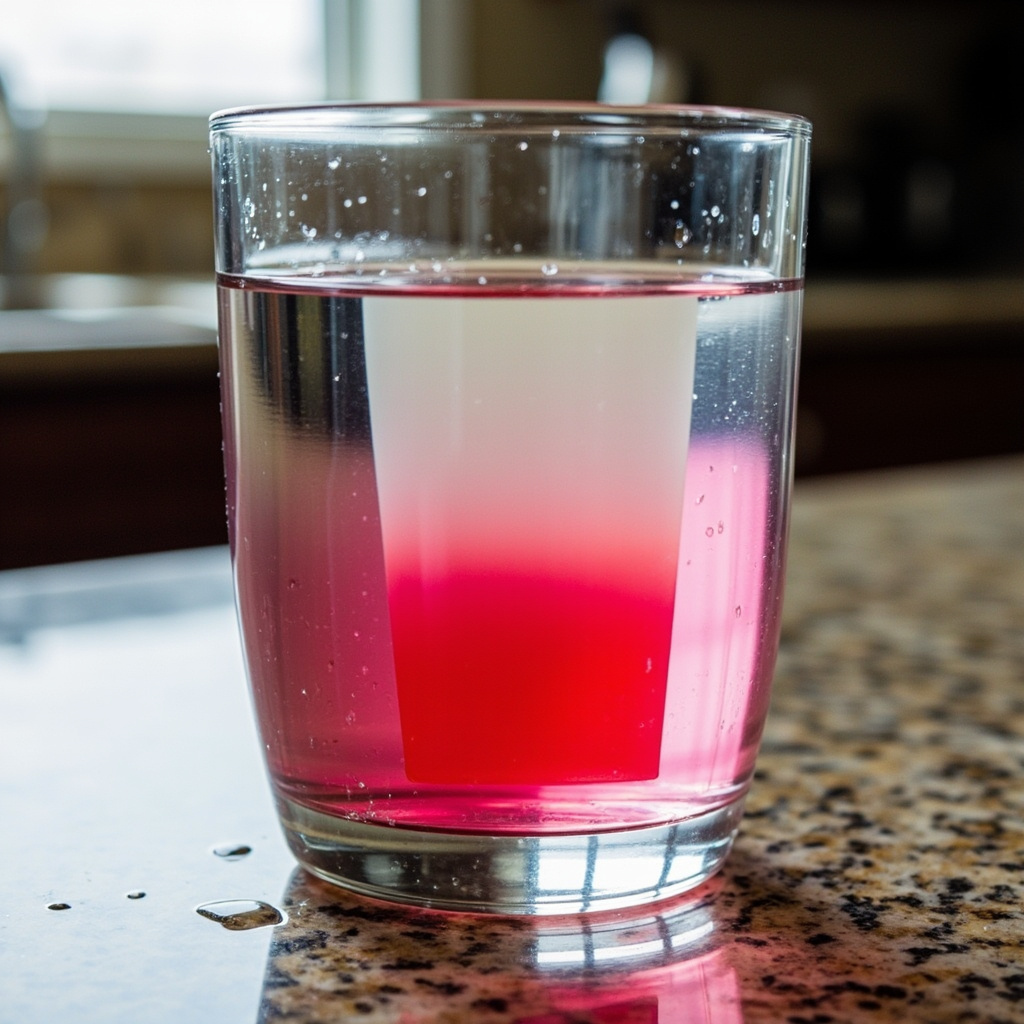
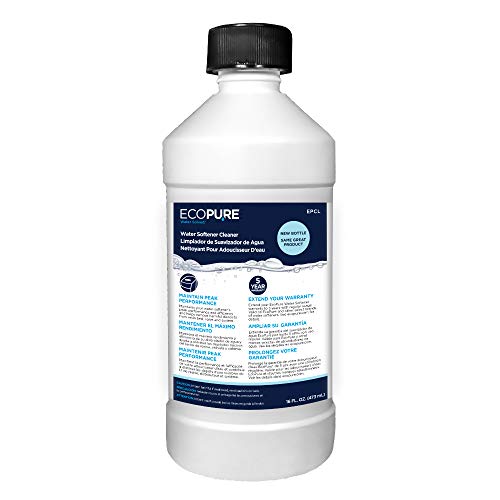
If you’ve run fine-grain or food-grade salt for several months, the resin bed itself picks up iron and organic buildup that salt alone can’t shift. The recovery move isn’t more salt — it’s a resin cleaner bath like EcoPure EPCL to dissolve iron fouling before it kills the regen cycle. The cleaner goes in the brine well, not on the salt pile; follow the bottle’s regen-cycle directions.
What to buy instead (roles, not a Top 10)
Skip the ranking. Buy by role.
| Role | What it does | Pick |
|---|---|---|
| Start here | Get a gpg number before any salt decision | Test strips first |
| Default pick | One 25 lb bag of pellets to trial | Start with one 25 lb bag of pellets |
| Bulk value | Lowest $/lb, crystals for low fill-in-tank frequency | 80 lb of solar crystals |
 | Rescue | Recover a tank that ran fine-grain or food salt | A resin cleaner bath to undo a bad salt run |
The forms explainer — pellets vs crystals vs rock salt, in a real comparison table — is on salt pellets vs crystals. The broader overview of what kind of salt goes in a softener, and the potassium-chloride sodium-free option, lives on water softener salt types.
If you still want himalayan salt
There are a few honest niche cases where the answer isn’t “stop, just buy pellets.” Small 1-2 person households on soft-ish water where consumption is low enough that the premium is around $10–15 a year — the cost question barely matters. Buyers who already have a pallet-grade source — the HSD pallet is the only verified US option. The “I want zero additives” preference — what’s actually additive-free is the anti-caking some made-for-softener salts use; the minerals in pink salt aren’t an additive so much as a contaminant.
If you go this route, run the least-damage version. Use coarse or large-crystal himalayan where you can find it — food-grade fine grain is the worst variant for brine tanks. Top off in small amounts rather than dumping a full jar. Watch the first month closely for crusts. The exact top-off routine — when to add, how full, what to check — is on how to add salt to a water softener. If you’ve already burned through a jar of Himalayan Chef fine grain and the tank looks crusty, the cleaner above is the recovery move before the resin pays for it.
Softener vs filter vs RO (one screen)
- Softener (salt): swaps hardness minerals — fixes scale and spotting on every tap that runs through it.
- Whole-house carbon/sediment: improves taste, chlorine, dirt — not the same job as softening.
- RO (usually under sink): polishes drinking and cooking water — doesn’t reach the shower or the washer.
Himalayan-salt-in-a-softener is purely a salt-consumable question; it doesn’t change which of these three systems fits your house. If you only care about drinking-water taste, an RO at the kitchen tap matters more than what salt is in the brine tank.
Safety and limits
- Shut off water and relieve pressure before opening any filter housing on the inlet.
- Don’t force fittings. Overtight plastic housings crack and leak quietly for months. The leak often shows up downstream in the basement or on a tile floor rather than at the housing itself.
- Drain lines for softeners must meet local code (air gap where required). If you’re unsure about the discharge point, use a licensed plumber rather than improvising a run to the nearest floor drain.
- Softened water carries more sodium than your raw tap-in. If someone in the house is on a strict sodium diet, ask their clinician about drinking softened water — we don’t give medical advice here. A common workaround is a separate drinking-water tap plumbed before the softener, or a small RO unit at the kitchen sink for cooking and drinking water.
- Keep salt bags and resin cleaner away from kids and pets; the brine water isn’t drinkable, and the cleaner is an irritant.
When to call a pro
Keep DIY if: testing hardness, setting the control head, adding salt, breaking a salt bridge, swapping a cartridge on a housing you already own.
Call a licensed plumber if any of these apply: you’re cutting into the main or relocating the brine tank. There is an active leak at fittings or drain. The control board or electrical side is acting up beyond a reset. The well pump or pressure tank is part of the failure.
We don’t rank local installers — there’s no installer-directory CTA on this page.
Common mistakes
- Judging salt by the bag’s feel. Fine-grain pink salt “looks purer” but it’s the bridging variant. Form beats color — start with one 25 lb bag of pellets if you want a known-clean baseline.
- Buying premium salt before testing hardness. The test kit should precede any salt habit. If you don’t have a gpg number, you’re optimizing in the dark.
- Ignoring the first month after switching salt. Crusts form quietly. One check at week three beats a dead resin bed at half a year.
- Paying pallet prices for a household problem. The only US himalayan softener-salt listing runs over a thousand dollars for a pallet. Households don’t need that volume — eighty pounds of solar crystals does the same job for under sixty.
Key takeaways
- A softener only needs NaCl to make brine; pink Himalayan salt is NaCl, so regeneration works the same way chemically.
- The verified economics land hard against the food-grade jar: the per-pound price gap is roughly four times, and that’s the entire minerals premium.
- Fine grain bridges and mushes; it’s the form, not the color, that determines whether the tank draws brine cleanly.
- The one US himalayan-branded pellet product exists only as a multi-thousand-dollar bulk pallet — households don’t need it.
- Test gpg first, at any price point — premium-salt debates are noise for soft-ish water.
- Pellets and crystals do the identical job for ~$0.72–0.82/lb; the minerals premium isn’t paid to clear your water.
- Recovery from a bad salt run isn’t more salt — it’s a resin cleaner bath and a fresh start.