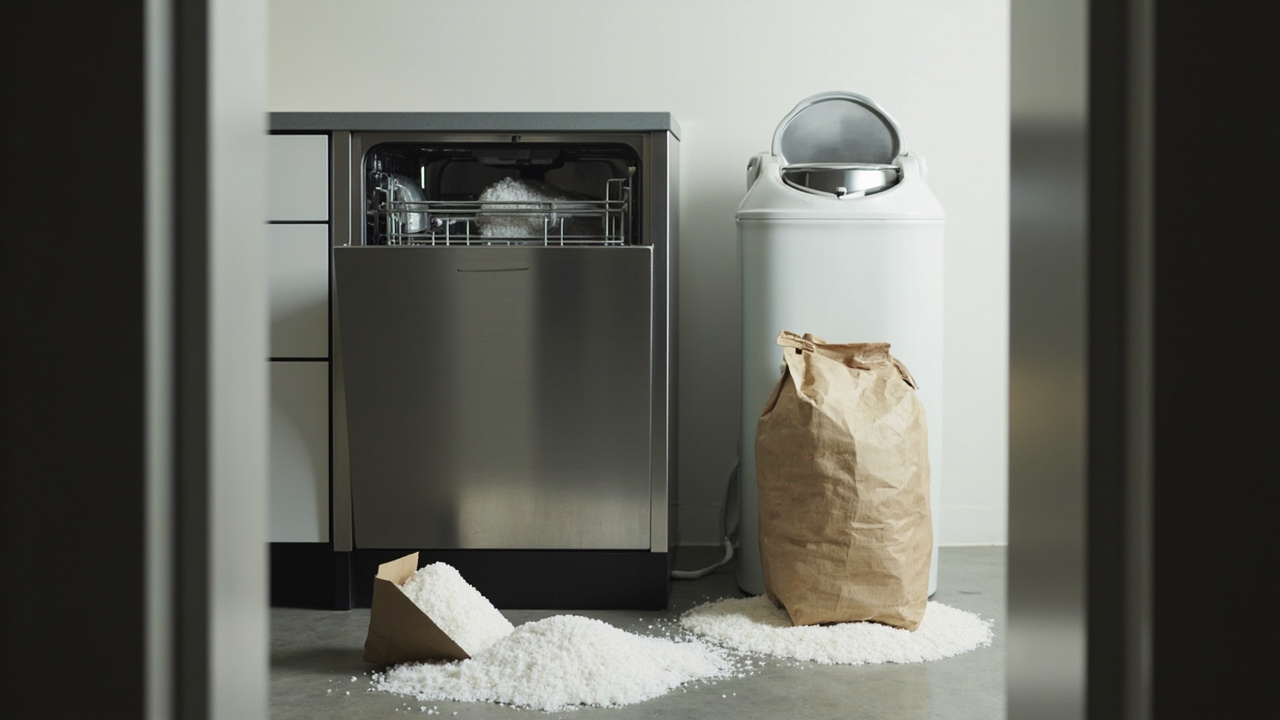
The bag in your hand is not the bag the other machine wants. Pour the wrong one and you clog a cap or underfill a brine tank. Match the bag to the machine below, then stop.
Quick answer
| Question | Answer |
|---|---|
| Same chemical? | Yes. Both are sodium chloride. |
| Same product? | No. Different grain, different bag, different machine. |
| Dishwasher salt into the brine tank? | Don’t. A 2 kg box underfills a tank that wants 40 lb. |
| Softener pellets into the dishwasher cap? | Don’t. Pellets don’t fit a fist-sized floor cap. |
| House softener already running? | It can lower the setting. It doesn’t retire a cap that’s there. |
| No salt cap in the tub floor? | Don’t add salt. The tub, the detergent cup, and the rinse-aid well aren’t a compartment. |
Both bags are sodium chloride. They don’t swap. Dishwasher salt refills the small resin tank in the floor of some European machines. Softener salt refills a whole-house brine tank. A house softener doesn’t retire a salt cap that’s on the machine. A machine with no cap doesn’t get salt poured into the tub.
Two machines, one ion
| Dishwasher salt | Water softener salt | |
|---|---|---|
| Machine | Floor cap on some Bosch, Miele, and other European tubs | Brine tank next to the softener |
| Job | Regenerate that tub’s own resin | Regenerate the whole-house resin |
| Form | Coarse granules, usually 1–8 kg boxes | Pellets, crystals, or blocks, usually 40 lb |
| What it doesn’t do | Soften the shower or the laundry | Fit through a dishwasher salt cap |
| Named damage path | Table salt in the cap (Bosch) | Wrong bag in the brine tank — already covered on the salt hub |
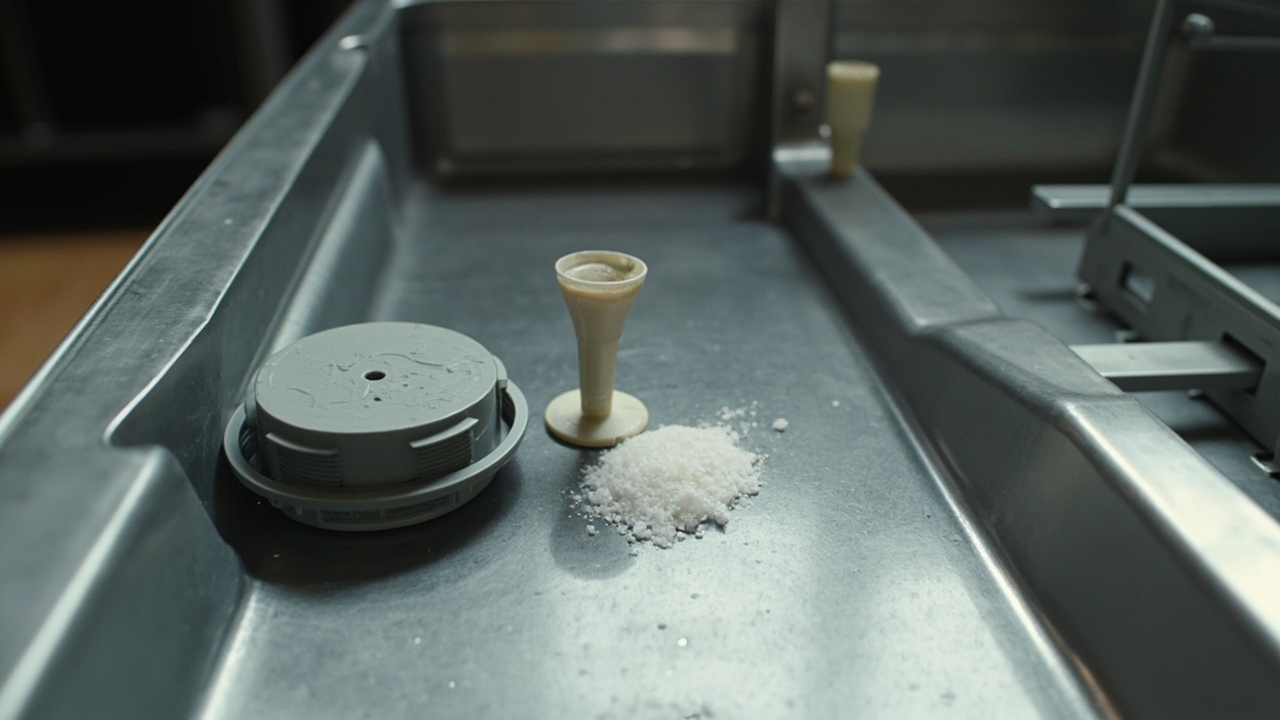
The dishwasher unit, where it exists, is a small ion exchanger. Salt regenerates its resin. Wikipedia says this is common in Europe, not universal, and that the salt is coarse-grained sodium chloride used to regenerate that built-in resin (Dishwasher salt, Wikipedia). Bosch says “some models” use salt to limit hard-water marks on dishes, and that the tank is reached through the dishwasher floor (Do I Need Dishwasher Salt?, Bosch). US machines often have no cap. That’s the branch, not a footnote.
The grain difference is the whole argument. Dishwasher salt is coarse so it dissolves slowly and doesn’t pack the small tank. Softener pellets are compressed so they sit on a grid in a brine well and don’t turn into fines. Same NaCl on the ingredient line doesn’t make those two shapes interchangeable. A box that says “helps prevent limescale” is still a dishwasher box. A bag that says water-softener pellets in a forty-pound sack is still a brine-tank bag.
EPA lists hardness and deposits as a nuisance effect of high total dissolved solids. The secondary standard is 500 mg/L. That line is aesthetic, not a health limit, and it doesn’t say whether this dishwasher needs salt (Secondary Drinking Water Standards, US EPA). Don’t invent a gpg cutoff the manual doesn’t print.
A salt softener swaps hardness minerals out of the water that reaches the house. A carbon or sediment filter changes taste, chlorine, and dirt. It doesn’t soften. An under-sink RO polishes drinking and cooking water. It doesn’t feed the dishwasher’s resin, and it doesn’t replace a brine tank. If you’re choosing among those three, that’s softener vs RO vs filter, not this page.
Pellets vs crystals is a different question. Pellets vs crystals owns it. This page only says which machine the bag belongs to.
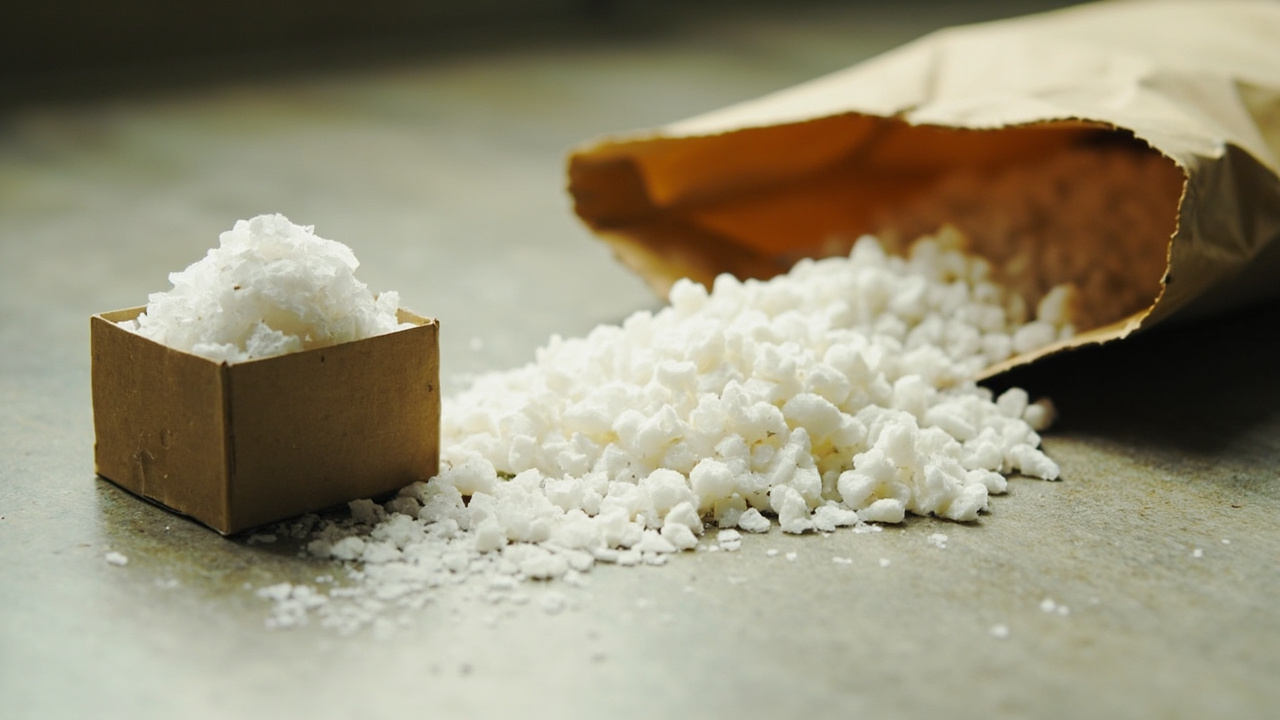
Don’t pour dishwasher salt into the brine tank
A two-kilogram dishwasher box is a few pounds of salt at a few dollars a pound. A brine tank wants a forty-pound bag. Using the dishwasher box as a substitute is an expensive way to underfill the tank. It’s also the wrong particle. Dishwasher salt is graded to dissolve slowly in a small cap. A brine well wants pellets or crystals made for that well.
Count it once. A typical brine tank holds several forty-pound bags above the water line. One two-kilogram carton is about four and a half pounds. You’d need roughly nine of those cartons to equal one forty-pound bag, and you’d still be pouring a grain the well wasn’t built for. That’s a shopping error, not a chemistry trick. Don’t do the arithmetic as a workaround.
This is the mirror of the pages that already refuse pink salt, Epsom salt, and salt meant for a swimming basin. Those answers stay on their own URLs. Don’t reopen them here. Which softener salt to buy — pellets, crystals, or potassium — lives on water softener salt types.
- Skip this branch if you don’t own a softener. There’s nothing to underfill.
Don’t pour softener pellets into the dishwasher compartment
Pellets are sized for a brine well. The dishwasher cap is a small threaded lid in the tub floor. Forcing a pellet in, or crushing a forty-pound bag into that hole, is how the cap and the resin well get clogged.
Bosch’s own warning is about table salt: dishwasher salt is coarse so it doesn’t clog the tank, table salt is finely ground, and pouring table salt in can damage the softening system (Do I Need Dishwasher Salt?, Bosch). Wikipedia adds that dishwasher salt doesn’t carry the anticaking agents or magnesium salts that can clog that unit (Dishwasher salt, Wikipedia). Softener salt isn’t table salt. It’s still the wrong particle, and some pellets carry anticaking or iron-treatment additives the compartment is trying not to see.
That warning is about the dishwasher unit. It isn’t a claim about cooking, and it isn’t a reason to treat the two bags as interchangeable.
- Don’t pour a pellet, a crystal, or a crushed forty-pound bag into the floor cap.
- Skip this branch if the dishwasher has no salt cap. There’s nowhere to pour the pellet.
If the dishwasher has a salt cap
You’ve confirmed a threaded cap in the tub floor. That’s the only machine this branch buys for. If you can’t find a cap after you pull the bottom rack, you’re in the no-cap branch below. Don’t go looking for a place to pour salt.
- Read the hardness setting in the manual before you buy a bigger box. Bosch says find out how hard the water is before the first use, then set the machine, then fill (Do I Need Dishwasher Salt?, Bosch). Don’t invent a gpg number the manual doesn’t print. A strip, if you want one, is on hardness test kits.
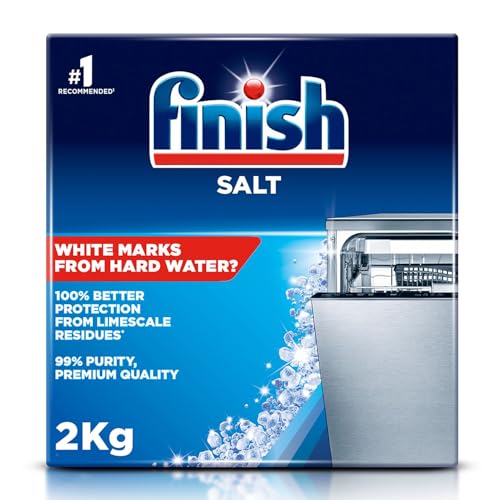
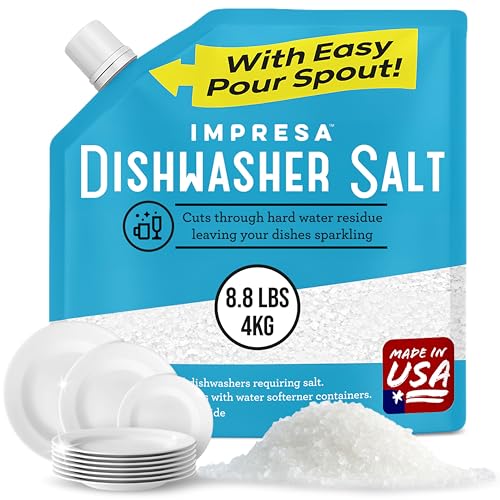
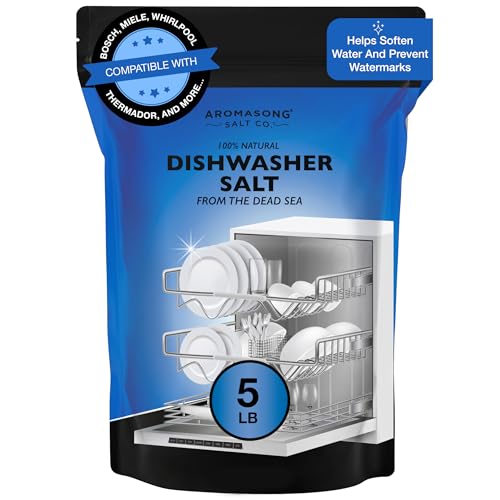
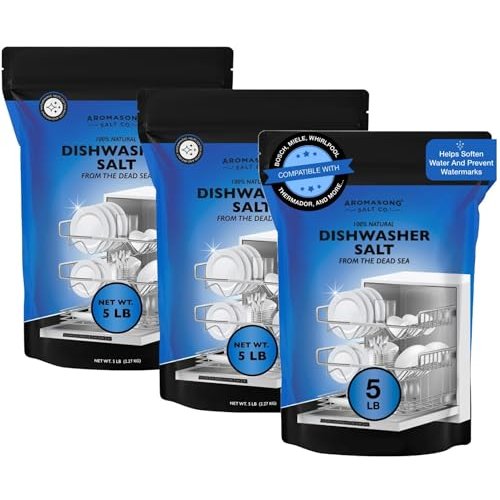
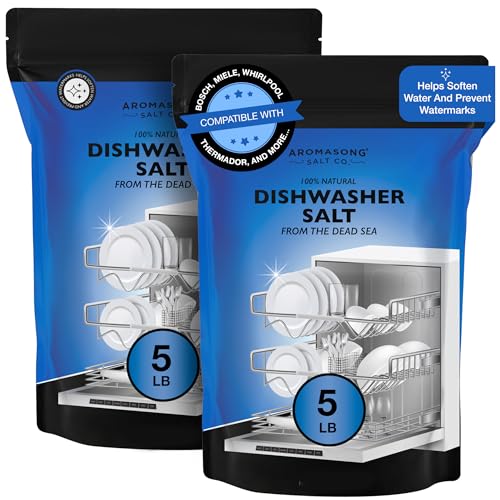
- Fill with salt labeled for a dishwasher. A small refill is Finish dishwasher salt, 2 kg. A larger coarse fill is IMPRESA dishwasher salt, 8.8 lb. A mid bag is Aromasong dishwasher salt, 5 lb. A one-time test fill is Finish dishwasher salt, 1 kg.
- Run a cycle right after filling so leftover grains don’t sit on the tub. Bosch says this. It’s a maker instruction, not a house rule we invented.
- The refill light means the compartment, not the whole-house brine tank. Those are different lights on different machines.
If you refill often, use the larger coarse bag. It lasts between grocery trips. IMPRESA coarse dishwasher salt, 8.8 lb. If the small box was gone in a couple of fills, step up to Aromasong dishwasher salt, 5 lb. Don’t buy the bulk bag you can’t store.
The long procedure for a brine tank is how to add salt to the softener. Don’t paste it here. This cap takes a funnel and a box, not a forty-pound bag tipped over the tank.
How often you refill isn’t a number this page can print. Bosch ties the setting to the hardness you measured, not to a calendar. A house on very hard water, with no softener, will empty the cap faster than a house whose tap is already soft. Buy the next size up when you’re refilling every few weeks. Don’t buy a brine-tank case because the cap feels small.
If the house has a brine tank
This branch is the other machine. You’ve confirmed a brine tank next to the softener, and you need a bag made for that tank — not a dishwasher box.
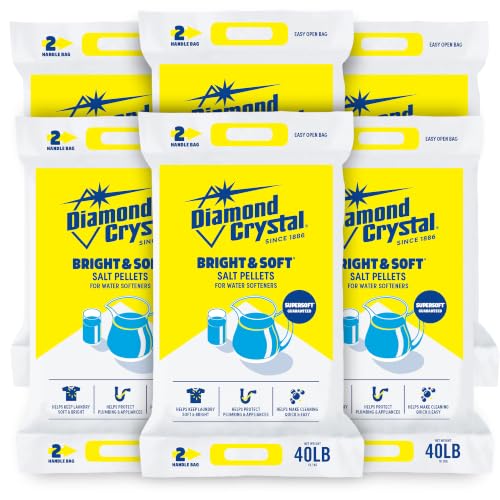
The contrast bag is Diamond Crystal softener pellets, 40 lb, 6-pack. That’s a case of six bags, not a fifteen-dollar carton. Read the price as six bags before you compare it with a two-kilogram dishwasher box.
If the tank is low and you only need one labeled bag to see the form factor, still don’t reach for the dishwasher box. A single forty-pound pellet bag is the unit the tank was built around. The six-pack is the same pellet, bought so you aren’t back at the store next month. It isn’t a better salt. It’s more of the right salt.
Pellet vs crystal, and whether you want potassium chloride instead of sodium chloride, stays on water softener salt types. This page doesn’t rank one brand against another. One labeled pellet case is enough to show the form factor. How often that tank should regenerate is the regeneration cycle, not a guess you make from the dishwasher’s refill light.
If the house is already softened
A working softener drops hardness at the tap. The dishwasher then sees softer water. That can mean a lower salt setting, or a longer gap between refills. It doesn’t mean the cap disappears.
No source on this page says a house softener retires the dishwasher compartment. Bosch tells you to test hardness and use the manual’s table. Wikipedia describes the dishwasher’s own resin. Neither sentence is “delete the cap because the basement has a softener.” If the cap is there, keep using dishwasher salt until the manual’s hardness table says the setting can sit at zero. “I have a softener” isn’t that table.
If the softener is bypassed, out of salt, or not regenerating, the dishwasher is back on raw hardness. Don’t diagnose the softener here. Water softener not working owns that.
Spots that remain after the cap is full are a different page. Dishwasher spots and film already tells Bosch and Miele owners to use dishwasher salt. Detergent dose, rinse aid, and etching stay there. Don’t repeat them here.
Salt-free conditioners are a third product, and they usually don’t bring hardness grains to zero on a strip. If that’s what the house has, the dishwasher is still seeing hard water. Match the claim on salt vs salt-free before you decide the cap can sit at zero.
If the model has no salt cap
US-market machines often have no compartment. Pouring any salt into the tub, the detergent cup, or the rinse-aid well doesn’t create one. Spots on those machines are a detergent, rinse-aid, and hardness problem. Send that to dishwasher spots and film. This branch buys no salt.
- Don’t add salt to a machine that has no floor cap, even if the bag says dishwasher.
What to buy
Two roles. Not a ranked list, and not a year-stamped roundup.
Role A — dishwasher compartment only. Buy these only after you’ve seen the floor cap.
| Bag | Size | Use it when |
|---|---|---|
| Finish dishwasher salt, 2 kg | 2 kg | Default small refill |
| Aromasong dishwasher salt, 5 lb | 5 lb | The 2 kg box runs out too fast |
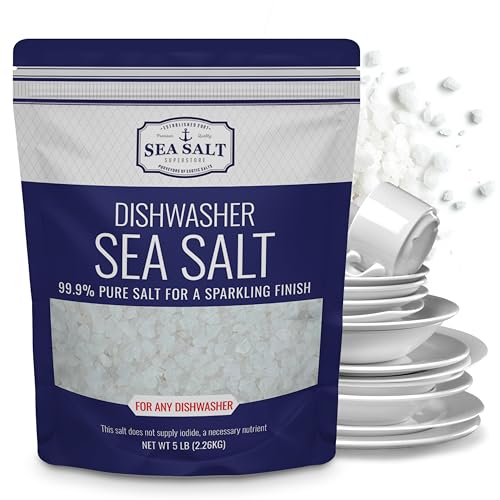
| Sea Salt Superstore dishwasher salt, 5 lb pouch | 5 lb pouch | You want a pouch, not a box |
| Aromasong dishwasher salt, 10 lb | 10 lb | Between the 5 lb and the 15 lb |
| Aromasong dishwasher salt, 15 lb | 15 lb | You refill a European tank often |
Role B — brine tank only. Diamond Crystal softener pellets, 40 lb, 6-pack (240 lb). Six forty-pound bags. Don’t read that price as a dishwasher carton. Then pick pellet vs crystal on pellets vs crystals. Not on this page.
Common mistakes
- Treating “both are salt” as permission to swap. Same ion, wrong machine.
- Emptying a forty-pound pellet bag into the dishwasher floor cap. That’s the clog path.
- Buying a two-kilogram dishwasher box to feed a brine tank. You’ll underfill it and overpay.
- Assuming a house softener retires the cap. It may lower the setting. It doesn’t remove the tank.
- Copying the table-salt warning onto cooking. Bosch’s warning is about the dishwasher unit. It isn’t a claim that the box is a food.
Related
- Water softener salt types — pellets, crystals, and potassium, which this page doesn’t rank.
- Pellets vs crystals — form factor for the brine tank only.
- How to add salt to the softener — the brine-tank fill, not the dishwasher cap.
- Dishwasher spots and film — spots that remain after the cap question is settled.
- Water softener not working — if the house unit is bypassed or out of salt, the dishwasher is back on raw hardness.
- Softener vs RO vs filter — three different jobs, only one of which is salt.
- Hardness test kits — a number for the manual’s table, not a guess.
- Salt vs salt-free — a conditioner usually doesn’t zero the strip, so it doesn’t retire the cap.
When to call a pro
Keep this DIY if you’re only choosing a bag, filling a salt cap you can see, or topping a brine tank that already has a lid.
Call a licensed plumber if the salt cap is cracked, the tub is leaking at the floor, or you’re cutting into the main to add or move a softener. We don’t rank local-service lists or installer directories.
Key takeaways
- Dishwasher salt and softener salt are both sodium chloride.
- They feed different machines. Don’t swap the bags.
- A salt cap in the tub floor means the machine has its own resin. Fill that with dishwasher salt.
- No cap means no salt. Don’t pour pellets into the tub.
- A house softener can lower the dishwasher’s hardness setting. It doesn’t delete the cap.
- Table salt is the product Bosch names as a damage path for that cap.
- Pellet vs crystal, and how often to add softener salt, live on the salt pages already shipped.
Safety and limits
- Keep both salts away from kids and pets. A brine tank isn’t a toy bin, and a dishwasher cap isn’t a place to store a box.
- Don’t force a pellet into the cap. Overtightening the lid or packing the well is how plastic threads crack.
- Softened water is higher in sodium. If someone is on a strict sodium diet, ask their clinician about drinking it. We don’t give medical advice.
- Dishwasher salt isn’t a cooking salt. Wikipedia notes it isn’t sold as food grade (Dishwasher salt, Wikipedia). That isn’t a lab claim, and it isn’t a reason to pour it into food or into the brine tank.