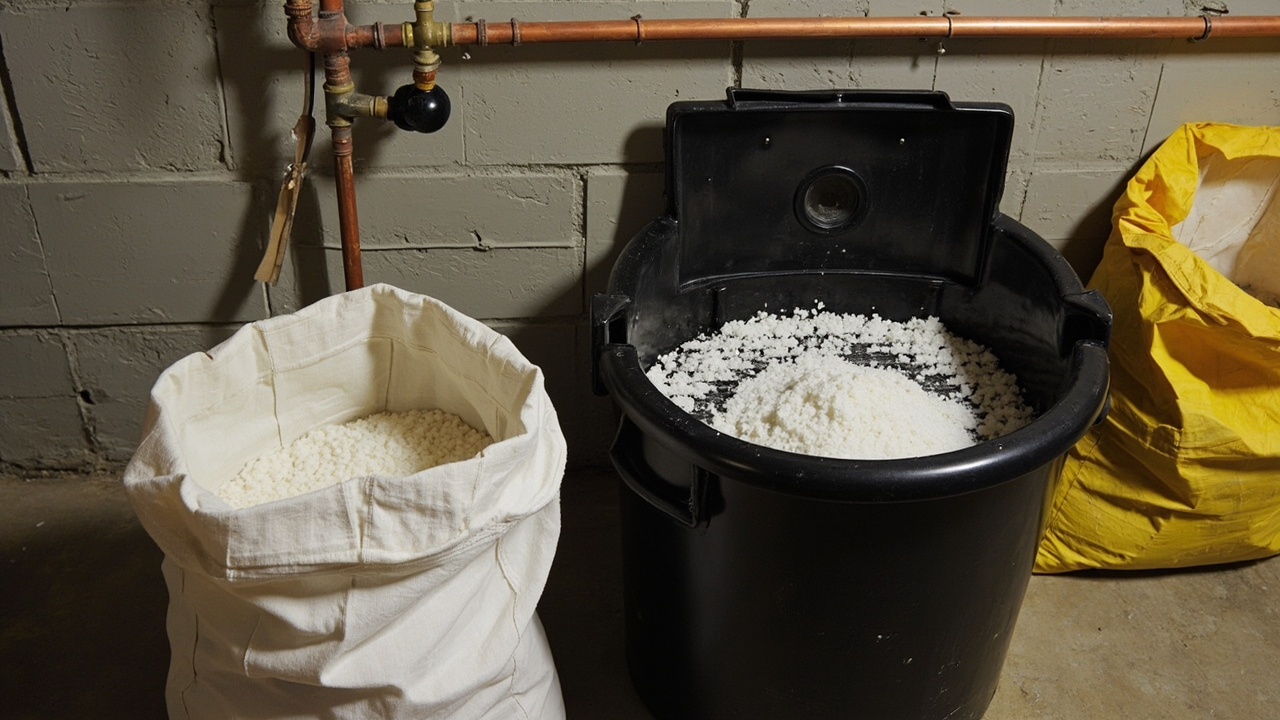
The bag says pool salt. Scoop it before the next regeneration.
Quick answer
| Bag in your hand | Put it in the softener? | Why |
|---|---|---|
| Label says pool salt or saltwater pool | No | Graded to dissolve in a pool, not to sit on a grid |
| Label says water softener pellets | Yes, if the manual allows pellets | Compressed so it does not pack into fines |
| Label says solar crystals or softener crystals | Only if the manual allows crystals | Sister page owns pellets vs crystals |
| Label says potassium chloride, for a softener | Yes, if you need low-sodium brine | Still a softener product, not a pool bag |
| Table salt, ice melt, rock salt, Epsom, kitchen jar | No | Already on the skip lists of the salt pages |
No. Don’t put pool salt in a water softener. Scoop it out before the next regeneration. Don’t buy another pool bag to top it off.
Same chemical, wrong job
A softener does not “add salt to the shower.” Resin holds calcium and magnesium. Regeneration uses a strong brine so the resin lets those minerals go. USGS defines hardness as the amount of dissolved calcium and magnesium in water (Hardness of Water, USGS Water Science School). Diamond Crystal’s FAQ says the salt helps recharge the resin beads, and that most softener salt is sodium chloride or potassium chloride (Water Softener Salt FAQs, Diamond Crystal).
Sodium chloride is the default brine salt. Potassium chloride is the low-sodium softener alternative. It is still a bag made for a softener. Pool salt is neither of those products, even when the ingredient line is mostly the same chemical.
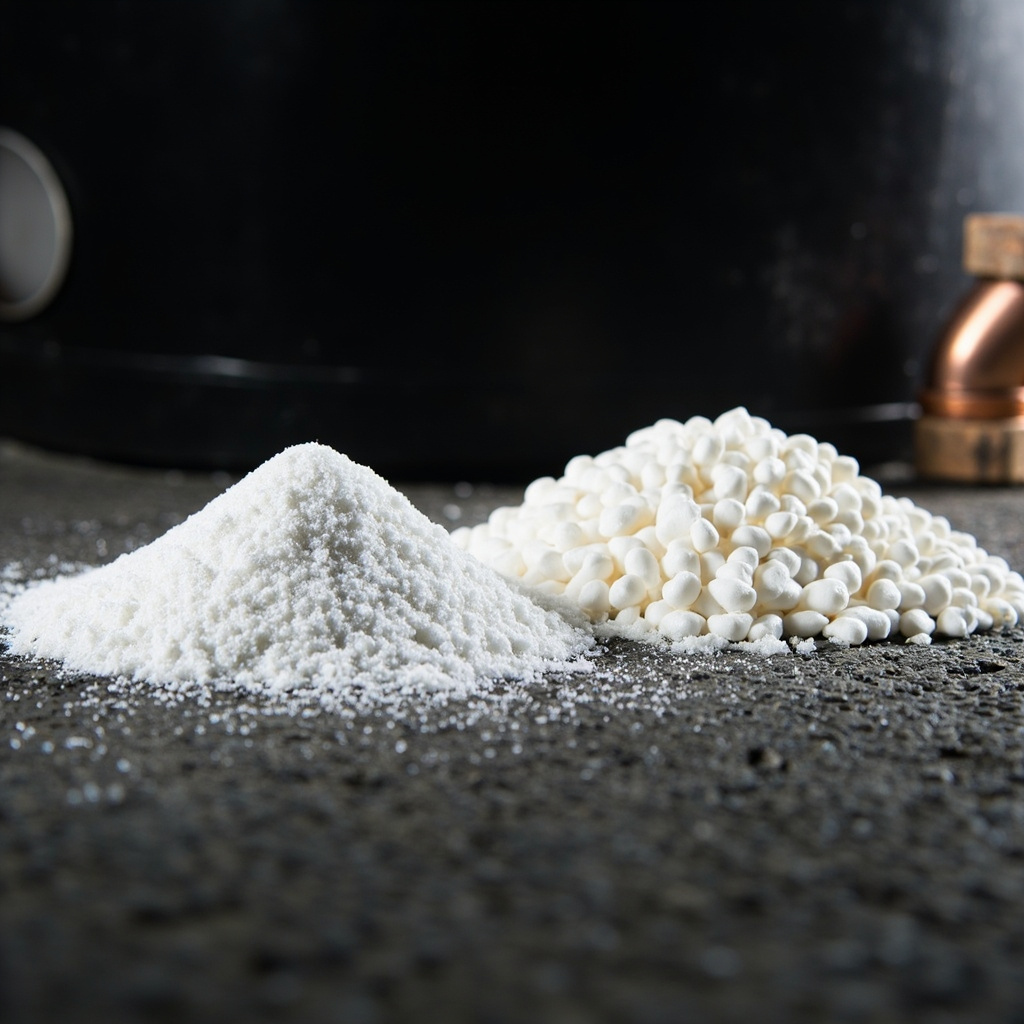
- Don’t treat “it’s all NaCl” as permission. Table salt, ice melt, and pool salt fail for additives, insolubles, or grain size. The element symbol isn’t the test.
- Don’t answer the reverse question on this page. Diamond Crystal says its solar crystals can go in a saltwater pool but dissolve more slowly, and it points pool owners to a pool-specific product. That sentence shows the manufacturer treats the bags as different. It is not a dose, and it is not a cart link.
What the bag is graded for
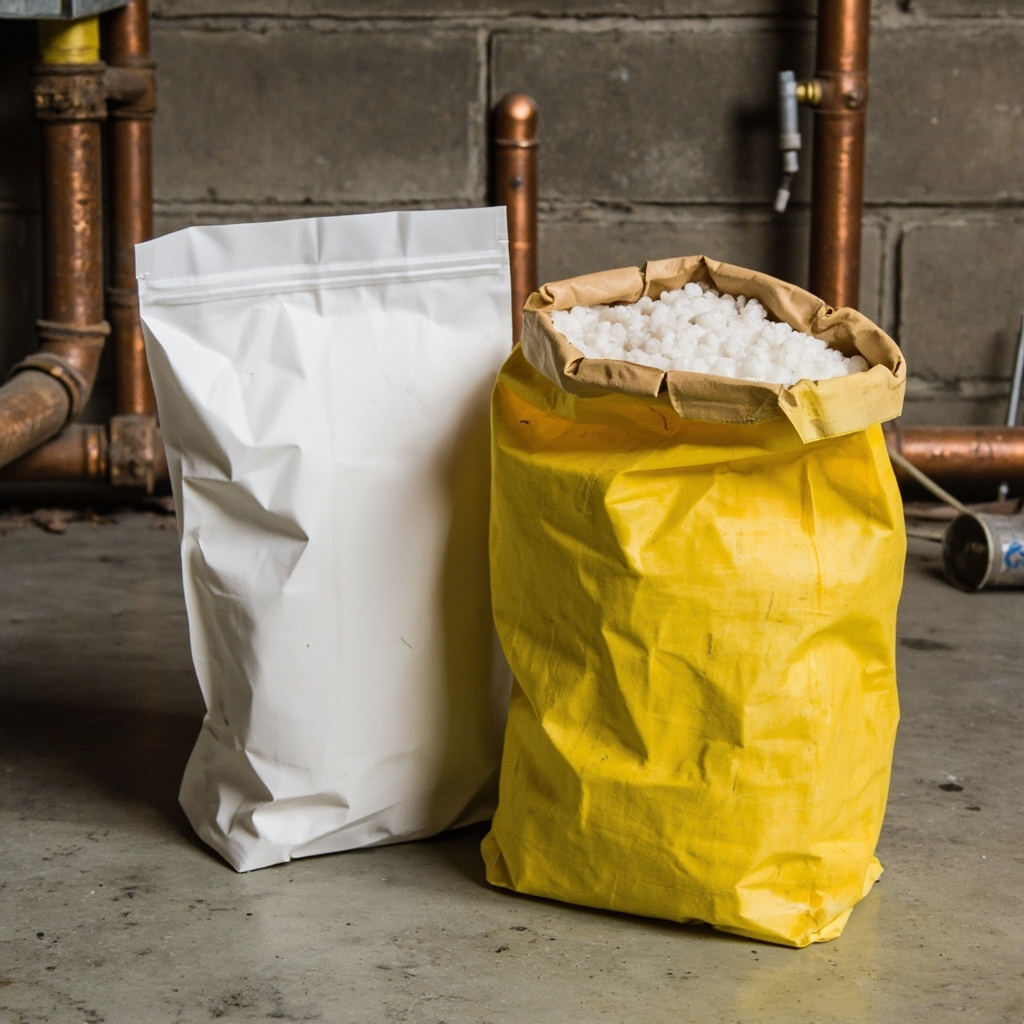
A pool bag is made to dissolve fast in a large volume of water. That’s a feature in a pool and a problem on a brine grid. Fine grains pack, hold water, and turn into mush. A softener bag says “water softener salt,” pellets or solar crystals, sometimes with a resin-cleaning additive. That label is the buying test.
Purity marketing is secondary. Do not copy a percentage off a forum post. If you want the additive line, read the bag in your hand. This page does not print an insoluble percent or an anti-caking dose, because no safety sheet for a specific pool-salt bag was checked.
The brine cycle itself is covered in why the brine cycle needs softener-grade sodium or potassium chloride. This page only settles which bag is legal for that cycle.
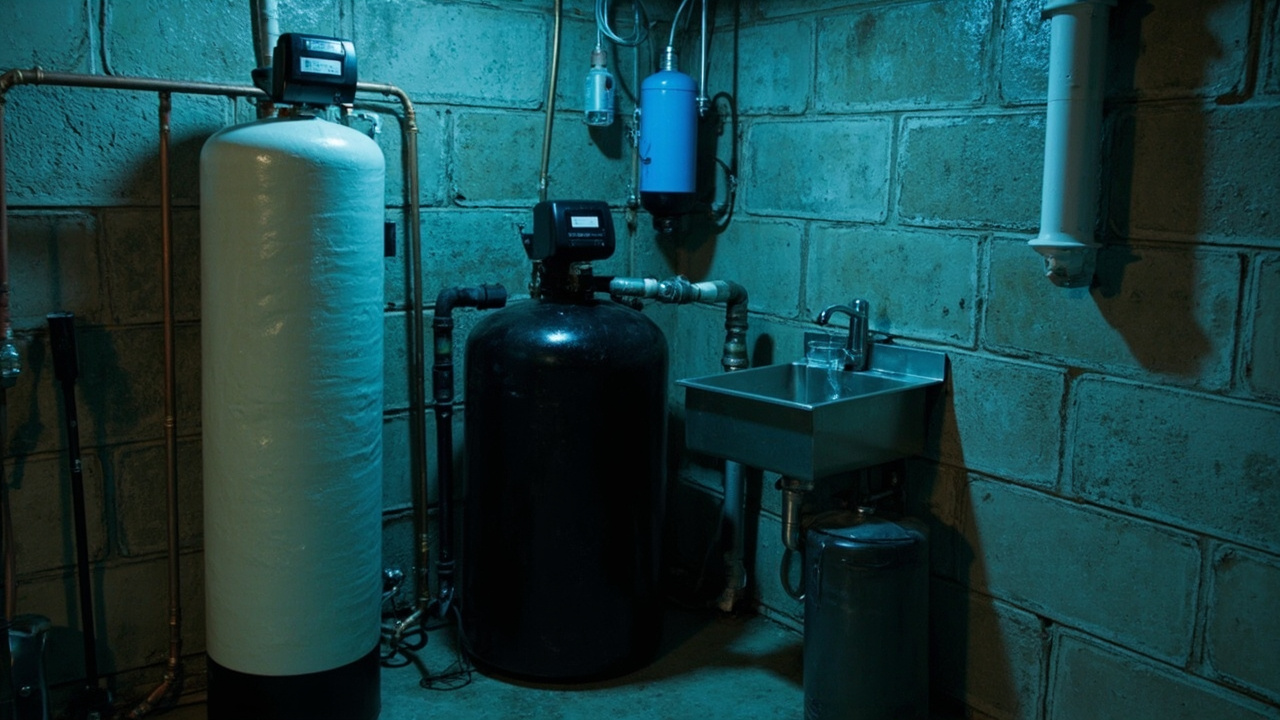
Softener, filter, and RO are not the same job
- A salt softener swaps calcium and magnesium for sodium or potassium. Spots and scale are its job.
- A whole-house carbon or sediment filter takes taste and dirt. It doesn’t drop hardness grains.
- An under-sink RO polishes drinking and cooking water. It does not treat every shower.
A salt-free conditioner is a fourth product, and it usually will not zero a hardness strip. If spots are the complaint, a conditioner is not the fix for a pool-salt mistake. The softener, filter, and RO comparison is the longer split. Stay on this page until the wrong bag is out.
EPA’s secondary drinking-water table lists chloride as a non-enforceable taste guideline, not a health limit (Drinking Water Regulations and Contaminants, US EPA). Softened water can carry more sodium and chloride than the raw water. That note is not a measurement of one pool bag at your tap. Do not do that arithmetic.
If the bag is already in the tank
This is the accident path. Stop the next regeneration before you shop for anything.
Stop. Do not start a regeneration while pool salt is still heaped on the grid. Do not add a second bag of anything on top of it.
Bypass if the valve has a bypass and you are about to dig in the tank. Leave power on unless the manual says otherwise.
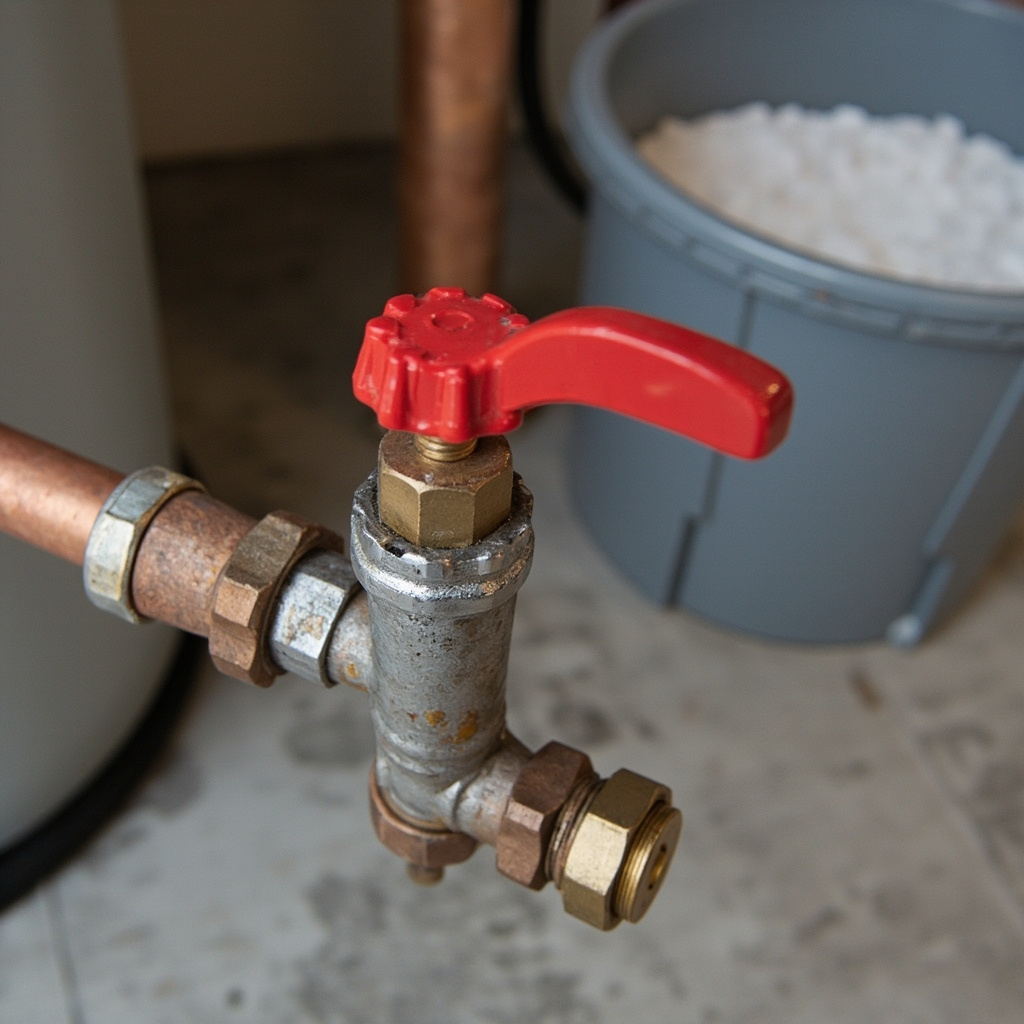
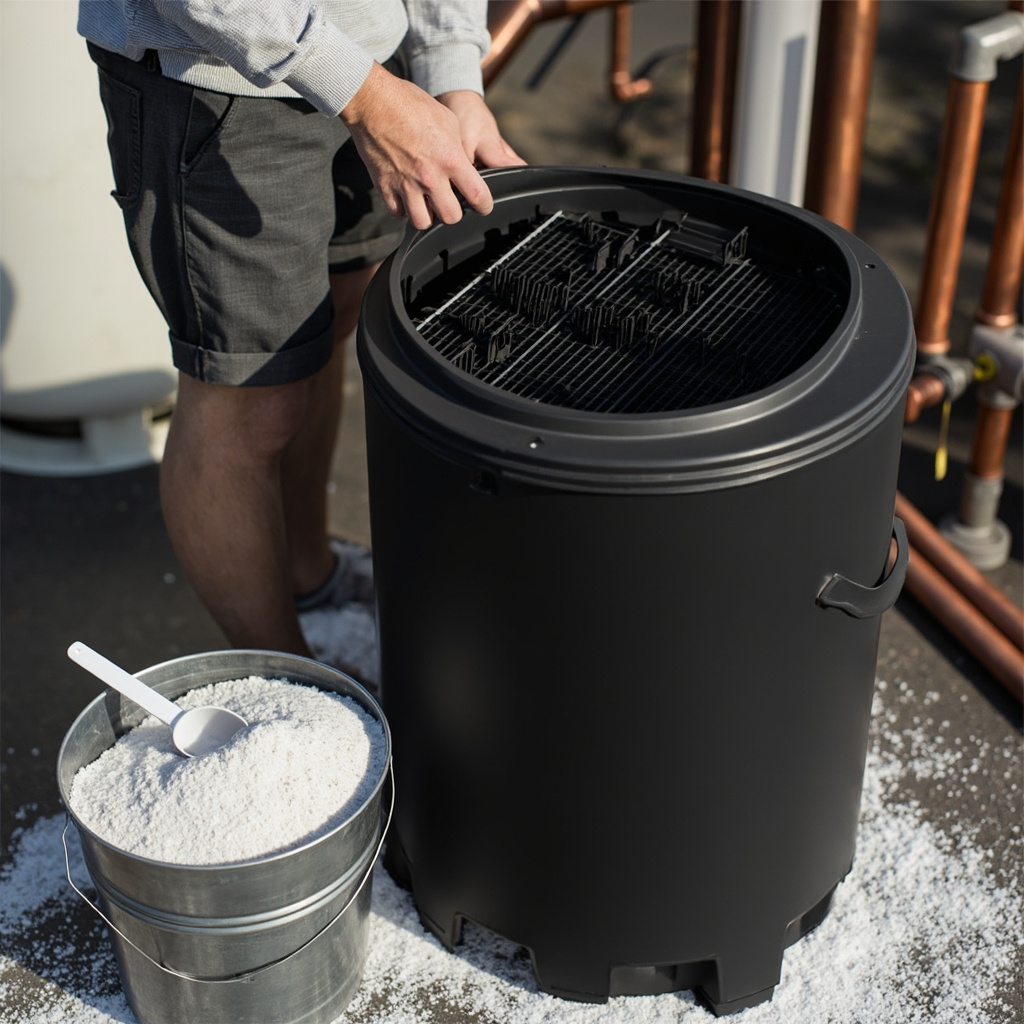
Scoop dry or damp pool salt into a bucket. A wet/dry vac is the right tool if the salt has already turned to slurry and you can reach it without standing in the tank.
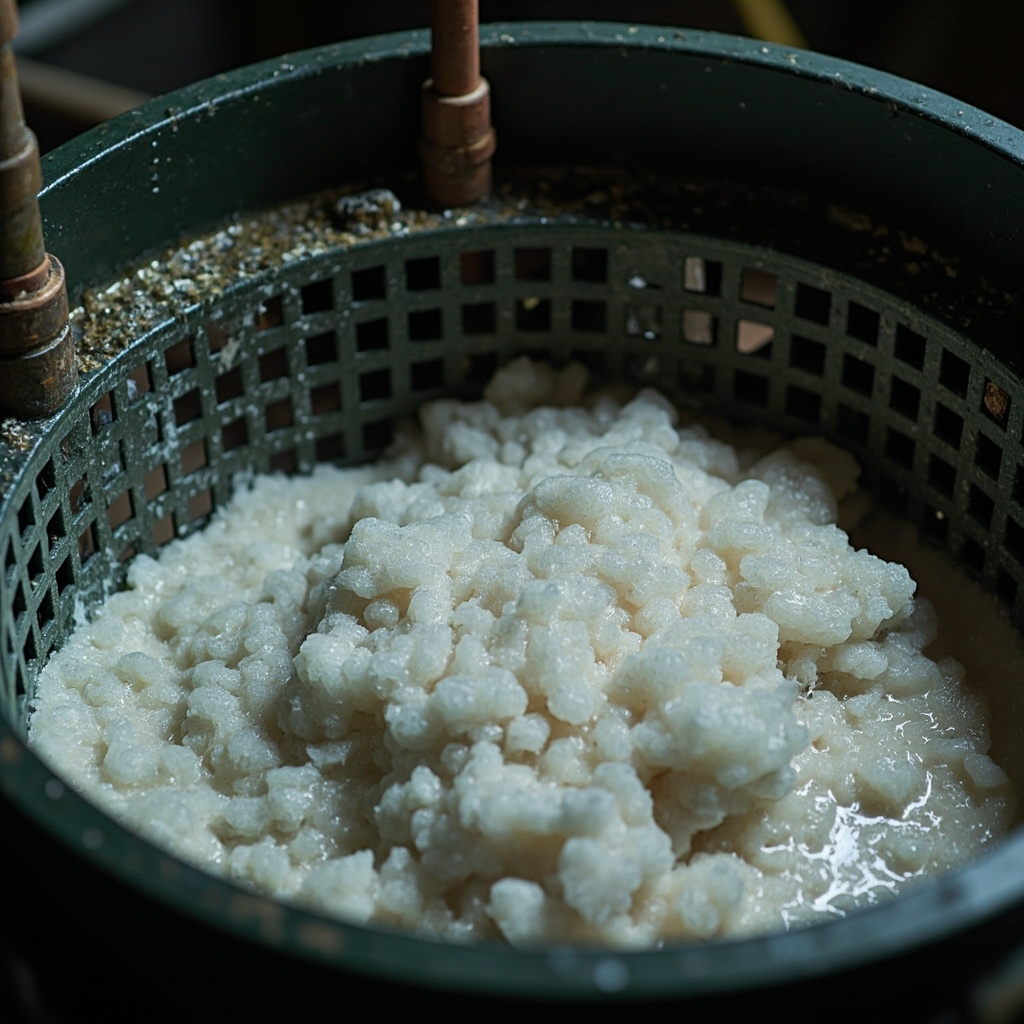
Look at the grid. Fines and undissolved crumbs are the failure mode. If you can’t see the grid, stop.
Refill about halfway with a bag labeled water softener salt. Leave headspace. The pour itself, including what not to dump in with the salt, is on what to skip when you add salt. The default refill after a pool-salt scoop is water softener salt pellets.
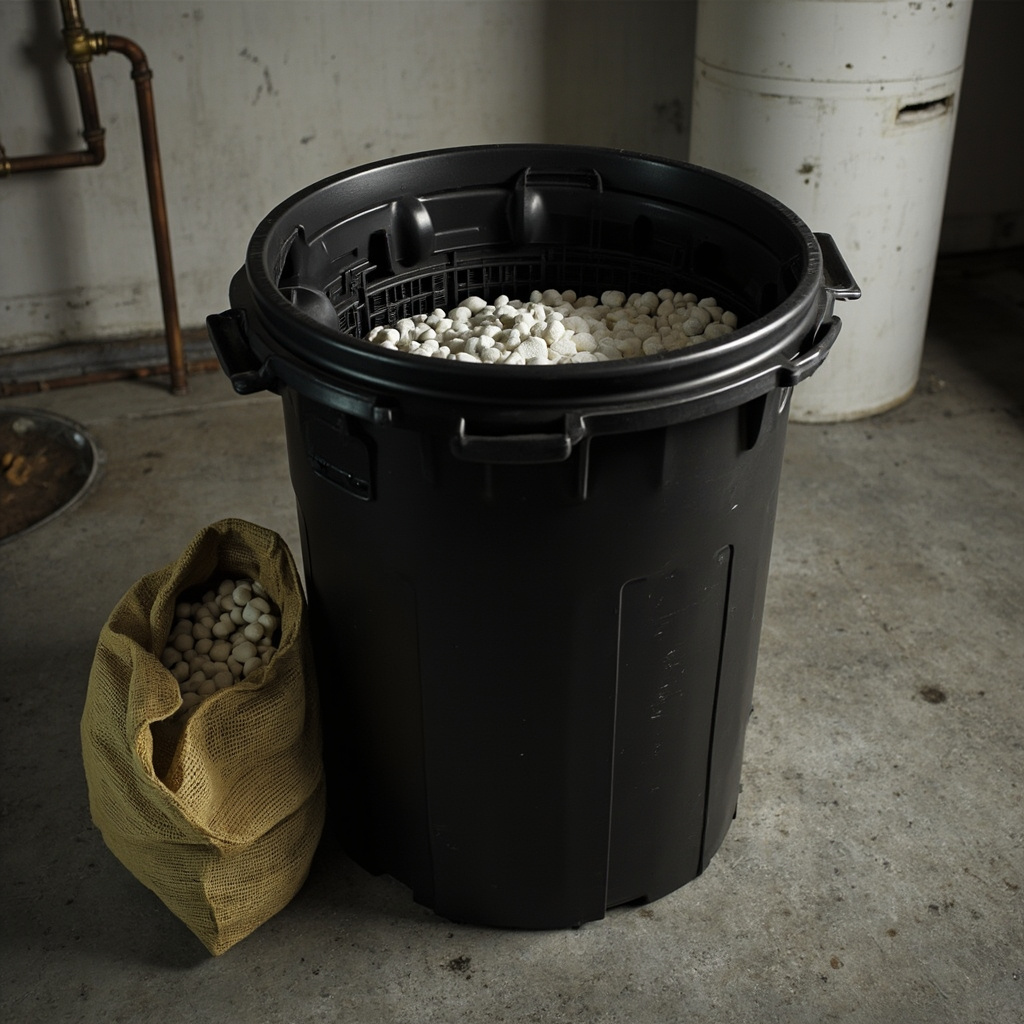 If the manual rejects pellets, use the crystal branch below instead of this bag.
Run one manual regeneration after the real salt is in, so the valve draws softener brine instead of a pool-grade slurry. Then check a cold tap with hardness test strips. If it is still hard after that cycle, the problem has left this page: brine draw, a bridge, or resin. Do not promise the resin is ruined. Do not promise it is fine.
- Skip the regeneration until the pool salt is out of the tank. A “flush” draws the dirty brine through the valve on purpose.
- Don’t stick a metal rod through a plastic grid. A cracked grid is a service call, not a faster scoop.
- Don’t rinse the slurry down a floor drain if local rules forbid brine discharge. Bag it.
When to stop and call a tech
Keep this as a homeowner job if you can see the grid, the float is still seated, and you are only scooping salt. Call a licensed plumber or a softener tech if any of these are true:
- You cannot reach the grid.
- The float or the brine line came loose while you were scooping.
- Two regenerations with real softener salt still leave hard water. That path is why a softener stops regenerating, not another bag.
- The tank smells like a cleaner, or the bag you poured wasn’t plain pool salt (a blend with a cleaner or a conditioner). Stop experimenting.
- You would have to cut the main, move the drain, or open the valve body to finish the job.
This page does not rank local-service lists or installer directories.
What can go wrong after
Short mechanism only. The repair steps live on the linked pages.
- Fines on the grid. Fine salt packs, holds water, and becomes mush. That is the same class of failure the bridge page describes for insolubles that settle in the tank. See what fine salt does to the brine tank. Do not copy a rock-salt insoluble percent onto a pool bag. That number was not measured here.
- A bridge. A crust over an empty well. The tank looks full and the valve draws no brine. The bridge page owns the broom-handle steps. Do not reprint them.
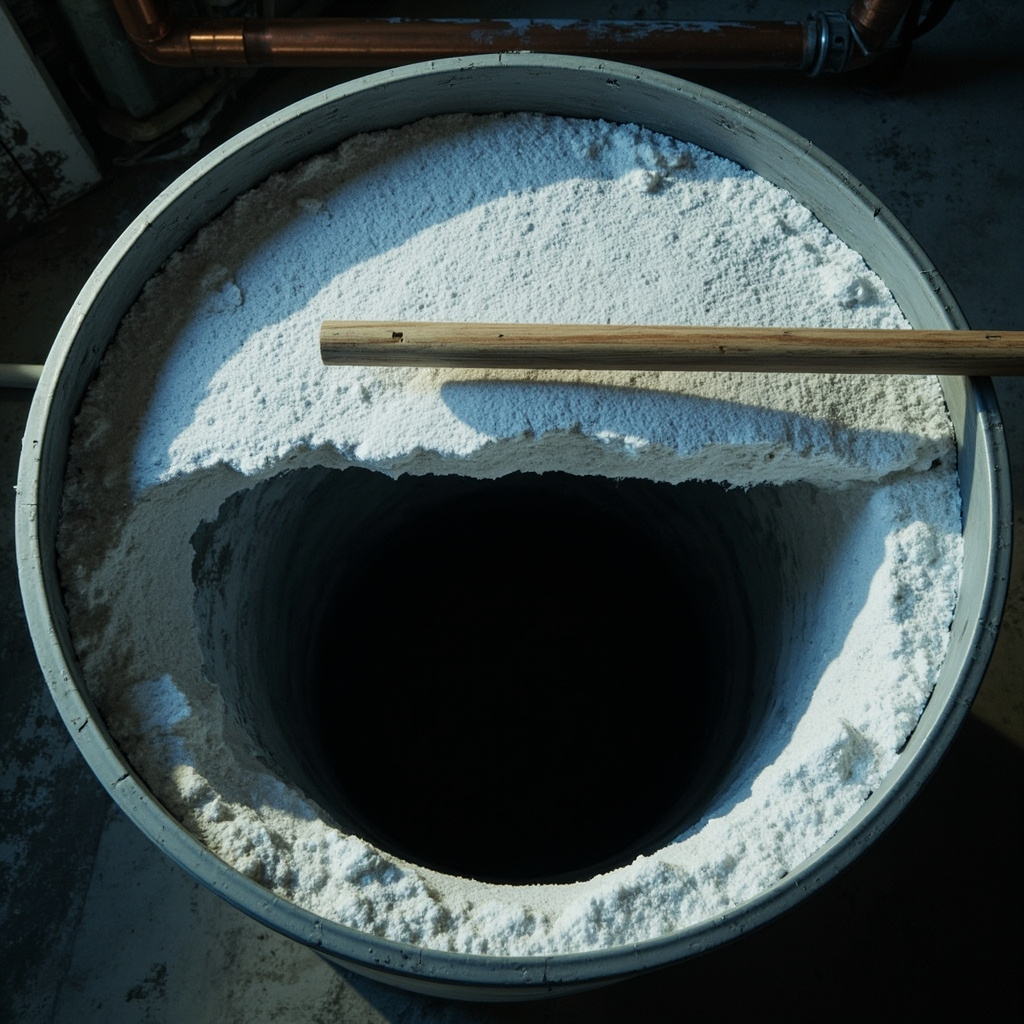
- Poor brine draw. The valve regenerates on weak brine, hardness comes back, and the next move is often “add more of the bag that is already in there.” That second bag is the mistake, not the fix.
- Resin. One accidental bag is not an automatic resin replacement. Repeated regenerations on dirty brine can foul the bed. Say that as a limit. A resin cleaner is for iron and residue after the wrong salt is out. It does not dissolve a pile of pool salt, and this page does not sell a cleaner.
What this section will not do
- Don’t give a pool dose or a pool-equipment setting. Those questions belong on a pool site.
- Don’t run the pool salt “just this month because it’s the same NaCl.” One quiet week isn’t a brine test.
What to put in instead
If-then. The table under the quick answer is the index. The buy decision is the label, then the manual.
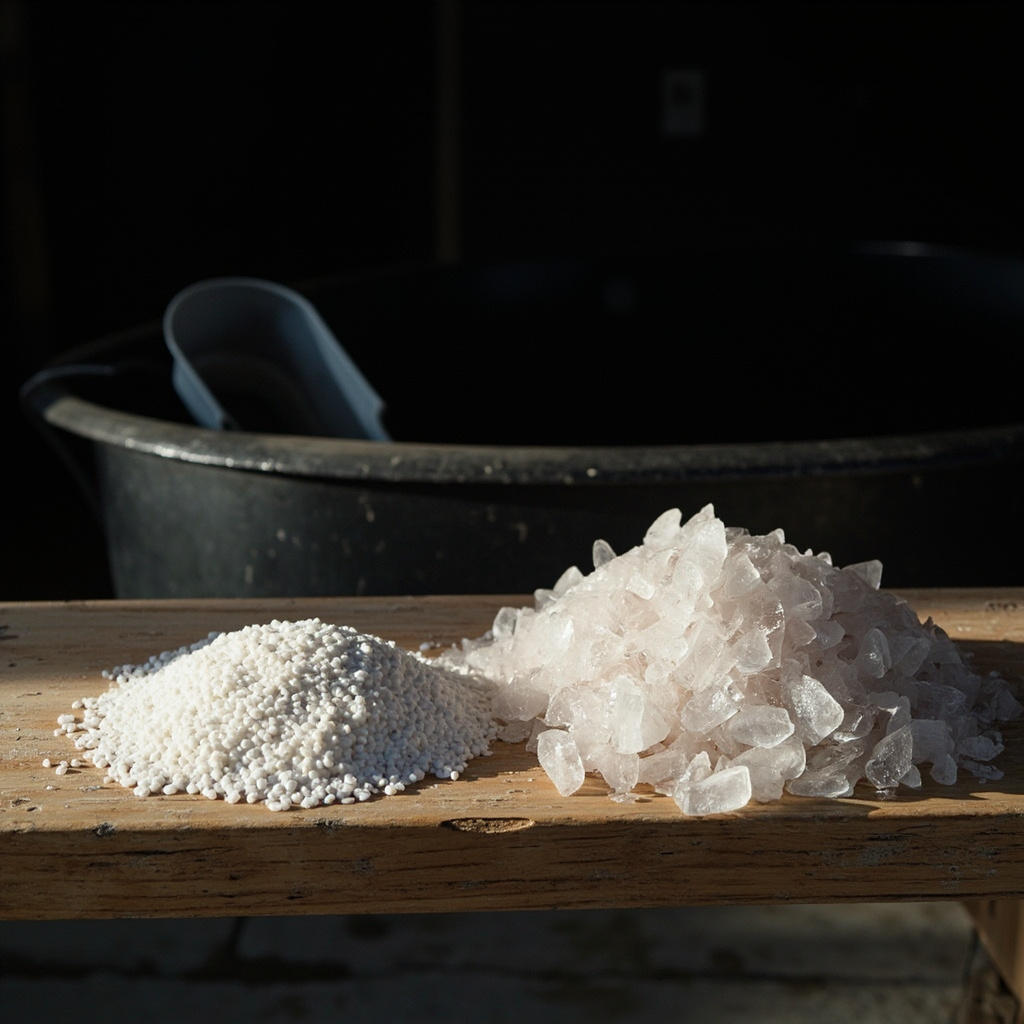
Default. Compressed softener pellets, if the manual allows pellets. A house that empties a 40 lb bag fast can buy the same pellet in a 50-pound pellet three-pack instead of stacking pool bags. The form comparison, including when blocks matter, is pellets vs crystals, the salts the tank is built for.
Iron in the water. Use softener pellets that carry a cleaning additive, not a new essay and not a pool product. That branch is iron-fighter softener pellets. The additive does not excuse leaving pool salt in the tank.
Manual wants crystals. Only then. Softener salt crystals are solar crystals labeled for a water softener. They are not the fix for a pool-salt mistake by themselves, and they are not the pool bag with a different cap.
Low-sodium brine. Potassium chloride pellets made for softeners. Not “lite” table salt, and not a pool bag that happens to be sodium chloride.
History of bridges on ordinary pellets. Morton says its Clean and Protect pellets are formulated to reduce bridging and mushing (Morton Clean and Protect Pellets). That claim is about the pellet formula, not about pool salt left on the grid. The matching bag is pellets made to reduce bridging. Scoop the pool salt first. These pellets do not excavate it.
Cabinet that won’t take 40 lb. One 25-pound softener pellets bag, still labeled for a softener. A smaller pool bag isn’t the space-saving option.
The wider salt-role page, including how often a normal tank needs a refill, is the water softener salt types overview. Frequency is the wrong question on the day the wrong bag is in the tank.
- Don’t buy pool salt because a forum said it is cheaper per pound. The cheap bag is the one you are scooping out.
- Don’t buy a whole new softener from this page. If two regens with real salt still fail, use the not-regenerating page. No softener-unit link here.
Cleaner, after the scoop
Resin cleaner is for iron and residue left in the bed. Offer it only after you refilled with real salt and the hardness strip is still high. It is not step 1, and it is not a substitute for scooping. No cleaner product is linked from this URL.
What to buy
Role lines only. Every bag below is softener salt or a hardness strip. None of them is pool salt. Prices are the 2026-10-13 product-data amounts, not a sale claim.
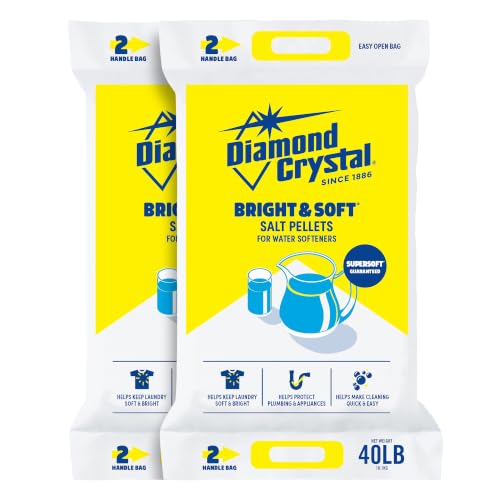
- Start here: Diamond Crystal Bright and Soft pellets, two 40 lb bags at $64.06. The label says water softener salt.
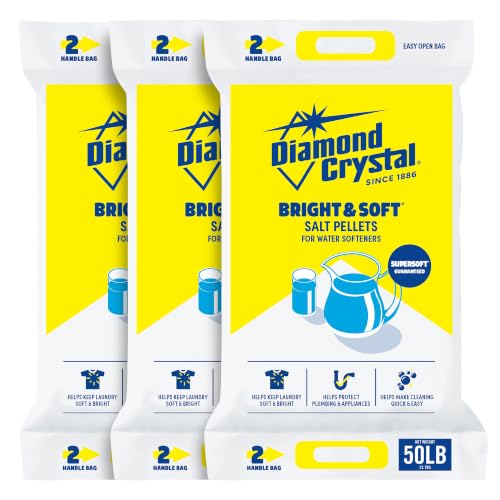
- Larger pellet buy: the same pellet in three 50 lb bags at $98.11, for a house that empties a 40 lb bag fast.
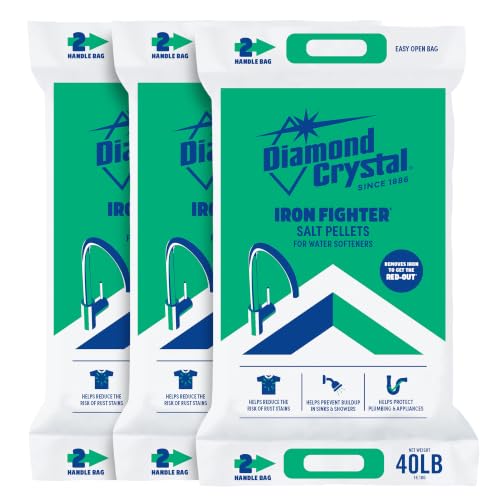
- Iron in the water: Iron Fighter pellets, three 40 lb bags at $95.57. Cleaning additive, still sodium chloride pellets, still not a pool bag.
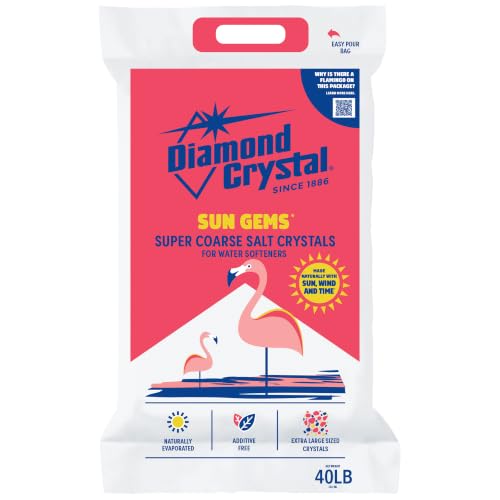
- Manual wants crystals: Sun Gems coarse softener crystals, 40 lb at $28.09. Only if the manual allows crystals.
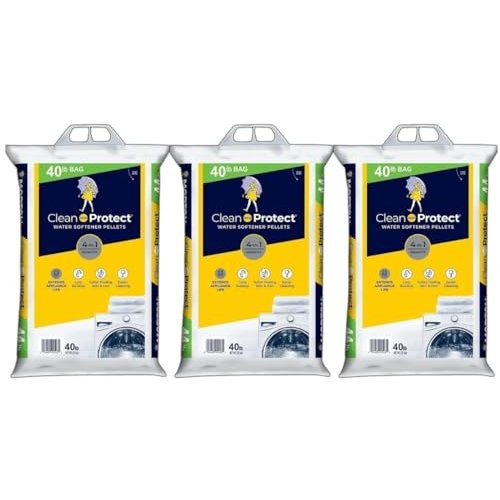
- Bridging on ordinary pellets: Morton Clean and Protect, three 40 lb bags at $39.39. Morton’s page is about bridging and mushing, not about dissolving a pool bag you left in the tank.
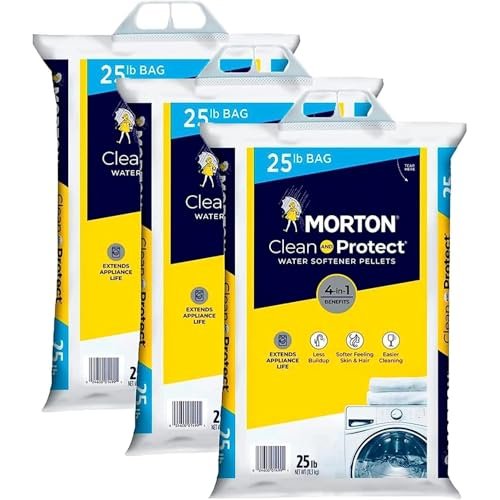
- Small cabinet: Clean and Protect pellets, 25 lb at $54.49. One bag when 40 lb will not fit.
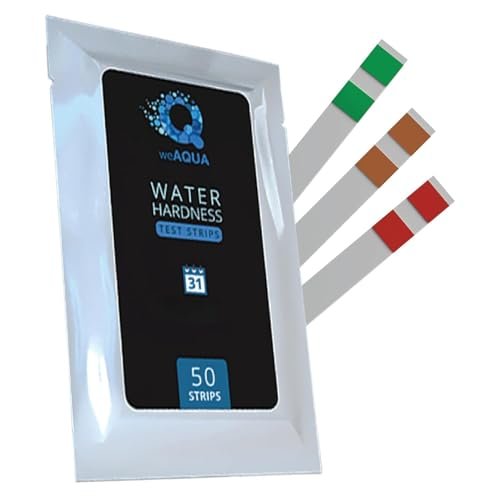
- Did the softener recover? 50 calcium and magnesium strips at $5.97. Use them on a cold tap after the manual regeneration. The listing title mentions a pool as a place you could test. This page uses the strips on household hardness only.
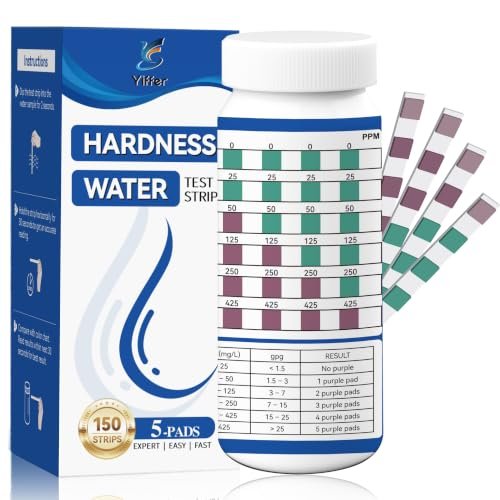
- More strips, same job: a 150-strip hardness kit at $8.99, if the 50-count pack will be gone after a few cycles. Same constraint. Not a pool-care kit.
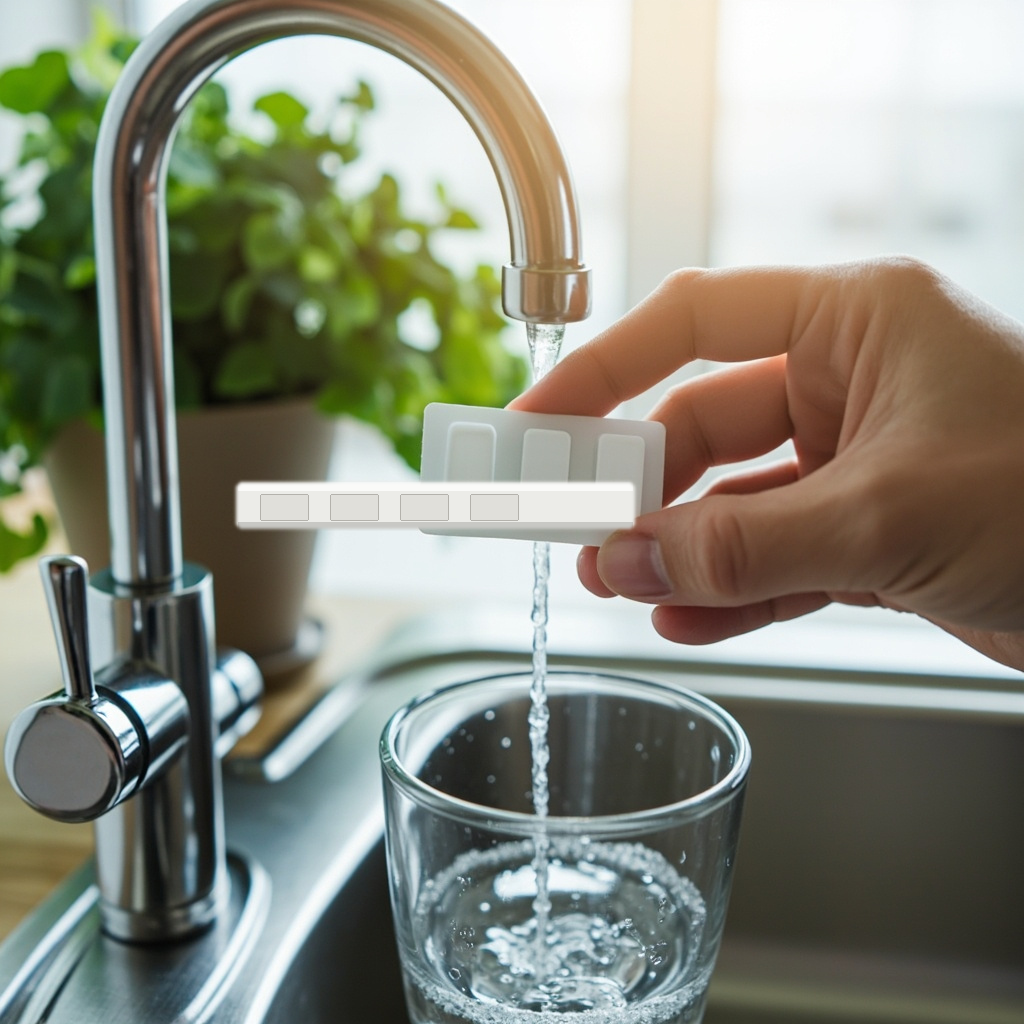
- Skip a pool-salt listing and any kit that isn’t a hardness strip. This URL doesn’t sell the bag you are removing.
- Don’t open an Amazon search for “pool salt softener.” Every product link on this page is a specific softener-salt or strip listing.
Common mistakes
- Buying another pool bag because the first one seemed to work. One quiet week isn’t a brine test. The grid fouls on the cycles you don’t watch. The refill is the softener pellets, not another pool bag.
- Leaving the pool salt in and pouring softener pellets on top. You buried the fines. Scoop first, then refill.
- Starting a regeneration to flush it. That draws the dirty brine through the valve on purpose. Bypass, scoop, then regenerate once with real salt.
- Breaking the grid with a screwdriver while scooping. A cracked grid is a service call. Use a plastic scoop or a vac, and only if you can see what you are touching.
- Reading a reverse-direction page and doing what it says. Pages that explain using softener salt in a pool are answering a different person. Do not import their dose into the brine tank.
Related
- Water softener salt types
- Pellets vs crystals
- Adding salt
- Salt bridge and mushing
- How softeners work
- Softener not regenerating
- Hardness test kits
I’d skip any link that starts with a pool dose.
Key takeaways
- Pool salt and softener salt share sodium chloride. The bag grade is the difference that matters.
- Do not buy pool salt for a softener, even if a forum says it is cheaper per pound.
- If it is already in the tank, scoop it out before the next regeneration.
- Refill with a bag labeled water softener salt, then run one manual regeneration.
- Test hardness after that cycle. A hardness strip checks recovery. It does not license the pool bag.
- Fines, mush, and a bridge are the likely leftovers. The bridge page owns the repair steps.
- One bag is not an automatic resin replacement. Repeated dirty regenerations are when you call a tech.